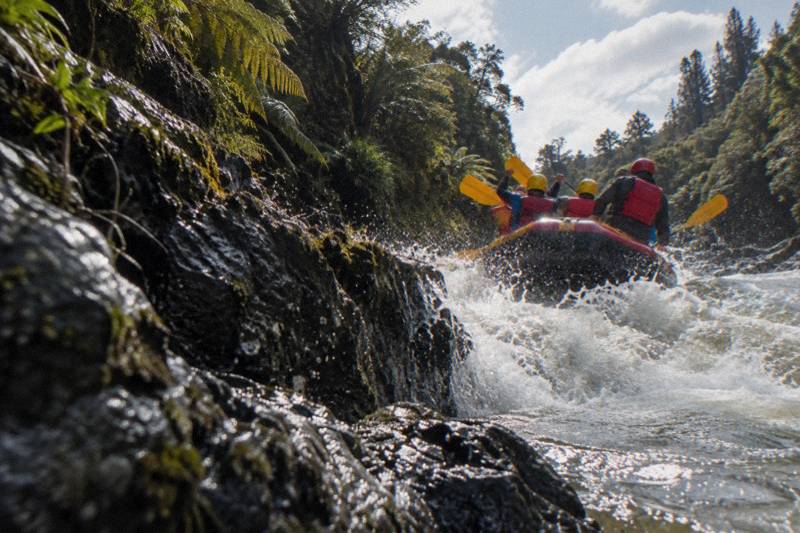
What Happens If You Fall Out Of The Raft?
Falling out is a normal part of whitewater rafting, and the whole trip is built around it: buoyancy aid, helmet, wetsuit, a guide trained to get you back, and a river with controlled flow. Here is what the operators themselves say happens, and what to check before you paddle.
Short answer
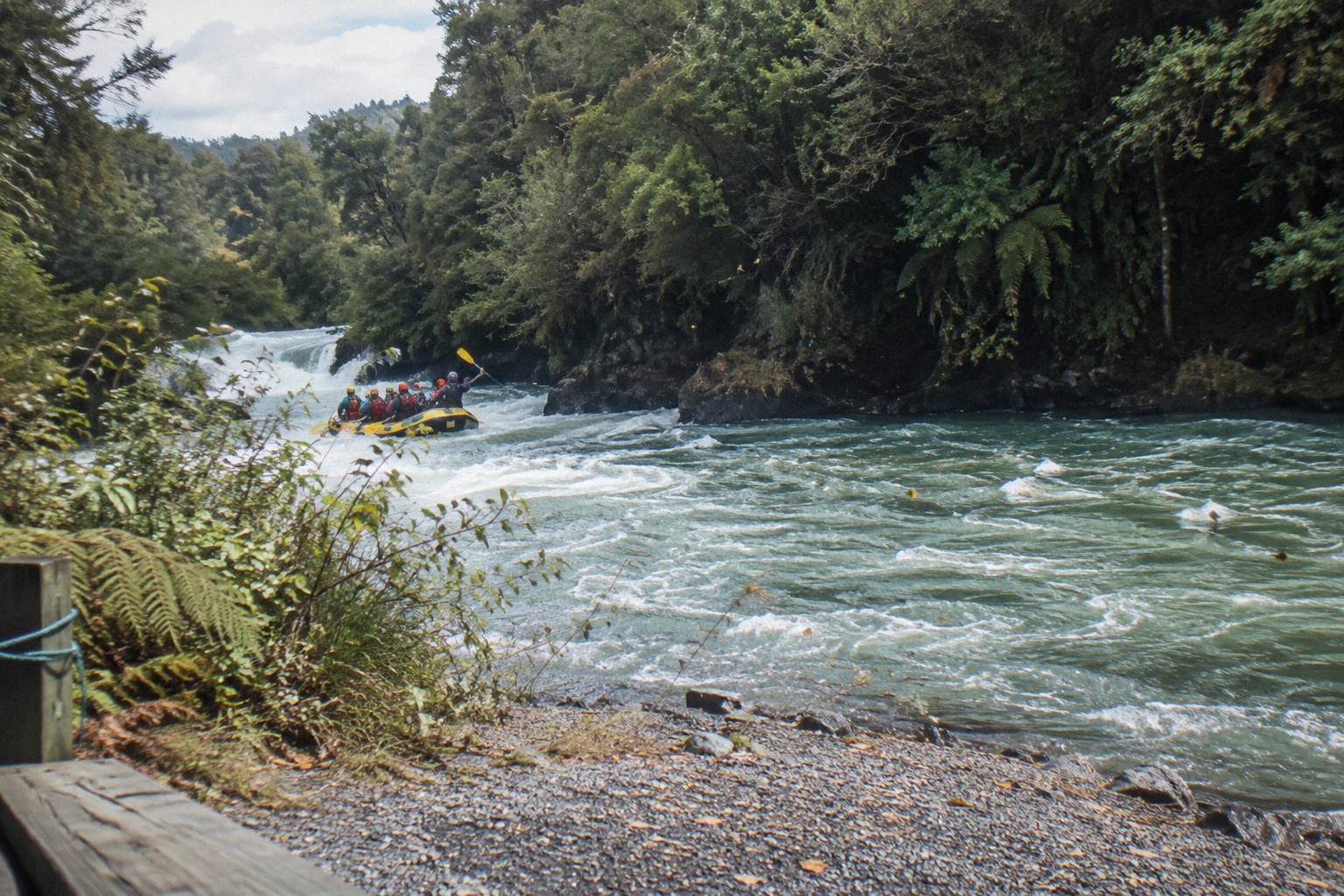
If you fall out, you float on your back in the supplied life jacket, feet pointed downstream, and the guide brings the raft to you. Operators supply wetsuits, helmets, life jackets, fleece, booties and a splash jacket, and Kaituna Cascades says a float test may be required. The river runs 365 days a year because council-controlled gates hold the flow.
Falling out is the question first-time rafters ask most, and the Kaituna is the river most people ask it about. Every trip covered here launches from the Okere Falls stretch of the Kaituna, and the full range of options sits in the Kaituna River rafting tours hub, from short Grade 5 runs to a full wilderness day on the Rangitaiki River guide. This page stays on one subject: what actually happens when a rafter ends up in the water, in the words and rules of the operators who run the river. It treats the swim itself, the recovery, the kit that protects a swimmer, the checks that happen on the bank, and the one official recommendation this river has generated, each in its own section so you can jump to the part that worries you.
| Fact | Detail |
|---|---|
| The river | The Kaituna, put-in at Okere Falls, about 20 minutes from central Rotorua |
| The big drop | Tutea Falls, 7 metres by the operators' figure |
| Time on the water | 50 to 60 minutes inside a roughly 2 hour experience, per Kaituna Cascades |
| Why it runs daily | Council-controlled gates at the Lake Rotoiti outlet hold the flow, 365 days a year |
| Supplied kit | Wetsuits, helmets, life jackets, fleece, booties and a splash jacket, per the Rotorua Rafting and Kaituna Cascades pages |
| Bring | Swimwear and a towel, per Kaituna Cascades |
| Ages and weights | Kaituna Cascades minimum age 13, maximum 120 kg; Rotorua Rafting maximum 130 kg; ages per listing |
| Water temperature | About 24 degrees C in summer, about 12 °C in winter, per the Rotorua Rafting FAQ |
What Actually Happens When Someone Falls Out?
A swimmer in the Kaituna floats rather than sinks, because the life jacket supplied on every trip holds them up, and the standard response is to lie back, point the feet downstream and let the guide bring the raft alongside. That is the general practice of whitewater rafting as described in the Wikipedia entry on rafting, and it is the position operators brief before launch. The river between the rapids is pooled water, and the flow is held steady by gates at the Lake Rotoiti outlet, so a swim tends to end in calm water rather than a continuous current. None of that makes falling out pleasant, but it makes it survivable and ordinary, which is why the operators plan for it rather than pretend it away.
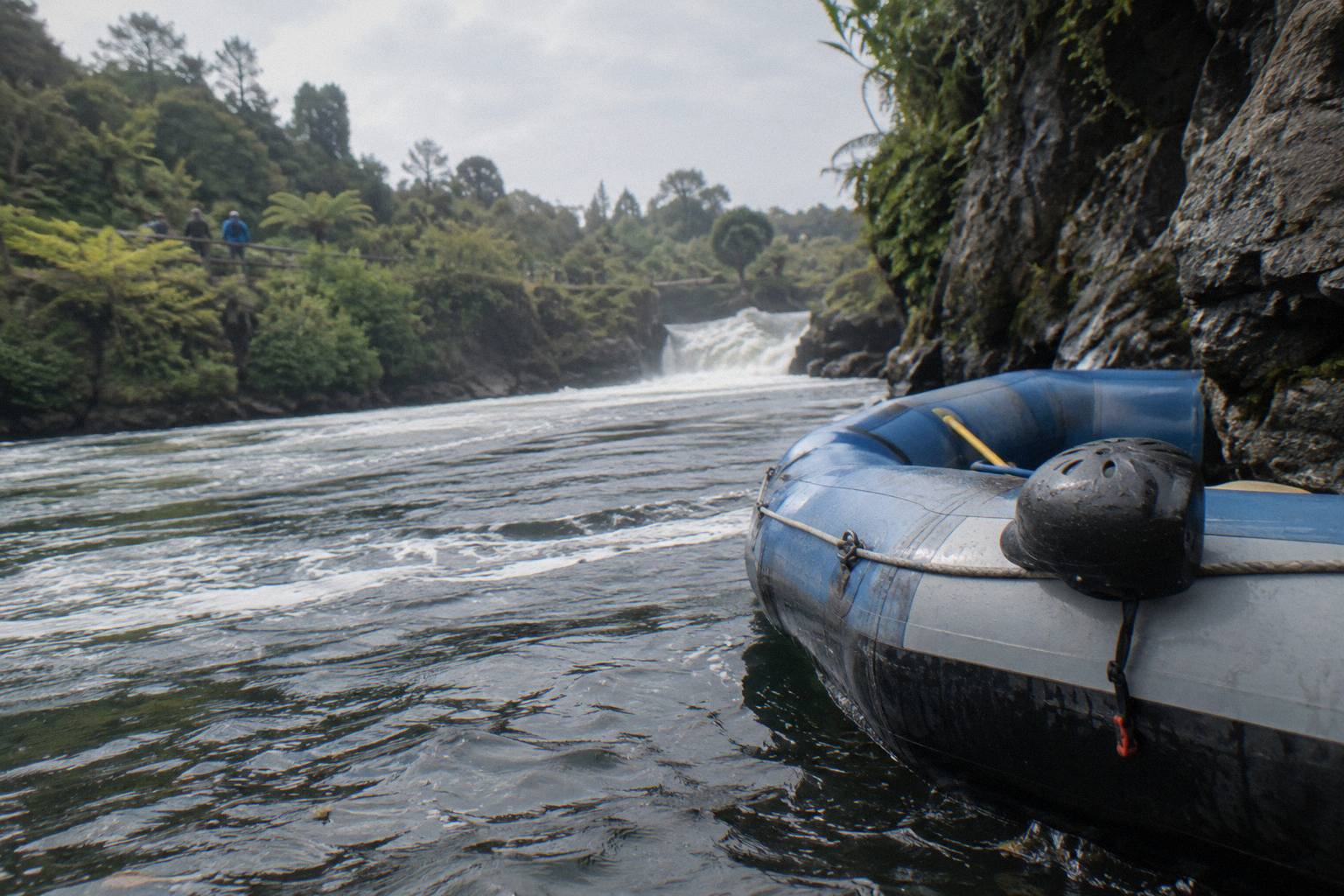
The frequency question is harder to answer with numbers, and no source for this river publishes one. What the operators do publish is preparation: Kaituna Cascades says a float test may be required before a guest joins a trip, and its pages list the full kit supplied. The right framing is that falling out is a designed-for event on a commercial rafting river, not an accident in the everyday sense. The safety briefing on the bank covers the swimming position, the paddle signals and what to grab before you are told to get in the boat. The structure of the run matters too, because a river that steps down through pools behaves very differently for a swimmer than a river that runs flat-out for miles, and the Kaituna is firmly the first kind.
| Stage of the run | What a swimmer experiences | Source |
|---|---|---|
| Pool between rapids | Slow moving water where floating and recovery happen | Kaituna Cascades run description |
| Grade 4 and 5 rapids | Fast water and drops, passed through quickly | Kaituna Cascades blog on the run's grades |
| The three waterfalls | Steep drops, including Tutea Falls at 7 metres | Kaituna Cascades |
| Take-out eddy | Calm water where the raft regroups | Kaituna Cascades run description |
Readers who want the water-level detail can go deeper on how the rapids are graded, because the grade of the rapid shapes how fast a swimmer travels through it. The Kaituna is sold as a Grade 5 run, and the Kaituna Cascades blog describes its rapids as a build of Grade 4 and 5 water finishing at the falls. The flow is not left to the weather either: the operators' river conditions page reported spring flows in the 500s on the control gates with water at 19 degrees C, which is the kind of variation the gates are there to manage. A swimmer in that system is swimming in measured water, not a flood.
How Does A Guide Get You Back In?
The guide's recovery job is trained work, not improvisation: they steer the raft to the swimmer, the swimmer is pulled in over the tube by the life jacket straps, and the rest of the crew keeps weight on the opposite side so the boat does not flip in the process. This is standard commercial rafting practice as described in general terms in the Wikipedia rafting entry, and it is the sequence a briefing walks through. The Kaituna gives it an unusual advantage: the run is short and stepped, 14 rapids and drops with three waterfalls by the Kaituna Cascades count, so most of the river is pool-and-drop rather than continuous white water, and swims usually end in the pool below.
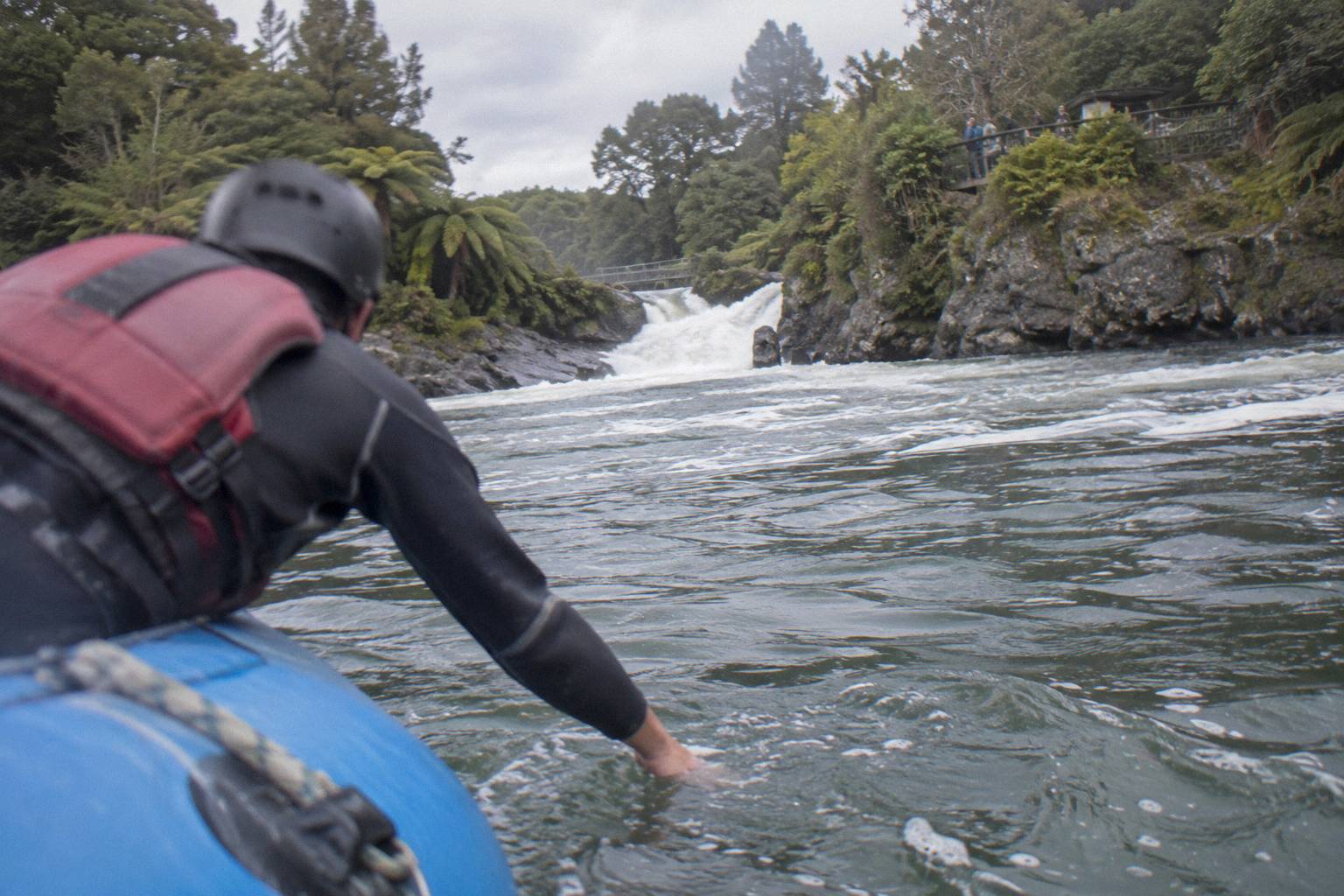
Every commercial operator on this river operates under the WorkSafe adventure activities regime: operators must pass a safety audit by a WorkSafe-recognised auditor and register with WorkSafe, and the public can check registrations on the WorkSafe adventure activities register. That regime exists precisely because recovery, not the rapid, is where competence shows. The grades themselves, and what Grade 5 means against Grade 4, are set out in the Wikipedia entry on whitewater and the International Scale of River Difficulty. The audit system covers the training behind the rescue, the equipment standards and the operating procedures, so the person pulling you over the tube is doing something they have been assessed on rather than something they picked up on the job.
The crew's job is easier on a river that runs every day. Because the gates hold the flow year round, Kaituna crews run the same water in winter and summer, and the run's 50 to 60 minutes on the water sits inside a roughly 2 hour experience, so the recovery window is short by design. Guests hold up their end by holding the paddle correctly and listening at the briefing, which is why operators spend real time on both.
If you are weighing which trip suits your confidence, three cards below cover the range: the hotel-transfer Kaitiaki product, the free-sauna run and the Kaituna Cascades originals trip.
The Rafting With Hotel Transfers product from Kaitiaki Adventures, rated 5.0 from 823 reviews and from NZ$139 per person, includes free hotel pickup, which matters if you would rather not drive to the river on the morning of a trip. The Free Sauna, 2h30 Kaituna Trip from Rotorua Rafting, 5.0 from 2,191 reviews and from NZ$135 per person, is a widely reviewed option. All amounts on this page are New Zealand dollars, and prices vary by date and group, so the booking page shows the price for the date you choose.
What Kit Protects You In The Water?
Every Kaituna operator on this site supplies the same categories of protection: a wetsuit, a helmet, a life jacket, fleece, booties and a splash jacket, listed on the Rotorua Rafting and Kaituna Cascades pages, so a swimmer enters the water buoyant, insulated and shielded from contact with rocks. The life jacket does the floating. The helmet does the head protection. The wetsuit and fleece address the water temperature, which the Rotorua Rafting FAQ puts at about 24 degrees C in summer and about 12 °C in winter. Kaituna Cascades adds one instruction for guests: bring swimwear and a towel.
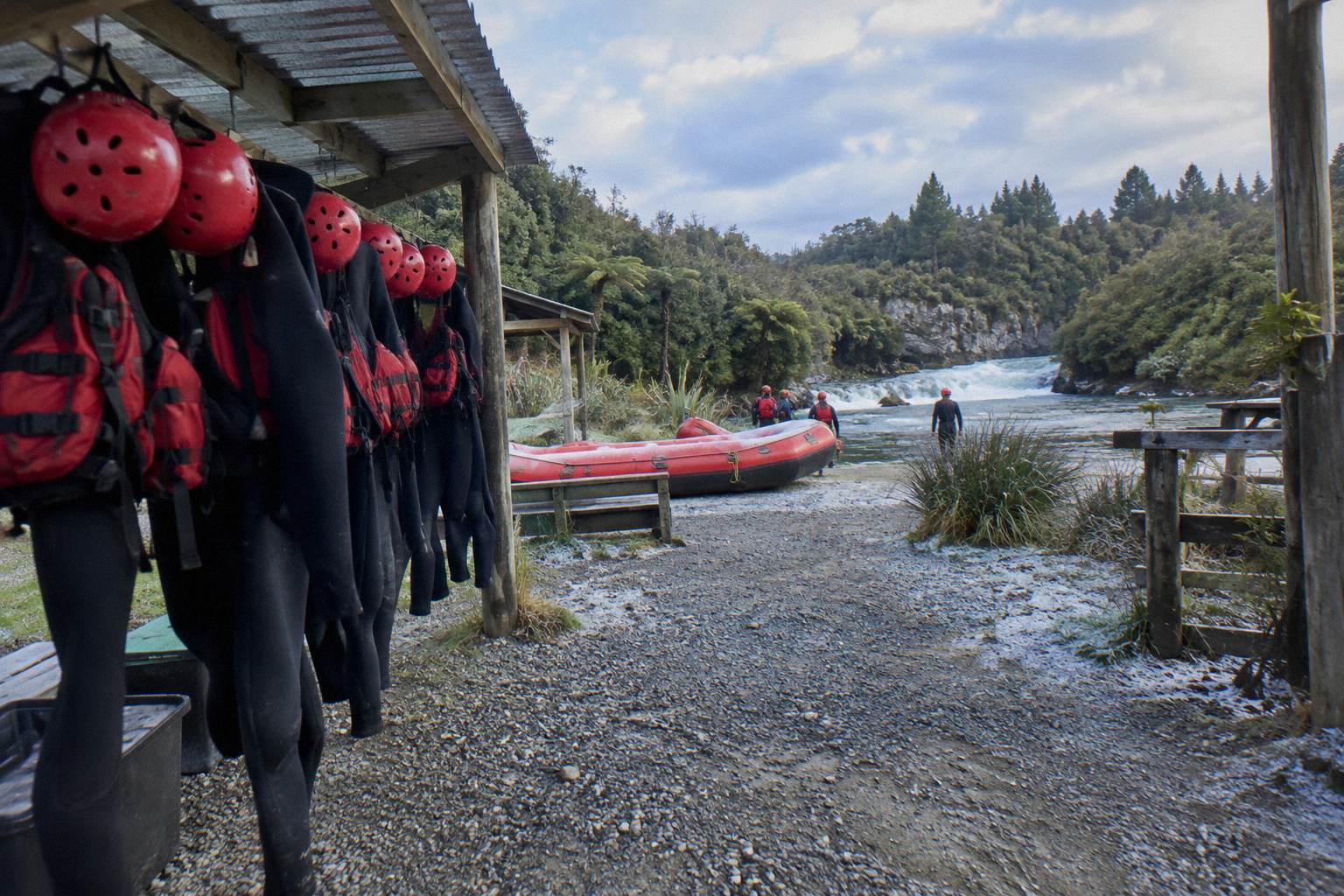
| Piece of kit | What it does for a swimmer | Who lists it |
|---|---|---|
| Life jacket | Holds the swimmer face-up and buoyant without effort | Rotorua Rafting and Kaituna Cascades pages |
| Helmet | Protects the head from contact with the raft and rocks | Rotorua Rafting and Kaituna Cascades pages |
| Wetsuit | Insulates against water temperature, about 12 °C in winter | Rotorua Rafting and Kaituna Cascades pages |
| Fleece | Adds warmth under the splash jacket in cold months | Rotorua Rafting and Kaituna Cascades pages |
| Booties | Protect feet walking on rocks at put-in and take-out | Rotorua Rafting and Kaituna Cascades pages |
| Splash jacket | Cuts wind and splash chill over the wetsuit | Rotorua Rafting and Kaituna Cascades pages |
Kaitiaki Adventures is a listed operator whose product pages carry their own kit description; the two pages above are the ones with published kit lists, so they are the ones quoted here. The fits matter more than the category names, which is why the fit checks in the next section are worth slowing down for. For what to wear underneath it all, the what to wear rafting guide covers the layering question in full, and the what to bring rafting guide lists everything else worth carrying to the base.
The winter numbers deserve a moment of attention. Water at about 12 degrees C is cold enough that a wetsuit is not a comfort item but the difference between a short swim and a long one, and the operators stack the fleece and splash jacket on top of it for exactly that reason. Summer swimmers at about 24 degrees C face a much softer version of the same physics. Either way, the kit is supplied, so the only wardrobe decisions that actually rest with the guest are swimwear and a towel.
Which Fit Checks Happen Before The Run?
The checks that matter most before launch are the ones the operators publish: age minimums, weight maximums, health conditions and the fit of the life jacket and helmet, and Kaituna Cascades states minimum age 13, maximum weight 120 kg, check-in 15 minutes early, no trips during pregnancy or with heart conditions, and a float test that may be required. Rotorua Rafting sets maximum weight at 130 kg, and its listings show a minimum age of 10 on those listings, a figure that belongs to each listing rather than an operator-wide rule. Kaitiaki Adventures sets minimum age 13 and includes free hotel pickup on all four of its listings.
| Check | Kaituna Cascades | Rotorua Rafting listings | Kaitiaki Adventures |
|---|---|---|---|
| Minimum age | 13 on its listing, ages 10 to 12 join halfway | 10 on its listings | 13 |
| Maximum weight | 120 kg | 130 kg | Ask the operator |
| Float test | May be required | Ask the operator | Ask the operator |
| Check-in | 15 minutes early | Ask the operator | Ask the operator |
| Health limits | Not for pregnancy or heart conditions | Ask the operator | Ask the operator |
A badly fitted life jacket is the specific failure mode the coroner's recommendation targets, so treat the fitting as part of the trip rather than a queue. The crew will size the jacket and helmet on the bank; the checks above are the ones you can verify yourself when booking. For the wider decision on family trips, the rafting with kids and minimum ages guide works through the age rules product by product. Guests over a weight maximum sometimes discover it only at check-in, which is an avoidable disappointment; the numbers are published, and a five-minute read before booking settles it.
The Grade 2 alternative is worth naming for nervous first-timers: the Grade 2 Rafting, 4h product from Rotorua Adventures Kayak and Raft, rated 4.9 from 7 reviews and from NZ$125 per person, runs 4 hours with 1.5 hours on the water and takes children from age 5 on its listing. See dates on the booking page if the gentler run sounds like the right first step. Other pages covering the same trip are gathered on Rafting Rotorua.
What Is The Float Test On A Kaituna Trip?
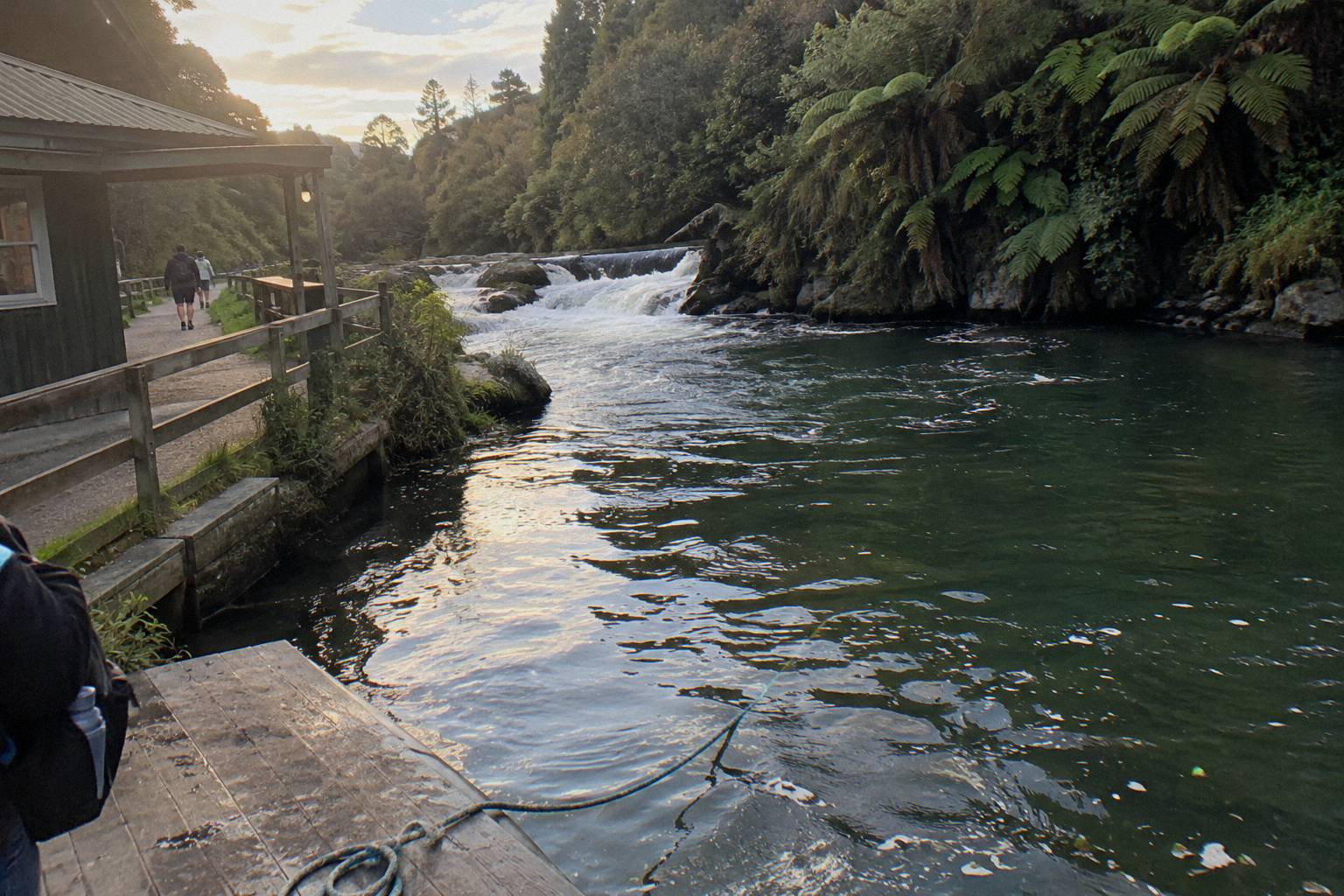
A float test is a short, supervised check in calm water that a would-be rafter can float in a life jacket without panicking, and Kaituna Cascades states it may be required before a guest joins the run, which turns the life jacket from supplied equipment into something verified on the person wearing it. The operator's page gives the requirement in that conditional form, and no source publishes how often it is applied or what happens when someone declines it. What is clear is the logic: the Kaituna's 7 metre waterfall at Tutea Falls puts every guest in fast water eventually, so the operator checks the basic skill of floating before the rapid checks it for them.
The swimming question sits right behind this one, and the do you need to swim to go rafting guide answers it in full. The short version is that the life jacket does the floating, the float test confirms you can let it, and being able to swim helps but is not the same requirement as being able to float calmly. Guests who cannot swim should raise it at booking rather than at the put-in. The test also serves a second purpose that is easy to miss: it gives the crew a look at how a person reacts in moving water while the water is still slow, which is more useful to them than any answer on a form.
Panic, not drowning, is the failure a float test is built to catch, because a life jacket holds an unconscious swimmer face-up by design and a calm one with ease. Nothing in the operators' pages describes the test's duration or format, so ask the operator when booking if the detail matters to you. The requirement is conditional, not universal, and it is the operator's clearest published statement that readiness is assessed on the person, not assumed from the ticket.
Budget-conscious readers can compare directly: the Kaituna Rafting, Free Pickup, 2.5h product from Kaitiaki Adventures, from NZ$61 per person on its booking page, is the same operator's lowest-priced rafting option and includes hotel pickup. Check the live price for your date.
What Did The Coroner Recommend?
A coroner's findings released in March 2026 recommended appropriately sized and fitted lifejackets and helmets. The reporting matters here for one reason: the single actionable recommendation was about fit, not about the river, the rapid or the activity. A life jacket that is the right size and correctly fastened is the piece of kit the entire recovery sequence depends on, and the helmet beside it carries the same logic.
The safety regime the operators operate under, the WorkSafe audits and the public register, is the standing system; the recommendation is the lesson folded into the briefing every guest now gets. Readers who want the fullest treatment of risk in the sport can read what is the fatality rate of whitewater rafting, and the river-specific question is covered in is Kaituna rafting safe.
What Trips People Up Before You Paddle
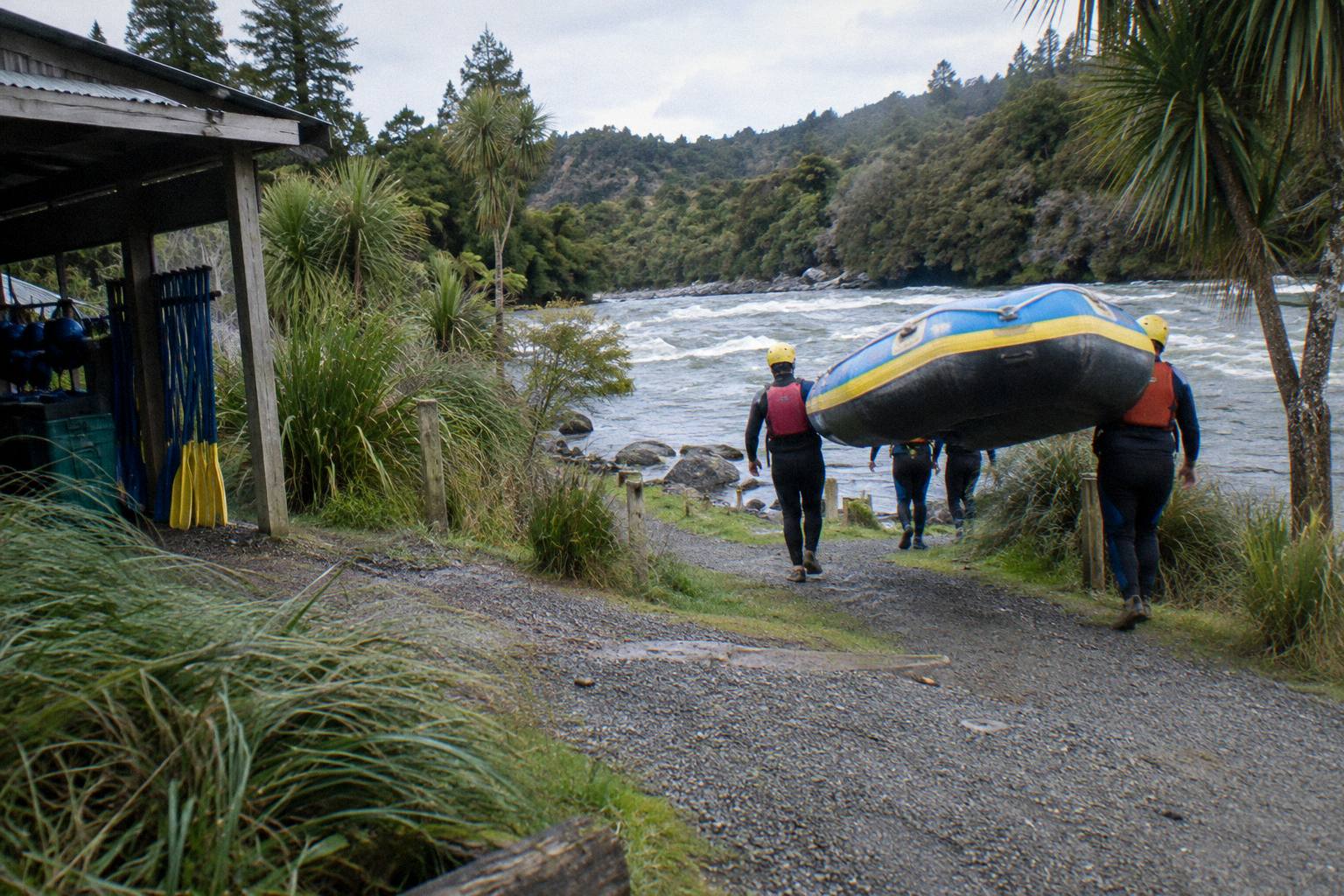
Most problems before a Kaituna trip are paperwork and wardrobe, not the river: turning up late when Kaituna Cascades asks for check-in 15 minutes early, wearing cotton instead of swimwear under the wetsuit, ignoring the age and weight rules until the bank, and booking a child onto a listing whose minimum age does not match the operator's own. The last one is the avoidable trap on this river, because the listings carry different minimum ages on different listings: 10 on the Rotorua Rafting listings, 13 at Kaituna Cascades with ages 10 to 12 joining halfway, 13 at Kaitiaki. The figure belongs to the listing you book, so read it before you pay.
The clothing mistakes have their own guide: the what not to wear rafting post lists the items that fail in a wetsuit, and Kaituna Cascades keeps its instruction to two items, swimwear and a towel. Weather worry is the other common pre-trip question, and whether rain cancels a rafting trip settles it: the gates hold the flow, and the trip runs in rain. None of these are dramatic failures, which is the point. The river's real risks are managed by kit, training and a state-run audit regime, and the remaining ones are wardrobe and calendar.
Seasonal timing is the last planning item. Rotorua Rafting runs three trips a day in winter, at 10, 12 and 2, and six or more in summer departing every 30 minutes on demand, per its open hours page, while Kaituna Cascades lists 10:30, 12:30 and 2:30 daily with extra departures in summer. The booking calendar holds every time, so treat those as the shape of the day rather than a promise. Winter swimmers should also remember the water sits near 12 degrees C, which makes the supplied fleece and splash jacket worth wearing even when the air feels mild.
For the shortest, cheapest way onto the water, the Free Sauna, 2h Kaituna Run from Rotorua Rafting, 4.9 from 490 reviews and from NZ$74 per person, compresses the experience to 2 hours. See dates and the live price on the booking page.
Fitting the swim, the recovery and the kit into one day is covered in how a Kaituna rafting trip unfolds, and the wider question of whether this is a sensible thing to do at all is answered in the is whitewater rafting safe guide. The three trips compared below are the ones most readers choose between.
Whatever you book, the fallback plan on the day is simple: jacket fastened, helmet strapped, feet downstream, and let the crew do the rest. That is the whole system, and it has been rehearsed more times than any rapid on the river. For everything that happens before the swim, the first timer rafting tips guide walks through the briefing, the paddle commands and the morning itself.
Common Questions About Falling Out Of The Raft
What Happens If You Fall Out Of A Raft?
You float on your back in the supplied life jacket with your feet pointed downstream, and the guide steers the raft to you and pulls you back in over the tube. The Kaituna is a pool-and-drop river, so a swim usually ends in the calm water below a rapid rather than in continuous current.
Will I Fall Out On The Kaituna?
No source publishes how often rafters swim on this river, so no one can promise either outcome. What is published is the preparation: full supplied kit, trained crews, and a float test that Kaituna Cascades says may be required before a guest joins the run.
Do I Need To Be Able To Swim?
The life jacket does the floating and the float test, where applied, checks that you can let it. Being able to swim helps, but the operators' own requirements centre on age, weight and health conditions rather than swimming ability. Raise any concern at booking.
What Kit Is Supplied?
The Rotorua Rafting and Kaituna Cascades pages list wetsuits, helmets, life jackets, fleece, booties and a splash jacket. Kaituna Cascades asks guests to bring swimwear and a towel. Water temperature runs about 24 degrees C in summer and about 12 °C in winter per the Rotorua Rafting FAQ.
Is There A Weight Or Age Limit?
Kaituna Cascades sets minimum age 13 with ages 10 to 12 joining halfway, and maximum weight 120 kg. Rotorua Rafting sets maximum weight 130 kg, and its listings show minimum age 10 on those listings. Kaitiaki Adventures sets minimum age 13. Every figure belongs to its own listing.
What Did The Coroner Recommend?
A coroner's findings released in March 2026, covering a death in August 2020 after a 7 metre drop at Tutea Falls, recommended appropriately sized and fitted lifejackets and helmets. Fit is the one part of the safety system a guest can personally verify, and it is why the fitting on the bank is part of the trip.
Keep reading: what to wear under the wetsuit, what to bring on the day, and the full Kaituna River rafting tours range.