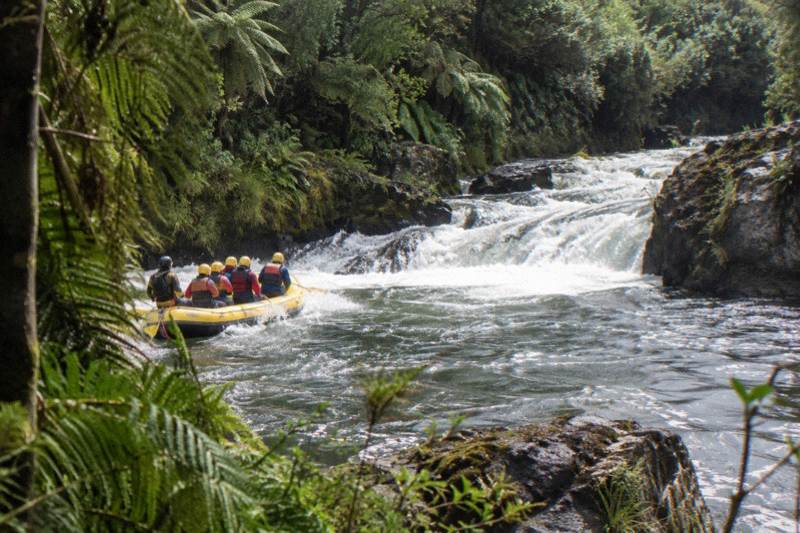
Is Kaituna Rafting Safe?
A straight look at Kaituna rafting safety: the river's grade, the Tutea Falls drop, how flow is managed year round, the WorkSafe regime operators must meet, and what a coroner found.
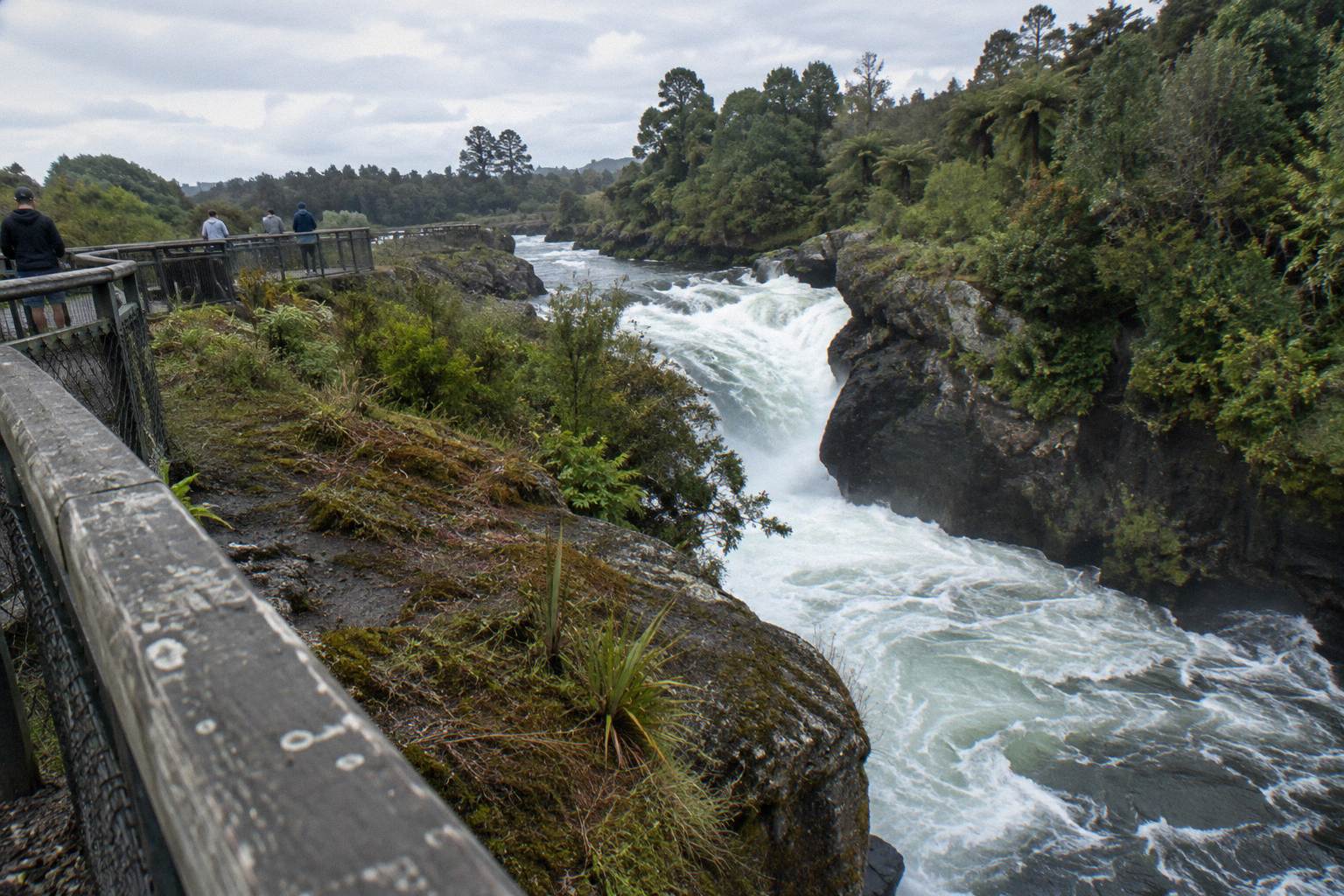
Every Kaituna trip on this site sits inside the Kaituna River rafting tours category, where each product's age minimum, duration and from-price is listed per booking page. This page takes the safety question on its own terms: the river's grade, the waterfall, the flow, the regulatory regime and one coronial finding.
| Fact | Detail |
|---|---|
| River grade | Sold as Grade 5 / Class V; Kaituna Cascades says the rapids are Grade 4 and 5 building to the falls |
| The waterfall | Tutea Falls, 7 metres (23 ft) by the operators' figure |
| Time on the water | 50 to 60 minutes, inside an experience of about 2 hours, per Kaituna Cascades |
| Trip composition | 14 rapids and drops, 3 waterfalls, per Kaituna Cascades |
| Flow control | Council-controlled gates at the Lake Rotoiti outlet keep the river rafting 365 days a year, per Kaituna Cascades |
| Safety regime | Adventure Activity Operators must pass a WorkSafe-recognised safety audit and register with WorkSafe |
| Gear supplied | Wetsuits, helmets, life jackets, fleece, booties and splash jackets, per the operators |
| Water temperature | About 24 °C in summer, about 12 °C in winter, per the Rotorua Rafting FAQ |
Yes, in the way guided commercial whitewater is safe: the Kaituna is a genuinely serious river, run daily by audited operators who supply the gear, give a safety briefing and paddle the trip with you. It is not a lazy float. The run is sold as Grade 5, the drop at Tutea Falls is 7 metres by the operators' figure, and participants need to listen, paddle on command and swim in a defensive position if they end up in the water. The question is better framed as whether the trip matches you: the listings carry a minimum age of 10 or 13 depending on the product, and each operator publishes terms you should read before booking.
That framing matters because "safe" collapses several separate things into one word. The river itself, its grade and its waterfall are fixed physical facts. The flow on any given day is managed, which is unusual among whitewater rivers and works in a rafter's favour. The operator you choose sits inside a regulatory regime that requires an audit and public registration. And your own preparation, fitness and candour about swimming ability shape the outcome as much as anything. Each of those gets its own section below.
If you are weighing whether a beginner belongs on this river at all, the picture is more nuanced than a single grade number suggests, and the rafting-for-beginners angle is covered in a beginner's guide to whitewater rafting on this river. The short version: operators run this trip with first-timers every day, the guides control the line through the falls, and the minimum ages on the listings reflect that.
Three products dominate the bookings on this site, and all three sit inside the same safety regime. Compare them side by side before deciding which fits.
What Makes The Kaituna A Serious River?
The Kaituna is sold as a Grade 5 run, and on the International Scale of River Difficulty that is the second-highest class there is, but the character of this river is unusual: the whole commercial run packs 14 rapids and drops, including 3 waterfalls, into 50 to 60 minutes on the water, per Kaituna Cascades, so difficulty arrives in short, spaced bursts rather than one long grind. The Kaituna Cascades description of the run says the rapids are Grade 4 and 5 building to the falls, which is a more precise picture than the headline grade. The scale itself, from Class 1 to Class 6, is explained in the Wikipedia entry on whitewater, and a plain-language walkthrough of how grades map onto this river is in the rapid grades explained guide.
The centrepiece is Tutea Falls. The drop is 7 metres (23 ft) by the operators' figure, stated by Kaituna Cascades, Kaitiaki, Rotorua Rafting and the German Wikipedia entry alike. Operators describe it as the highest commercially rafted waterfall in the world. That is an operators' claim rather than an independently adjudicated record, but Kaituna Cascades publishes a comparison list underneath it: three lower commercially rafted falls, Agers Falls at 5.5 m, Sweets Falls at 4.3 m and Husum Falls at 3.7 m. Whatever the ranking, a 7 metre vertical drop is the single largest thing that happens to you on the run, and it is the reason the briefing before the trip spends its longest stretch on body position, holding on and what to do at the bottom.
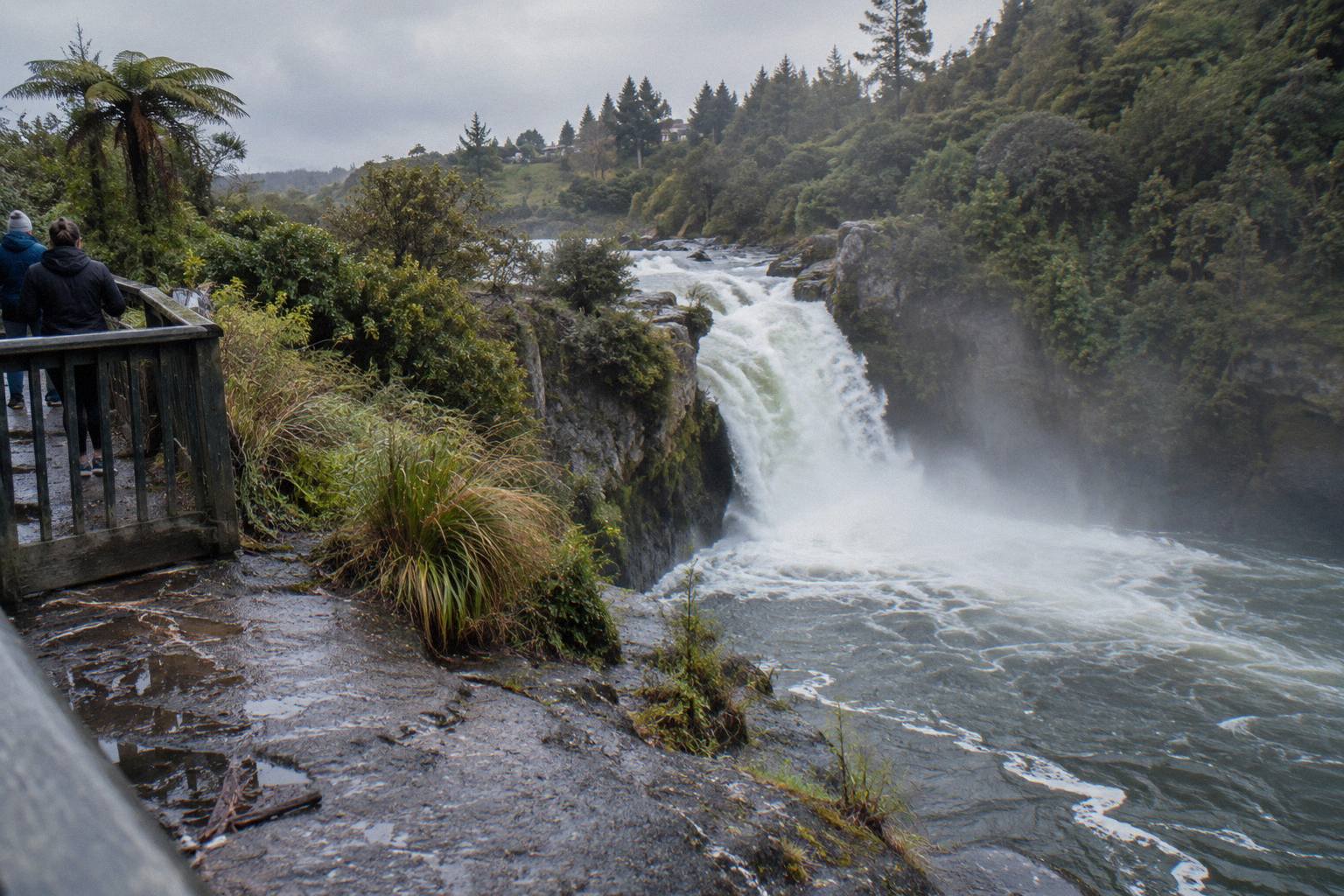
The place itself is small and contained. The put-in and the bases sit at Okere Falls, about 20 to 23 minutes from central Rotorua depending on the operator, and the river runs through a short bush-clad gorge, which is the Okere Falls setting described in the local guide. A containment point worth knowing: the gorge is narrow enough that the trip is over quickly, and you are never far from the base. That geography, plus the managed flow, is a large part of why a river this difficult is run commercially every day of the year. The falls and the surrounding area have their own history, summarised in the Wikipedia entry for Okere Falls.
One note on the grade: do not let "Grade 5" alone decide the question, and do not let it comfort you either. The grade describes the hardest rapid, not the average minute of the trip. Kaituna Cascades' own description, Grade 4 and 5 building to the falls, is the version to plan around, and it matches what a first-timer actually experiences: a series of short drops with recovery pools between them, then the falls, then a short paddle out.
How The Flow Is Managed Year Round
The Kaituna runs 365 days a year because council-controlled gates at the Lake Rotoiti outlet hold the flow, per Kaituna Cascades, which removes the single biggest variable in commercial whitewater: a river that is either bone dry or dangerously flooded on the day you booked. Most whitewater rivers depend on rainfall or scheduled dam releases. This one is throttled by gates at the lake outlet, described in the Wikipedia entry for Lake Rotoiti, and the result is a river with a managed, predictable flow for commercial trips in every season.
Managed does not mean constant. The Kaituna Cascades river-conditions page reports high spring flows, in the 500s on the control gates, with the water at 19 degrees C in that update, and says the big waterfall is more powerful but slightly less tall and vertical at those levels. The page is the live source for what the river is doing, and it is worth a look if your trip falls in spring: the Kaituna Cascades river conditions page publishes current flow readings and seasonal updates. Rain still matters, and the question of whether rain cancels a trip has its own answer, covered in does rain cancel a rafting trip.
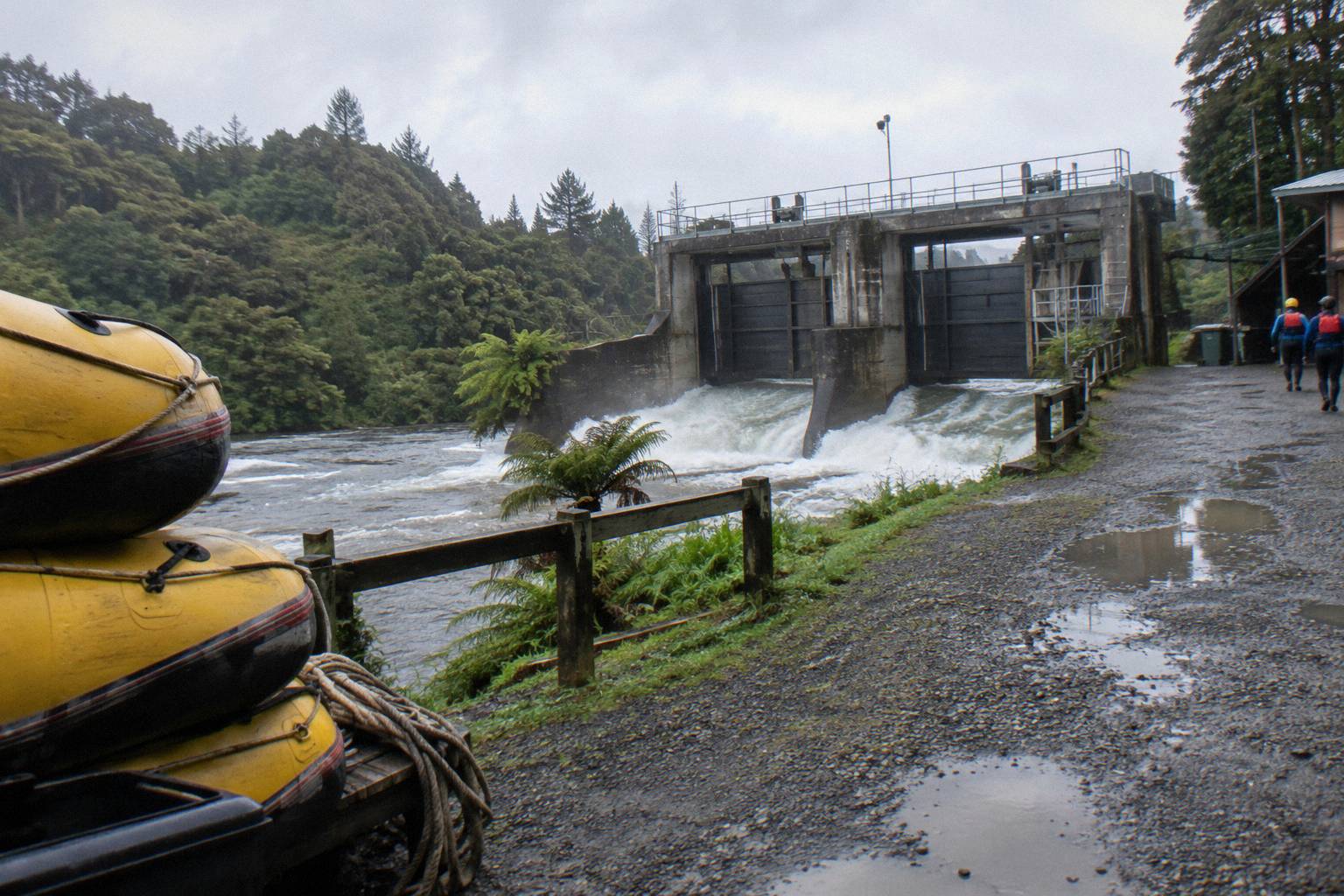
For a safety question, the flow regime cuts both ways, and it is fair to state both. On one side, operators are never guessing what the river will do tomorrow; the gates set the band, and the operators read it daily. On the other, spring flows sit at the top of that band, and a first-timer who wants the calmest possible version of the run can simply choose a different season, since the river runs every day. The month-by-month differences, including water temperature and trip frequency, are laid out in the Kaituna rafting season guide.
The other seasonal facts come from the operators' own season pages. Rotorua Rafting runs three trips a day in winter, 1 May to 31 August, at 10, 12 and 2, and six or more trips a day in summer, 1 September to 30 April, every 30 minutes on demand. Kaituna Cascades runs 10:30, 12:30 and 2:30 daily, plus 8:30 and 4:30 in summer. The booking calendar holds every departure, and times belong to the operator's season, not to a promise.
| Season | What The River Is Doing | What The Operators Report |
|---|---|---|
| Spring | High flows, in the 500s on the control gates, water at 19 degrees C | Falls more powerful but slightly less tall and vertical, per the Kaituna Cascades river-conditions page |
| Summer, 1 September to 30 April | Managed daily flow under the lake outlet gates | Rotorua Rafting runs 6 or more trips a day, every 30 minutes on demand; Kaituna Cascades adds 8:30 and 4:30 departures |
| Winter, 1 May to 31 August | Managed daily flow, water about 12 degrees C | Rotorua Rafting runs 3 trips a day at 10, 12 and 2; wetsuits and booties supplied by the operators |
If reading all of this has settled the safety question for you and the only remaining question is which day, the related product below runs every day of the year the gates are open.
What The Safety Regime Requires Of Operators
Every commercial adventure activity operator in New Zealand must pass a safety audit by a WorkSafe-recognised auditor and register with WorkSafe under the Adventure Activities Regulations 2016, and anyone can look an operator up on a public register before booking, which is the single most concrete safety check a visitor can do in five minutes. The regime is summarised on the WorkSafe adventure activities page, and the underlying law is the Adventure Activities Regulations 2016. The register itself lives at the WorkSafe adventure activities register.
What the regime means in practice, for a rafter, is that an operator cannot legally run paid trips on a river like the Kaituna without an external audit of its safety systems. The audit covers the things you would hope it covers: documented procedures, guide competence, equipment checks and emergency planning. The public register is the visible end of that, and it is searchable. Checking that the name on your booking page matches a name on the register is a reasonable pre-booking habit anywhere in New Zealand, not just here.
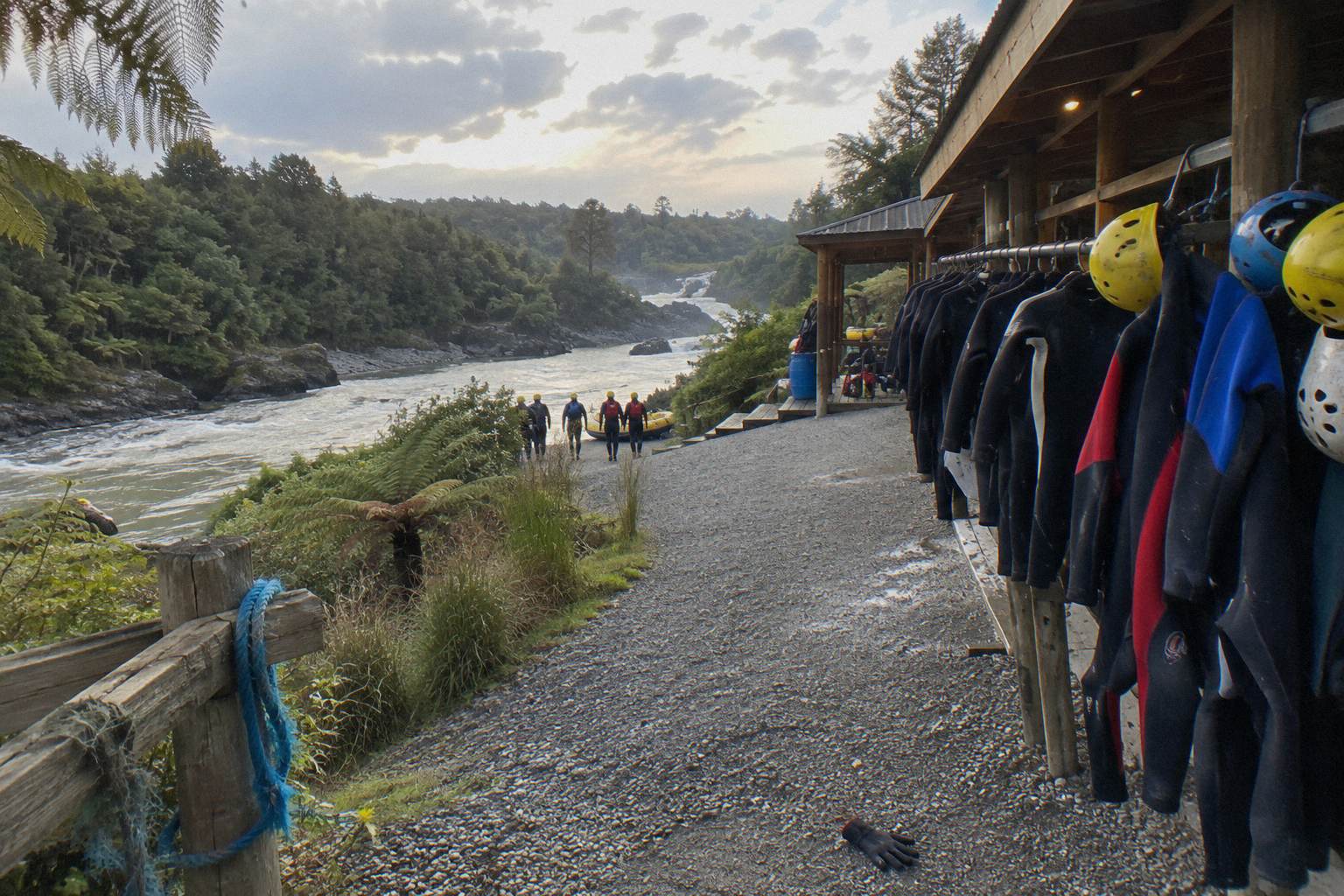
The gear side is operator-supplied and consistent across the operators. Operators supply wetsuits, helmets, life jackets, fleece, booties and a splash jacket, which covers everything except what you wear underneath, and the packing question has its own pages: what to wear whitewater rafting and what to bring on a rafting trip. Water temperatures run about 24 °C in summer and about 12 °C in winter, per the Rotorua Rafting FAQ, which is why the wetsuit is not optional.
The helmets and life jackets are the two pieces that matter most at the falls, and the coronial recommendation below centres on them being correctly sized and fitted, not merely present. A life jacket that rides up and a helmet that shifts are the failure modes the briefing is designed to prevent, which is why operators check each participant's fit personally before the trip leaves the base.
What The Coroner Recommended
A coroner's findings released in March 2026 recommended appropriately sized and fitted lifejackets and helmets. That single recommendation is the part worth carrying onto a page like this. Readers who want the fuller picture, including the context and numbers behind it, can turn to the fatality rate question answered in full, where the detail sits alongside the wider safety record of commercial rafting. The source reporting is the SunLive report on the coroner's findings, which sets out the findings directly from the coroner's release.
What the recommendation changed is simple and checkable: the gear matters, and the fit of the gear matters.
The practical reading for a reader is short. Wear the helmet as fitted, keep the life jacket straps as the operator sets them, and if either feels loose after the briefing, say so before the raft leaves the bank. Everything else in the safety picture, the audit regime, the managed flow, the guide in the raft with you, is already working in your favour before you do anything at all.
Which Operator Should You Book With For Peace Of Mind?
All three leading products on this site are 5.0-rated with review pools in the hundreds or thousands, and the differences that matter for safety are practical ones: departure times, pickup, minimum ages per listing and the base you start from, so the choice is less about safety margins and more about which product's terms match your group. The listings' own figures: "White Water Rafting - Kaituna Cascades, The Originals" holds 5.0 from 1,385 reviews, from NZ$135 per person; "Rotorua Rafting: Kaituna River White Water Rafting & Free Sauna" holds 5.0 from 2,191 reviews, from NZ$135 per person; "Rotorua White Water Rafting | Kaitiaki Adventures + Transport" holds 5.0 from 823 reviews, from NZ$139 per person. All amounts are New Zealand dollars, and the booking page shows the price for your date.
| Product | Rating And Reviews | From Price | Duration | Minimum Age |
|---|---|---|---|---|
| Kaituna Cascades, The Originals | 5.0 from 1,385 reviews | NZ$135 per person | 2h | 13 |
| Free Sauna, 2h30 Kaituna Trip | 5.0 from 2,191 reviews | NZ$135 per person | 2h30 | 10 |
| Rafting With Hotel Transfers | 5.0 from 823 reviews | NZ$139 per person | 2h30 | 13 |
The Kaituna Cascades trip is the one linked from this page as the featured product, and you can read its details on the Kaituna Cascades Tutea Falls trip page. It is a 2 hour product with a minimum age of 13 on its listing, and its base at 18 Okere Falls Road has free parking and direct river access, which shortens the gap between briefing and water. The twin products on this site are separate bookable products with their own terms, so match the listing to the trip you actually want rather than assuming they share a minimum age.
The Rotorua Rafting sauna product is the listings's most-reviewed Kaituna trip at 5.0 from 2,191 reviews, a 2h30 experience from NZ$135 per person with a minimum age of 10 on its listing, and the free sauna after the run belongs to the Rotorua Rafting and Rotorua Ziplines sauna products. For the sauna details, see the guide to the free sauna after rafting.
The Kaitiaki transfer product brings a different kind of reassurance: free hotel pickup is included on that listing, from NZ$139 per person, 2h30, minimum age 13, so nobody in your group is driving a unfamiliar road to a deadline after a long flight. See dates and the live price on the booking page before locking in a day.
What Trips People Up Before You Book
Most of the avoidable friction on a Kaituna trip happens at booking rather than on the water: picking a product whose minimum age or weight terms do not match your group, arriving without swimwear and a towel, or assuming the price on one twin product applies to another, and every one of those is fixed by reading the specific listing before paying. The operators' published terms are short and worth five minutes. Kaituna Cascades sets a minimum age of 13 with 10 to 12 year olds joining halfway, a maximum weight of 120 kg, check-in 15 minutes early, and excludes pregnancy and heart conditions, with a float test possible on the day. Rotorua Rafting sets a maximum weight of 130 kg on its FAQ page. Ages and weights are per listing, so check the product you are actually booking.
| Operator Term | Kaituna Cascades | Rotorua Rafting |
|---|---|---|
| Minimum age | 13 on the listing, 10 to 12 join halfway | 10 on the sauna listings, the operator site says 13 |
| Maximum weight | 120 kg | 130 kg |
| Check-in | 15 minutes early | Ask the operator |
| Exclusions stated | Not for pregnancy or heart conditions | Ask the operator |
| Bring | Swimwear and towel | Swimwear and towel |
The twin-product trap deserves a plain warning. Several Kaituna trips on this site appear as two separate bookable products, one with figures of its own, and their from-prices, durations and minimum ages belong to their own cards. Never read one twin's NZ$61 or NZ$74 starting price onto another product's page; the cheaper twin is a different product, not a discount on the dearer one. The honest comparison is product against product, as the operators comparison lays out.
The gear and packing mistakes are the smallest but most common. Bring swimwear and a towel, per Kaituna Cascades; everything else is supplied. Do not wear crocs or loose footwear, a question with its own answer in are crocs Ok for rafting. If swimming ability worries you, the answer is in do you need to swim to go rafting: operators require you to be able to swim, and the Wairoa listing states it outright.
And the question people rarely ask but should: what happens in the water. Falling out is a normal, planned-for event on a whitewater trip, the defensive swimming position is taught in the briefing, and the sequence is walked through in what happens if you fall out of the raft. Knowing it before you arrive is the cheapest safety upgrade available on this river, and it costs nothing but a few minutes of reading on Rafting Rotorua before your trip day.
Common Questions About Kaituna Safety
Is Kaituna Rafting Safe?
Guided commercial Kaituna trips run 365 days a year under a managed flow, with audited, WorkSafe-registered operators supplying helmets and life jackets, and a coroner's findings in March 2026 recommended appropriately fitted lifejackets and helmets. It remains a Grade 5 river with a 7 metre waterfall, so the briefing, the minimum ages per listing and the operators' terms all matter.
How Big Is The Waterfall On The Kaituna?
Tutea Falls is 7 metres (23 ft) by the operators' figure, stated by Kaituna Cascades, Kaitiaki and Rotorua Rafting. Operators describe it as the highest commercially rafted waterfall in the world, and Kaituna Cascades lists three lower commercially rafted falls below it: Agers Falls at 5.5 m, Sweets Falls at 4.3 m and Husum Falls at 3.7 m.
Can The Kaituna Run Every Day Of The Year?
Yes, per Kaituna Cascades, because council-controlled gates at the Lake Rotoiti outlet hold the flow, the river runs 365 days a year. Spring updates on the operator's river-conditions page report higher flows, in the 500s on the control gates, with the falls more powerful but slightly less tall and vertical.
How Do You Check A Rafting Operator's Safety Record?
Look the operator up on the WorkSafe adventure activities public register. Under the Adventure Activities Regulations 2016, operators must pass a safety audit by a WorkSafe-recognised auditor and register with WorkSafe before running paid trips.
What Gear Is Supplied On A Kaituna Trip?
Operators supply wetsuits, helmets, life jackets, fleece, booties and a splash jacket. You bring swimwear and a towel. Water temperatures run about 24 °C in summer and about 12 °C in winter, per the Rotorua Rafting FAQ.
What Is The Minimum Age For Kaituna Rafting?
It depends on the listing. The Kaituna Cascades Originals product and the Kaitiaki products list a minimum age of 13; the two Rotorua Rafting Kaituna products list 10 on their listings. Ages are per product, so check the specific booking page for your group.