What To Bring White Water Rafting: Day-Of Checklist
Bring swimwear, a towel and nothing that needs to stay dry. Everything protective, from wetsuit to booties, comes from the operator. The checklist below walks the day in order: pack at home, check in on time, raft, dry off.
Short answer
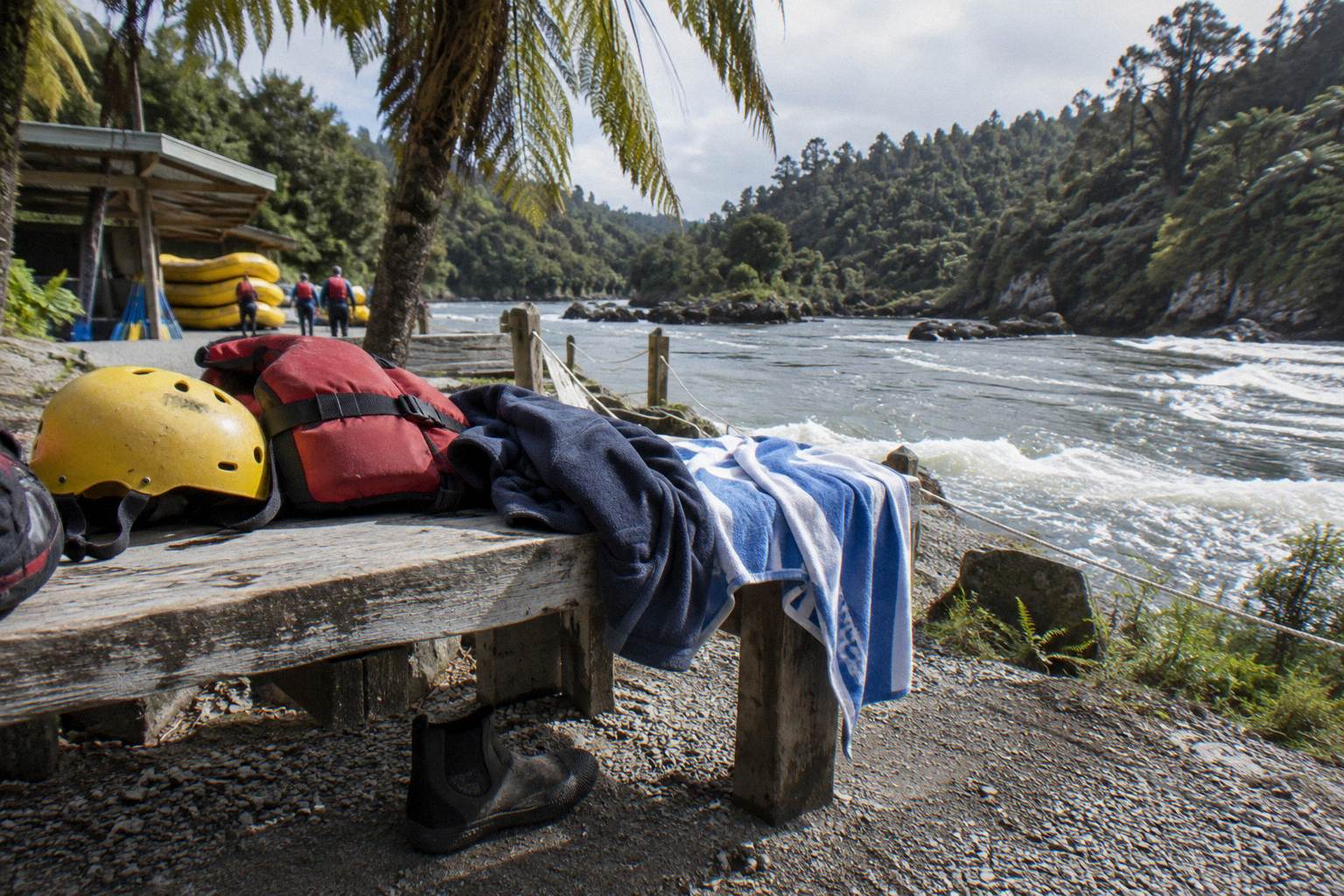
Pack swimwear and a towel, wear something quick-drying for the drive, and arrive at check-in 15 minutes early where your operator asks for it. Wetsuits, helmets, life jackets, fleece, booties and splash jackets are supplied on the Kaituna products that state their kit. Leave valuables locked away; operators allow GoPro mounts on Rotorua Rafting trips. All prices on this page are New Zealand dollars.
Trips on the Kaituna leave from bases clustered around Okere Falls, a 20 to 25 minute drive from central Rotorua, and almost everything technical is handed to you at the base. The Kaituna River rafting guide covers how the products that run this river compare, and it is the natural next read once the packing is settled. What follows is the day in sequence: what to pack before you leave, what happens at check-in, what the operator hands you, and what to sort once you are off the water.
| Fact | Detail |
|---|---|
| Pack list from operators | Swimwear and a towel (Kaituna Cascades) |
| Kit supplied | Wetsuits, helmets, life jackets, fleece, booties, splash jacket (Rotorua Rafting and Kaituna Cascades pages) |
| Check-in rule | 15 minutes early, Kaituna Cascades |
| Drive from Rotorua to Okere Falls | 20 to 25 minutes (23 minutes per Kaituna Cascades) |
| Weight limits | 120 kg on Kaituna Cascades, 130 kg on Rotorua Rafting |
| Minimum ages | Per listing: 13 on Kaituna Cascades and Kaitiaki listings, 10 on the Rotorua Rafting listings that state it |
| Cameras | GoPro mounts allowed on Rotorua Rafting trips |
| Currency | All amounts in New Zealand dollars |
What To Bring White Water Rafting: The Short Answer
Bring swimwear, a towel and a dry change of clothes for afterwards, and wear quick-drying clothing for the drive out. Everything else, meaning the wetsuit, helmet, life jacket, fleece, booties and splash jacket, is supplied on the products whose pages list that kit. Arrive 15 minutes early where your operator asks for it, park at the base, and leave anything that cannot get wet or lost locked in the car. The packing burden on a Kaituna trip is deliberately small. You are dressing to get changed at a base with direct river access or a short shuttle to the put-in, then getting wet within the hour. Anything beyond the swimwear-and-towel core is comfort, not requirement.
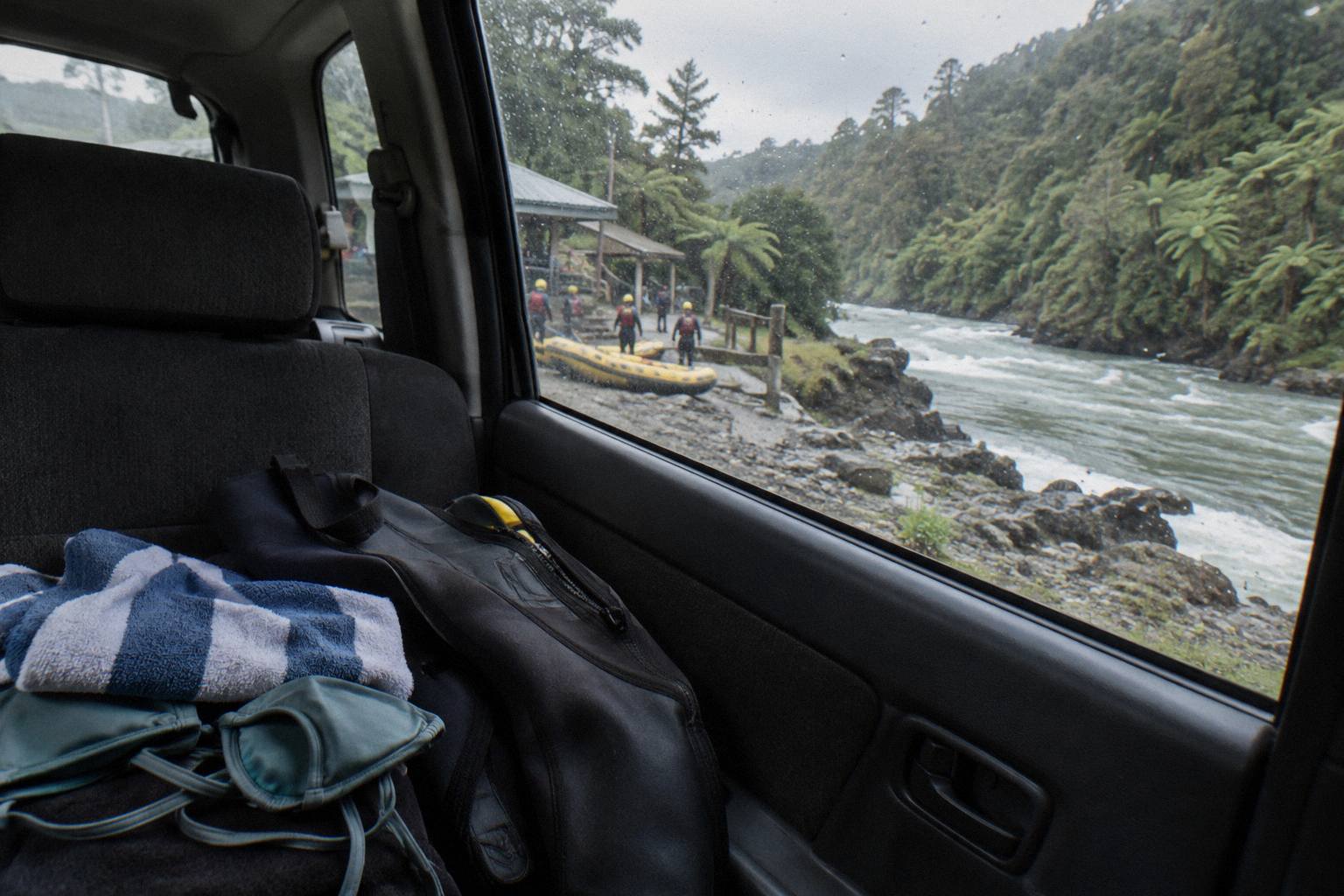
The reason the list is short is that the operators carry the expensive gear. Kaituna water runs about 24 degrees C in summer and about 12 °C in winter per the Rotorua Rafting FAQ, so thermal protection is not optional, and it is not something you are asked to own. The wetsuit and fleece do that work. Your job is to have something thin and close-fitting underneath, a towel at the end, and a way home that does not involve sitting in a wet seat.
Clothing detail, layering choices and what to actually wear on the water have their own page. For the full breakdown of fabrics, fit and footwear, read what to wear white water rafting; the rest of this page sticks to the day-of sequence, timings and the small rules that catch people out.
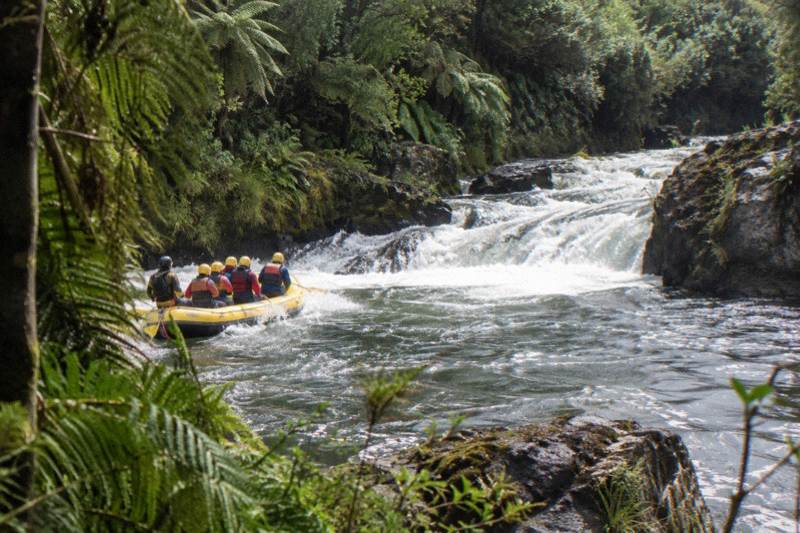
The river itself deserves a moment of context, because it explains the kit. The Wikipedia entry for the Kaituna River traces how the river drains Lake Rotoiti toward the Bay of Plenty, dropping through the Okere Falls stretch where the commercial trips run. It is that concentrated drop, 14 rapids and drops with 3 waterfalls on the standard run, that makes the helmet non-negotiable and the wetsuit welcome, and it is why the run is 50 to 60 minutes on the water inside a roughly 2 hour experience, per Kaituna Cascades.
| Moment | You Bring | Operator Provides |
|---|---|---|
| Before leaving | Swimwear on or packed, towel, dry clothes, secure footwear for the base | Nothing yet |
| At check-in | Booking reference, 15 minutes early on Kaituna Cascades trips | Wetsuit, fleece, booties |
| On the water | Nothing loose, GoPro on a mount only on Rotorua Rafting trips | Helmet, life jacket, splash jacket, paddle, guide |
| After the run | Towel, dry clothes, something warm to drink if you want it | Changing facilities at the base |
Before You Leave: The Morning-Of Routine
Get changed into swimwear before you leave if you can, pack the towel where you will find it, and plan the drive so you arrive with the check-in buffer your operator asks for, which is 15 minutes on Kaituna Cascades trips. Fuel and food matter less than timing: the Okere Falls bases sit 20 to 25 minutes from central Rotorua, and a late arrival risks the slot rather than the trip. Eat something normal beforehand. Nothing about the morning requires special preparation beyond not arriving hungry, thirsty or rushed.
The drive itself is simple, and the directions have their own page: getting to the Kaituna for rafting covers both bases, the parking situation and the timing maths from Rotorua or further afield. Kaituna Cascades bases itself at 18 Okere Falls Road with free parking and direct river access, so there is no shuttle guessing on that product. Rotorua Rafting uses 761 State Highway 33, about 20 minutes from central Rotorua. Kaitiaki Adventures works from 1135 Te Ngae Road, Tikitere, and its listings all include hotel pickup instead, which removes the drive question entirely on those listings.
Two packing decisions matter more than people expect. First, jewelry, watches and anything with sentimental value stay behind or stay locked in the car; a river run gives loose items every opportunity to leave. Second, glasses and sunglasses need a strap or need to stay ashore, and the operator's kit does not include one as standard. Neither is a rule anyone will police at check-in, but both are the kind of small loss that colors a good day.
Food is worth one line: eat a normal meal an hour or two before, not a feast in the car park. The trips are short, 50 to 60 minutes on the water per Kaituna Cascades, but they are physical, and a heavy stomach plus a Grade 5 drop is a combination the body sometimes objects to. Water in the car for afterwards is a better use of the cup holder than anything else.
Choosing between those three products changes the morning slightly. The hotel-transfer listing removes the drive and parking question altogether, since pickup is included on that product. The two Okere Falls bases both solve parking on site. Whichever you pick, the day-of packing list is identical, which is the point of keeping it this short.
Arriving And Checking In On Time
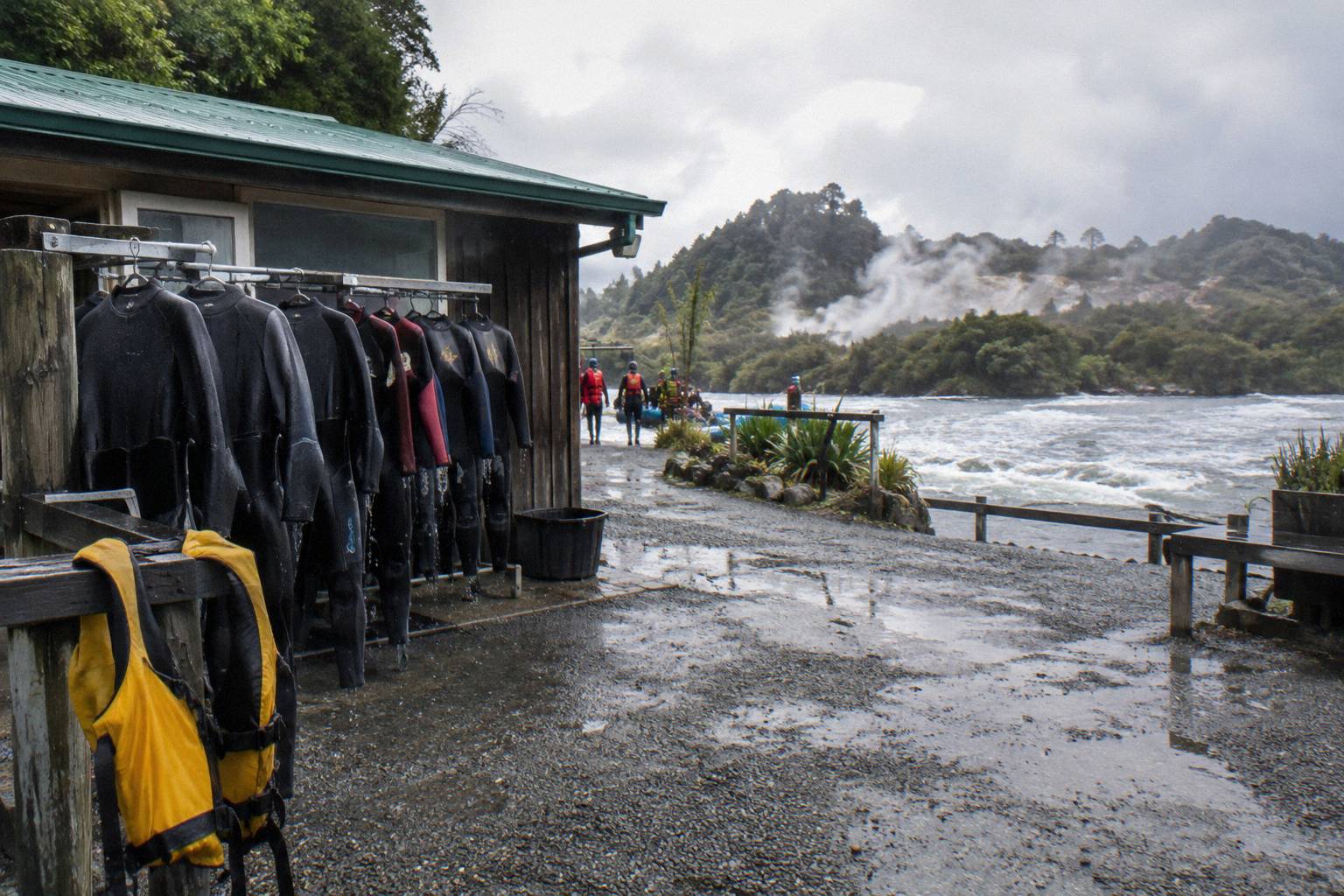
Arrive 15 minutes before your trip time on Kaituna Cascades products, which states that buffer as a condition, and treat the same buffer as good practice everywhere else on this river. Check-in is where you sign on, get sized for a wetsuit and booties, meet the guide and hear the safety brief. The whole experience runs about 2 hours door to door on the standard Kaituna products, with 50 to 60 minutes of that on the water.
Departure clocks differ by operator and season. Rotorua Rafting runs three trips a day in winter, 1 May to 31 August, at 10, 12 and 2, and moves to six or more daily trips from 1 September to 30 April, leaving every 30 minutes on demand. Kaituna Cascades runs 10:30, 12:30 and 2:30 daily, plus 8:30 and 4:30 in summer. Those are the operator's published times; the booking calendar holds every confirmed slot, so check your own trip time there rather than trusting a pattern.
Sizing is the quiet bottleneck at check-in. Wetsuits are snug by design and bootie sizes run out of easy order when a full trip checks in together, which is exactly why the 15 minute buffer exists. Turn up on time and the fitting is relaxed; turn up at the departure minute and you are the person being hurried through a wetsuit. If your weight or build sits near a limit, 120 kg on Kaituna Cascades or 130 kg on Rotorua Rafting, mention it at booking rather than at the base.
The conditions you are checking in against are unusually stable for a whitewater river. Council-controlled gates at the Lake Rotoiti outlet hold the flow, which is why the Kaituna runs 365 days a year, a point the Wikipedia page for Lake Rotoiti helps explain from the water-supply side. Flow still moves with the seasons, and the operators publish what the river is doing, but a booked Kaituna trip is not a gamble against rainfall in the way many rafting bookings are.
The Originals trip from Kaituna Cascades is the full run: 14 rapids and drops, 3 waterfalls, Tutea Falls at 7 metres by the operators' figure as the finale, from NZ$135 per person on a 2 hour product with a 5.0 rating from 1,385 reviews. If that is the day you are packing for, check the Kaituna Cascades Originals trip page for dates, and remember the 15 minute check-in rule belongs to this operator's products.
What The Operator Provides Versus What You Carry
The Rotorua Rafting and Kaituna Cascades pages both list wetsuits, helmets, life jackets, fleece, booties and a splash jacket as supplied, so your personal kit need only cover what goes under, over and after the wetsuit. Kaituna Cascades names the bring list plainly: swimwear and a towel. Do not buy technical clothing for one trip; the operator's thermal layers are the ones sized and maintained for this river. Kaitiaki Adventures products are booked on their own stated terms, and their pages carry what they include.
| Item | Supplied By The Operator | Notes |
|---|---|---|
| Wetsuit | Rotorua Rafting and Kaituna Cascades pages | Fitted at check-in |
| Helmet | Rotorua Rafting and Kaituna Cascades pages | Sized at the base |
| Life jacket | Rotorua Rafting and Kaituna Cascades pages | Fitted; a float test may be required on Kaituna Cascades trips |
| Fleece layer | Rotorua Rafting and Kaituna Cascades pages | Worn under or over the wetsuit as directed |
| Booties | Rotorua Rafting and Kaituna Cascades pages | Bring nothing for your feet |
| Splash jacket | Rotorua Rafting and Kaituna Cascades pages | Outer shell on the water |
| Swimwear | You | Kaituna Cascades bring list |
| Towel | You | Kaituna Cascades bring list |
| Dry clothes for after | You | Not on any operator list; you will want them |
The logic of the split is simple. Anything that keeps you alive or warm in moving water is operator territory, because it must fit, be maintained and be replaced on a cycle no visitor can match. Anything that touches your skin before and after is yours. That is why swimwear and a towel keep appearing as the entire stated bring list: they are the only items in the sequence that nobody else can hand you.
There is a discipline point hiding in the kit table. The safety equipment on these trips is not decoration; it sits inside a regulated regime. Commercial adventure operators in New Zealand must pass a safety audit by a WorkSafe-recognised auditor and appear on the WorkSafe adventure activities public register, under the Adventure Activities Regulations 2016. When a guide fits your life jacket and checks the strap, that is the visible end of a compliance chain, so let them fit it properly rather than negotiating the fit.
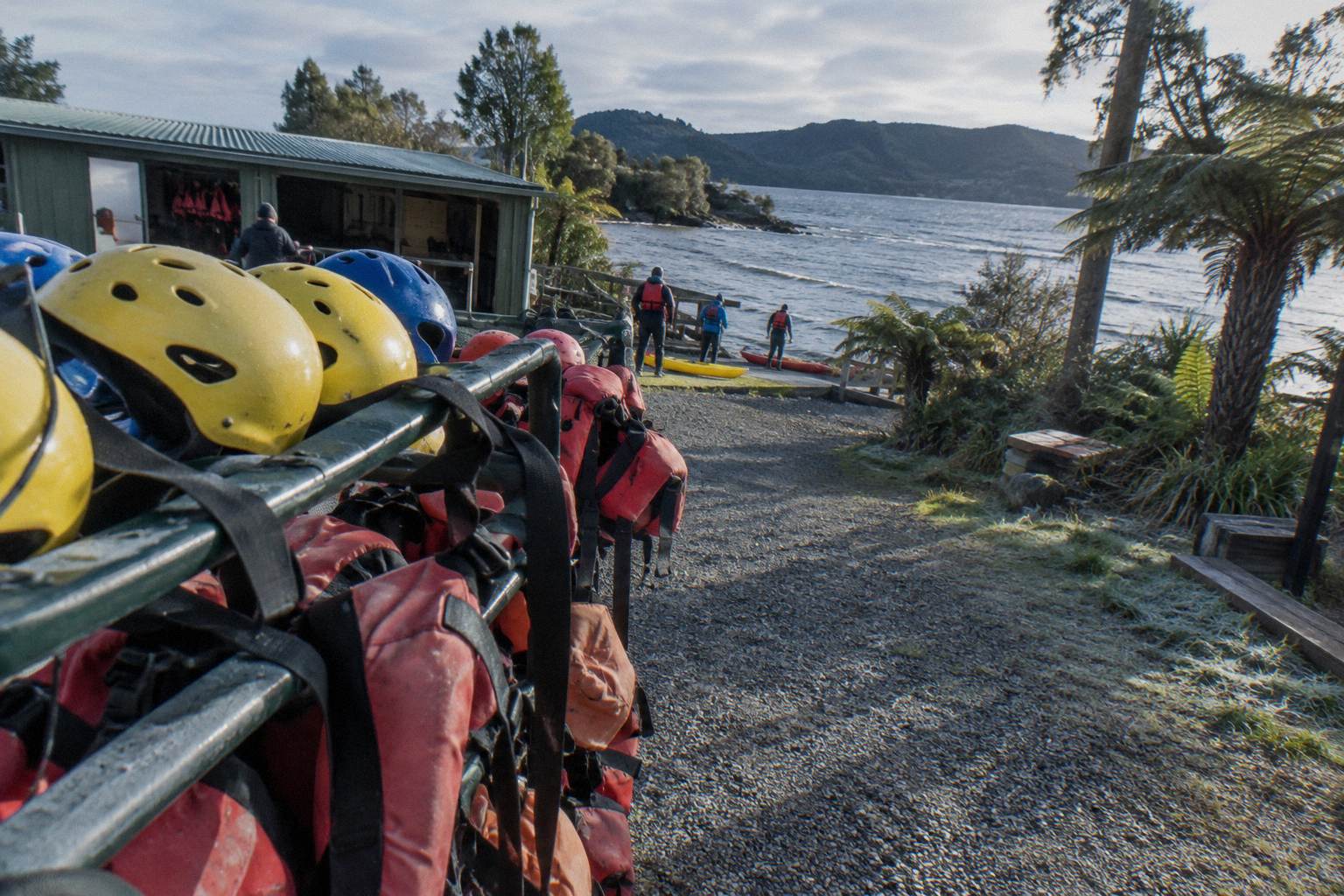
If your budget instinct is to shave the trip cost instead of the kit, the Kaitiaki Adventures Kaituna River Rafting Experience is the low figure on the river, from NZ$61 per person on a 2.5 hour listing that includes hotel pickup.
Cameras, Phones And The GoPro Rules
Rotorua Rafting states that GoPro mounts are allowed on its trips, which is the only camera rule printed among these operators' pages; for anything else, ask the operator at check-in rather than assuming. Phones and loose cameras are a different question from mounted action cameras, because a mount keeps the device attached to you or the raft while a hand-held anything becomes a projectile and a riverbed donation. The safe default is a mount or nothing.
The distinction matters at Tutea Falls specifically. A 7 metre drop, by the operators' figure, moves the raft fast enough that hand-held footage tends to end as a splash and a loss. Mounted cameras survive; held cameras generally do not, and neither do sunglasses without a strap. Kaituna Cascades describes Tutea Falls as the highest commercially rafted waterfall in the world, which is the operators' claim rather than an independent ranking, and it captures why the drop is the moment everyone wants on film and the moment equipment is most at risk. Other pages covering the same trip are gathered on Rafting Rotorua.
For the phone you are not taking on the water, the car at the base is the locker. Both Okere Falls bases have on-site parking, free at Kaituna Cascades, so the phone stays dry, charged and waiting. Anyone relying on a phone for the drive home or for post-trip photos at the base should plan for that rather than pocketing it into the wetsuit and hoping.
One more camera-adjacent point: photos of you are sometimes available as a purchase after the run, since the operators photograph the drops from the bank. That is an operator-by-operator offer, not a promise, and the way to find out is to ask at check-in when the answer is current for your trip. Budget for it mentally the way you would budget for a photo at any attraction, not as an inclusion.
If a companion would rather watch the falls than raft them, the walking track above the rapids gives a view of the same water from dry land; the Okere Falls track above the rapids covers where to stand and when the rafts come through. That is also the dry-camera solution for a non-rafting photographer in the group.
Ages, Weights And Who Can Come
Minimum ages belong to each listing, not to the river: 13 on the Kaituna Cascades and Kaitiaki Adventures listings, and 10 on the Rotorua Rafting listings that state it, while Kaituna Cascades allows ages 10 to 12 to join halfway along its run. Weight limits are 120 kg on Kaituna Cascades and 130 kg on Rotorua Rafting. Kaituna Cascades also states its trips are not for pregnancy or heart conditions, and that a float test may be required. None of that is negotiable at the base, so it belongs in the booking decision, not the car park.
| Condition | Kaituna Cascades | Rotorua Rafting | Kaitiaki Adventures |
|---|---|---|---|
| Minimum age | 13, with 10 to 12 joining halfway | 10 on the listings that state it | 13 on its listings |
| Maximum weight | 120 kg | 130 kg | Ask the operator |
| Check-in | 15 minutes early | Ask the operator | Ask the operator |
| Health terms | Not for pregnancy or heart conditions; float test may be required | Ask the operator | Ask the operator |
| Pickup | Not included | Optional paid pickup, price on the booking page | Free hotel pickup on all four listings |
The pattern to notice is that the youngest rafters and the lightest packing loads both point to the same operator. A family with a keen 11 year old is choosing between the halfway-join option on Kaituna Cascades and the Rotorua Rafting listings showing a minimum age of 10, and the right question at booking is where the younger rafter joins and what they miss. The age detail interacts with what to bring only in one respect: children get cold faster, so the towel and dry layers in the car matter more, not less.
For readers whose appetite runs past the Kaituna, the same packing logic transfers to the harder water nearby. The Wairoa product from Kaituna Cascades runs Grade 5 rapids near Tauranga on selected Sundays when the power company releases water, a 5 hour day from NZ$190 per person with a 9:30am departure and a minimum age of 13, and the Wikipedia entry for Tauranga situates that region. The bring list stretches slightly, a full day needs food planning, but the core is unchanged.
After The Run: Towel, Warmth And Getting Away
Plan the first 30 minutes after the trip around getting dry and warm: towel, dry clothes from the car, and something to drink. On the Rotorua Rafting sauna listings the sauna is part of the product, so the warm-down is built in; Kaituna Cascades and Kaitiaki pages state no sauna. Confirm any inclusion on the product's own page before you book, and let the 20 to 25 minute drive back to Rotorua finish the job.
The sauna point is worth being precise about because it gets misread. The free sauna belongs to the Rotorua Rafting and Rotorua Ziplines products that name it in their titles, not to the river or the category. If a warm-down is part of what you want from the day, choose a product that says so; the full picture, including how the sauna fits a rafting afternoon, is in the free sauna after rafting guide. If your product has no sauna, the plan is simpler: dry off, dress, and let the heater in the car do the work.
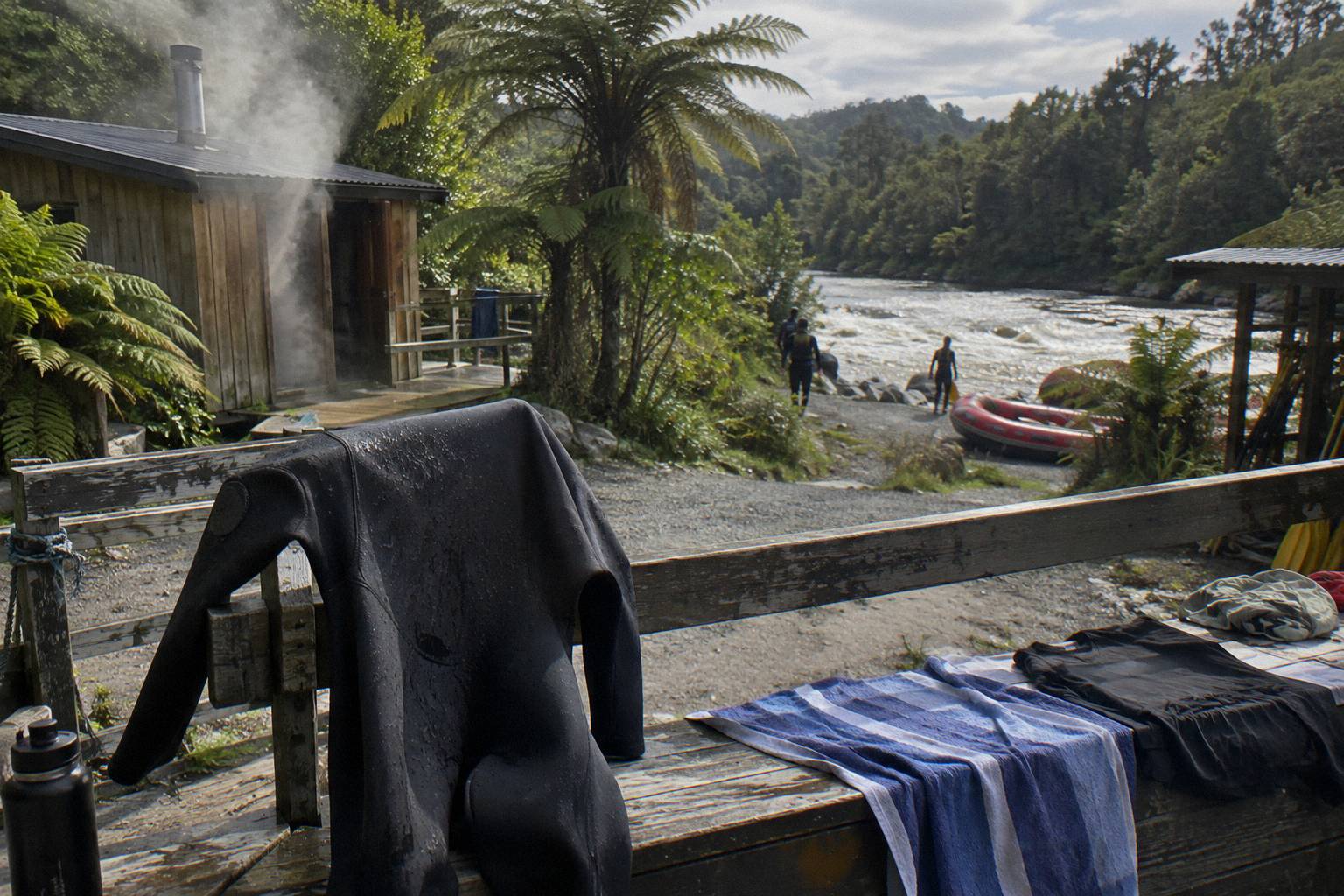
Timing the exit matters if the day has more in it. The standard Kaituna experience occupies about 2 hours, so a morning slot ends before lunch and an afternoon slot ends before dinner, and either leaves room for the walk along the track above the falls or the drive back into Rotorua. Building a whole day around the trip has its own page, one day built around a rafting trip, for readers who want the rafting paired with the rest of the region rather than squeezed between flights.
The last item on the day-of list is a review of your own kit before you drive off: wetsuit and booties go back to the base, but towels, swimwear and any layers you wore under the suit go home damp. A plastic bag or a dry bag in the car turns that from a nuisance into nothing. It is the single most forgotten item on any packing list for any water sport, and it costs nothing to throw in.
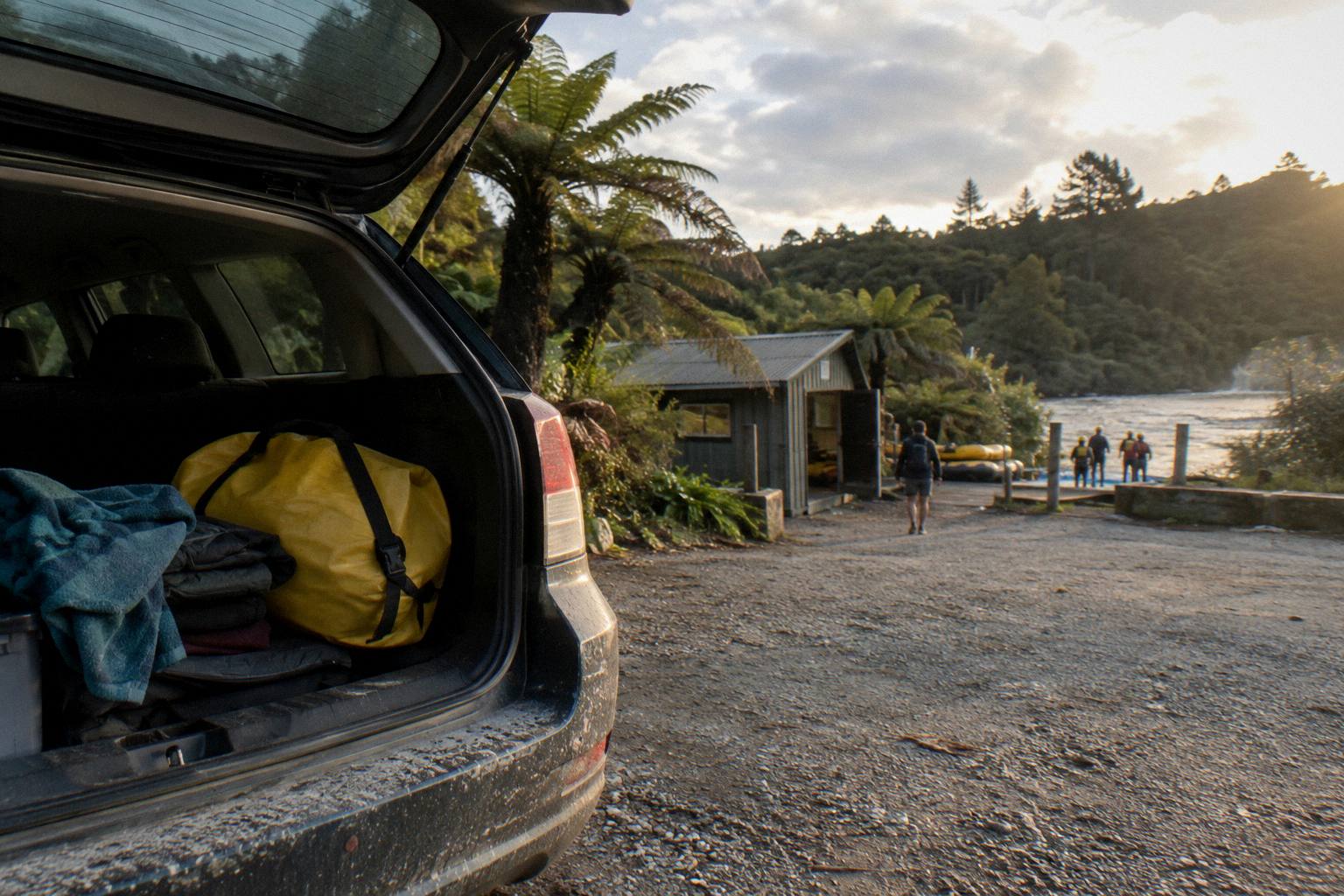
If the drive itself is the part of the day you would most like removed, the Kaitiaki transfer product wraps hotel pickup into the trip at NZ$139 per person, a 2h30 listing with a 5 rating from 823 reviews, so the dry bag rides in someone else's boot and the warm-down starts the moment you are dropped back.
What Trips People Up Before You Book
The recurring mistakes are arriving without the 15 minute buffer on Kaituna Cascades trips, bringing a phone instead of a mounted camera, assuming a sauna that the product does not include, and reading one listing's minimum age as an operator-wide rule. Each is fixed in a minute at the planning stage. The booking calendar shows the price for your date, and every figure in a product's terms belongs to that product alone.
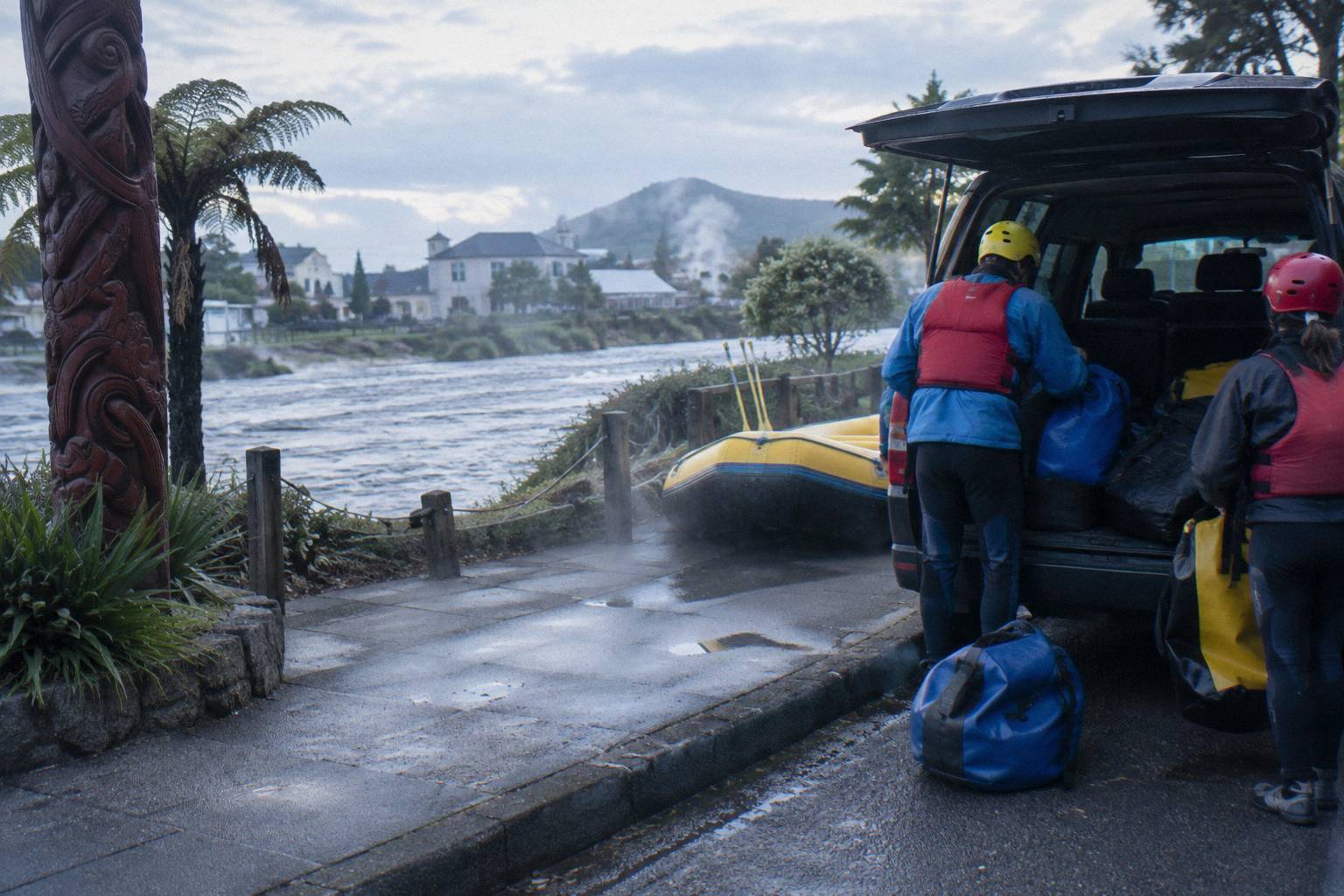
The age mistake deserves a second mention because it is the one that costs a booking. The Rotorua Rafting listings on this site show a minimum age of 10; Kaituna Cascades and Kaitiaki listings show 13, with Kaituna Cascades allowing 10 to 12 to join halfway. Booking a mixed-age family onto the wrong product turns into a base-side negotiation nobody enjoys. Check the listing's own age line, then check it again for the exact product you booked, since the operators run more than one.
The second mistake is packing for the wrong part of the day. People pack elaborately for the river, which needs almost nothing from you, and sparsely for afterwards, which is when you are wet, cold and standing in a car park. Flip the effort: the river half is handled by the operator's kit, and the after half is handled by the towel, the dry bag and the warm layer you brought. That inversion is the whole checklist in one sentence.
The third is treating the drive as trivial. Twenty to 25 minutes from Rotorua is short, but it is still a road with holiday traffic in peak season, and the check-in buffer absorbs exactly one wrong turn. Leave at the time the drive plus 15 minutes implies, not at the time the trip starts. The Rotorua Rafting FAQ page is the operator's own word on kit, water temperature and ages, and it is the page to re-read the night before if any detail is fuzzy.
Common Questions About Pack And Kit
What Should I Bring White Water Rafting?
Swimwear and a towel, per the Kaituna Cascades bring list, plus dry clothes for afterwards and a plastic bag for the wet kit. Wetsuits, helmets, life jackets, fleece, booties and splash jackets are supplied on the products whose pages list that kit. Wear quick-drying clothing for the drive and secure footwear for the base.
Do I Need To Bring A Wetsuit?
No. The Rotorua Rafting and Kaituna Cascades pages both list wetsuits as supplied, along with fleece and booties. Water temperature runs about 24 degrees C in summer and about 12 °C in winter per the Rotorua Rafting FAQ, and the operator's thermal kit is the gear maintained for those conditions.
Can I Bring My Phone Or Camera On The Raft?
Mounted action cameras are the supported route: Rotorua Rafting states GoPro mounts are allowed on its trips. Hand-held phones and cameras are a risk to keep and a risk to others on a Grade 5 run, so leave them at the base or in the car. For any other operator's policy, ask at check-in.
How Early Should I Arrive For Check-In?
Kaituna Cascades asks rafters to check in 15 minutes early, and that buffer is good practice on every product on this river. Sizing a wetsuit and booties and hearing the safety brief all happen in that window. The standard Kaituna experience runs about 2 hours in total.
What Should I Bring For After The Trip?
A towel, dry clothes and a warm layer, kept in the car. On the Rotorua Rafting sauna products the sauna is part of the day, so the warm-down is included there. A dry bag or plastic bag for the wet swimwear is the one item people most often wish they had packed.
Do The Weight And Age Limits Change What I Bring?
The limits belong to each product: 120 kg on Kaituna Cascades, 130 kg on Rotorua Rafting, and minimum ages of 13 or 10 depending on the listing. They do not change the packing list, but they do belong in the booking decision, since none of them can be adjusted at the base on the day.