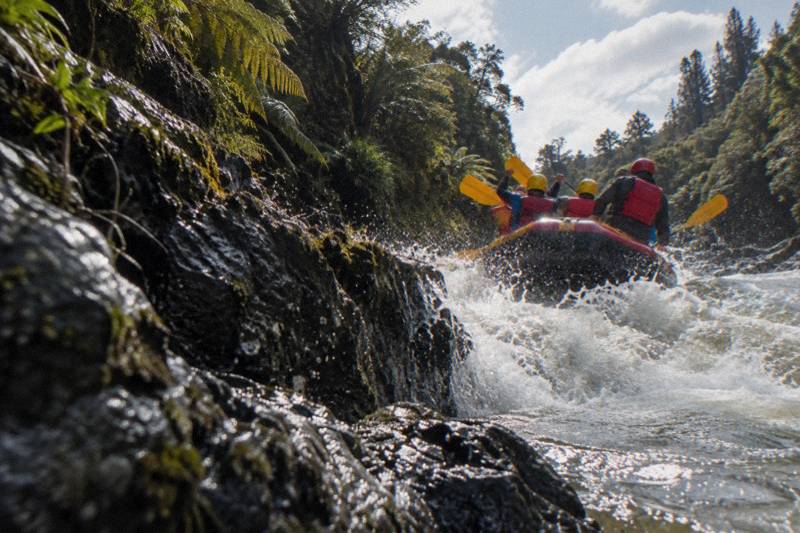
Kaituna Rapids Grade: Which Rapids You Raft And How Hard They Are
Sold as Grade 5, described as Grade 4 and 5 building to a 7 metre waterfall: what the Kaituna's grade actually means for the rapids you paddle.
Short answer
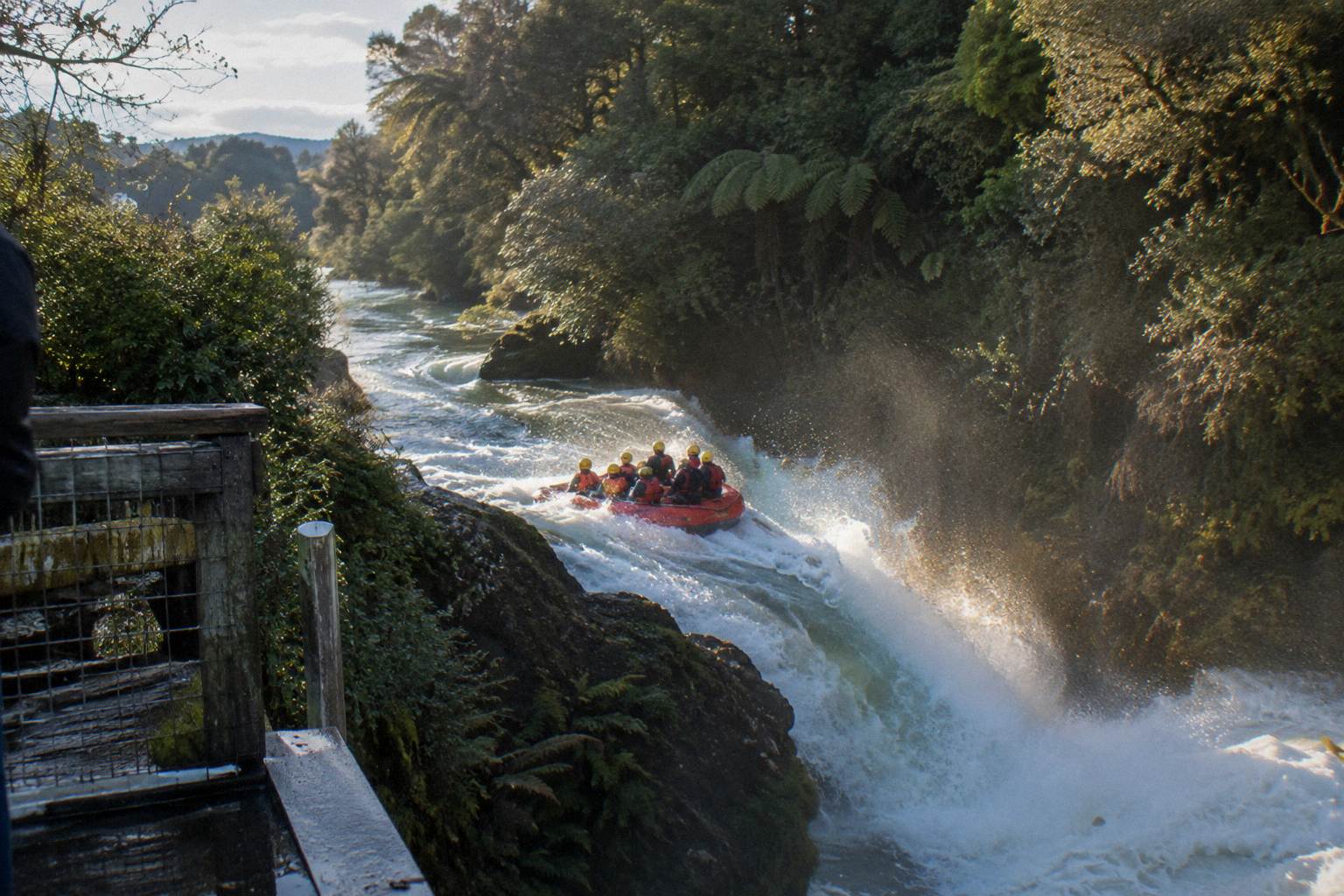
The Kaituna is sold as a Grade 5 run. Every commercial trip paddles 14 rapids and drops including three waterfalls, with Tutea Falls the 7 metre finale by the operators' figure. Kaituna Cascades' blog describes the rapids as Grade 4 and Grade 5 building to the falls, and council-controlled gates at the Lake Rotoiti outlet keep it running 365 days a year.
Every Kaituna trip on this site gets measured against the same water, and the Kaituna River rafting guide covers each product's price, duration and minimum age side by side. This guide stays on one question: what grade the river is, which rapids that grade buys you, and how much of the Grade 5 label is the falls versus the paddling in between.
| Fact | Detail |
|---|---|
| Grade as sold | Grade 5, Class V, on every commercial listing |
| Grade as described | Grade 4 and Grade 5 rapids building to the falls, per the Kaituna Cascades blog |
| Rapids and drops | 14 rapids and drops, 3 waterfalls, per Kaituna Cascades |
| Time on the water | About 50 to 60 minutes |
| Whole experience | About 2 hours |
| Tutea Falls | 7 metres (23 ft), the operators' figure |
| Base | Okere Falls, 23 minutes from Rotorua |
| Season | 365 days a year, flow held by council-controlled gates at the Lake Rotoiti outlet |
What Grade Is The Kaituna River?
Every commercial operator on the Kaituna sells the run as Grade 5, the top grade commonly rafted, and the label is fair: the trip includes 14 rapids and drops with three waterfalls, finishing at Tutea Falls at 7 metres by the operators' figure. The nuance is that the Kaituna Cascades blog describes the individual rapids as a mix of Grade 4 and Grade 5, building in difficulty toward the falls rather than sitting at the ceiling the whole way down.
So the grade sticker and the river's own description tell two slightly different stories, and both are true. Grade 5 is the classification used to market the trip because the run as a whole contains waterfall drops, and a waterfall drop puts a rapid in the top band of the International Scale of River Difficulty as Wikipedia sets it out. The rapids between the drops, the wave trains and rock gardens that make up most of the 50 to 60 minutes on the water, sit a notch lower on that scale.
For a first timer, that distinction matters more than it sounds. A river that is Grade 5 for its entire length would be a sustained, exhausting fight. The Kaituna, as Kaituna Cascades describes it, is a sequence of Grade 4 water punctuated by drops, with the biggest single feature saved for the end. Paddlers get moments to breathe, reset their grip and hear the next instruction between features.
The Wikipedia entry for the Kaituna River covers the river's full course from Lake Rotoiti toward the Bay of Plenty; the commercial run is only the steepest short section at the Okere Falls stretch. That concentration of drop into a brief gorge is exactly why the grade is high while the trip is short: about 2 hours door to door, with 50 to 60 minutes of it actually on the water.
The name attached to the run's headline product is "White Water Rafting, Kaituna Cascades, The Originals", a 2 hour trip rated 5.0 from 1,385 reviews, from NZ$135 per person, minimum age 13. See whether the Originals trip suits you, or check availability for a date. If you want the wider picture of who runs this river and how their offers differ, the operator comparison guide breaks it down trip by trip.
How The Grading Scale Works In Plain Terms
Grades run from 1 to 6 in the International Scale of River Difficulty: 1 is easy moving water, 2 is gentle rapids with a clear line, 3 needs manoeuvring around obstacles, 4 demands precise positioning and a guide who reads water fast, and 5 means long, violent rapids or big drops where a mistake carries real consequences. Grade 6 is considered unrunnable commercially. The Kaituna is sold in the Grade 5 band because of its waterfalls.
The scale is not a rulebook, it is a shared shorthand. One rafter's Grade 3 can feel like another's Grade 4 depending on the day's flow, the craft and the crew. That is why the Kaituna Cascades blog's description of its own river as Grade 4 and 5 building to the falls is not a contradiction of its Grade 5 ticket: the blog is describing individual rapids one by one, while the ticket describes the run as a whole package.
| Grade | What It Means In Plain Terms | Where You Meet It On The Kaituna |
|---|---|---|
| Grade 2 | Small waves, clear channels, a swim is a float | The pools and calm stretches between features |
| Grade 3 | Waves and rocks that need steering around | Sections of the middle run before the drops stack up |
| Grade 4 | Continuous, powerful water needing precise lines | Several of the rapids between the waterfalls, per the Kaituna Cascades blog |
| Grade 5 | Extreme water, drops, severe consequences for error | The waterfall drops, including Tutea Falls at 7 metres |
A common question is whether a beginner can physically survive this scale of water with no rafting history. Many people run the Kaituna as their first rafting trip and the operators' minimum ages, 10 or 13 depending on the listing, reflect that. The beginners' rafting guide walks through what a first trip asks of you, and the general shape of the sport is covered in what white water rafting is.
Among the trio of trips most compared for this river, each carries the same Grade 5 water but packages it differently, and prices are per product, never merged: amounts are in New Zealand dollars.
Which Rapids And Drops Do You Actually Paddle?
Kaituna Cascades counts 14 rapids and drops on the commercial run, including 3 waterfalls, spread across 50 to 60 minutes on the water. The sequence builds: the upper section carries the Grade 4 water described in the operator's blog, the drops grow as the gorge narrows, and the run finishes at Tutea Falls, the 7 metre drop the operators describe as the highest commercially rafted waterfall in the world.
The shape of the run is a deliberate arc. Rather than opening with the headline drop, the trip starts on friendlier water where the guide sets the paddle calls and the crew finds a rhythm. Each feature is bigger than the last, which is why the operator's own description uses the phrase building to the falls: the river trains you as you descend it.
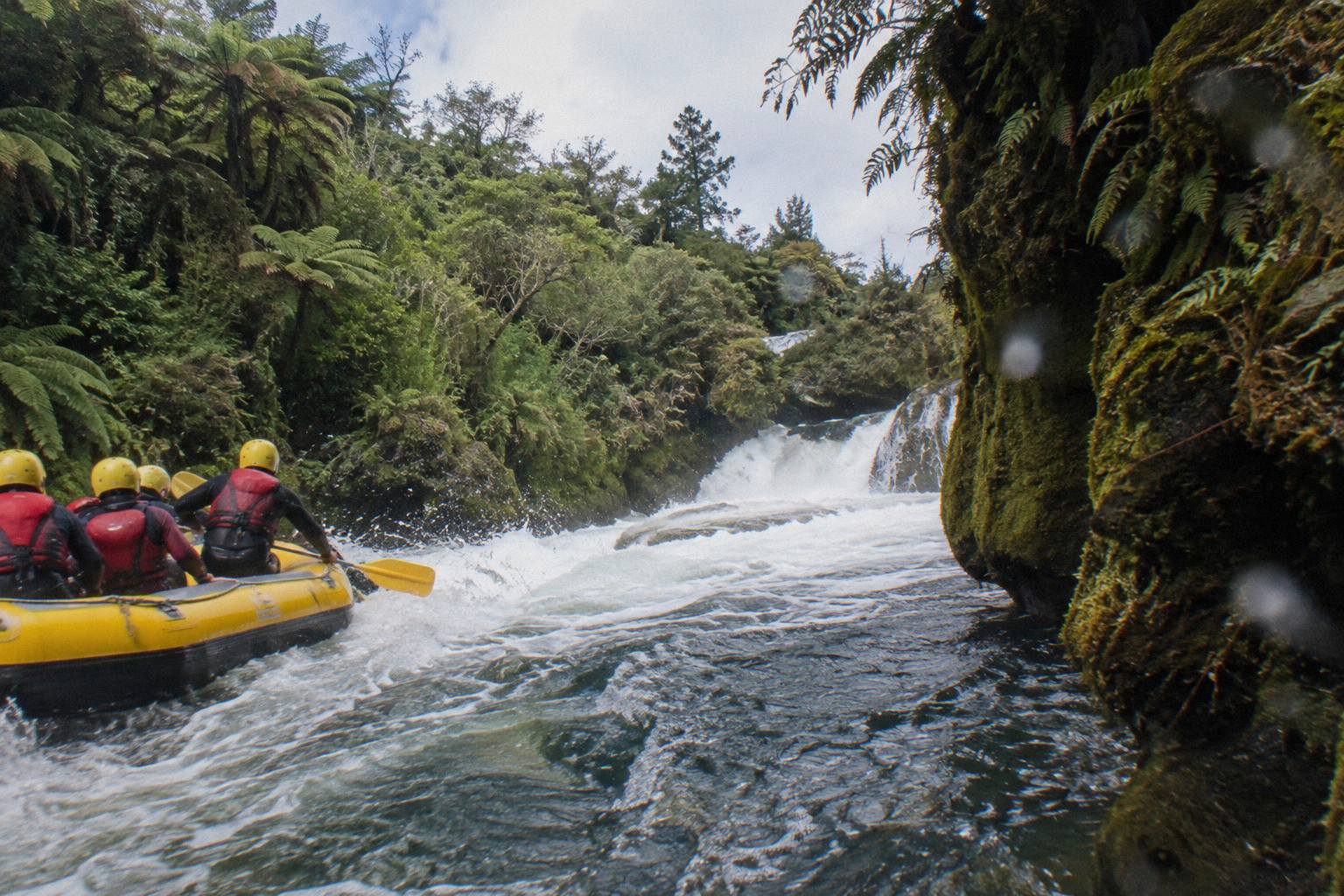
Two named features dominate the memory of most trips. Tutea Falls is the finale, and below it the raft exits into a pool where the river flattens out and the climb back to the base begins. Above it sit the other drops of the three the operator counts, each a committing vertical move but smaller than the last one. A fuller rapid-by-rapid account of the trip structure, from check in to the final pool, is in the what happens on a Kaituna trip walkthrough.
| Part Of The Run | How The Operators Describe It | Grade Framing |
|---|---|---|
| Put-in and upper section | Paddle calls and warm-up features below the Okere Falls base | Grade 4 water per the Kaituna Cascades blog |
| Middle rapids | Continuous features stacking toward the gorge | Grade 4 and 5 mix |
| The three waterfalls | Vertical drops counted among the 14 rapids and drops | Grade 5 territory |
| Tutea Falls | 7 metres, the operators' figure, the run's finale | The drop that sells the Grade 5 label |
One practical note on the grade question: the difficulty of the biggest drop moves with the water. In its spring high-flow update, Kaituna Cascades says the waterfall becomes more powerful but slightly less tall and vertical. More water means a heavier hit at the base; less water means the drop reads taller and cleaner. The grade label stays Grade 5 either way.
Wondering which trip to lock in for this water?
Tutea Falls And The 7 Metre Question
Tutea Falls is 7 metres, or 23 feet, by the operators' figure, stated by Kaituna Cascades, Kaitiaki Adventures and Rotorua Rafting alike. The operators describe it as the highest commercially rafted waterfall in the world. Kaituna Cascades supports the superlative with a comparison list: Agers Falls at 5.5 metres, Sweets Falls at 4.3 metres and Husum Falls at 3.7 metres, all commercially rafted and all lower.
That claim is an operators' claim, and it is worth holding it at exactly that weight. Kaituna Cascades publishes the comparison itself, naming three rafted waterfalls that sit below the 7 metre mark, and the phrase to use is that operators describe Tutea Falls as the highest, not that a governing body has certified it. The measurement, by contrast, is consistent across every operator and outside source checked: 7 metres, 23 feet.
Seven metres is roughly a two storey building. The raft does not free fall it like a stone: the drop has a lip, a short face and a pool, and the guide times the approach so the boat lands flat in the foam. In high spring flows, per the Kaituna Cascades river-conditions update, the feature changes character: more power in the water, a slightly less tall and vertical face. The Kaituna Cascades waterfall page carries the operator's own account of the drop and the comparisons.
If the drop is the reason you are booking, two things sharpen the choice. First, every Kaituna product on this site runs the same waterfall; you are choosing operator, duration, transfers and extras, not a harder or easier falls. Second, the level of the water on your day shapes the hit, and no one can promise a specific flow, so pick a date and let the river be the river. A deeper look at the drop itself, including its name and setting, is in the Tutea Falls rafting guide.
The Rotorua Rafting product "Kaituna River White Water Rafting & Free Sauna" runs 2h30 on this water, rated 5.0 from 2,191 reviews, from NZ$135 per person, minimum age 10 on that listing.
Why The Kaituna Runs 365 Days A Year
The Kaituna flows through council-controlled gates at the Lake Rotoiti outlet, and those gates hold the flow steady enough that Kaituna Cascades runs the river 365 days a year. That is unusual: most rafting rivers depend on rainfall or scheduled dam releases, which is why rivers like the Wairoa run only on selected Sundays. The gate-controlled flow is what makes a Kaituna booking reliable in any month.
This is the quiet engineering fact behind the Grade 5 ticket. The Wikipedia page for Lake Rotoiti describes the lake at the river's head; the gates at its outlet release a managed flow into the Kaituna, and the operators schedule around it. Steady flow does not mean identical flow: the same river-conditions update that reports spring levels in the 500s on the control gates also reports the water at 19 degrees C in that update, and the falls change shape with the volume.
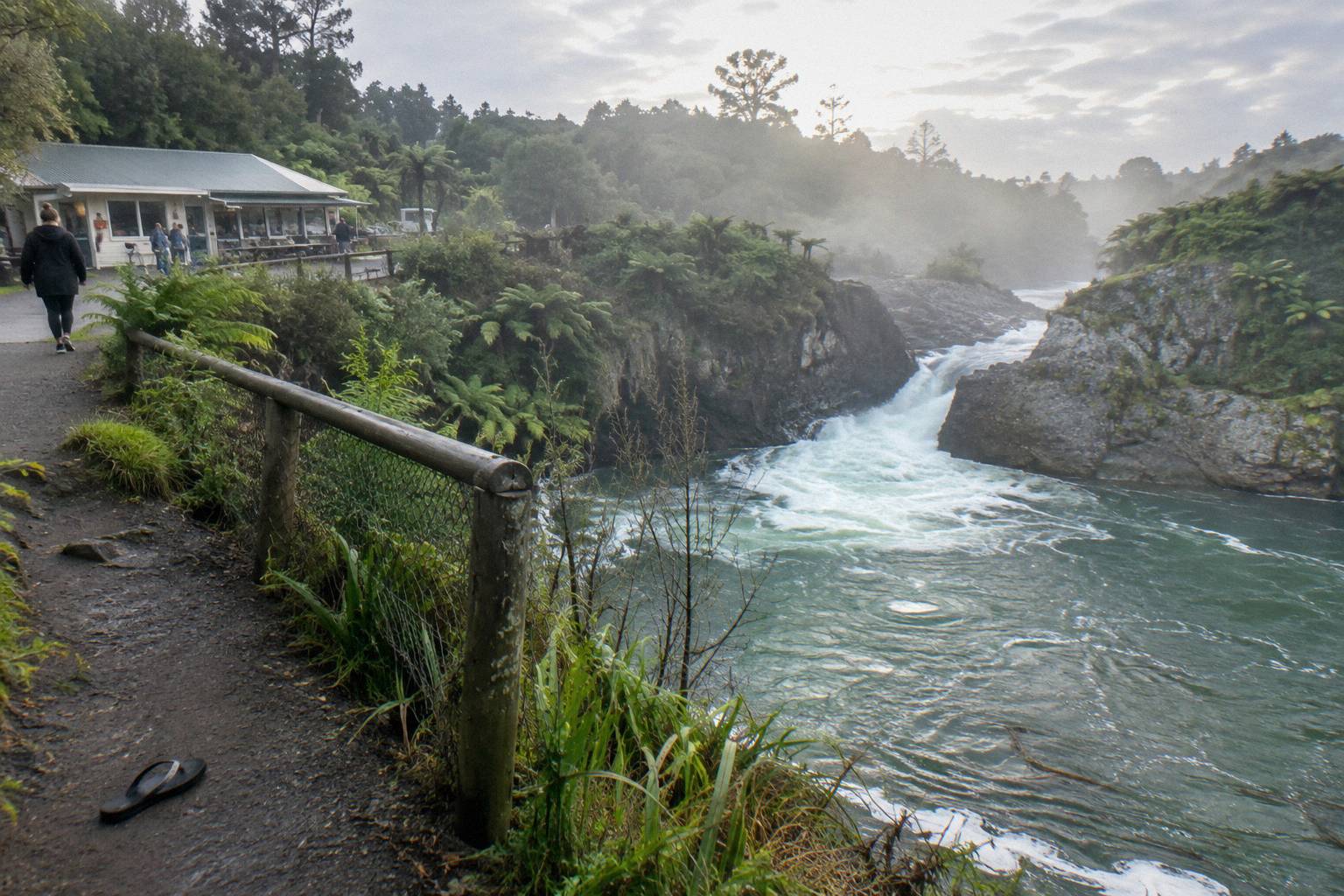
For planning, the reliability cuts both ways and both favour the Kaituna. Rain does not cancel the trip in the way it can on rain-fed rivers, and drought does not shut it down either. The rainy day rafting explanation covers how operators treat weather calls generally, and the month by month season guide maps the year against departure schedules.
Aside from flow, the other season variable is simply the water and air temperature. Rotorua Rafting's FAQ puts the river at about 24 °C in summer and about 12 °C in winter, and every operator supplies wetsuits, helmets and life jackets as part of the trip. Winter trips run three times a day on that operator's schedule; summer steps up to departures every 30 minutes on demand, all subject to the booking calendar.
The Kaitiaki Adventures product "Kaitiaki Adventures + Transport", rated 5.0 from 823 reviews and from NZ$139 per person, wraps the same water with free hotel pickup, minimum age 13 on that listing.
Is The Kaituna's Grade 5 Right For A Beginner?
Yes, in the sense the operators sell it: a guided run where the guide handles the line, the crew paddles, and minimum ages of 10 or 13 depending on the listing tell you newcomers and children are accepted. It is not Grade 5 in the sense of needing prior rafting experience or swimming mastery; Kaituna Cascades requires that you can swim and lists conditions like pregnancy and heart conditions as exclusions.
The distinction that resolves most anxiety is who is responsible for the line. On a guided commercial trip, reading the rapid, choosing the angle and calling the strokes is the guide's job. The crew's job is to paddle hard when told and hold on through the drops. That division of labour is exactly what the grading scale does not capture: a Grade 5 rapid in a guided raft with a professional at the tiller is a different proposition from the same rapid in a private kayak.
Questions of swimming ability come up constantly, and the answer sits with the operators: Kaituna Cascades requires that you be able to swim, and a float test may be required. The do you need to swim guide takes the question in full, and what happens if you fall out of the raft covers the recovery drill and the recommendation about a well fitted lifejacket and helmet.
Families weigh the minimum age more than the grade. The two listings at minimum age 10 are Rotorua Rafting products; the Kaituna Cascades and Kaitiaki listings sit at 13. Ages are per listing, so the number on the trip you book is the one that applies. The rafting with kids and minimum ages guide sets out every option, and the first timers tips guide handles the rest of the nerves.
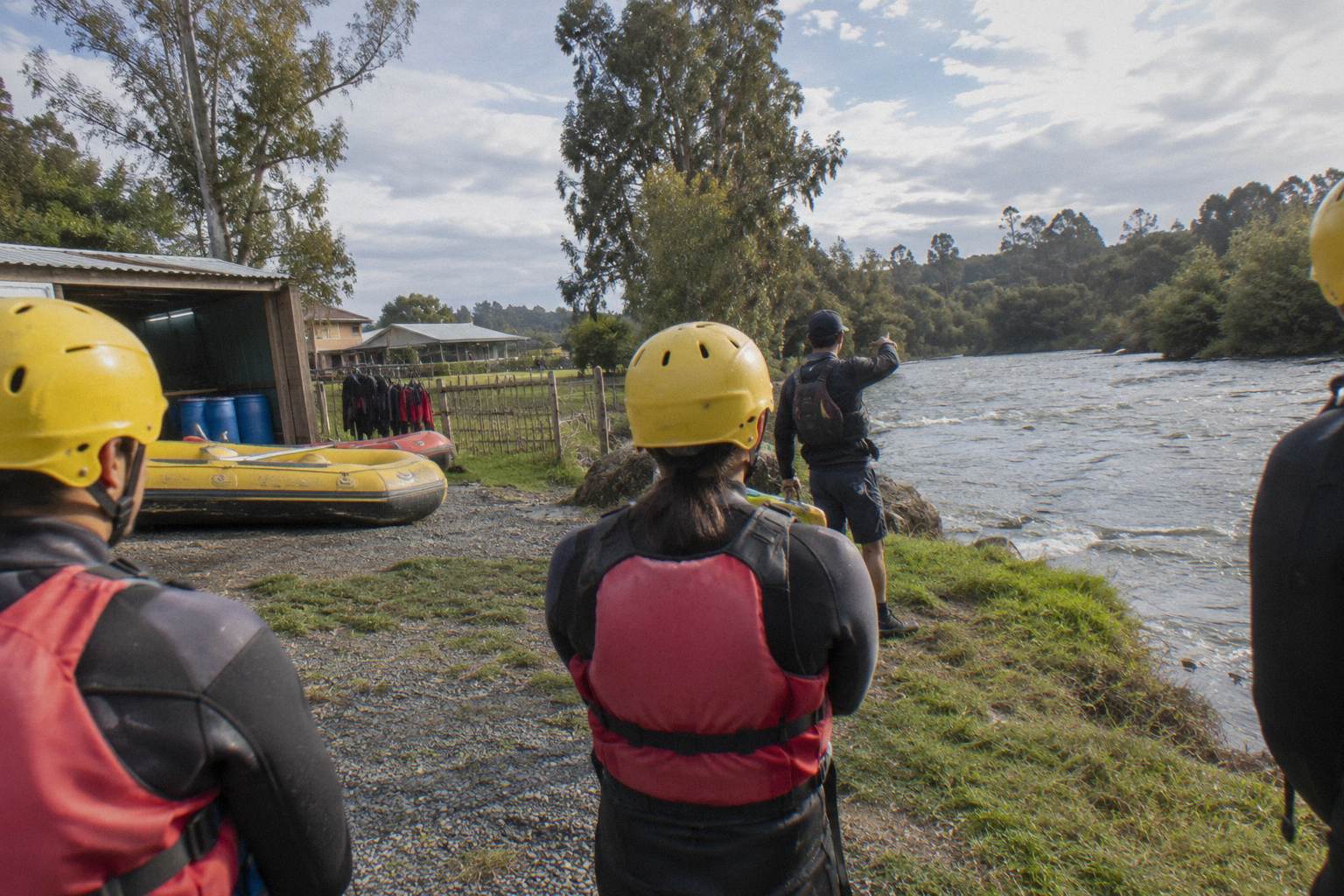
For a gentler first taste of moving water, the same region holds a Grade 2 option under a different operator: "Rangitaiki Rafting Grade 2" from Rotorua Adventures Kayak and Raft, rated 4.9 from 7 reviews, from NZ$125 per person, minimum age 5 on that listing. The Rangitaiki river guide compares the two experiences properly.
How The Kaituna Compares With The Region's Other Runs
The Kaituna is the steep, short, waterfall-driven run: Grade 5 as sold, 14 rapids and drops, about an hour on the water. The Wairoa near Tauranga is also Grade 5 but longer and stronger, a 5 hour Kaituna Cascades product from NZ$190 per person that runs only on selected Sundays when the power company releases water. The Rangitaiki is the calm sibling: a Grade 2 trip from a different operator, minimum age 5, built for families.
Same region, three completely different answers to the grade question. The Kaituna optimises for density of drama in minimal time, which suits a Rotorua stay with an afternoon to fill. The Wairoa is a commitment: Kaituna Cascades requires a 9:30am departure, about 2 hours on 5 km of river, minimum age 13, a 120 kg maximum and the ability to swim, and it only exists on release days, so check the booking calendar rather than expecting a date on demand. The Wairoa river guide holds the full picture.
| Run | Grade Framing | Duration | From Price Per Person | Minimum Age |
|---|---|---|---|---|
| Kaituna, Kaituna Cascades The Originals | Sold Grade 5, described Grade 4 and 5 | 2h | NZ$135 | 13 |
| Kaituna, Free Sauna 2h30 trip | Sold Grade 5 | 2h30 | NZ$135 | 10 |
| Kaituna, Kaitiaki with hotel transfers | Sold Grade 5 | 2h30 | NZ$139 | 13 |
| Wairoa, Kaituna Cascades | Grade 5 | 5h | NZ$190 | 13 |
| Rangitaiki, Rotorua Adventures Kayak and Raft | Grade 2, per that operator's listing | 4h | NZ$125 | 5 |
Each row is its own product with its own figures; twin listings elsewhere on this site are separate cards and never merge into one price. If the choice is really between towns as much as rivers, the Taupo or Kaituna comparison and the North Island rafting overview widen the frame.
The budget end of the Kaituna ladder is the Kaitiaki Adventures rafting experience, from NZ$61 per person on a 2.5 hour trip, minimum age 13, with no reviews published yet. Hotel pickup is included, same as the wider Kaitiaki operation.
What Trips People Up Before You Book
Most booking mistakes on this river come from reading the Grade 5 label as an experience requirement, assuming the sauna or transfers are on every product, or confusing twin listings for one another. The grade is handled by the guide; inclusions differ by operator and product; and twin products are separate bookable trips with their own prices, durations and minimum ages, never one merged offer.
The sauna question deserves its own sentence: the free sauna belongs to the Rotorua Rafting and Rotorua Ziplines sauna products only, and Kaituna Cascades and Kaitiaki Adventures state no sauna on their pages. The free sauna after rafting guide lists exactly which trips carry it. Hotel pickup likewise sits only on the two Kaitiaki transfer products; every other trip assumes your own transport to the base.
A short checklist saves most of the grief:
| Trip Up | The Reality |
|---|---|
| Grade 5 means experts only | Guided trips take beginners; minimum ages run 10 or 13 per listing |
| Every trip has a sauna | Sauna is on the Rotorua Rafting and Rotorua Ziplines sauna products only |
| Twins are the same product | Twin listings are separate trips with their own prices and terms |
| Any date works on any river | The Wairoa runs only on selected release Sundays; the Kaituna runs daily |
| Age limits are universal | Each listing carries its own minimum age; check the one you book |
Weight limits also trip people: Kaituna Cascades lists a 120 kg maximum and Rotorua Rafting lists 130 kg. Bring swimwear and a towel, per Kaituna Cascades, and plan to check in 15 minutes early. If kit is the worry, the what to wear guide and the what to bring guide settle it item by item.
One more thing worth saying plainly: the guides, gear and gates make this run routine for the operators, but water is water, and the booking calendar decides what runs on the day. Rafting Rotorua keeps every product's figures on its own page so you can compare like with like before you commit.
Every figure above ties to its own product, so the final comparison comes down to operator, inclusions and price: the Originals trip, the transfer trip and the sauna trip are the three most compared cards for this water.
Common Questions About The Kaituna Rapids
What Grade Is The Kaituna River?
Every commercial listing sells it as Grade 5, Class V. The Kaituna Cascades blog describes the individual rapids as Grade 4 and Grade 5 building toward the falls, so the top-band label comes mainly from the waterfall drops, including Tutea Falls at 7 metres.
Is Grade 5 Safe For Beginners?
Operators take beginners on this run: minimum ages are 10 or 13 depending on the listing, and the guide reads the water while the crew paddles. Kaituna Cascades requires that you can swim, lists a 120 kg maximum, and excludes pregnancy and heart conditions.
How Many Rapids Are On The Kaituna?
Kaituna Cascades counts 14 rapids and drops, including 3 waterfalls, over 50 to 60 minutes on the water. The whole experience, base to base, takes about 2 hours.
How Big Is The Waterfall On The Kaituna?
Tutea Falls is 7 metres, or 23 feet, by the operators' figure. Kaituna Cascades lists three lower commercially rafted falls for comparison, Agers Falls 5.5 m, Sweets Falls 4.3 m and Husum Falls 3.7 m, and operators describe Tutea Falls as the highest commercially rafted waterfall in the world.
Does The Kaituna Run All Year?
Yes. Kaituna Cascades runs it 365 days a year because council-controlled gates at the Lake Rotoiti outlet hold the flow. Departure frequency varies by season, and the booking calendar holds every time.
Which Is Harder, The Kaituna Or The Wairoa?
Both are Grade 5, but they differ in shape. The Kaituna is short and steep with waterfall drops; the Wairoa, run by Kaituna Cascades near Tauranga, is a 5 hour Grade 5 trip on release Sundays only, about 2 hours on 5 km of river, minimum age 13, from NZ$190 per person.