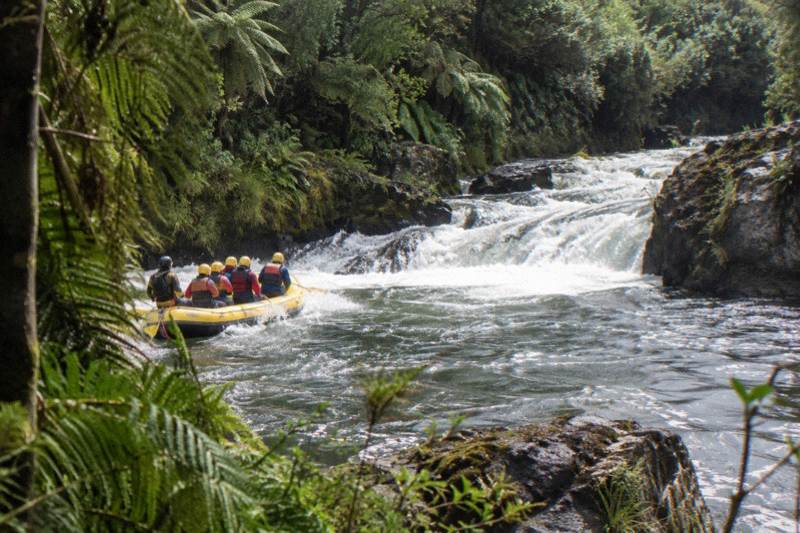
What To Wear White Water Rafting: Wetsuit, Shoes, And What To Leave Home
The short version of what to wear white water rafting on the Kaituna: bring swimwear and a towel, and the operators supply nearly everything else, wetsuit, helmet, life jacket, fleece, booties and a splash jacket. Here is how that kit works across summer and winter, and what to leave home.
Short answer
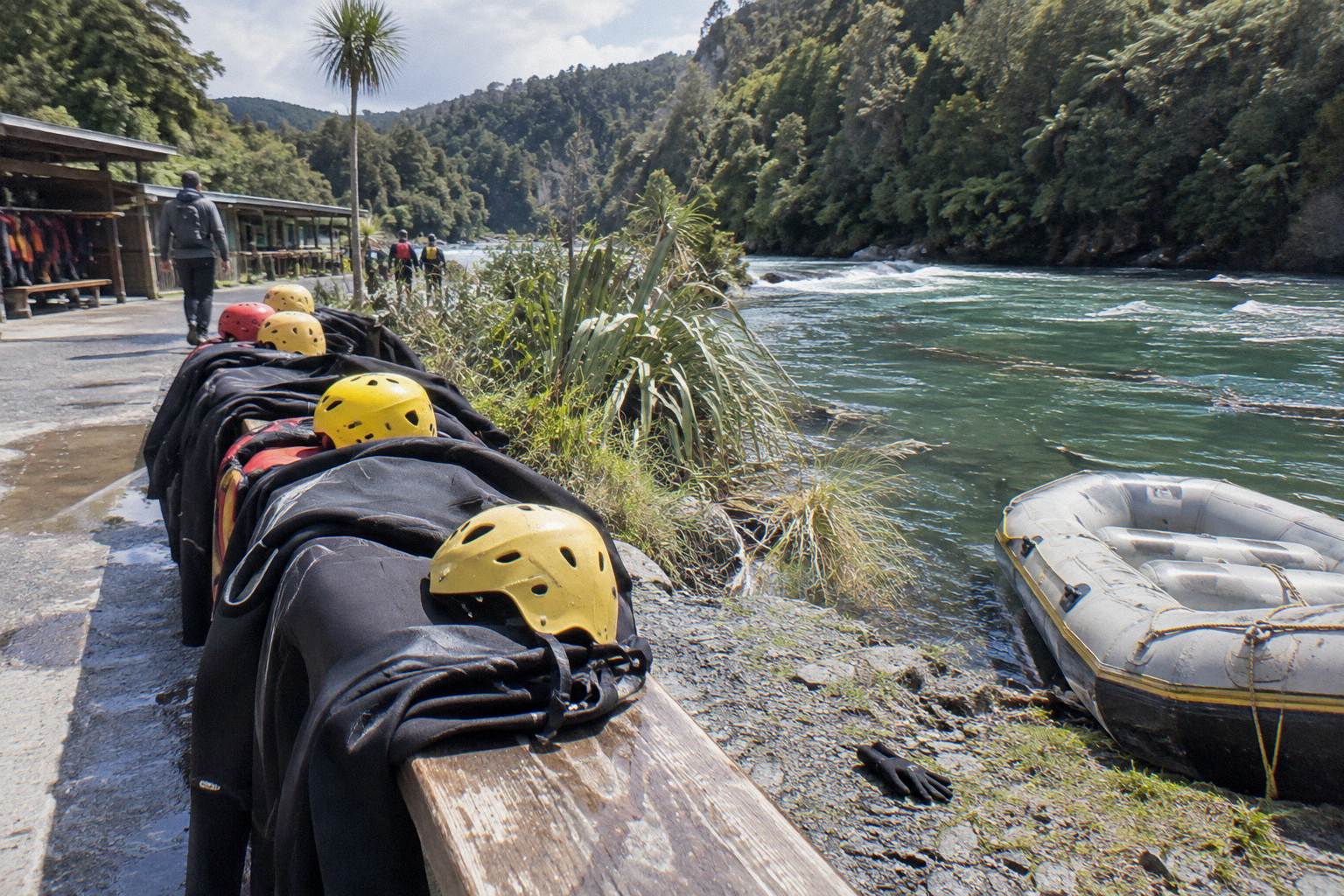
Wear a swimsuit under your clothes and bring a towel; Kaituna Cascades asks for exactly that. The operator pages list wetsuits, helmets, life jackets, fleece, booties and a splash jacket as supplied. The Rotorua Rafting FAQ puts the water at about 24 °C in summer and about 12 °C in winter, so the layering changes mainly with the season, not with the packing list.
The Kaituna runs close to town and the kit list is short, which is half the reason the Kaituna rafting trips work as a half-day plan. The river is rafted year round because council-controlled gates at the Lake Rotoiti outlet hold the flow, so the question of what to wear white water rafting has one packing answer and two seasonal versions of it.
That answer surprises people who have rafted elsewhere. On many rivers you arrive with a bag of your own thermal layers, river shoes and sometimes a wetsuit you rented separately. On the Kaituna the base does the work: the operator pages list a complete issued kit, and the one thing a rafter brings that matters is a swimsuit to put underneath it all and a towel for the end. The rest of this guide is about how that kit behaves at different times of year, what footwear actually belongs in the boat, how the departure schedule shapes what you wear to the base rather than in it, and where the common packing mistakes happen.
| Fact | Detail |
|---|---|
| You bring | Swimwear and a towel, per Kaituna Cascades |
| Supplied kit | Wetsuit, helmet, life jacket, fleece, booties, splash jacket, per the operator pages |
| Summer water | About 24 °C, per the Rotorua Rafting FAQ |
| Winter water | About 12 °C, per the Rotorua Rafting FAQ |
| Time on the water | 50 to 60 minutes inside a roughly 2 hour experience, per Kaituna Cascades |
| Check in | 15 minutes early, per Kaituna Cascades terms |
What Do The Operators Supply On The Kaituna?
Almost everything you need in the boat comes with the trip: the Rotorua Rafting and Kaituna Cascades pages both list wetsuits, helmets, life jackets, fleece, booties and a splash jacket as supplied. That is a full thermal and safety layer, top to bottom, and it is the same core kit in January or July. Your own contribution is a swimsuit and a towel.
The wetsuit does most of the thermal work, and the fleece underneath adds warmth in the colder months. The splash jacket cuts wind and spray on the flat stretches between rapids, and the booties cover your feet where ordinary shoes would fill with water. The helmet and life jacket are safety items, not comfort items, and they are part of every departure rather than an optional extra. A general primer on what whitewater grading means explains why a river sold at Grade 5 demands full protective kit even in warm weather.
Each piece has a specific job, and understanding the jobs helps you wear the kit properly rather than fighting it. The wetsuit works by trapping a thin layer of water against your skin, which your body warms, so it needs to fit snugly rather than hang loose. The fleece is the adjustable middle layer: worn under the suit in cold water, skipped or thinned when the summer figure makes the suit alone enough. The splash jacket goes over the top as a shell, and on the flat paddling stretches between the drops it is what stops the wind from stripping the heat the wetsuit has banked. The booties protect against rocks underfoot at the put-in and the take-out, both of which are wet, uneven and slippery by nature. None of it is yours to maintain or wash; it is issued at the start of the experience and handed back at the end.
| Item | Supplied by the operators | You bring it |
|---|---|---|
| Wetsuit | Yes, on both pages | No |
| Helmet | Yes, on both pages | No |
| Life jacket | Yes, on both pages | No |
| Fleece layer | Yes, on both pages | No |
| Booties | Yes, on both pages | No |
| Splash jacket | Yes, on both pages | No |
| Swimwear | Not listed as supplied | Yes, Kaituna Cascades asks for it |
| Towel | Not listed as supplied | Yes, Kaituna Cascades asks for it |
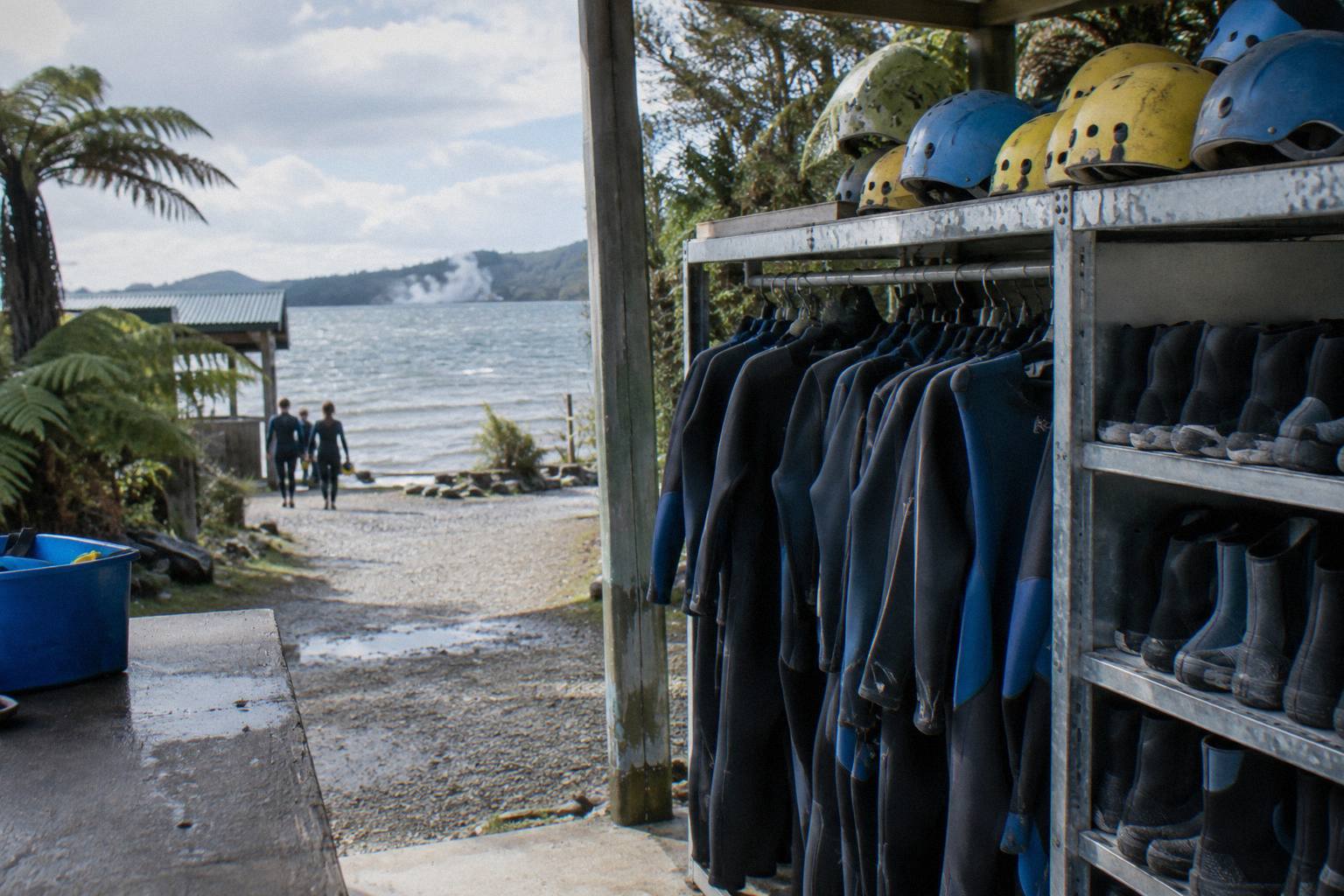
If you want to see how the kit looks in practice on the run itself, the guide to what actually happens on a Kaituna rafting trip walks through the sequence from base to take-out, and it is worth reading alongside what to bring white water rafting for the non-clothing side of the bag.
What Do You Bring Yourself?
Two items, and only two, are named for you to bring: swimwear and a towel, both on the Kaituna Cascades page. Swimwear because you put a wetsuit on over damp skin, so you change at the base and wear the suit against the water, and a towel because you get out of the river wet at the end. Everything thermal, protective or footwear-shaped is already hanging at the base when you arrive.
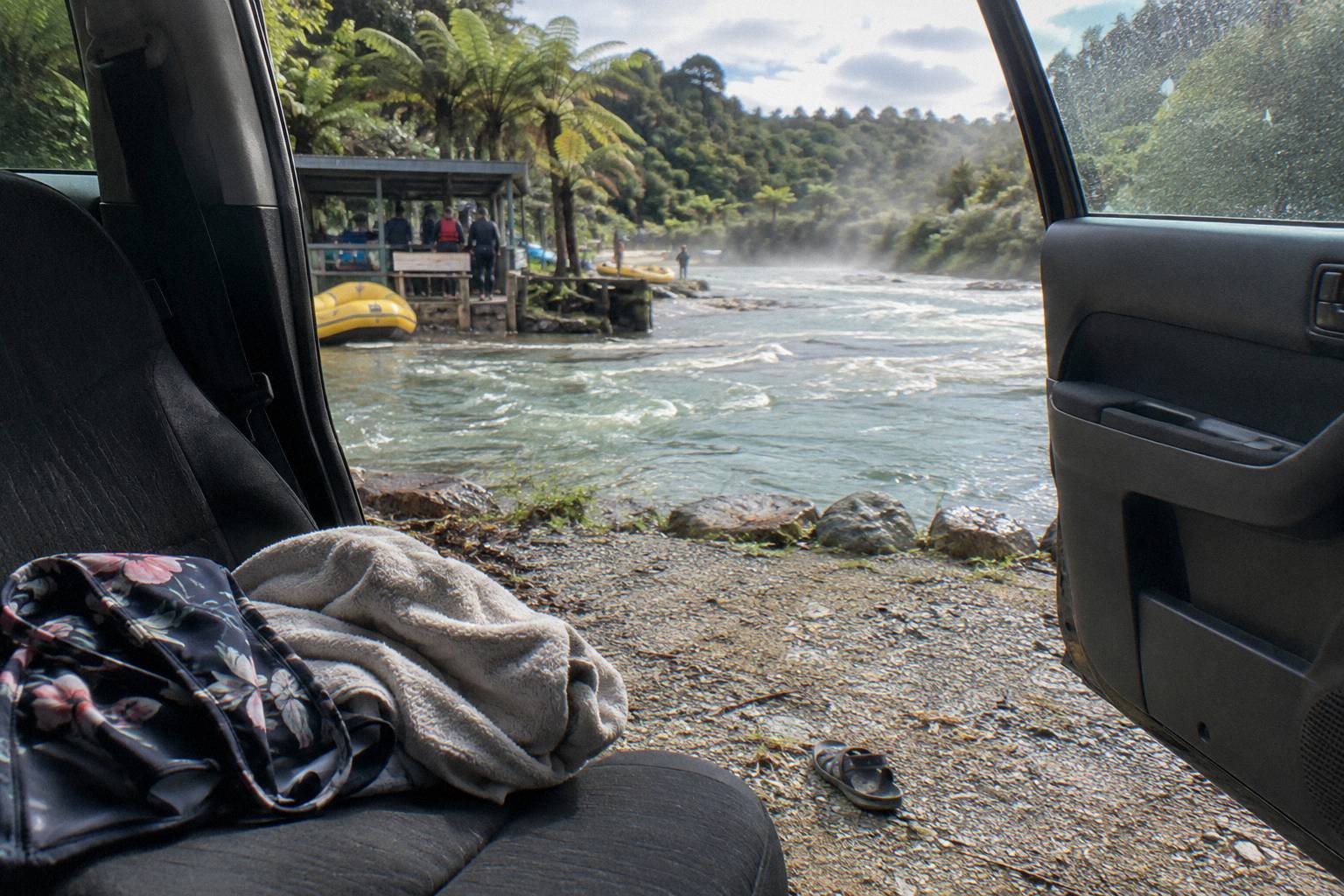
Wear the swimsuit to the base under ordinary clothes and you cut your changing time to almost nothing, which matters on a tight schedule. Kaituna Cascades asks rafters to check in 15 minutes early, so arriving already half dressed buys back a little of that buffer. The towel lives in the car or the locker rather than the raft; there is nothing in the supplied kit list for drying off mid-trip.
There is a small discipline to the towel that is easy to miss. Once you are on the water for the 50 to 60 minutes the run takes, everything you are wearing is wet, and it stays wet until you change back at the base. The towel is the first thing you want in hand when that process starts, so it belongs somewhere logical rather than buried under a bag of snacks. A dry change of clothes for the drive home is worth packing too, not because any operator page asks for it, but because sitting in a car in a damp swimsuit after a winter run is a self-inflicted misery that takes thirty seconds of foresight to avoid.
The flagship example of how little you need to carry is "Rotorua Rafting: Kaituna River White Water Rafting & Free Sauna", rated 5.0 from 2,191 reviews, from NZ$135 per person for a 2h30 experience, minimum age 10 on that listing. You can read the full Free Sauna Kaituna trip details and check availability once your dates are firm; the sauna on that product is a warm-up option the others on the river do not advertise. Check the live price for your date before you pack, since amounts vary by date and group.
How Does The Kit Change With The Season?
It thickens, and that is all: the Rotorua Rafting FAQ gives about 24 °C in summer and about 12 °C in winter, and the supplied list does not change between the two. The fleece layer matters more at the winter figure, the splash jacket earns its place at both, and the wetsuit is the constant that makes a July run as viable as a January one. You still bring only swimwear and a towel in either season.
Twelve degrees is cold enough that you want every layer the operator hands you, worn properly and zipped closed, and warm dry clothes waiting in the car for the take-out. At the summer figure the same stack can feel warm on the flat water, and the choice of how much fleece to wear under the suit is yours at the base. What you should not do is show up in cotton layers of your own expecting to wear them in the raft; the operator kit is designed to work together, and the packing list does not ask for personal thermal wear.
The practical difference between the seasons is smaller than newcomers expect, because the wetsuit compresses most of it. At the summer figure a rafter in a full suit is comfortably warm on the flat sections and warm enough in the rapids; the fleece is there if the day is overcast or the wind is up. At the winter figure the same rafter wears the whole stack and is grateful for it, and the moment of truth is not the river but the changing room afterwards, which is where the towel and the dry clothes in the car start earning their place. Spring sits between the two, and the operators' river conditions page has described spring flows as high, with the big waterfall more powerful but slightly less tall and vertical, so the flow matters as much as the thermometer to how the day feels.
| Season | Water temperature | How the supplied kit is worn |
|---|---|---|
| Summer, 1 Sep to 30 Apr on the Rotorua Rafting calendar | About 24 °C, per the operator FAQ | Full kit, fleece optional depending on the day |
| Winter, 1 May to 31 Aug on the Rotorua Rafting calendar | About 12 °C, per the operator FAQ | Full kit including fleece, warm clothes waiting at the take-out |
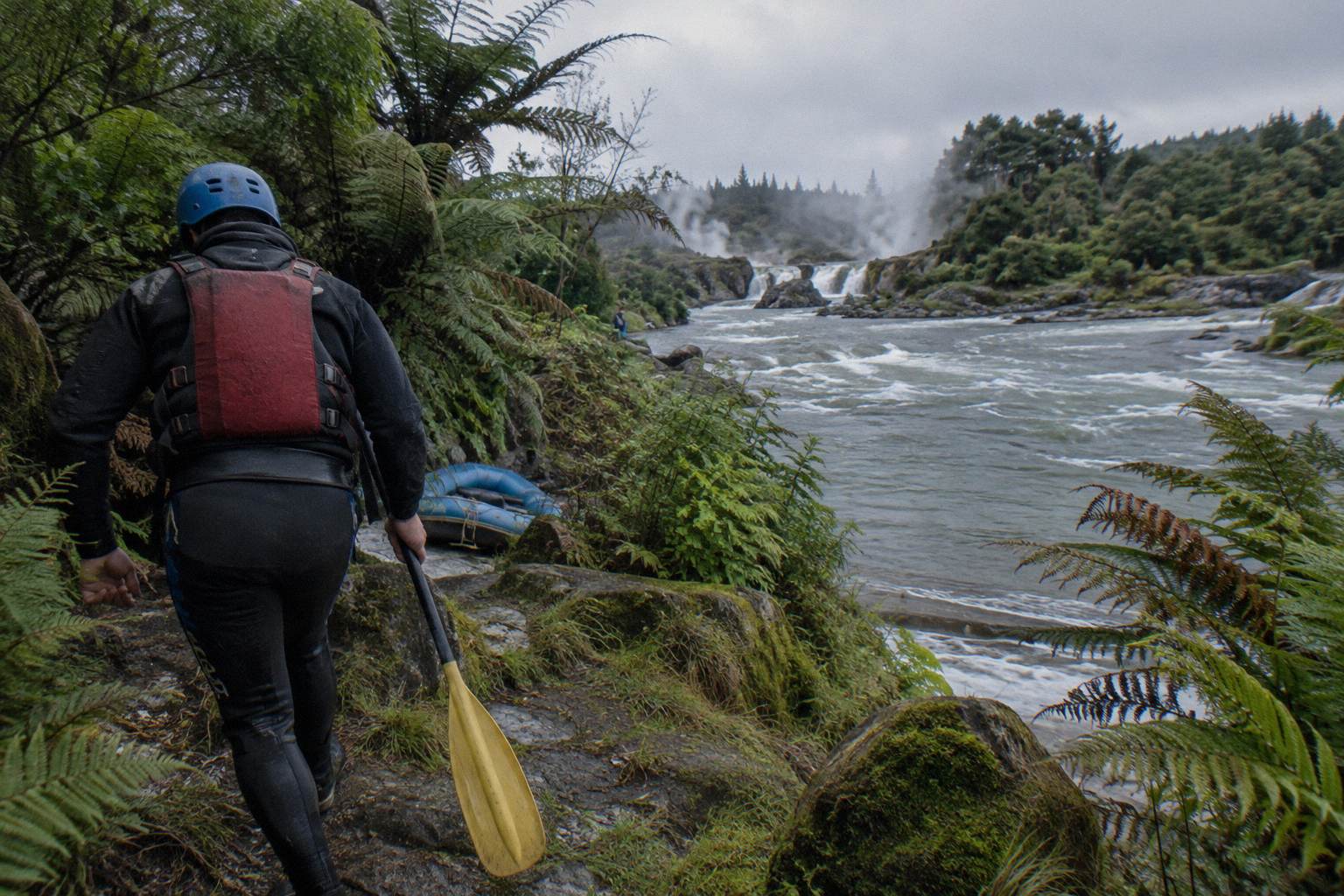
The operator FAQ that carries the temperature figures is the Rotorua Rafting FAQ page, and the same site's season and departure times page sets out the calendar the table above leans on. If a colder-water trip appeals rather than puts you off, the post on rafting through the winter months covers what changes beyond the wardrobe.
What Shoes Do You Wear In The Raft?
The supplied booties are the answer: both operator pages list them as part of the kit, so you do not need to buy river shoes for one trip. They are made to be soaked, they grip wet raft floors and slippery rocks, and they drain where sneakers trap water and get heavy. Your own footwear, like your own clothes, stays in the car for after the run.
Anything you wore on the drive belongs in the same category as the towel: for afterwards. The path from the changing area to the raft and the exit at the take-out are wet-foot territory, and the booties are issued for exactly that. If you are walking the river corridor on another day, note that the supplied booties are rafting kit rather than hiking kit, and the guide to the track above the Okere Falls rapids is a separate outing with separate shoes.
The failure mode of the wrong shoe is worth spelling out, because it is the one wardrobe item people insist on overruling. A sneaker worn into the raft fills with water on the first wave, doubles in weight, loses all grip on the raft floor, and takes a day to dry. A sandal solves the drying problem but invites gravel and the strap problem instead, and anything with a stiff sole fights the footwork the guide calls for. The issued bootie does none of this: it drains, it flexes, and its sole is shaped for wet rock. Trust it, and save your questions about footwear for the walk to the base rather than the boat.
If you are still weighing whether a full rafting trip suits you at all, "White Water Rafting - Kaituna Cascades, The Originals" runs the same river from NZ$135 per person, rated 5.0 from 1,385 reviews, 2 hours door to river and back, minimum age 13 on that listing. See dates and lock a slot with the operator's calendar when your group is decided.
Do The Departure Times Change What You Wear?
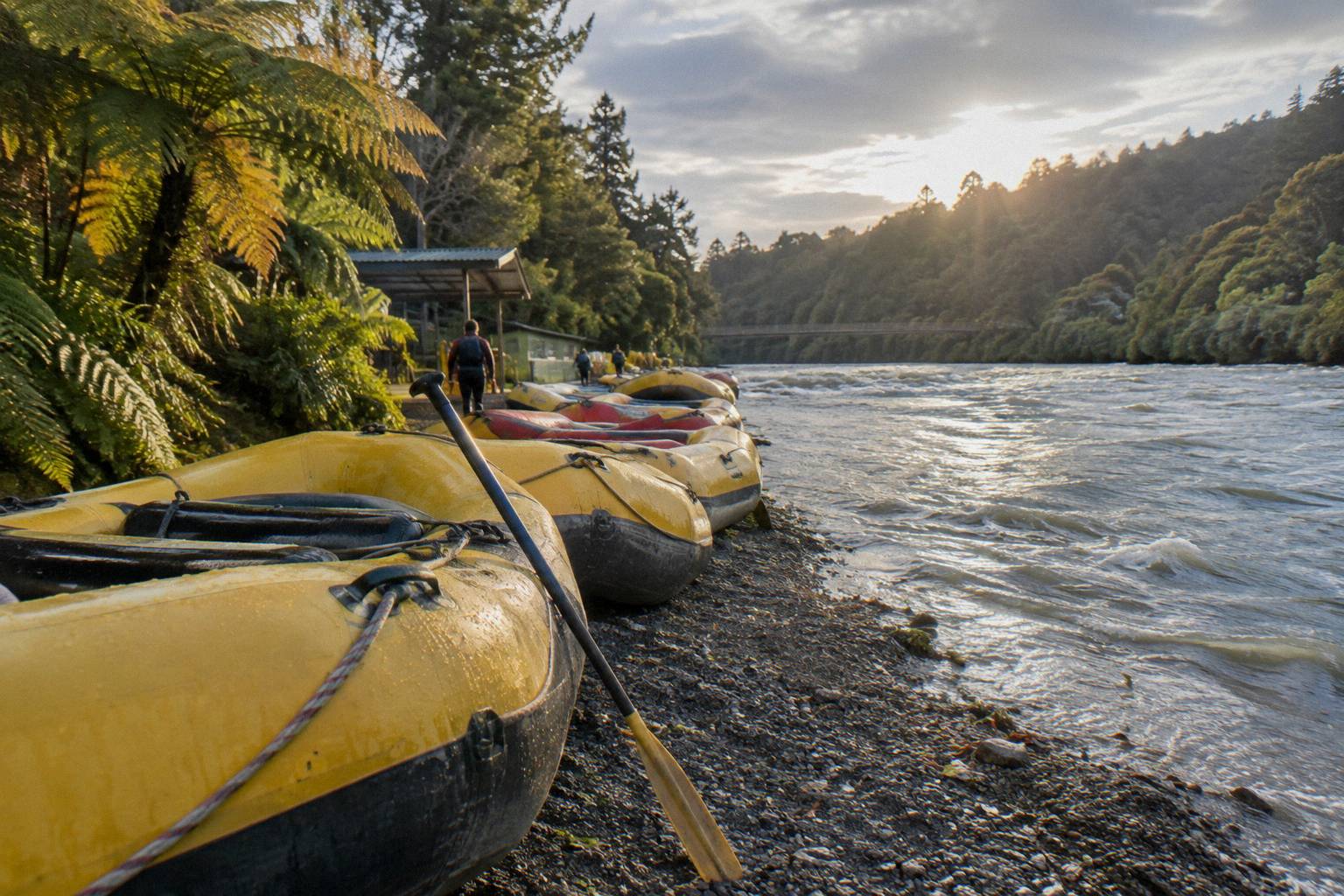
They change what you wear to the base, not in the raft. Rotorua Rafting runs 3 trips a day in winter, at 10am, 12pm and 2pm, and 6 or more in summer, every 30 minutes on demand; Kaituna Cascades runs 10:30am, 12:30pm and 2:30pm daily, with 8:30am and 4:30pm added in summer. Early and late slots mean changing in the cooler part of the day.
Those times belong to their operators and their seasons, and the booking calendar holds every actual departure, so treat the list above as the shape of the schedule rather than a promise of any particular time. The wardrobe consequence is simple: for an 8:30 or 4:30 slot, put real clothes over the swimsuit for the drive, and keep the towel and dry layers where you can reach them at the take-out, because you will want them before the heater has caught up.
There is a second consequence that only shows up in winter. A 2pm departure in July finishes in the late afternoon with the light already going, and a rafter standing in a wet wetsuit at the changing area discovers why the dry clothes in the car matter more than anything worn during the run. In summer the same slot finishes in full warmth and the whole question dissolves. This is the one place the schedule genuinely touches the packing list, so when you compare departure times on the booking calendar, think about the end of the trip, not the start.
| Operator | Winter trips | Summer trips |
|---|---|---|
| Rotorua Rafting | 3 a day, 10am, 12pm, 2pm, 1 May to 31 Aug | 6 or more a day, every 30 minutes on demand, 1 Sep to 30 Apr |
| Kaituna Cascades | 10:30am, 12:30pm, 2:30pm daily | Plus 8:30am and 4:30pm in summer |
What Should You Leave Home?
Anything beyond the swimsuit and the towel that you were tempted to wear in the boat: your own shoes, cotton layers, jewellery, and anything you would grieve losing in a river. The operator pages do not publish a prohibited list, so the honest rule is the packing list read backwards, if Kaituna Cascades does not ask you to bring it, the raft does not need it, and a river is an unkind place for valuables.
The safest home for keys, phone and wallet is the car or the base, not a pocket under a wetsuit. Kaituna Cascades notes that GoPro-style mounting questions belong to the operator conversation, with Rotorua Rafting allowing GoPro mounts on its trips, so ask before you bring a camera anywhere near the water rather than assuming. The write-up on the free sauna after rafting explains which products carry it, and that is an after-trip comfort worth planning around the same way you plan the towel.
Jewellery deserves its own sentence because it fails quietly. Rings and straps catch on paddle shafts and raft lines, and a loose item that goes into the river at the top of a rapid does not come back. The same logic covers sunglasses: if you need them for the drive, wear them to the base and hand them over with your car keys, because a retainer strap is an accessory the operator pages do not mention and a lost pair is a common, avoidable expense. The principle across all of it is that everything you carry into the boat is something the river gets to keep.
Transport is one thing you can also leave to the operator, at least on one product: "Rotorua White Water Rafting | Kaitiaki Adventures + Transport" includes free hotel pickup, from NZ$139 per person, rated 5.0 from 823 reviews, 2h30 duration, minimum age 13 on that listing. That changes the wardrobe question slightly, since you can leave the dry clothes in your room and step into a warm vehicle at the end. Check the live price for your date on the booking page.
What Trips People Up Before You Book
Most wardrobe problems on the Kaituna are packing problems: people bring too much, bring the wrong shoes, or dress for the drive rather than the river. The operator-supplied kit means a first rafter needs almost nothing, and the swimwear-and-towel list from Kaituna Cascades means the mistakes all involve adding rather than forgetting. Weight and age limits live on the product pages, and each listing carries its own.
The recurring slips look like this:
- Wearing cotton under the wetsuit when the fleece supplied is the layer designed for that job.
- Bringing sneakers for the boat when booties are part of the issued kit.
- Packing valuables for the run instead of leaving them at the base or in the car.
- Forgetting the towel, the one item actually named on the bring list.
- Assuming the summer temperature means skipping the splash jacket, which the operators still supply.
- Mixing up twin products when checking prices; they are separate cards with separate figures and must be compared that way.
A few of these deserve a second line each, because they are the ones that cost money or a place on the boat. The age minimums differ between listings on the same stretch of water, with the flagship Rotorua Rafting product listing a minimum age of 10 and the Kaituna Cascades products listing 13, so a family with a ten-year-old and a twelve-year-old should read each listing's own figure before choosing. The weight terms sit on the operator pages too, with Kaituna Cascades listing a maximum of 120 kg and Rotorua Rafting 130 kg. None of this is wardrobe, but all of it surfaces at the same moment the kit does, at the base, on the day, when it is too late to fix.
Safety on the commercial side is audited rather than assumed: operators must pass a safety audit by a WorkSafe-recognised auditor and appear on the WorkSafe adventure activities register under the Adventure Activities Regulations 2016, so the kit you are handed at the base sits inside a regulated system. For the wider risk picture, the guide to whether white water rafting is safe covers it properly. The budget trip on this site is a different card from the flagship one: "Rotorua Rafting: Kaituna River Rafting Experience - Free Sauna", the 2h run, from NZ$74 per person, rated 4.9 from 490 reviews, minimum age 10 on that listing. The booking page shows the price for the date you want.
There is more on this site about the river and the kit if you want it before you decide: Rafting Rotorua collects the operator guides, and the planning pieces below go deeper on each piece of the day. If the transfers product caught your attention for the warm-ride-home logic, its full hotel-transfer trip page breaks down what pickup includes.
Keep Reading
- What to bring white water rafting, the full bag beyond the wardrobe
- What happens on a Kaituna rafting trip, the run minute by minute
- Rafting with kids and the minimum ages, if a 10-year-old is coming
Common Questions About Rafting Kit
What To Wear White Water Rafting?
Wear a swimsuit under your clothes and bring a towel; that is the entire personal list Kaituna Cascades gives. The operators supply the wetsuit, helmet, life jacket, fleece, booties and splash jacket you wear in the raft, so your own wardrobe is only for the drive there and the warm dry change afterwards.
Do I Need To Buy Wetsuit Booties Or River Shoes?
No. Booties appear on the supplied kit lists of both Rotorua Rafting and Kaituna Cascades, so footwear for the raft is handed to you at the base. Bring shoes for the drive and the walk around town, and leave them in the car for the run.
What Do I Wear Under The Wetsuit?
Your swimwear, plus the fleece the operators supply when the day calls for it. The water runs about 24 °C in summer and about 12 °C in winter per the Rotorua Rafting FAQ, so the fleece layer earns its place in the colder months and is a judgement call in the warmer ones.
Can I Wear My Own Clothes In The Raft?
The packing list does not ask for them, and the supplied kit is designed to work as a set. Cotton layers soaked in river water stop insulating, so the practical answer is to change fully at the base, wear what is issued, and keep your own clothes dry for the take-out.
Does The Kit Change Between Summer And Winter Trips?
The list does not, the layering does. Summer water sits at about 24 °C and winter at about 12 °C on the operator FAQ, so winter runs use the full stack including the fleece, while summer runs give you more discretion over how much you wear under the splash jacket.
Can I Bring A Camera Or Phone On The Raft?
Treat the river as a no-pocket zone: keys, phones and wallets stay at the base or in the car. Rotorua Rafting allows GoPro mounts on its trips, so if you want photos of the run, ask the operator about mounting options when you book rather than carrying loose electronics into the boat.