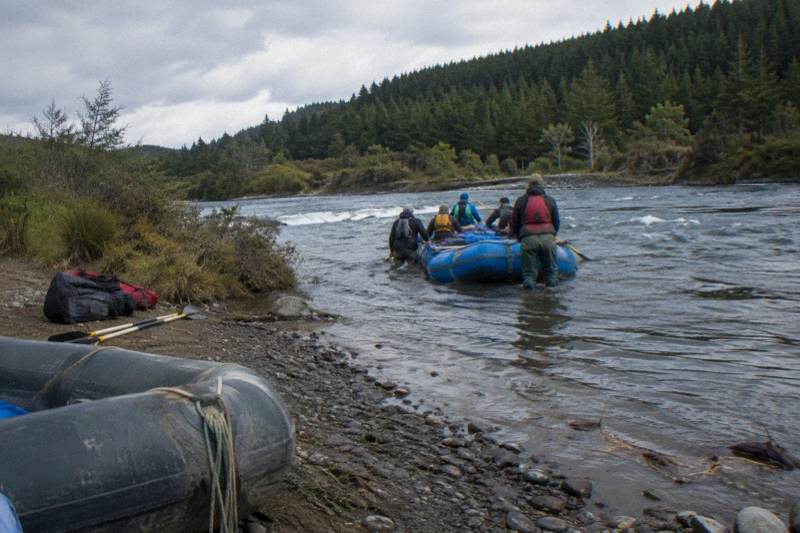
Rapid Grades Explained For Rafters: Class 2 To Class 5
The class 2 to class 5 scale is the shorthand every rafting operator in New Zealand uses to describe how hard a stretch of water is. Here is what each grade means in plain terms, and which trips around Rotorua sit at which grade.
Short answer
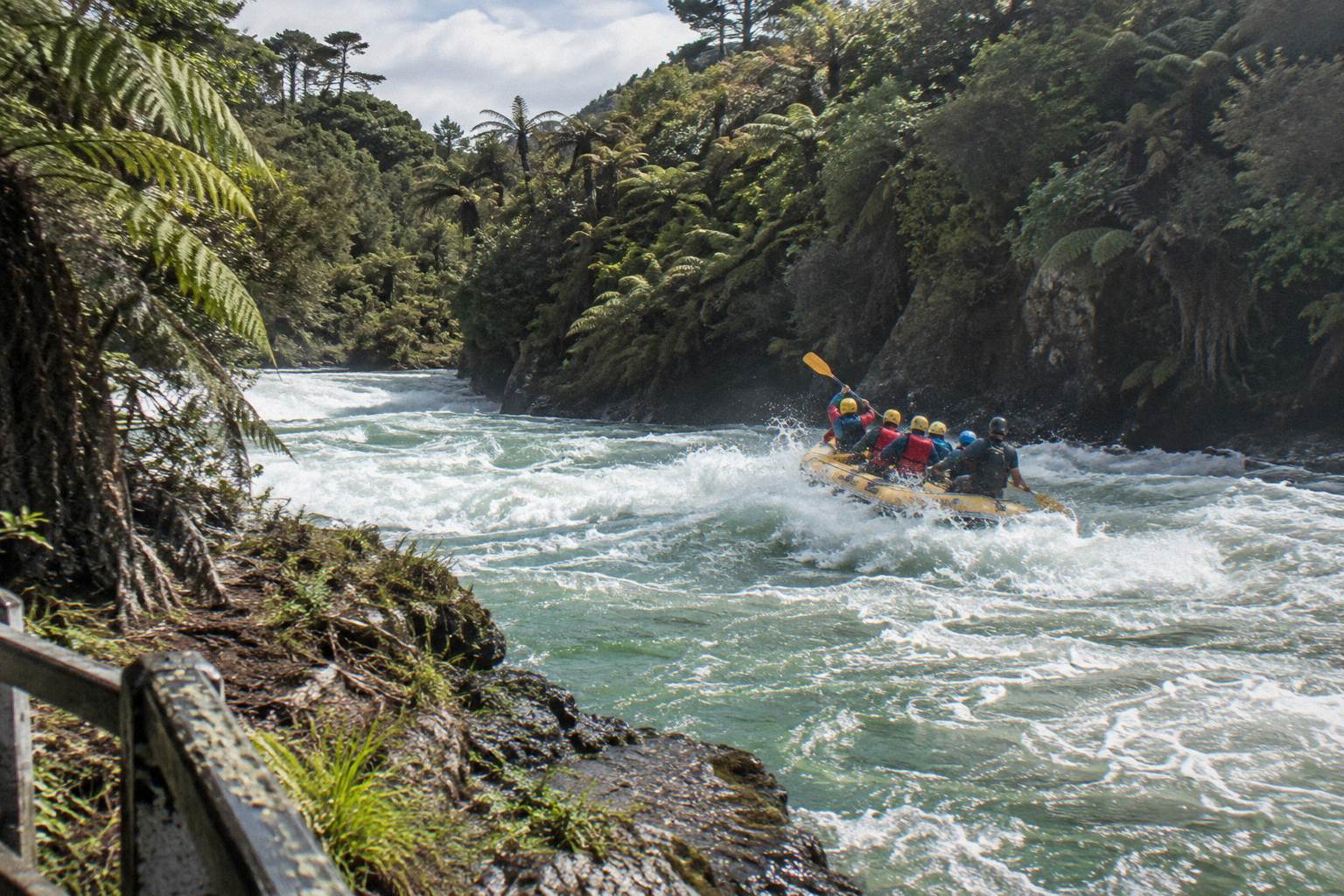
Rapid grades run from class 1, which is moving flat water, to class 6, which is considered unrunnable. Class 3 means irregular waves that need a guide steering, and class 4 adds powerful, continuous water with precise manoeuvring. Around Rotorua, the Rangitaiki Grade 2 listing suits age 5 up, while the Kaituna is sold as Grade 5.
The Kaituna is the river most visitors come here for, and its flagship product, Rafting With Hotel Transfers, is the trip most first-timers land on: Grade 5 as sold, minimum age 13 on that listing, from NZ$139 per person with pickup included. This page owns one job: explaining the scale itself, class 2 through class 5, and mapping the local trips onto it. For the river-by-river detail on the Kaituna specifically, the Kaituna rapids and grade breakdown carries the deeper treatment.
| Fact | Detail |
|---|---|
| The scale | The International Scale of River Difficulty, class 1 to class 6 |
| Class 3 in one line | Irregular waves, narrow passages, a guide steers actively |
| Class 4 in one line | Powerful, continuous water, precise manoeuvring, consequential features |
| Class 5 in one line | Long, violent rapids, steep drops, for experienced crews with strong safety cover |
| Easiest local listing | Rangitaiki Grade 2, minimum age 5, 4 hours with 1.5 hours on the water, from NZ$125 |
| Signature local run | Kaituna River, sold as Grade 5, Tutea Falls at 7 metres by the operators' figure |
| Hardest local listing | Wairoa River Grade 5, selected Sundays only, from NZ$190 |
What The Class 2 To Class 5 Scale Actually Measures
The Class 2 through Class 5 scale measures the difficulty and consequence of whitewater, not how much fun a run is or how wet you get. Each step up the scale changes what the water can actually do to a raft, marking a real shift in the hazards, maneuvers, and risks involved rather than a simple increase in splash level. Class 2 is straightforward water with clear channels and small waves, where a competent crew barely needs to paddle hard. Class 3 introduces irregular waves and routes that need reading. Class 4 brings continuous, powerful water where a missed line matters. Class 5 is long, violent and steep, run by operators with serious safety systems in place. The scale is described in full in the Wikipedia entry for Whitewater, which covers the International Scale of River Difficulty from class 1 to class 6, and grades are always read with local context, because the same class 4 rapid behaves quite differently at low flow and at high flow.
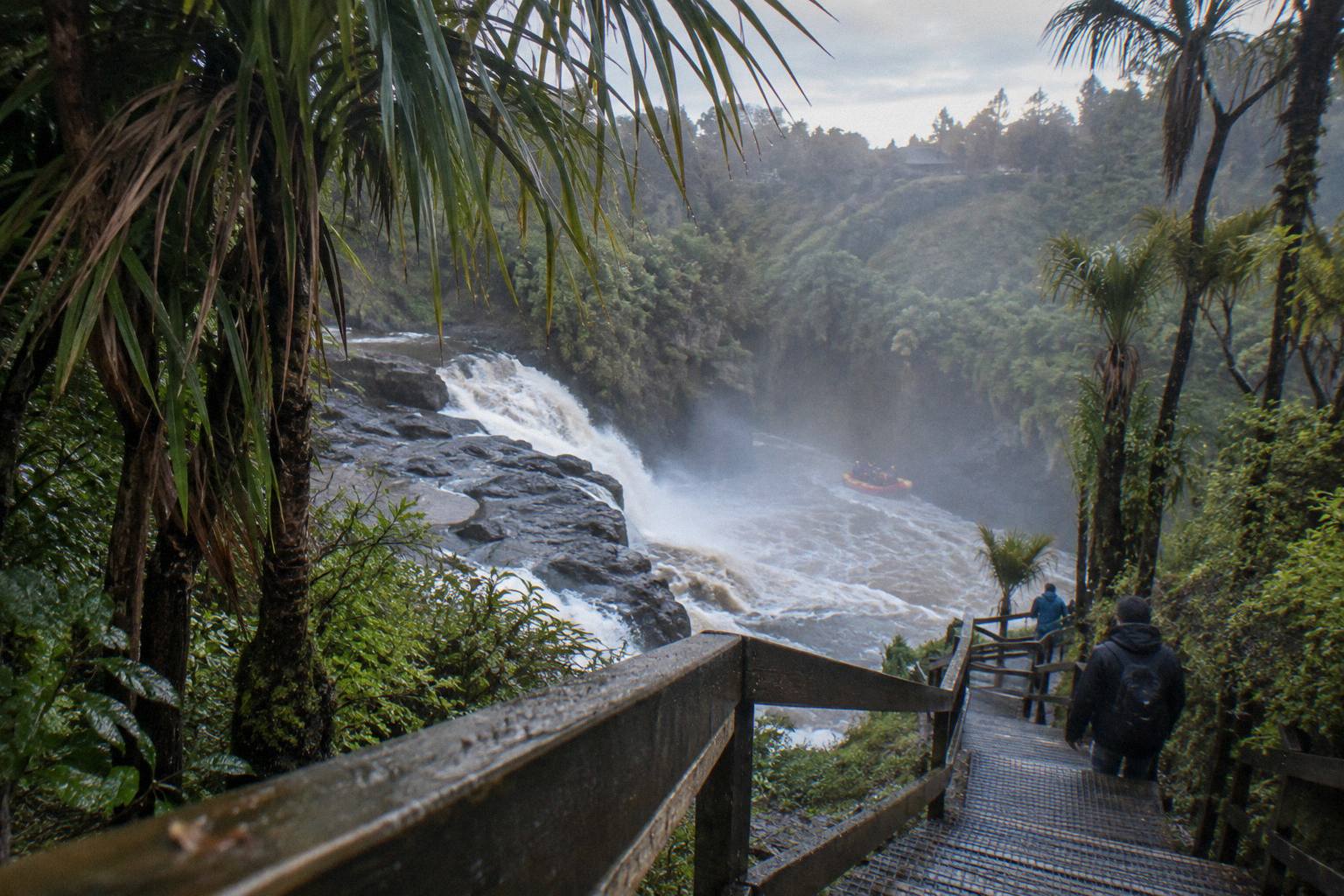
Two points about how the scale works in practice deserve emphasis. First, grades describe a stretch of river, not a whole river: a single trip can pass through class 2 water, a class 3 rapid and a class 5 waterfall pool in an hour, which is exactly the shape of the Kaituna run. Second, operators grade their own trips conservatively for commercial reasons, so a trip sold as Grade 5 may be built from Grade 4 and 5 rapids with a guided descent of one waterfall. That is how the Kaituna is described by its operators, and it is why a Grade 5 label alone does not tell you whether beginners are welcome, because on the Kaituna they are, with ages set per listing.
A third point follows from the first two: the scale is descriptive, not regulatory. There is no authority that certifies a rapid as class 4 rather than class 3; the grade on a trip page is the operator's own reading of the water at a typical flow. This is why the same river can carry a Grade 2 listing from one operator and a Grade 4 description from another, as the Rangitaiki does. When you compare trips, compare the product descriptions, the minimum ages and the stated requirements, not the bare grade numbers alone. The grade tells you the shape of the difficulty; the product details tell you whether you fit it.
Class 3 Vs Class 4: Where The Line Sits
Class 3 is water a guided raft can read at speed, with waves and drops that are exciting but forgiving; class 4 is water that demands precision, where features are powerful enough that a mistake sends the raft somewhere you do not want it. On the International Scale, class 3 rapids have moderate, irregular waves and narrow passages that require complex manoeuvring in the boat. Class 4 rapids are powerful but predictable, need precise boat handling, and carry features that may be hard to see from the water. Class 5 extends the same trend into long, obstructed, violent rapids where scouting matters and the consequences of a swim are real and immediate.
The practical difference for a first-time rafter is usually less dramatic than the numbers suggest. A guided commercial raft on class 3 water is a genuinely gentle introduction: the guide does the reading, the crew paddles forward on command, and the worst outcome of most errors is a slow float to the next eddy. Class 4 in a guided raft still works for most people who can swim and want to be thrilled, because the guide's line is rehearsed daily and the crew's job is power and timing rather than judgement. Class 5 with a commercial operator is a different contract again: you are trusting the operator's safety systems entirely, and the pre-trip briefing covers what to do if the raft flips, not just how to paddle.
| Class | What The Water Looks Like | What The Crew Does | Who It Suits |
|---|---|---|---|
| Class 2 | Clear channels, small waves, gentle drops | Paddle lightly, enjoy the scenery | Families, young children, nervous first-timers |
| Class 3 | Irregular waves, narrow passages, waves that hit the boat | Paddle hard on command, follow the guide's calls | Confident beginners, most adults |
| Class 4 | Powerful, continuous rapids, features hard to see from the water | Precise, timed paddling, brace through big waves | Adventurous adults, strong swimmers |
| Class 5 | Long, violent, steep rapids and drops | Follow instructions exactly, expect to get worked | Experienced rafters or well-briefed first-timers with daily-run operators |
If you are weighing two grades directly, the single-grade comparisons elsewhere on this site go deeper: whether class 3 or class 2 is harder covers the gentle end of the scale, the difference between class 4 and class 5 rapids covers the sharp end, and whether a beginner can do class 4 rapids answers the most common confidence question in between. The Kaituna, for reference, is sold as Grade 5 but built, as the operators describe it, from Grade 4 and 5 rapids building to the falls. That hybrid shape is exactly why it works for beginners: the difficulty is concentrated in short, well-managed moments rather than spread across an unbroken gorge.
If the grades above are pushing you toward a decision, three products cover the whole span of the scale as sold here: a Grade 5 Kaituna run with hotel transfers, a Grade 2 Rangitaiki float suitable from age 5, and a Grade 5 Wairoa release-Sunday trip for confident swimmers.
How The Local Trips Map Onto The Scale
Every rafting product covered here names a grade, and the span runs from a Grade 2 family float to two different Grade 5 products with very different shapes: the Kaituna's short, waterfall-led run and the Wairoa's release-driven big-water trip. The table below lists each grade with the product sold at it, its operator, its minimum age and its from-price as shown on the booking page. Amounts are New Zealand dollars, and prices vary by date and group, with the exact figure shown when you check a date. The Kaituna detail in the table belongs to this scale overview; the river's own page carries the fuller picture.
| Product | Operator | Grade As Sold | Minimum Age | From Price |
|---|---|---|---|---|
| Grade 2 Rafting, 4h | Rotorua Adventures Kayak & Raft | Grade 2 | 5 | NZ$125 per person |
| Rafting With Hotel Transfers | Kaitiaki Adventures Aotearoa | Grade 5 (Kaituna) | 13 | NZ$139 per person |
| Free Sauna, 2h30 Kaituna Trip | Rotorua Rafting | Grade 5 (Kaituna) | 10 | NZ$135 per person |
| Kaituna Cascades, The Originals | Kaituna Cascades | Grade 5 (Kaituna) | 13 | NZ$135 per person |
| Wairoa River Grade 5, 5h | Kaituna Cascades | Grade 5 (Wairoa) | 13 | NZ$190 per person |
Note what the table does and does not say. The three Kaituna Grade 5 rows are separate products from different operators, each with its own card and its own price, not one trip at three prices. Minimum ages are per listing, so the same river can welcome 10-year-olds on one product and start at 13 on another. And the two Grade 5 grades are not interchangeable: the Kaituna's Grade 5 centres on one 7-metre waterfall by the operators' figure, while the Wairoa's Grade 5 is sustained big water that only exists on release Sundays. The Wikipedia entry for the Kaituna River covers the river's geography, and grades in general are explained in the Wikipedia entry for Rafting.
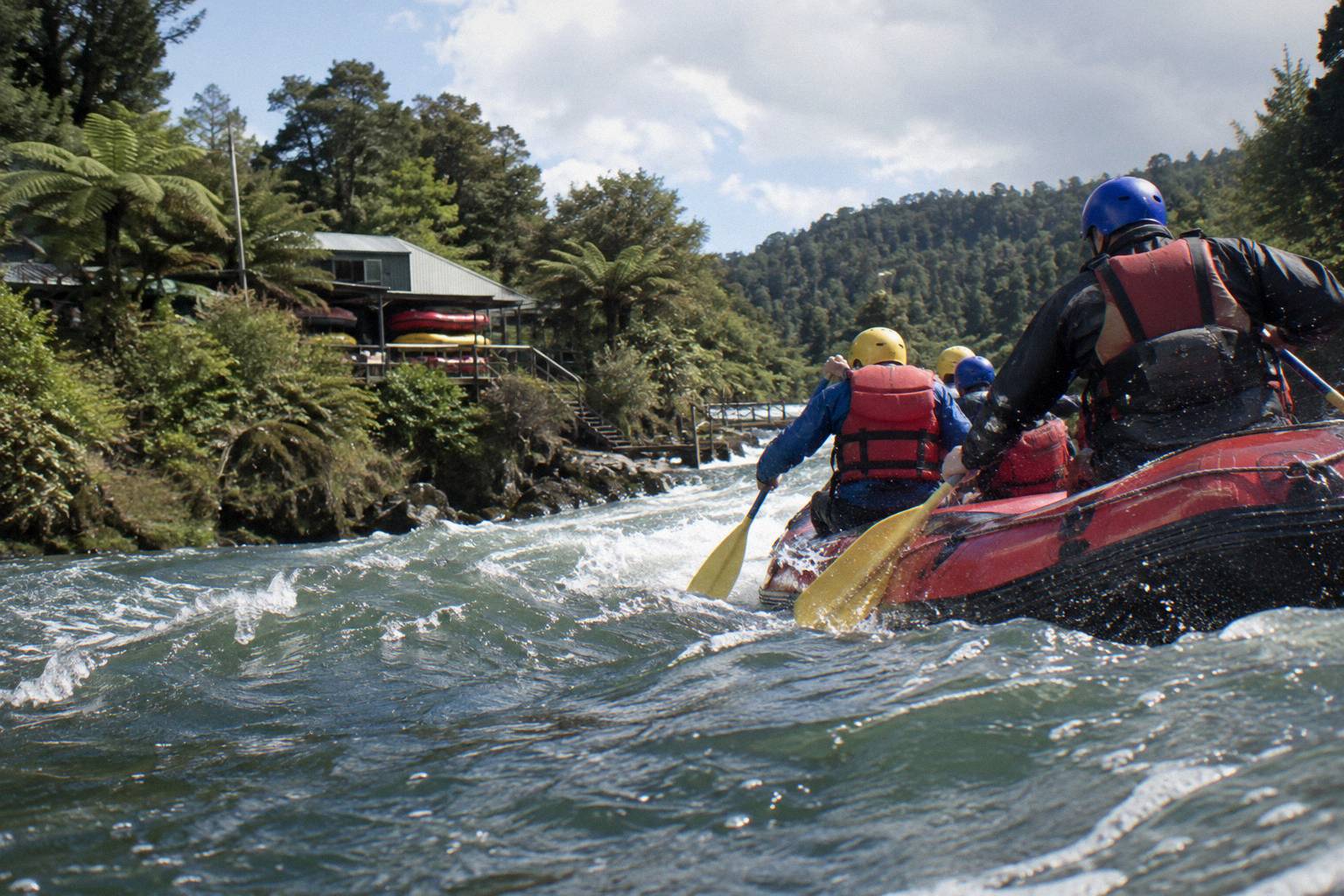
One product sits at the easy end and deserves its own look. The Grade 2 Rangitaiki trip is the only Grade 2 listing here, it runs 4 hours with 1.5 hours on the water, and its minimum age of 5 makes it the natural entry point for families whose youngest member rules out every Grade 5 option on age alone.
Wondering whether a Grade 5 run is a step too far for your first rafting trip? The booking page answers that directly.
The Rangitaiki: Grade 2, And Why Two Operators Describe It Differently
The Rangitaiki shows up here in two very different guises: a Grade 2 family trip and a Grade 4 wilderness run, and both descriptions hold because they are separate products from different operators on different stretches and conditions. The Grade 2 version, "Rangitaiki Rafting Grade 2", is listed by Rotorua Adventures Kayak & Raft: minimum age 5, 4 hours total with 1.5 hours on the water, from NZ$125 per person. Kaituna Cascades separately describes a Grade 4 wilderness trip on the same river, meeting 9:30am at 33 Waipa State Mill Road or a central pickup with no self-drive option, running when river levels and group size allow, about an hour south-east towards Murupara.
The split matters because it shows exactly why this page treats grade as a property of a product, not of a river. A river as long as the Rangitaiki holds easy water and harder water, and each operator packages a different section at a different pace with a different crew in mind. When a trip description says Grade 2, the buyer's question is simple: will the youngest and least confident person in the group cope? On the Grade 2 listing, with a minimum age of 5 and moving but gentle water, the answer for most families is yes, subject to how the trip feels on the day. The Wikipedia entry for the Rangitaiki River gives the river's full course, and the Rangitaiki rafting guide covers the trips in detail. Never treat one grade number as the river's grade; treat it as the product's.
The Kaituna: Sold As Grade 5, Built From Grade 4 And 5
The Kaituna run is sold as Grade 5, and the Kaituna Cascades blog describes its rapids as Grade 4 and 5 building to the falls, which is the pattern to expect: a rising sequence over 14 rapids and drops and 3 waterfalls, capped by Tutea Falls at 7 metres by the operators' figure. Kaituna Cascades states the run takes 50 to 60 minutes on the water inside a roughly 2 hour experience, with the put-in and base at Okere Falls, 23 minutes from Rotorua. The run exists 365 days a year because council-controlled gates at the Lake Rotoiti outlet hold the flow, a detail covered on the Wikipedia page for Lake Rotoiti and by the operators themselves. Flow can still shift the character of the water, and a high-flow spring changes how the big waterfall reads even though the trip runs.
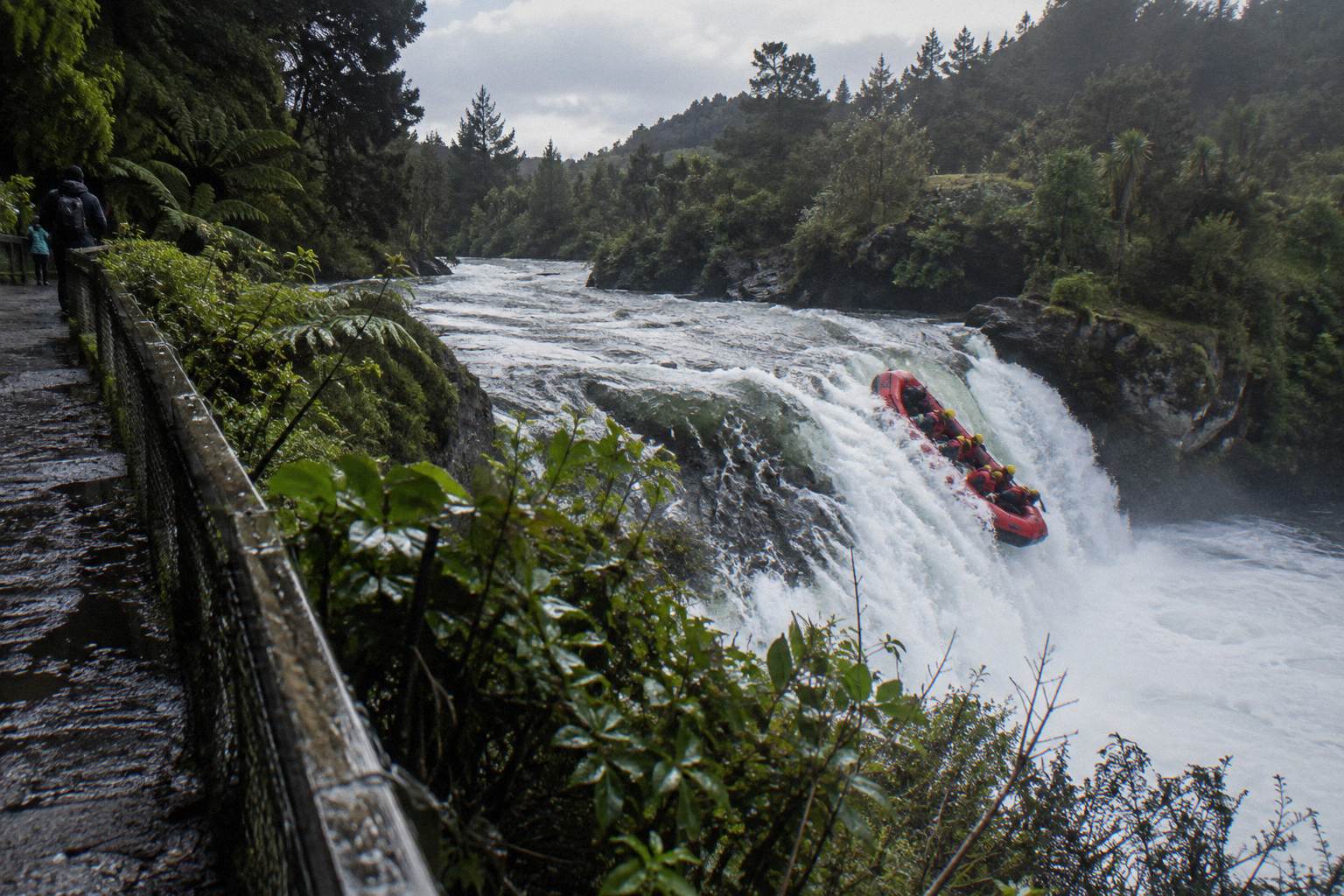
For a beginner weighing a Grade 5 label, the Kaituna is the reassuring case study. First-timers run it constantly because the Grade 5 rating is earned almost entirely by the waterfall sequence, not by miles of unbroken class 5 water: the rest of the run is Grade 4 and 5 rapids with pools between, and each operator runs the trip daily, in all seasons, with the same guides reading the same lines. The "highest commercially rafted waterfall in the world" description is the operators' claim, which they support by listing comparable rafted falls at 5.5, 4.3 and 3.7 metres elsewhere in the world. The fuller safety picture, including what the grade means for a nervous first-timer, sits in the detailed Kaituna rapids grade guide, and the question of swimming ability is answered separately in whether you need to swim to go rafting.
Among the products, the "Free Sauna, 2h30 Kaituna Trip" from Rotorua Rafting carries a 5 rating from 2,191 reviews, from NZ$135 per person, minimum age 10 on that listing, with the free sauna belonging to the Rotorua Rafting products. Its twin, the "Free Sauna, 2h Kaituna Run", starts from NZ$74 per person and is a separate card with its own rating of 4.9 from 490 reviews; the two are never one product at two prices. Ages, inclusions and durations all follow the listing, which is the recurring lesson of this whole scale page: the grade opens the door, the product details decide the booking.
The Wairoa: Grade 5 That Only Exists On Sundays
The Wairoa is the other Grade 5 product here, and its grade is inseparable from its schedule: the river only carries raftable water on selected Sundays when the power company releases it, so the trip is a 9:30am departure on a listed date, not an any-day booking. Kaituna Cascades' Wairoa trip is Grade 5, about 2 hours on 5 km of river inside 3 to 4 hours overall, minimum age 13, maximum weight 120 kg, and participants must be able to swim. The meeting point is a farm paddock at 1376 State Highway 29 near Tauriko, Tauranga, at the take-out. The product runs from NZ$190 per person, with a 5 rating from 470 reviews.
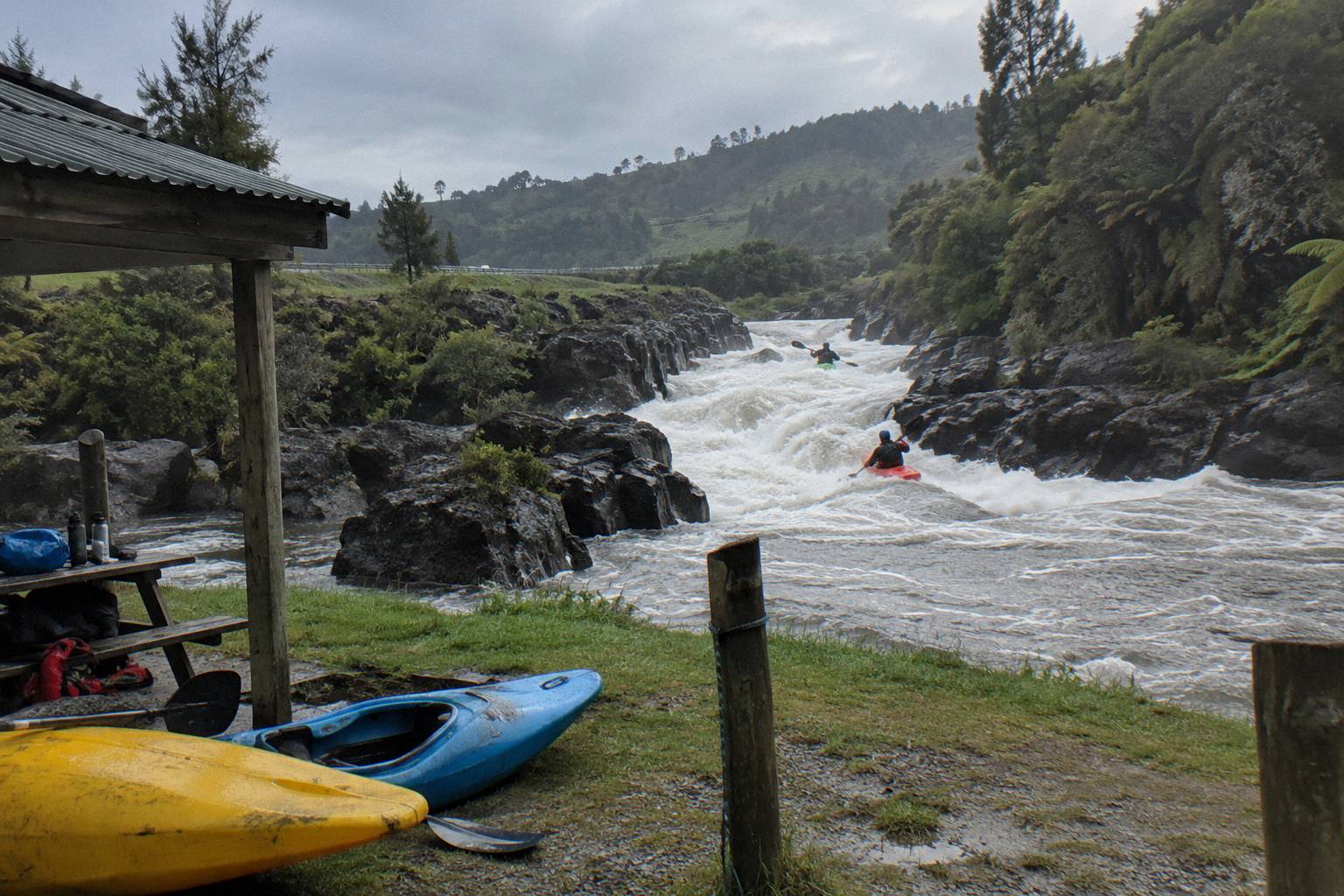
The operator lists the release Sundays on its page, so treat the calendar, not a season, as the planning constraint: check the booking calendar for dates rather than assuming any Sunday works. Where the Kaituna's Grade 5 is a short, waterfall-led descent with recovery pools built in, the Wairoa's is sustained big water through a gorge, which is why it carries a swimming requirement and a 13-year minimum alongside the 120 kg weight maximum. The Wairoa rafting guide covers the trip in full, and the Wikipedia entry for Tauranga covers the city the release river runs past. For anyone comparing the two Grade 5 experiences side by side, the fair framing is grade-equal but different in kind: one is a daily-run descent built around a single famous drop, the other is a rare, calendar-driven big-water day.
Choosing Your First Trip By Grade
Pick the grade that matches the youngest or least confident traveler in your group, not the most experienced one. Once that grade is set, narrow further by the dates your calendar actually allows, and only then compare prices. Grade does the heaviest filtering of any detail on a trip card, so locking it down first saves you from scrolling through options you could never actually book. With a 5-year-old, the Grade 2 Rangitaiki listing is the only trip here that fits, since the Kaituna listings start at 10 or 13 depending on the product and the Wairoa sits at 13. With teenagers of 13 or over, every Grade 5 Kaituna product is open, plus the Wairoa. With a fixed itinerary, the Wairoa only works if a release Sunday lines up with your dates, while the Kaituna runs daily year-round thanks to the control gates. Price differences across the Kaituna listings are modest, from NZ$61 to NZ$139 per person depending on the product, so the decision usually turns on inclusions such as hotel pickup or the sauna rather than on cost alone.
| Your Situation | Grade That Fits | Product To Look At First |
|---|---|---|
| Youngest rafter is 5 to 9 | Grade 2 | Grade 2 Rafting, 4h (Rotorua Adventures Kayak & Raft) |
| Family with a 10 or 11 year old | Grade 5 (Kaituna) | Free Sauna, 2h30 Kaituna Trip (minimum age 10 on that listing) |
| Adults, no car, staying in town | Grade 5 (Kaituna) | Rafting With Hotel Transfers (pickup included on that listing) |
| Strong swimmers wanting big water | Grade 5 (Wairoa) | Wairoa River Grade 5, 5h (release Sundays only) |
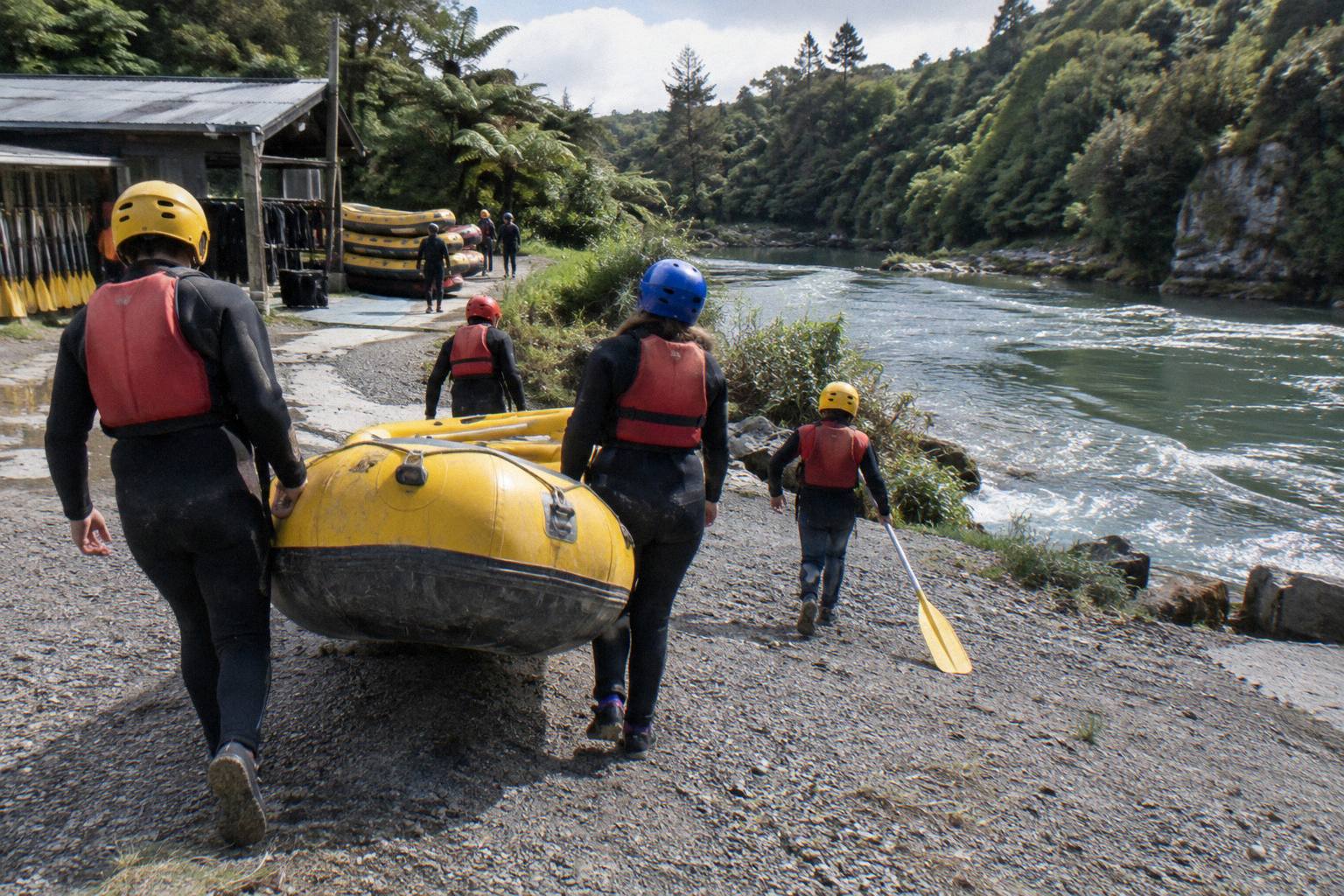
A few planning anchors help once the grade is chosen. Hotel pickup comes with both Kaitiaki Adventures listings: the rafting trip with transfers, from NZ$139 per person with a 5 rating from 823 reviews over 2h30, and the Kaituna River White Water Experience from NZ$61 per person, 2.5h. These are two separate cards with their own price, title and rating, not a discount framing. The free sauna belongs to the Rotorua Rafting and Rotorua Ziplines sauna products only, so do not assume it elsewhere. Ages are per listing, not per river. If the goal is a fuller day built around water, the raft and zipline combo question covers the pairing, and Rafting Rotorua lists each tour with its own grade, age minimum and price. For what a day actually costs, the pricing breakdown for Rotorua rafting does that job separately.
What Trips People Up Before You Book
Most booking mistakes around grades come from four places: treating a river as having one grade, assuming inclusions carry across operators, reading a twin product as a discount, and forgetting that one local Grade 5 only runs on listed Sundays. The Rangitaiki alone proves the first: one operator sells a Grade 2 listing, another describes a Grade 4 wilderness trip, and both are accurate for their own product. The second catches people who expect a sauna or a pickup that belongs to a different operator's product. The third wastes time: twin listings are separate bookable products, and their from-prices must never be merged into a like-for-like comparison. The fourth strands plans: the Wairoa has no midweek option at all.
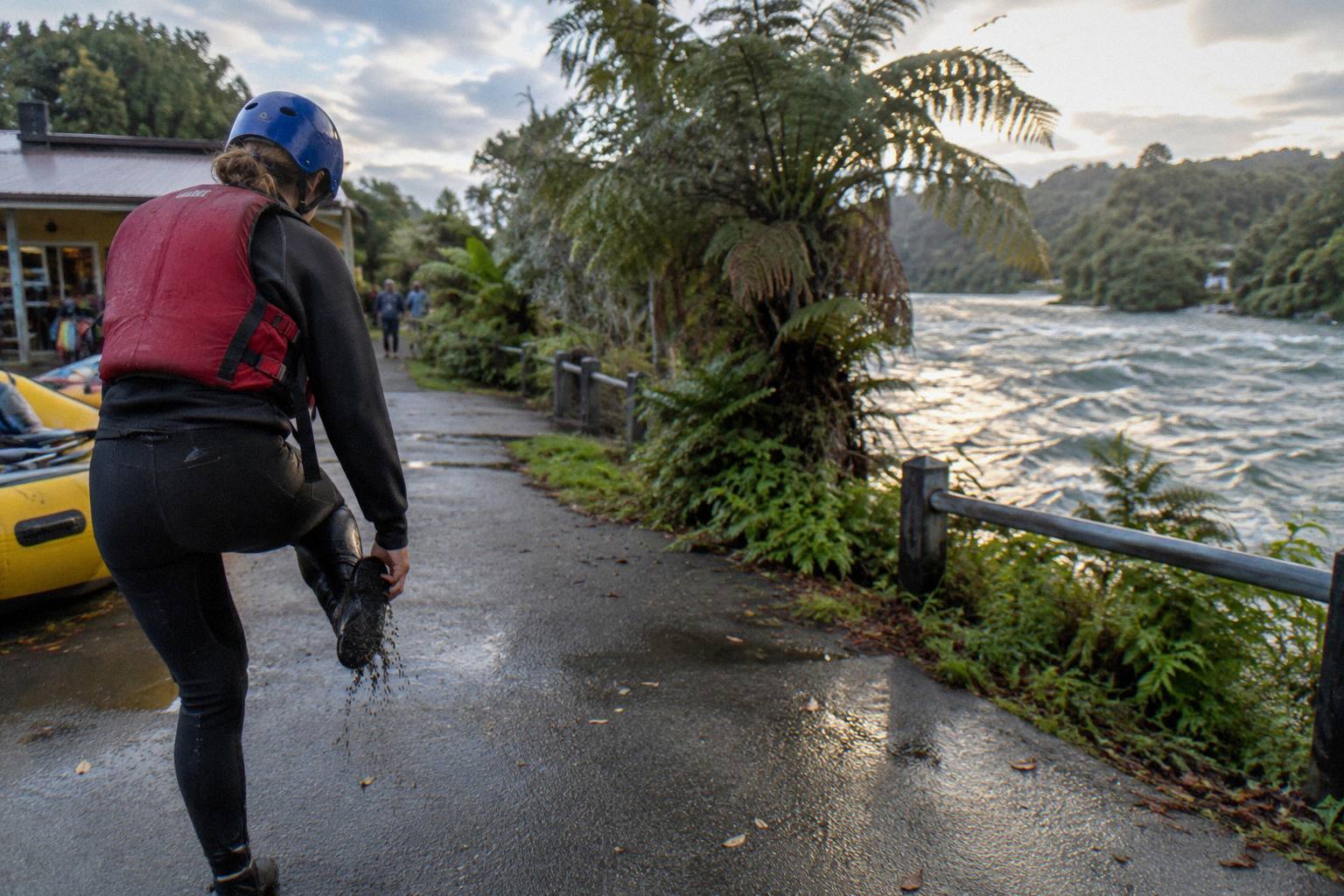
Beyond grades, small errors cost real slots. Check-in is 15 minutes early at Kaituna Cascades, and weight maximums differ by operator, 120 kg on the Kaituna Cascades trips and 130 kg on the Rotorua Rafting products. Bring swimwear and a towel, since wetsuits, helmets, life jackets, fleece, booties and splash jackets are supplied by the operators. Water temperature runs about 24 °C in summer and about 12 °C in winter per the operator FAQ, which is why the wetsuit is standard kit rather than optional. When a detail is not clear on a card, ask the operator before booking rather than assuming, because assumptions about grade, age or inclusions are exactly what the four mistakes above are made of. And if a trip is sold out on your date, the next departure is usually close by on the Kaituna, whose operators run multiple trips a day in season.
If one of the three below now matches your group, the calendar and the live price are a click away.
Common Questions About Rapid Grades
Is A Class 4 Rapid Dangerous For Beginners?
Class 4 means powerful water that needs precise handling, but a guided commercial raft runs class 4 with a trained guide who reads the line. The Kaituna, sold as Grade 5 and built from Grade 4 and 5 rapids, takes beginners daily on its listings from age 10 or 13 depending on the product.
What Is The Difference Between Class 3 And Class 4 Rapids?
Class 3 rapids have moderate, irregular waves and narrow passages that need a guide steering actively. Class 4 rapids are powerful and need precise manoeuvring, with features that may be hard to see from the water and consequences that matter if a line is missed.
What Grade Is The Kaituna River?
The Kaituna run is sold as Grade 5, and the Kaituna Cascades blog describes the rapids as Grade 4 and 5 building to the falls. The Grade 5 rating rests heavily on the waterfall sequence, including Tutea Falls at 7 metres by the operators' figure.
Can A Beginner Do A Grade 5 Rafting Trip?
Yes, on the Kaituna. Its Grade 5 listings run daily year-round with minimum ages of 10 or 13 per listing, supplied wetsuits and safety gear, and a 50 to 60 minute run with pools between rapids. The Wairoa Grade 5 is a different case, with a swimming requirement and a 13-year minimum.
What Is The Easiest Rafting Trip Around Rotorua?
The Grade 2 Rangitaiki listing from Rotorua Adventures Kayak & Raft is the gentlest, with a minimum age of 5, 4 hours total and 1.5 hours on the water, from NZ$125 per person.
Does A Higher Class Mean A Better Trip?
No, it means more difficult and more consequential water. A Grade 2 float with a 5-year-old and a Grade 5 waterfall descent are both good trips for the right group. Match the grade to your crew's confidence and swimming ability, not to a number.