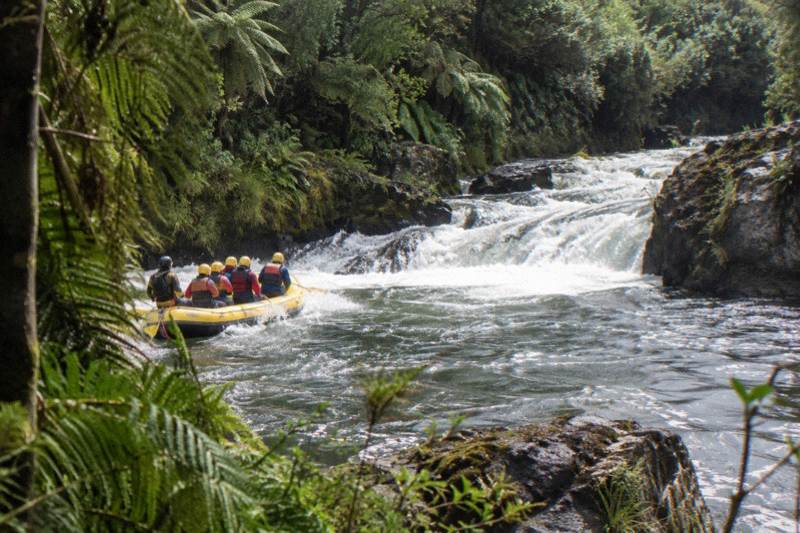
White Water Rafting For Beginners: What A First Trip Is Really Like
A first rafting trip on the Kaituna follows a shape the operators describe the same way: kit, briefing, roughly an hour on the water, and a finish back at the base. Here is that sequence, and how to pick between the products a beginner can actually book.
Short answer
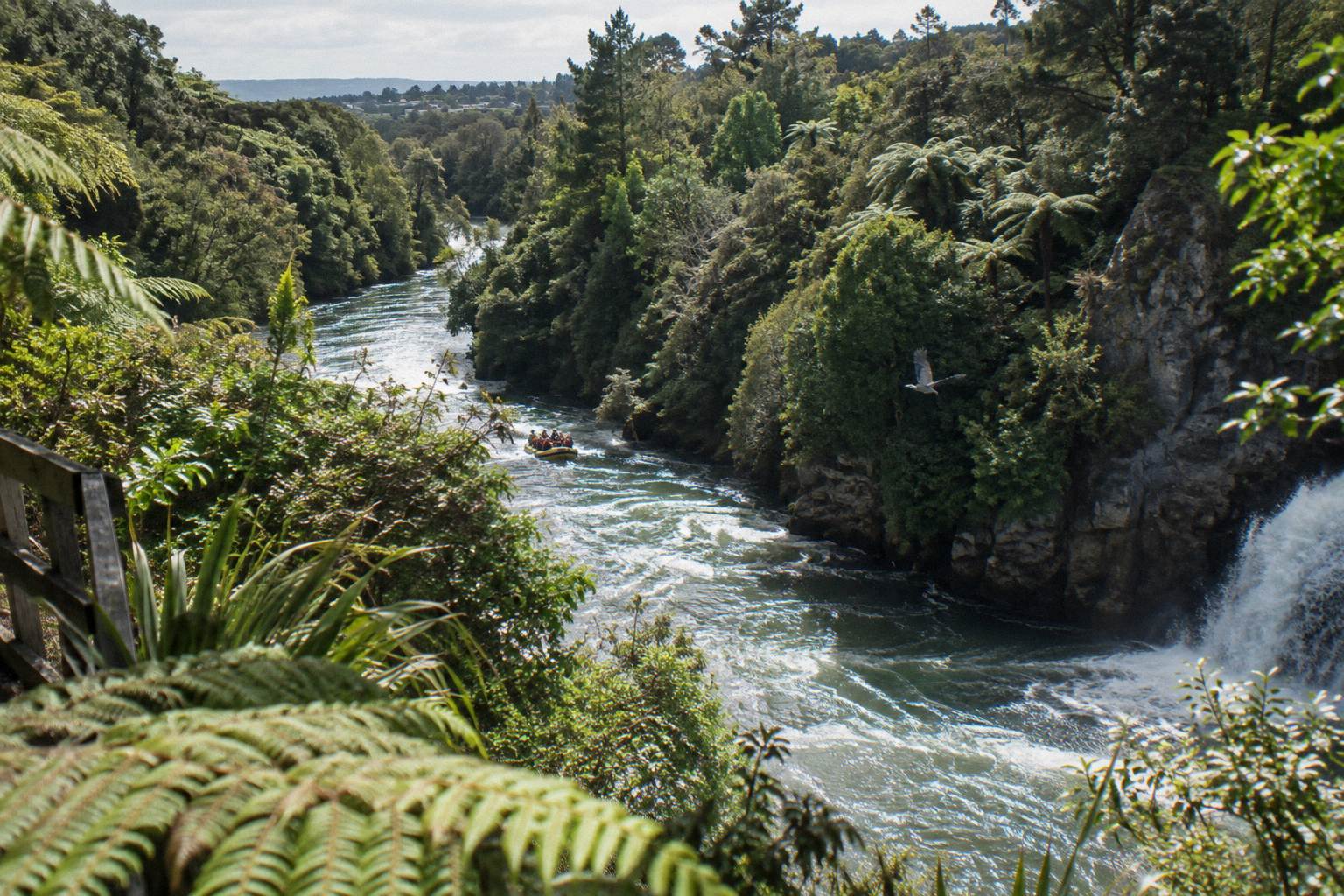
A first trip on the Kaituna runs from Okere Falls, 23 minutes from Rotorua, with about 50 to 60 minutes on the water inside roughly 2 hours. Trips are sold as Grade 5 and take beginners, with minimum ages of 10 or 13 depending on the product. Prices run from NZ$61 to NZ$135 per person.
Rafting on the Kaituna is the region's flagship water trip, and every product covered here launches from the same corner of the district. The most convenient first booking is the Rafting With Hotel Transfers tour page, the product this guide features throughout. This walkthrough covers what a first trip actually involves, in the order the operators themselves describe it, and then matches the bookable products to the kind of beginner taking them.
| Fact | Detail |
|---|---|
| Put-in and base | Okere Falls, 23 minutes from Rotorua |
| Time on the water | About 50 to 60 minutes |
| Whole experience | About 2 hours |
| Rapids and drops | 14, with 3 waterfalls |
| Grade | Sold as Grade 5 (Class V) |
| Tutea Falls | 7 metres, by the operators' figure |
| Season | 365 days a year, flows held by council-controlled gates at the Lake Rotoiti outlet |
| Water temperature | About 24 °C in summer, about 12 °C in winter, per the Rotorua Rafting FAQ |
Is White Water Rafting Ok For A First Trip?
Yes, in the sense the operators themselves state: the Kaituna rafting products listed here are sold to the general public, beginners included, with minimum ages of 10 or 13 depending on the product. The Kaitiaki Adventures rafting listing includes hotel pickup from central Rotorua. The river runs 365 days a year because council-controlled gates at the Lake Rotoiti outlet hold the flow steady, and roughly 50 to 60 minutes on the water sits inside about 2 hours for the whole experience.
The river itself is described in the Wikipedia entry for the Kaituna River, which drains Lake Rotoiti toward the Bay of Plenty. The rafting industry clusters at Okere Falls, where the river drops through a short, steep gorge. Operators sell the run as Grade 5, the top class on the scale explained in the Wikipedia article on whitewater and the International Scale of River Difficulty, though the Kaituna Cascades blog breaks it down further, saying the rapids are Grade 4 and 5 building to the falls.
That distinction matters to a beginner choosing a product. The number on the scale describes the hardest rapid on the run, not the difficulty of every minute. The Kaituna's gorge is short and pool-drop in character: rapids, then recovery water, then the next drop. Operators also run a gentler alternative, covered further down, on a different river with a different operator.
Safety in New Zealand commercial rafting sits under a formal regime. Adventure activity operators must pass a safety audit by a WorkSafe-recognised auditor and register with WorkSafe, and you can confirm an operator's registration yourself through the WorkSafe adventure activities register. That is a background check worth thirty seconds before you book anything, on any river.
What A First Trip Looks Like, Start To Finish
Arrival, kit, briefing, the run, the waterfalls, the finish: that is the sequence, and it takes about 2 hours in total, of which about 50 to 60 minutes are on the water. Kaituna Cascades asks rafters to check in 15 minutes early and to bring swimwear and a towel. The kit is supplied, the briefing happens at the base, and the trip ends back where it started.
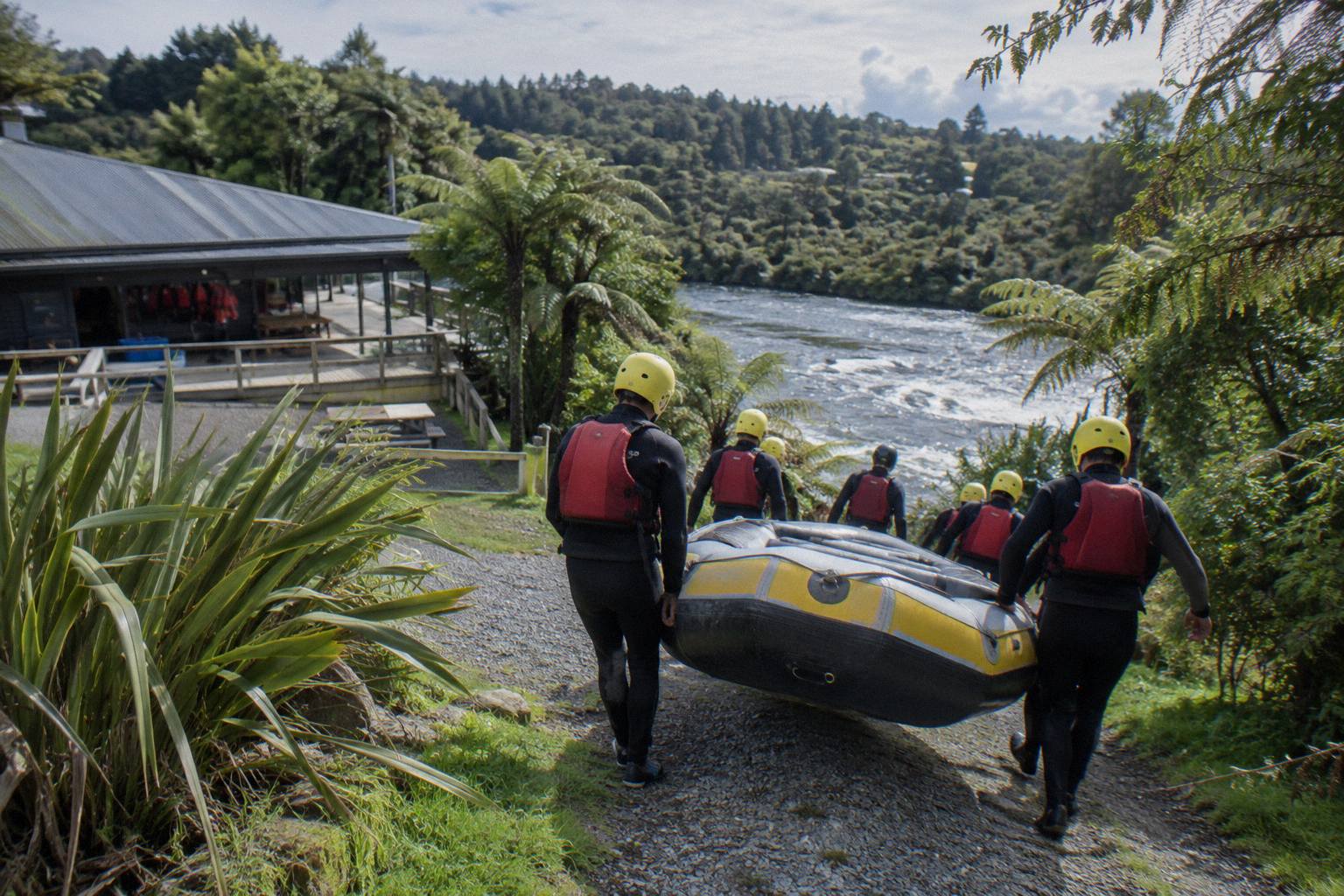
First, arrival. The Kaituna Cascades base sits at 18 Okere Falls Road with free parking and direct river access. The Rotorua Rafting base is at 761 State Highway 33, about 20 minutes from central Rotorua. Kaitiaki Adventures operates from 1135 Te Ngae Road, Tikitere, though its transfer products collect you from your hotel instead. Which base you drive to depends entirely on which product you booked.
Then kit. The Rotorua Rafting and Kaituna Cascades pages list wetsuits, helmets, life jackets, fleece, booties and a splash jacket as supplied. Water temperature runs about 24 °C in summer and about 12 °C in winter, per the Rotorua Rafting FAQ, so the fleece layer earns its place in the colder months. You bring swimwear to wear under the wetsuit and a towel for the finish. Kaitiaki Adventures' own product pages carry their kit description; say nothing beyond them.
| Stage | What Happens | Operator Detail |
|---|---|---|
| Arrival | Check in at the base | Kaituna Cascades asks for check-in 15 minutes early |
| Kit | Wetsuit, helmet, life jacket, fleece, booties, splash jacket | Supplied per the Rotorua Rafting and Kaituna Cascades pages |
| Briefing | Paddle commands and safety run-through at the base | Bring swimwear and a towel, per Kaituna Cascades |
| The run | 14 rapids and drops, 3 waterfalls, 50 to 60 minutes on the water | Kaituna Cascades pages |
| Tutea Falls | The 7 metre drop, by the operators' figure | Operators describe it as the highest commercially rafted waterfall in the world |
| The finish | Off the water and back at the base | About 2 hours for the whole experience |
The briefing is where the trip's mechanics get explained, at the base, before anyone gets wet. The operator pages describe the shape of this but not a script: commands, what to do if the raft hits a big drop, how to sit and hold. From there the run itself unfolds over 14 rapids and drops and 3 waterfalls. The step-by-step detail of the on-water sequence, rapid by rapid, is expanded in what happens on a Kaituna rafting trip, which pairs with this page if you want the granular version.
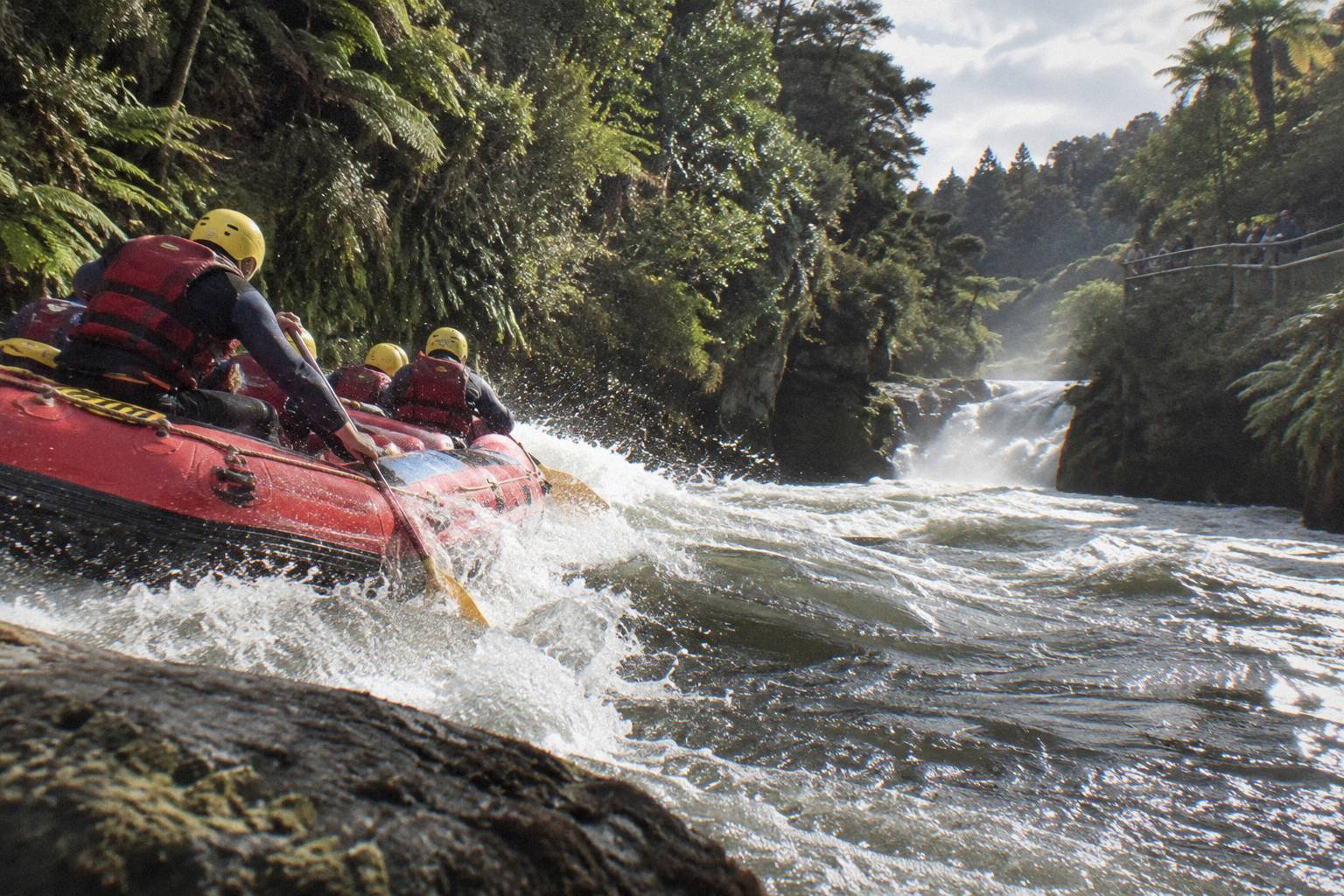
The waterfalls are the reason most people book. Tutea Falls stands 7 metres by the operators' figure, and the operators describe it as the highest commercially rafted waterfall in the world. The Kaituna Cascades comparison lists other commercial drops well below it: Agers Falls at 5.5 m, Sweets Falls at 4.3 m and Husum Falls at 3.7 m. Then the run flattens out, the raft reaches the take-out, and you head back to the base, towel in hand, about 2 hours after it all started.
Which Product Fits Which Kind Of Beginner?
Three decisions sort a beginner into the right product: age, whether you want hotel pickup, and how much you want to spend. The Kaitiaki transfer product costs from NZ$139 per person and collects you from your hotel. The Grade 2 Rangitaiki product, from NZ$125 per person with a minimum age of 5, suits a cautious group. All amounts are New Zealand dollars, and prices vary by date and group.
Start with age, because it eliminates products fastest. The Kaitiaki transfer product and the Kaituna Cascades products carry a minimum age of 13 on their listings. The Rotorua Rafting listings show a minimum age of 10, so a family with a 10 or 12 year old has a Kaituna option, and Kaituna Cascades says ages 10 to 12 join halfway along its run. The Grade 2 Rangitaiki listing goes down to age 5. Ages are per listing, never an operator-wide rule.
Then pickup. Both Kaitiaki Adventures listings include free hotel pickup, which removes the drive entirely. Rotorua Rafting offers an optional paid pickup, and the booking page shows the current arrangement for your date. On price, the cheaper Kaitiaki Kaituna product starts from NZ$61 per person, against NZ$139 for the version with transport. They are separate bookable products, not one trip at two prices.
The sorted view, product by product, reads like this.
| Product (short name) | From Price | Minimum Age | Best Fit |
|---|---|---|---|
| Rafting With Hotel Transfers (Kaitiaki) | NZ$139 per person | 13 | Beginner who wants pickup included |
| Free Sauna, 2h30 Kaituna Trip (Rotorua Rafting) | NZ$135 per person | 10 on this listing | Family with a 10 to 12 year old |
| Kaituna Rafting with Hotel Pickup (Kaitiaki) | NZ$61 per person | 13 | Budget beginner who wants pickup |
| Grade 2 Rafting, 4h (Rotorua Adventures) | NZ$125 per person | 5 | Cautious group or young family |
| Sledging With Transfers (Kaitiaki) | NZ$139 per person | 13 | Confident swimmer wanting sledging |
The Rafting With Hotel Transfers product is the one to pick when transport is the friction: minimum age 13, duration 2h30, from NZ$139 per person, 5.0 from 823 reviews. Check availability for your dates, since the booking page shows the price and departure for the day you want.
Budget sorting comes last but bites hardest. Kaituna rafting prices run from NZ$61 to NZ$135 per person, with one product showing its price only on the booking page. The cheapest Kaituna entry point is the Kaitiaki Adventures product at NZ$61, which includes hotel pickup. The Free Sauna, 2h Kaituna Run from Rotorua Rafting starts at NZ$74 per person and includes the sauna, an inclusion stated only on the Rotorua Rafting and Rotorua Ziplines listings. Say no more about other operators' inclusions, because their pages do not state them.
One listing prints no price at all: the Tutea Falls 2h Rafting trip from Kaituna Cascades Rafting, rated 4.9 from 380 reviews. The live booking page shows the price for the date. That trip shares its operator family with the Kaituna Cascades, The Originals product, from NZ$135 per person, 5.0 from 1,385 reviews, 2 hours, minimum age 13. They are separate listings with their own figures.
Several operators here run twin products that are easy to confuse. Rotorua Rafting has two sauna products, a 2h30 version and a 2h version. Kaitiaki Adventures lists its rafting and sledging trips with hotel pickup included. Rotorua Ziplines has a 2h30 zipline product and a 2h one. Each twin is a separate bookable product with its own price and rating, so compare them card by card and never as one trip at two prices.
The Kit You Wear And What To Bring
The operator pages list wetsuits, helmets, life jackets, fleece, booties and a splash jacket as supplied on the Rotorua Rafting and Kaituna Cascades products. You bring swimwear and a towel, per Kaituna Cascades. Water temperature spans about 24 °C in summer to about 12 °C in winter, which is why the fleece layer exists. Nothing on the pages suggests buying specialist gear for a first trip.
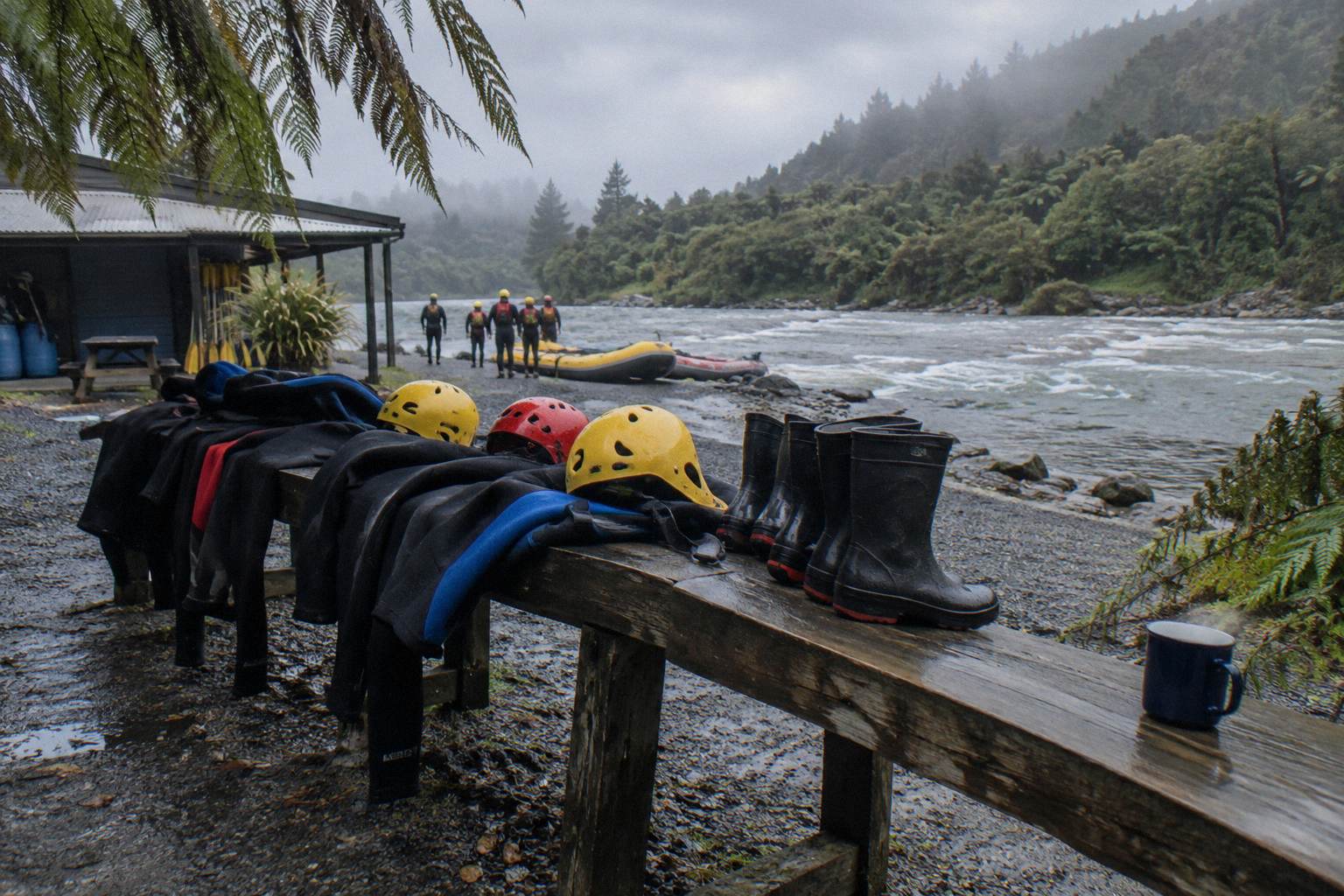
The supplied list is long because the water is cool even in summer. A wetsuit handles insulation, the splash jacket cuts wind at the take-out, booties protect feet on the rocks, and the life jacket and helmet are the safety pair. The well-fitted lifejacket and helmet recommendation recurs across safety guidance, and it is the one piece of kit worth checking yourself rather than accepting on autopilot. Other pages covering the same trip are gathered on Rafting Rotorua.
What you personally bring is short. Swimwear goes under the wetsuit. A towel for the end. A dry change of clothes for the drive home. Rotorua Rafting allows GoPro mounts, so a small action camera is an option on its products, but ask the operator about camera policy elsewhere. Beyond that, the deeper packing question, including footwear choices and the crocs debate, is covered in what to wear rafting and what to bring, which goes item by item.
A common beginner worry is swimming ability. Kaituna Cascades states a float test may be required, and its terms say you must be able to swim for the Wairoa product. For the Kaituna products, the operator pages state age and weight limits, and the briefing covers what happens in the water. The full discussion, including the operator wording, is in whether you need to swim to go rafting.
Weight and health terms sit with each operator. Kaituna Cascades sets a maximum weight of 120 kg and states its trips are not for pregnancy or heart conditions. Rotorua Rafting sets a maximum of 130 kg. These are operator terms, not river rules, and they differ between products on the same water, so read the terms on the product you actually book.
The Grade 2 Rangitaiki Option For A Cautious Group
The Grade 2 Rafting, 4h product from Rotorua Adventures Kayak and Raft opens the door to rafters as young as 5, with 4 hours door to door and 1.5 hours on the water, from NZ$125 per person. Its listing carries a 4.9 rating from 7 reviews. It is a different operator, a different river and a different grade from anything on the Kaituna.
The Rangitaiki is described in the Wikipedia entry for the Rangitaiki River, which flows through the region east of Rotorua. Two different operators run trips on it. The listings here include the Rotorua Adventures Kayak and Raft trip, Grade 2, minimum age 5. Kaituna Cascades separately describes its own Rangitaiki trip as a Grade 4 wilderness run meeting 9:30am at 33 Waipa State Mill Road or a central pickup, with transport arranged rather than self-drive, about an hour south-east towards Murupara, running when river levels and group size allow. Print that grade only as Kaituna Cascades describes it, never as one number for the river.
For a beginner choosing, the split is simple. The Grade 2 product is the family entry: young kids allowed, gentler water, a 4 hour day. The Kaituna products are the headline trips: bigger water, waterfalls, a 2 hour experience. A cautious first-timer who wants to graduate to the Kaituna later can treat the Rangitaiki as step one, and the Rangitaiki river rafting guide covers that river in full.
Sledging: A Smaller, Closer-To-The-Water Alternative
Sledging replaces the raft with a river board you hold onto, and the listings carry two sledging products from Kaitiaki Adventures: Sledging With Transfers, from NZ$139 per person, 4.9 from 101 reviews, with free hotel pickup, and River Board Sledging, from NZ$79 per person, 4.9 from 40 reviews, 2.5 hours. Same river family, lower seat height, no raft between you and the water.
A beginner weighing sledging against rafting is really weighing how much water they want between themselves and the current. The raft holds a crew and a guide; the board holds you. Both Kaitiaki sledging products sit in the Kaituna category among the listings, both run 2.5 hours, and both carry the 13 minimum age. Both include hotel pickup, and the transfer version wraps that pickup around the same core trip.
The comparison, including who each format suits and how the on-water experience differs, is laid out in rafting versus river sledging on the Kaituna. As a rule of thumb from the product pages alone: confident swimmers who want intensity lean sledging, groups and cautious first-timers lean rafting.
One thing sledging does not change: the briefing, the kit and the base routine are the operator's process either way, and the age and health terms still apply per product. The booking page for each sledging product shows the dates and the price for the day you want.
Grades, Waterfalls And What The Water Is Doing
The Kaituna run is sold as Grade 5, and the Kaituna Cascades blog describes its rapids as Grade 4 and 5 building to the falls, with 14 rapids and drops and 3 waterfalls in the 50 to 60 minute run. Tutea Falls measures 7 metres by the operators' figure. Flow is held year-round by council-controlled gates at the Lake Rotoiti outlet, so the river runs 365 days a year.
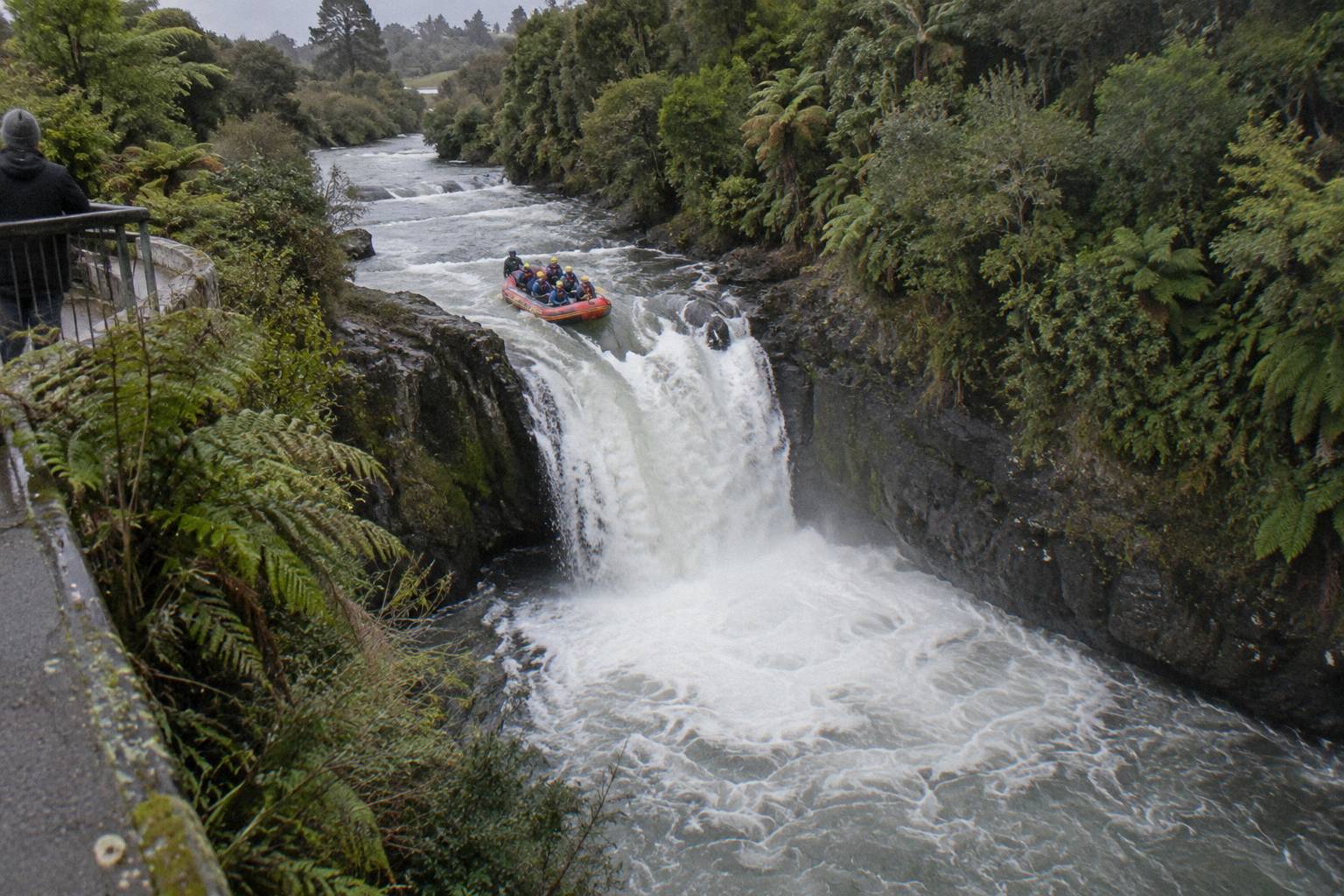
Grade numbers describe the hardest stretch, and the scale itself, from easy moving water up to Class VI, is set out in the Wikipedia article on whitewater and the International Scale of River Difficulty. That is why a run sold as Grade 5 can still take beginner crews: the pool-drop structure gives recovery water between the drops, and the guide does the line-reading. The grades system, class by class, is unpacked in rapid grades explained for rafters.
Flow is the part beginners rarely think about and operators watch constantly. Because the gates at the Lake Rotoiti outlet control what leaves the lake, the Kaituna keeps running through seasons when rain-fed rivers elsewhere drop too low. A spring 2026 conditions update from Kaituna Cascades reported flows high, in the 500s on the control gates, with water at 19 degrees C and the big waterfall described as more powerful but slightly less tall and vertical. High flow changes the character of a run, and the operator decides what runs on the day.
Weather questions follow, and the short version is that the booking calendar and the operator decide what runs, not the forecast alone. Rain does not automatically cancel a rafting trip; the fuller answer, including what the operators say about wet days, is in whether rain cancels a rafting trip.
Timing Your First Trip Across The Year
Rotorua Rafting runs 3 trips a day in winter, at 10, 12 and 2, from 1 May to 31 August, and 6 or more trips a day in summer from 1 September to 30 April, every 30 minutes on demand, per its open hours page. Kaituna Cascades runs 10:30, 12:30 and 2:30 daily, plus 8:30 and 4:30 in summer. These are operator schedules, not promises, and the booking calendar holds every bookable time.
Winter and summer are both real options, and the month-by-month trade-offs, water temperature included, are laid out in the Kaituna rafting season, month by month. Winter water sits around 12 °C against about 24 °C in summer, per the Rotorua Rafting FAQ, and the supplied fleece and wetsuit exist precisely for that gap. Crowds and daylight hours, not the river, are what actually change across the calendar, because the gates keep the flow coming either way.
The two operators' published schedules, side by side, look like this.
| Operator | Season | Departures | Detail |
|---|---|---|---|
| Rotorua Rafting | 1 May to 31 August | 10, 12 and 2 | 3 trips a day in winter |
| Rotorua Rafting | 1 September to 30 April | Every 30 minutes on demand | 6 or more trips a day |
| Kaituna Cascades | Daily | 10:30, 12:30 and 2:30 | Standard schedule |
| Kaituna Cascades | Summer | Plus 8:30 and 4:30 | Extra summer departures |
For a beginner, the practical timing advice is narrow. Book the product that matches your age mix and transport needs first, then let the calendar show you which departure times remain. Check the live price and see dates on the booking page before locking anything in, because departure counts shift between seasons and the page is the only place the current day's times live.
What Trips People Up Before You Book
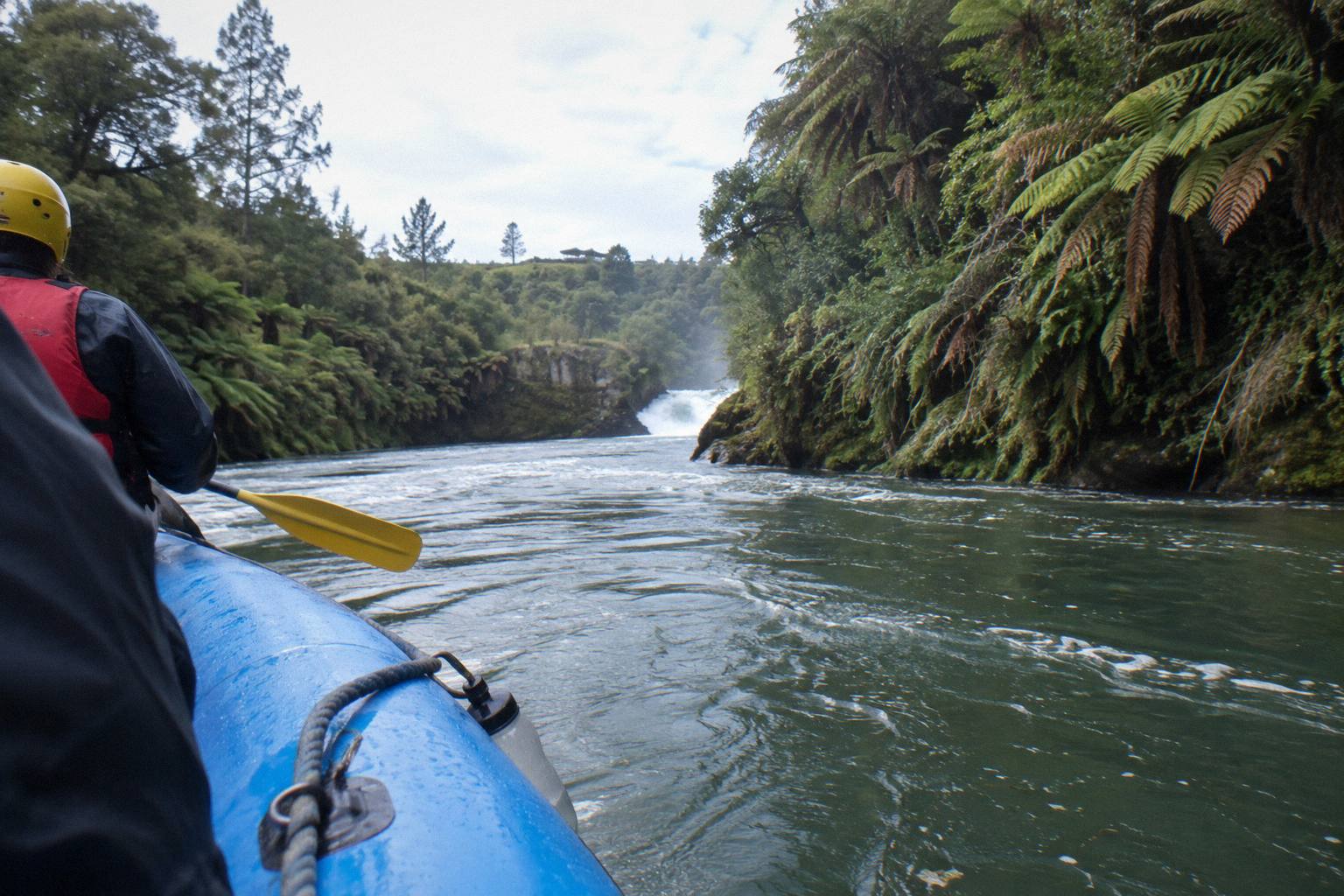
Most beginner mistakes happen at booking, not on the water: assuming every product has the same minimum age, merging twin products into one comparison, expecting sauna or pickup inclusions the operator does not state, and treating operator terms as river-wide rules. Minimum ages across the listings run 5, 10 and 13 depending on the product. Sauna belongs only to the Rotorua Rafting and Rotorua Ziplines listings.
The twin products deserve a second warning because the trap is subtle. Two listings can describe what sounds like the same trip from the same operator family at two prices, and they are separate bookable products with their own ratings and inclusions. Never read the cheaper twin as a discount on the dearer one. Compare card against card, product against product, and check the live price on the booking page for your date before deciding.
Inclusions are the second trap. The free sauna appears only on the Rotorua Rafting and Rotorua Ziplines products; the Kaituna Cascades and Kaitiaki pages do not state sauna inclusion, so say nothing and ask the operator if it matters to you. Pickup follows the same rule: both Kaitiaki Adventures listings include hotel pickup, while Rotorua Rafting's pickup is a separate optional paid arrangement.
The third trap is treating a first rafting trip as a gear project. The operators supply the water kit. Swimwear and a towel are the stated personal items. Anyone advising you to buy specialist equipment before a first commercial trip is selling equipment, not advice. Get to the base, get the kit, listen to the briefing.
Common Questions About A First Rafting Trip
Is White Water Rafting Ok For Beginners?
The Kaituna products in the listings are sold to the general public with minimum ages of 10 or 13 depending on the product, and the river runs 365 days a year. The operator pages do not state that prior experience is required, and none of them promises it is not: read the terms on the product you book.
How Long Does A First Rafting Trip Take?
About 2 hours for the whole experience, of which about 50 to 60 minutes are on the water, per the Kaituna Cascades pages. Some products list 2h30 or 2.5 hours; the Grade 2 Rangitaiki product lists 4 hours with 1.5 hours on the water.
What Should I Bring On My First Rafting Trip?
Swimwear and a towel, per Kaituna Cascades, plus a dry change of clothes for after. Wetsuits, helmets, life jackets, fleece, booties and a splash jacket are supplied on the Rotorua Rafting and Kaituna Cascades products.
Do I Need To Be Able To Swim?
Kaituna Cascades states a float test may be required on its products, and its Wairoa trip requires swimming. For the Kaituna products, the pages state age and weight terms rather than a swimming test, and the briefing covers in-water procedure. Ask the operator if unsure.
What Is The Minimum Age For Rafting?
It depends on the product: 5 on the Grade 2 Rangitaiki listing, 10 on the Rotorua Rafting listings that show 10, and 13 on the Kaitiaki and Kaituna Cascades listings. Ages are per listing, and Kaituna Cascades says ages 10 to 12 join its run halfway along.
How Cold Is The Water?
About 24 °C in summer and about 12 °C in winter, per the Rotorua Rafting FAQ. The supplied wetsuit, fleece and splash jacket are matched to that range, which is why the kit list is long even in the warmer months.
Keep reading: what happens on a Kaituna rafting trip, white water rafting tips for first timers and whether rafting in Rotorua is safe for beginners take the next steps from here, and the Grade 2 Rangitaiki product page is the gentlest first booking among the listings.