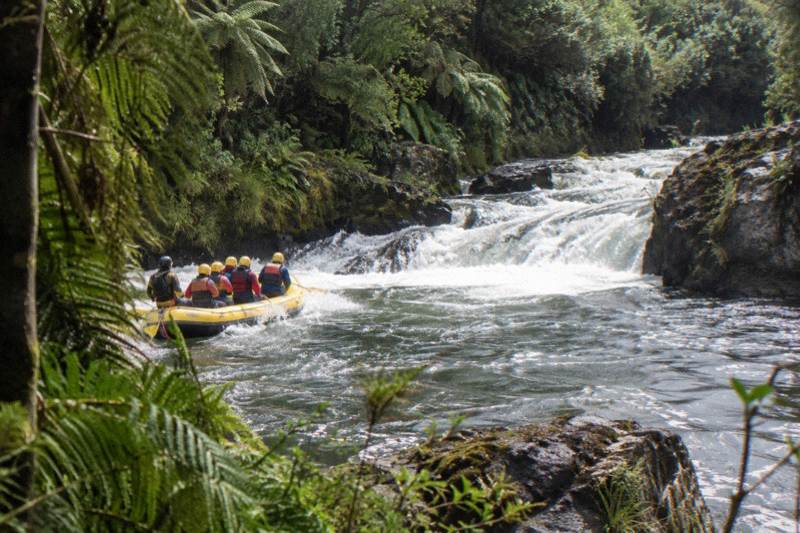
White Water Rafting With Kids: Minimum Age And Grade Limits
There is no single age limit for rafting around Rotorua: each product sets its own minimum, from age 5 on the Grade 2 Rangitaiki family trip to 13 on the Grade 5 runs. Here is what each booking page says, child by child.
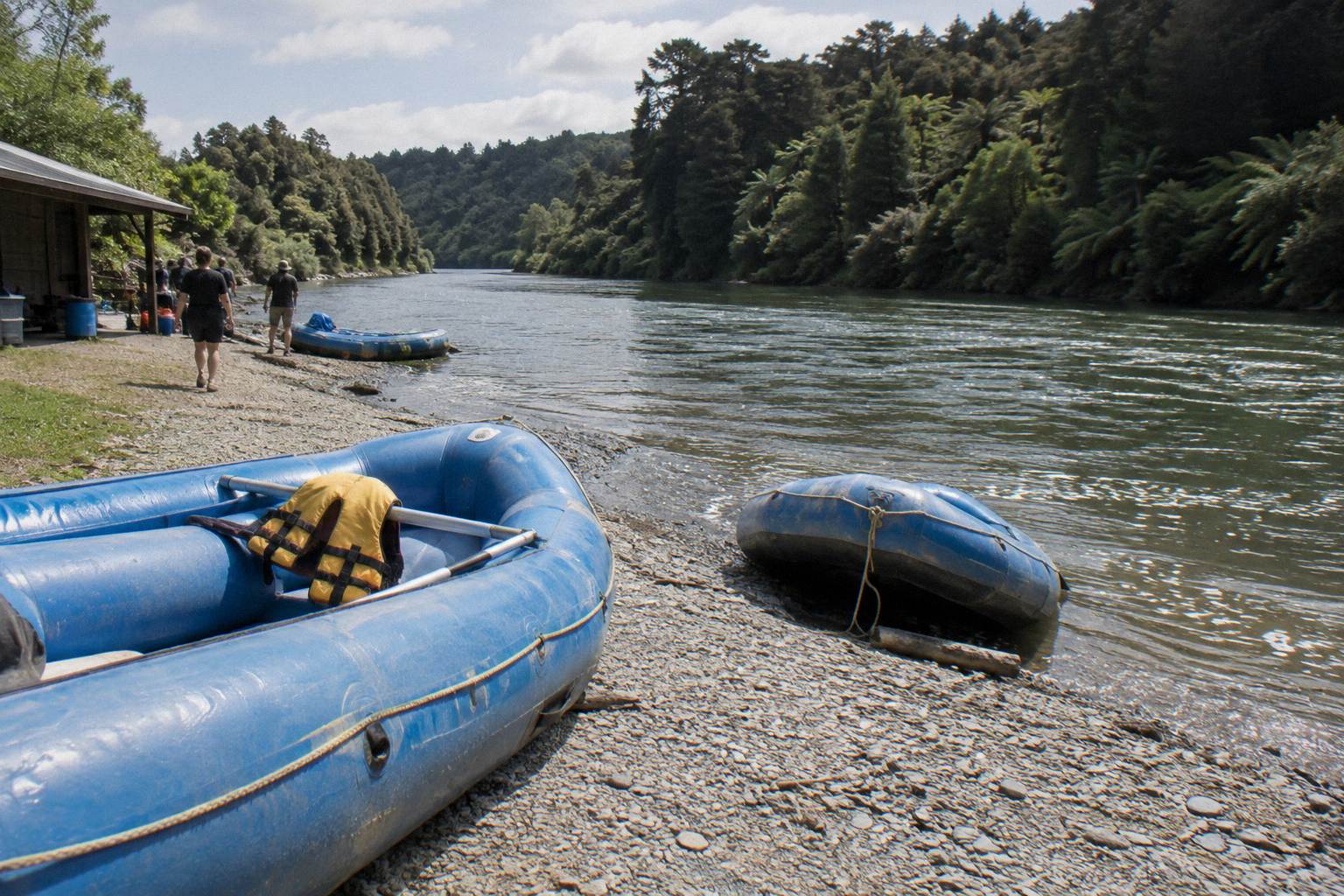
Short answer
Minimum ages are set per product, not per river. The Grade 2 Rangitaiki trip takes children from age 5, the Rotorua Ziplines listing takes age 5, the two Kaituna listings with a sauna take age 10, and the Kaituna Cascades and Kaitiaki Kaituna products, plus the Wairoa trip, take age 13. Weight caps apply on top of age.
Family rafting around Rotorua splits cleanly in two: a gentle Grade 2 wilderness run that takes children from age 5, and the Grade 5 Kaituna and Wairoa trips that start at 13. The middle ground, ages 10 to 12, is where the choices narrow and the small print starts to matter. This page works through every product's age and weight rules, one booking page at a time. The gentler family trips sit with the Rangitaiki and Wairoa rafting collection, while the Kaituna products sit in their own category.
| Fact | Detail |
|---|---|
| Lowest minimum age on a rafting product | 5, on the Grade 2 Rangitaiki listing |
| Lowest minimum age on a Kaituna rafting product | 10, on the two Kaituna listings with a sauna |
| Minimum age on Kaituna Cascades trips | 13, with ages 10 to 12 able to join halfway along the run |
| Maximum weight, Kaituna Cascades | 120 kg |
| Maximum weight, the operator behind the sauna listings | 130 kg |
| Water time on the Kaituna run | 50 to 60 minutes of a roughly 2 hour experience |
| Tutea Falls height | 7 metres by the operators' figure |
| Gear supplied | Wetsuits, helmets, life jackets, fleece, booties, splash jacket |
What Is The Minimum Age For White Water Rafting Near Rotorua?
There is no one age limit, because each product sets its own. The Grade 2 Rangitaiki listing takes children from age 5, the Rotorua Ziplines listing takes age 5, both Kaituna listings that include a sauna show a minimum age of 10, and every other rafting product in the region starts at 13. Reading the specific product's page, rather than a river-wide rule, is the whole game here.
The reason the ages differ so widely is grade, the difficulty scale used to describe rapids. The Kaituna run is sold as Grade 5, and it finishes over Tutea Falls, a 7 metre drop by the operators' figure, which operators describe as the highest commercially rafted waterfall in the world. The Rangitaiki trip offered on the Grade 2 listing is exactly what its name says, moving water with small, regular waves, the kind of run where a five year old can paddle along without the drops. How the scale works, and why a two grade gap matters more for a child than for an adult, is explained on the Wikipedia entry for whitewater, which covers the International Scale of River Difficulty used by New Zealand operators.
A second reason the ages differ is commercial rather than technical. Operators write their terms for the trips they actually run, with the gear sizes and boat setups they own. The two sauna listings at ages 10 and up are the exception on the Kaituna rather than the rule, and they are twin products of each other, meaning they are two separately bookable cards, not one trip at two prices. Treat every figure on this page as belonging to the single product named beside it, and check the booking page for your date before promising a child anything.
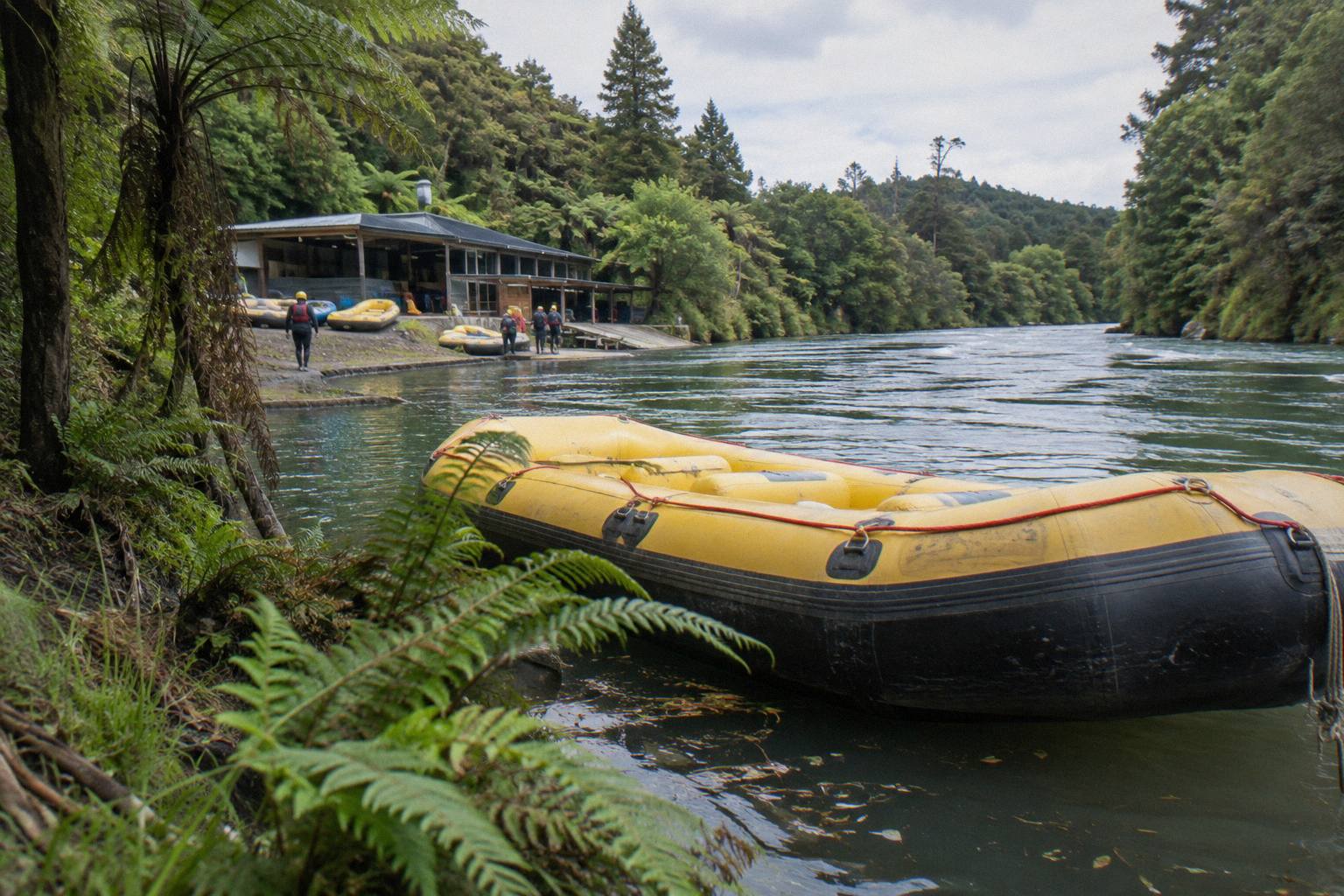
If your child is under 10, the realistic options are the Grade 2 Rangitaiki product and the zipline, both at age 5. Between 10 and 12, the two sauna Kaituna listings open up, and Kaituna Cascades says ages 10 to 12 can join its run halfway along, skipping the upper section. At 13 the full menu unlocks, from the 2 hour Kaituna trips to the 5 hour Wairoa run near Tauranga. The rest of this page takes each band in turn.
Which Trips Take Children Aged 10 To 12?
Two Kaituna products show a minimum age of 10 on their booking pages: "Rotorua Rafting: Kaituna River Rafting Experience - Free Sauna" (2 hours, from NZ$74 per person) and its twin, "Rotorua Rafting: Kaituna River White Water Rafting & Free Sauna" (2 hours 30, from NZ$135 per person). Kaituna Cascades takes 13 as its minimum but says ages 10 to 12 can join the run halfway along. Nothing else on the Kaituna goes below 13.
The two sauna listings are twin products, which means separate cards with separate figures, never one trip quoted two ways. The shorter run is 2 hours and the longer is 2 hours 30, and each from-price belongs to its own card. Both include the sauna, which the free sauna guide on this site covers in more detail, including how it fits a family schedule after a cold-water run. For a 10 to 12 year old the practical difference between them is duration and price, not difficulty: both paddle the same river.
Kaituna Cascades takes a different route to the same middle ground. Its stated minimum age is 13, but its terms say ages 10 to 12 join halfway along the run, which means missing the upper rapids and meeting the trip at a calmer stage. That arrangement depends on the operator's judgment on the day, so it is a question to ask when you book rather than a promise to build a day around. The operator also asks rafters to check in 15 minutes early, and says a float test may be required.
| Product | Minimum age on that product | Duration | From price |
|---|---|---|---|
| Grade 2 Rafting, 4h (Rangitaiki) | 5 | 4h, with 1.5h on the water | NZ$125 per person |
| Zipline Over Waterfalls, 2h30 | 5 | 2h30 | NZ$169 per person |
| Free Sauna, 2h Kaituna Run | 10 | 2h | NZ$74 per person |
| Free Sauna, 2h30 Kaituna Trip | 10 | 2h30 | NZ$135 per person |
| Kaituna Cascades, The Originals | 13 | 2h | NZ$135 per person |
| Rafting With Hotel Transfers | 13 | 2h30 | NZ$139 per person |
| Kaituna Rafting, Free Pickup, 2.5h | 13 | 2.5h | NZ$61 per person |
| Tutea Falls 2h Rafting | 13 | 2h | shown on the booking page |
| Wairoa River Grade 5, 5h | 13 | 5h | NZ$190 per person |
| Sledging With Transfers | 13 | 2h30 | NZ$139 per person |
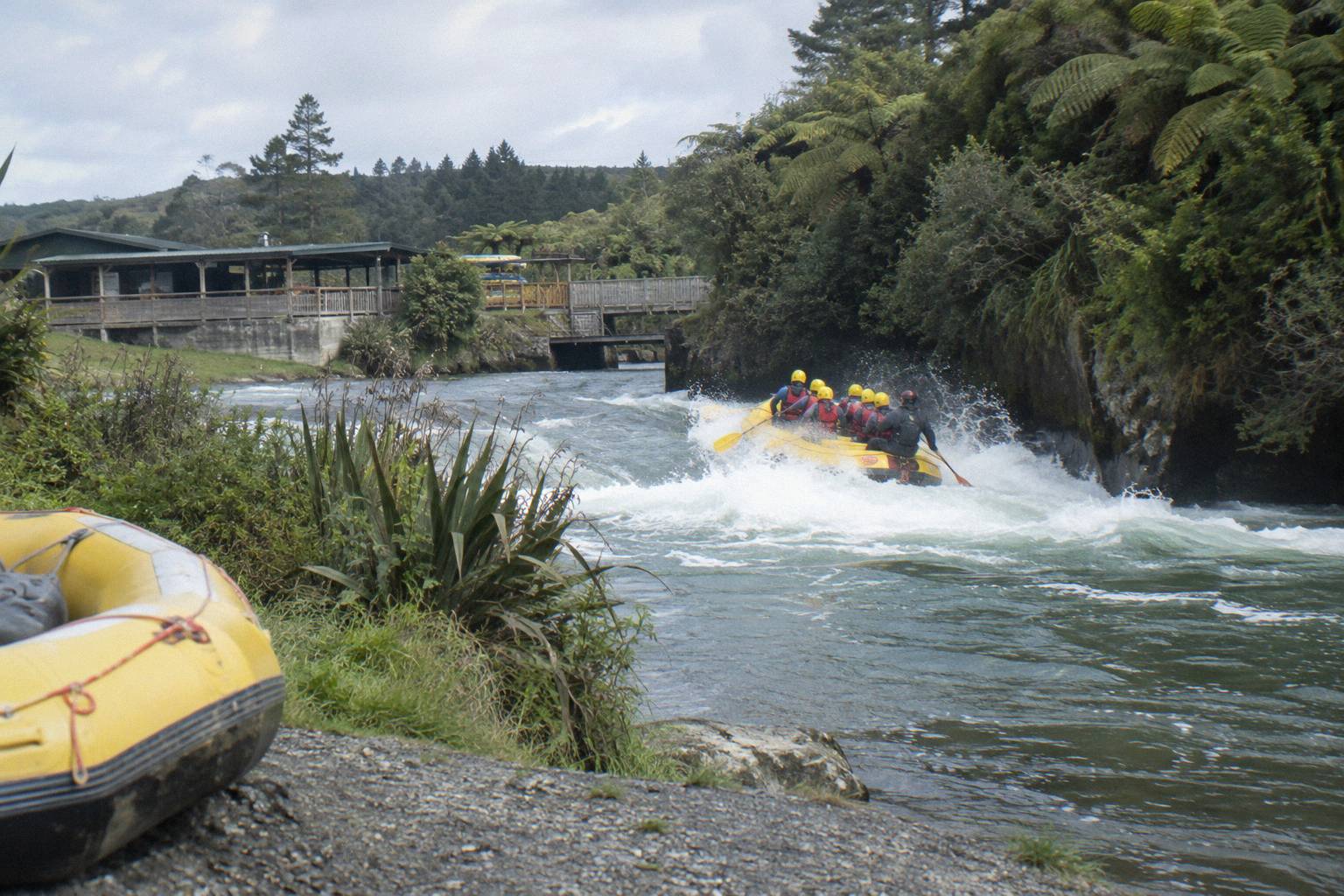
All amounts are New Zealand dollars, and each from-price belongs to the product named beside it; prices vary by date and group size, and the booking page shows the price for the date you want. The full age picture is easier to read as a chart than as a list of cards, and the numbers above are what it shows.
One more option sits in this age band without being a rafting trip at all: the tandem kayak product on the Kaituna, run by NZ Whitewater Academy, shows minimum age 13 on its card, so it opens at the same point as the full rafting runs. For a 10 to 12 year old who wants their own craft rather than a seat in a raft, the honest answer is that the age rule points back to the Grade 2 Rangitaiki trip and the two sauna listings.
Is The Grade 2 Rangitaiki Trip Right For A Young Family?
The "Rangitaiki Rafting Grade 2" listing, run by Rotorua Adventures Kayak and Raft, takes children from age 5, runs 4 hours with 1.5 hours on the water, and starts from NZ$125 per person. It is the only rafting product in the region whose card shows an age in single digits, which makes it the default answer for families with primary school children.
Grade 2 water is the right introduction for a young child: waves are small and regular, the paddle work is cooperative rather than reactive, and there are no waterfall drops. A full comparison of the river and its operators is in the Rangitaiki river rafting guide, including how the two operators' trips differ, because they are different companies and must never be merged into one description. Kaituna Cascades describes its own Rangitaiki trip as a Grade 4 wilderness run, meeting 9:30am at 33 Waipa State Mill Road or a central Rotorua pickup, running when river levels and group size allow, and aimed at 13 and up. The Grade 2 label belongs to the listing named above and to that operator alone.
The 4 hour total against 1.5 hours on the water matters for planning with small children. The rest is drive, briefing and gear, so pack snacks and a towel for the wait, and treat the day as a half-day outing rather than a quick spin. More on what to pack is in what to bring white water rafting, which lists swimwear and towels as the essentials operators ask for.
If your children are the right age for this trip, it is worth seeing what dates the calendar holds, since a 4 hour commitment with limited daily departures fills fastest around school holidays.
The Grade 2 Rafting, 4h product page carries the booking link and the figures for your date. Check availability once you have a date window in mind.
Do Weight And Health Limits Affect Children?
Weight caps apply on top of age, and they are set by operator, not by product. Kaituna Cascades states a maximum of 120 kg, and the operator behind the sauna listings states 130 kg. Kaitiaki Adventures states no weight figure on the material available, so ask the operator when you book. Health terms also matter: Kaituna Cascades excludes pregnancy and heart conditions, and says a float test may be required.
For most children the weight caps never come into play; they become relevant for teenagers booking adult-priced trips, and for a parent whose size sits near a limit. When a family books together, the binding constraint is usually the youngest child's age, not anyone's weight, but the caps are worth knowing because they are stated per operator and apply across that operator's trips.
| Operator | Maximum weight stated | Other stated terms |
|---|---|---|
| Kaituna Cascades | 120 kg | Minimum 13 (10 to 12 join halfway), check in 15 minutes early, not for pregnancy or heart conditions, float test may be required |
| Rotorua Rafting | 130 kg | Minimum age 10 shown on its two Kaituna listings, GoPro mounts allowed, optional paid pickup |
The float test clause deserves a moment with children in mind. Kaituna Cascades says one may be required, which gives the operator a way to check that a young rafter can handle themselves in the water before the trip commits to the falls. For a nervous 11 or 12 year old, treat that as a feature rather than a hurdle: it is the operator checking the run suits the child, which is exactly what a parent wants. The Wairoa trip adds a swimming requirement, it states rafters must be able to swim, on top of its age 13 minimum and 120 kg cap.
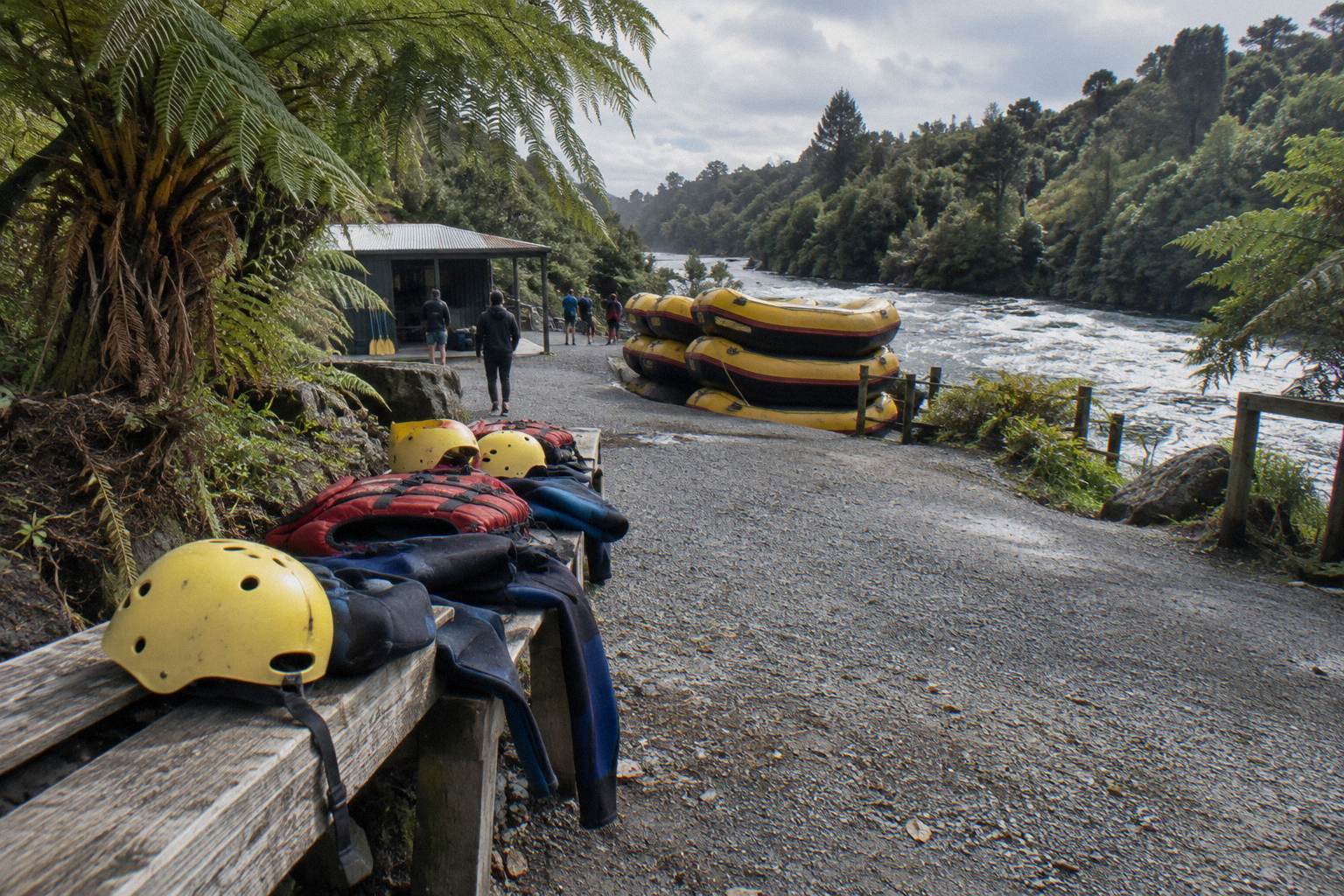
Gear sizing is the quiet second limit for small children. Operators supply wetsuits, helmets, life jackets, fleece, booties and splash jackets, and the age 5 minimums on the Rangitaiki and zipline listings imply the gear exists in small sizes for those trips. If your child is at the very bottom of an age range, a quick question about wetsuit sizing when you book avoids a morning-of surprise. What everyone should wear underneath is covered in what to wear white water rafting.
Which Rapid Grades Suit Which Ages?
As a planning rule drawn from the products themselves: Grade 2 water is listed from age 5, Grade 5 water from age 10 on the two sauna listings and 13 elsewhere. The gap between those grades is large: Grade 2 means small regular waves and clear channels, while Grade 5 means long, powerful rapids and, on the Kaituna, a 7 metre waterfall. Age minimums follow the water, not the other way round.
The scale itself is the International Scale of River Difficulty, described in the Wikipedia entry for whitewater. The Kaituna run is sold as Grade 5, and the Kaituna Cascades blog says its rapids are Grade 4 and 5 building to the falls, which is why the run carries the region's higher minimums. A fuller walkthrough of every rapid on the run is in the Kaituna river rapids grade guide.
| Grade | What it means | Products listed at that grade | Minimum age on those products |
|---|---|---|---|
| Grade 2 | Small regular waves, clear channels, little manoeuvring | Grade 2 Rafting, 4h (Rangitaiki) | 5 |
| Grade 4 and 5 building to the falls | Powerful rapids, drops, a 7 metre waterfall | The Kaituna rafting products, sold as Grade 5 | 10 on the two sauna listings, 13 on the rest |
| Grade 5 | Sustained powerful whitewater | Wairoa River Grade 5, 5h | 13 |
For teenagers the question flips from permission to appetite. A 14 year old who meets every age and weight rule may still find the Kaituna's waterfall a big ask, and a confident 13 year old might be ready for the Wairoa, which runs on selected Sundays only when water is released from the upstream scheme. The difference between the two top grades is unpacked in the difference between class 4 and 5 rapids, and the question of whether younger teens belong in class 4 water is treated in are class 4 rapids ok for kids.
For a family split across ages, one pattern works well: put the under 10s and a parent on the Rangitaiki Grade 2 trip, and take the 13 and overs down the Kaituna the same morning, since both run daily on their own schedules. See dates for both on their booking pages before you commit to the pattern, because a shared morning only works when the clocks line up. Everything else covered here is indexed on Rafting Rotorua.
What Does A Family Day Around A Trip Look Like?
Plan a half day per rafting product. The Kaituna run is 50 to 60 minutes on the water inside a roughly 2 hour experience, the Rangitaiki Grade 2 trip is 4 hours total with 1.5 hours on the water, and the Wairoa is 3 to 4 hours overall with about 2 hours on 5 km of river. Schedules belong to the operators and the calendar, so treat times as structure, not promises.
Departure patterns differ by operator and season, which matters when children are waiting. Rotorua Rafting runs 3 trips a day in winter, 1 May to 31 August, at 10, 12 and 2, and 6 or more daily through summer, 1 September to 30 April, every 30 minutes on demand. Kaituna Cascades lists 10:30, 12:30 and 2:30 daily, plus 8:30 and 4:30 in summer. The month by month picture, including what winter water temperatures around 12 degrees mean for children, is in the Kaituna rafting season month by month guide and the companion post on whether you can raft in winter.
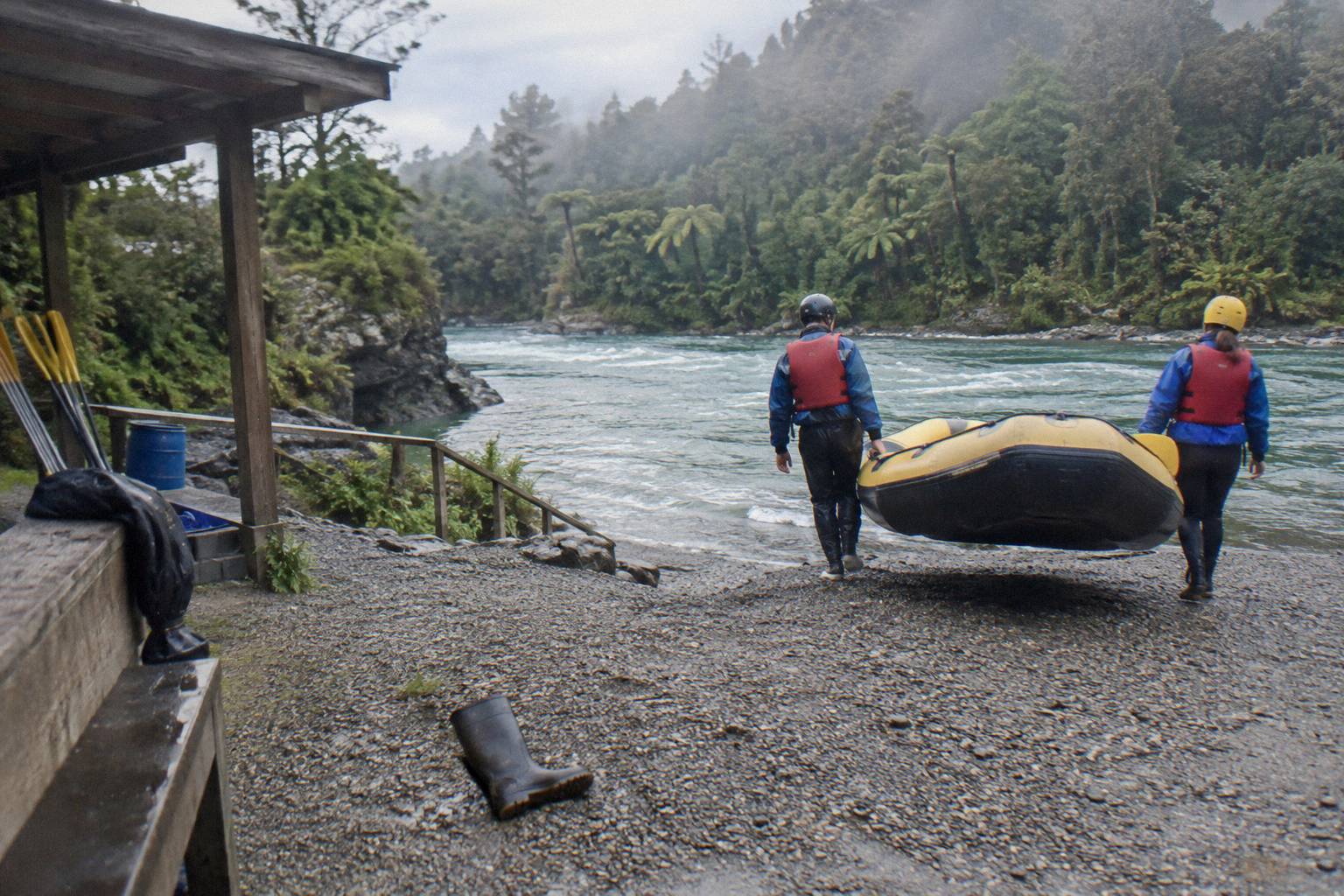
The bases are close enough to Rotorua that a family morning is realistic. The river runs through Okere Falls, and the put-in area sits about 20 to 25 minutes from central Rotorua depending on the operator's base, with free parking at the Kaituna Cascades base on Okere Falls Road. The Kaitiaki transfer products remove the drive question entirely: free hotel pickup is included on both Kaitiaki rafting listings and both sledging listings, so the choice between the NZ$139 Rafting With Hotel Transfers option and the NZ$61 Kaituna White Water Experience comes down to price and listing details rather than pickup. Directions and transport options are laid out in getting to the Kaituna for rafting.
A full day plan, combining a morning run with an afternoon activity, is sketched in one day built around a rafting trip. With children, the safe version keeps the afternoon empty: the sauna on the age 10 listings is a good wind-down, and the track above the rapids, described in the Okere Falls track guide, lets the family watch other rafts take the falls.
How Do You Check An Operator Is Safe For A Child?
Every commercial adventure operator in New Zealand must pass a safety audit by a WorkSafe-recognised auditor and register with WorkSafe under the Adventure Activities Regulations 2016. Parents can look an operator up by name on the public register before booking, which takes a minute and answers the question directly rather than relying on reviews.
The register is the WorkSafe adventure activities register, and the regime behind it is described on the WorkSafe adventure activities pages, with the regulations themselves at the Adventure Activities Regulations 2016. For a parent the practical step is simple: search the operator's name, confirm the registration is current, and then judge the product on its own terms, age minimum, weight cap and health exclusions.
Beyond the register, the planning questions that matter most with children are the ones this page has already covered. Is the child old enough for this specific product, not for the river in general? Does anyone in the family sit near a weight cap? Do the health terms, pregnancy, heart conditions, the swimming requirement on the Wairoa, apply to anyone in the boat? And does the child actually want to go, because a reluctant rafter on a Grade 5 run is a different day from an eager one on Grade 2 water.
For teenagers eyeing the top end, the safety discussion continues in is white water rafting safe, and for the nervous ones, white water rafting for beginners covers what the first trip actually feels like in practical terms.
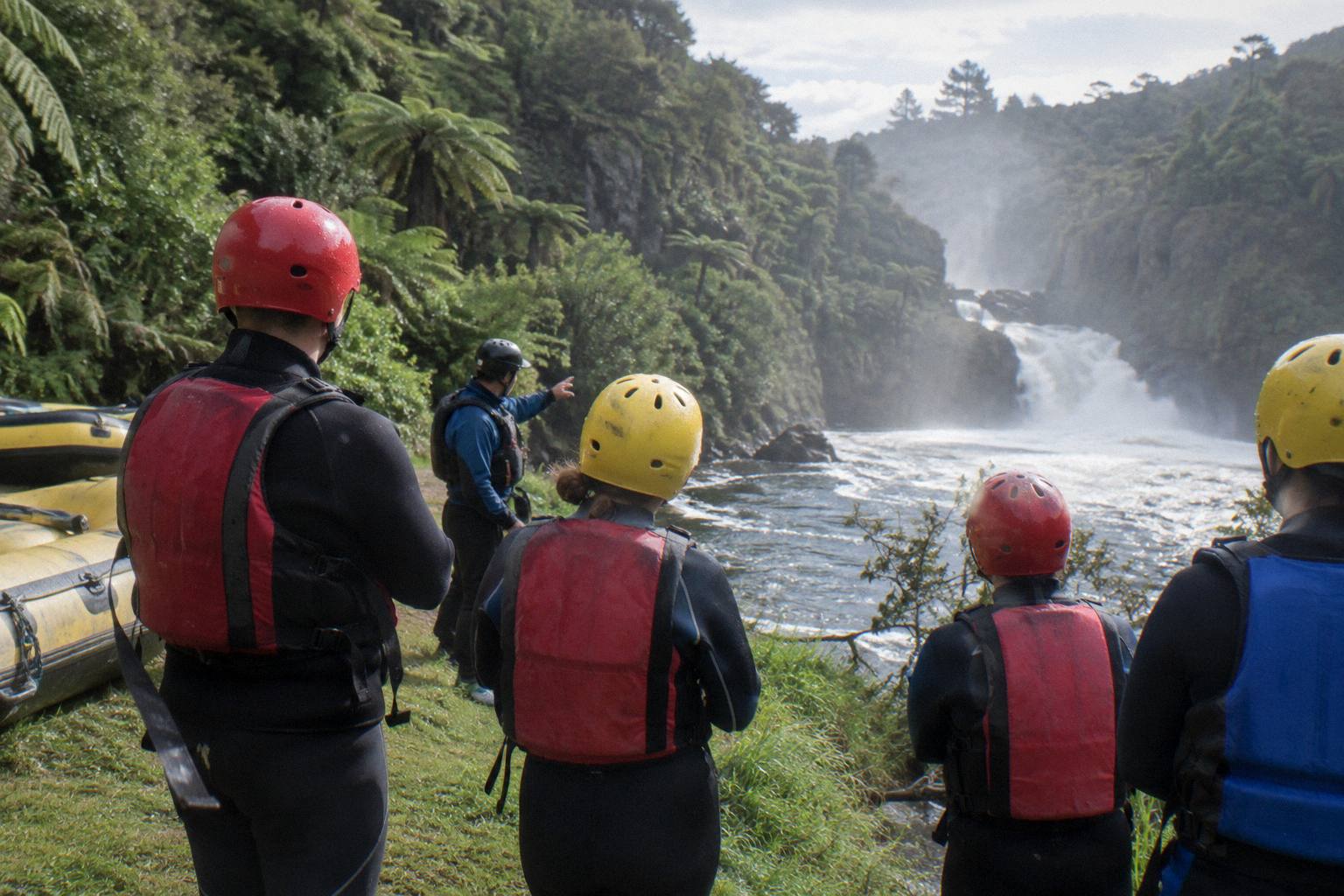
What Trips People Up Before You Book
The recurring mistakes are all versions of one error: treating an age figure as a river-wide rule. Families assume the 10 on one Kaituna listing applies to every Kaituna trip, assume the sauna comes with every operator, or assume the Rangitaiki has one grade. Each of those assumptions puts a child on the wrong trip or an adult on the wrong side of a weight cap.
The first trap is the twin products. The two sauna listings and their age 10 minimums belong to those two cards only; the Kaituna Cascades and Kaitiaki Kaituna products sit at 13, and the Cascades halfway-join arrangement for ages 10 to 12 is an operator's stated option, not a booking category. If a booking page shows 13 and you expected 10, you are on a different product, not a wrong page.
The second trap is the sauna. The free sauna belongs to the Rotorua Rafting and Rotorua Ziplines products only; nothing in the material available says Kaituna Cascades or Kaitiaki trips include one, so do not build the post-raft warm-down into a booking before confirming it on that product's page. The third trap is the Rangitaiki: two operators run trips there, one describing a Grade 4 wilderness run at 13 plus, the other listing the Grade 2 family trip at 5 plus, and mixing the two descriptions is how a five year old ends up booked onto the wrong one.
The fourth trap is logistics with children. Optional paid pickup exists on the sauna operator's products, and free hotel pickup exists on exactly two Kaitiaki listings, but neither fact transfers to another operator's trip. Check in times, 15 minutes early at Kaituna Cascades, bite harder with children in tow. And the Wairoa runs on selected Sundays only, released water and a meeting point in a farm paddock at 1376 State Highway 29 near Tauranga, so it is a planned day, not a spontaneous one. See dates on the booking page before anyone gets excited about it.
Common Questions About Rafting Ages For Kids
What Is The Minimum Age For White Water Rafting Near Rotorua?
It depends on the product. The Grade 2 Rangitaiki listing and the Rotorua Ziplines listing both start at age 5, the two Kaituna listings with a sauna start at 10, and the remaining rafting products start at 13. Check the specific product's page before booking.
White Water Rafting With Kids: Minimum Age And Grade Limits, How Do They Connect?
The age follows the grade. Grade 2 water carries an age 5 minimum on the one listing sold at that grade, while the Grade 5 Kaituna runs carry 10 on the two sauna listings and 13 elsewhere. The higher the grade, the higher the minimum, with the operator's own terms setting the exact figure.
Can A 10 Year Old Do The Kaituna Rafting Run?
On two products, yes: both sauna listings show a minimum age of 10. Kaituna Cascades sets its minimum at 13 but says ages 10 to 12 can join the run halfway along. Kaitiaki Adventures' Kaituna products start at 13.
Can A 5 Year Old Go Rafting?
On one rafting product: the Grade 2 Rangitaiki listing run by Rotorua Adventures Kayak and Raft, which shows a minimum age of 5 and runs 4 hours with 1.5 hours on the water. The zipline listing also takes age 5, though it is not a rafting trip.
Do Weight Limits Apply To Children On Rafting Trips?
Weight caps are set by operator: Kaituna Cascades states 120 kg and the operator behind the sauna listings states 130 kg. They rarely bind for children but apply to every rafter on that operator's trips, teenagers included. Ask the operator about any figure not shown on the booking page.
Do Kids Need To Be Able To Swim To Go Rafting?
The Wairoa trip states rafters must be able to swim, and Kaituna Cascades says a float test may be required on its trips. The Grade 2 Rangitaiki listing states no swimming requirement. Life jackets are supplied on every trip, and the full discussion is in do you need to swim to go rafting.