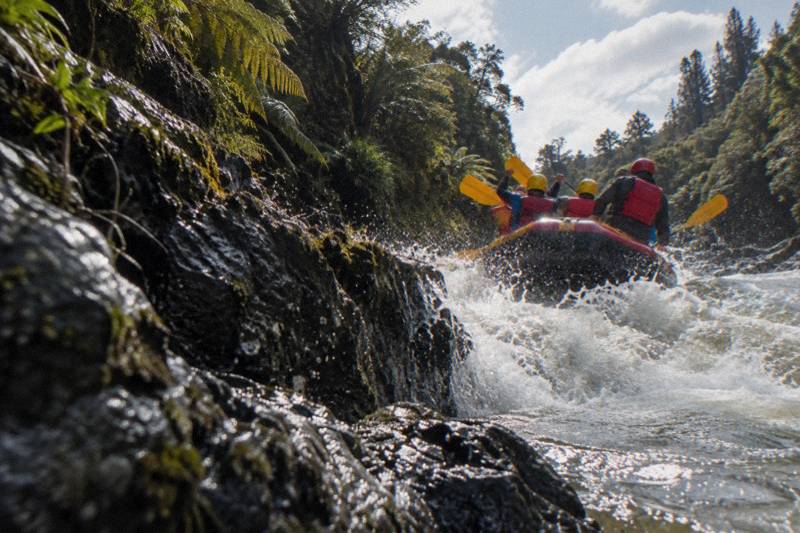
Tutea Falls: The Seven Metre Drop On A Rafting Trip
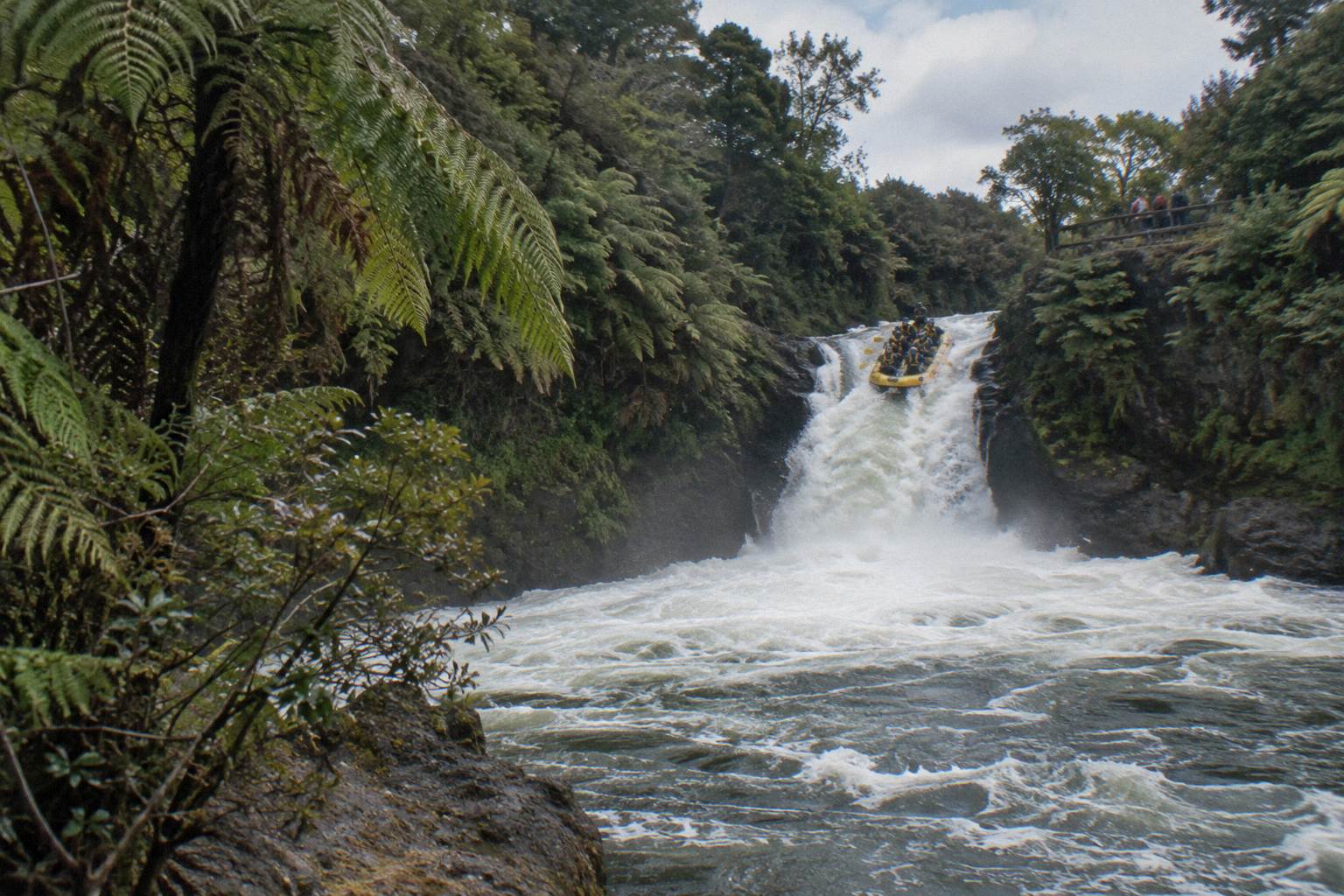
Tutea Falls is the 7 metre waterfall at the heart of the Kaituna River rafting run at Okere Falls, 23 minutes from Rotorua. Operators describe it as the highest commercially rafted waterfall in the world, and every Grade 5 trip on this site runs it.
Short answer
Tutea Falls is a 7 metre drop on the Kaituna River at Okere Falls, 23 minutes from Rotorua, and the operators describe it as the highest commercially rafted waterfall in the world. Trips from NZ$135 per person run it year round because council-controlled gates at the Lake Rotoiti outlet hold the flow. The run takes 50 to 60 minutes on the water.
Every Kaituna River trip sold on this site exists because of a single 7 metre sheet of water pouring over a lava ledge at Okere Falls, on the same run covered by the Free Sauna, 2h30 Kaituna trip. Tutea Falls is the reason the run is sold as Grade 5, the reason film crews show up, and the reason a 50 to 60 minute paddle can carry a price tag normally attached to a half day outing. This page is about the waterfall itself: how tall it really is, what the operators claim about it, how a raft is steered over it, what happens to its shape when the spring flows run high, and what coroner reporting has said about it.
| Fact | Detail |
|---|---|
| Height | 7 metres (23 ft), the operators' figure |
| Location | Kaituna River at Okere Falls, 23 minutes from Rotorua |
| World standing | Operators describe it as the highest commercially rafted waterfall in the world |
| River grade of the run | Sold as Grade 5 (Class V); Kaituna Cascades' blog says the rapids are Grade 4 and 5 building to the falls |
| Time on the water | About 50 to 60 minutes, inside an experience of about 2 hours |
| Rapid count | 14 rapids and drops, 3 waterfalls |
| Flow control | Council-controlled gates at the Lake Rotoiti outlet keep the river running 365 days a year |
| Spring high-flow note | Kaituna Cascades' river conditions page reported flows in the 500s on the control gates, water at 19 degrees C |
What Is Tutea Falls And Where Does It Sit?
Tutea Falls is a 7 metre waterfall on the Kaituna River at Okere Falls, roughly 23 minutes from Rotorua by road, and it is the centrepiece of the commercial rafting run that starts and finishes in the same stretch of river. Operators put their bases right beside it: Kaituna Cascades at 18 Okere Falls Road, with free parking and direct river access.
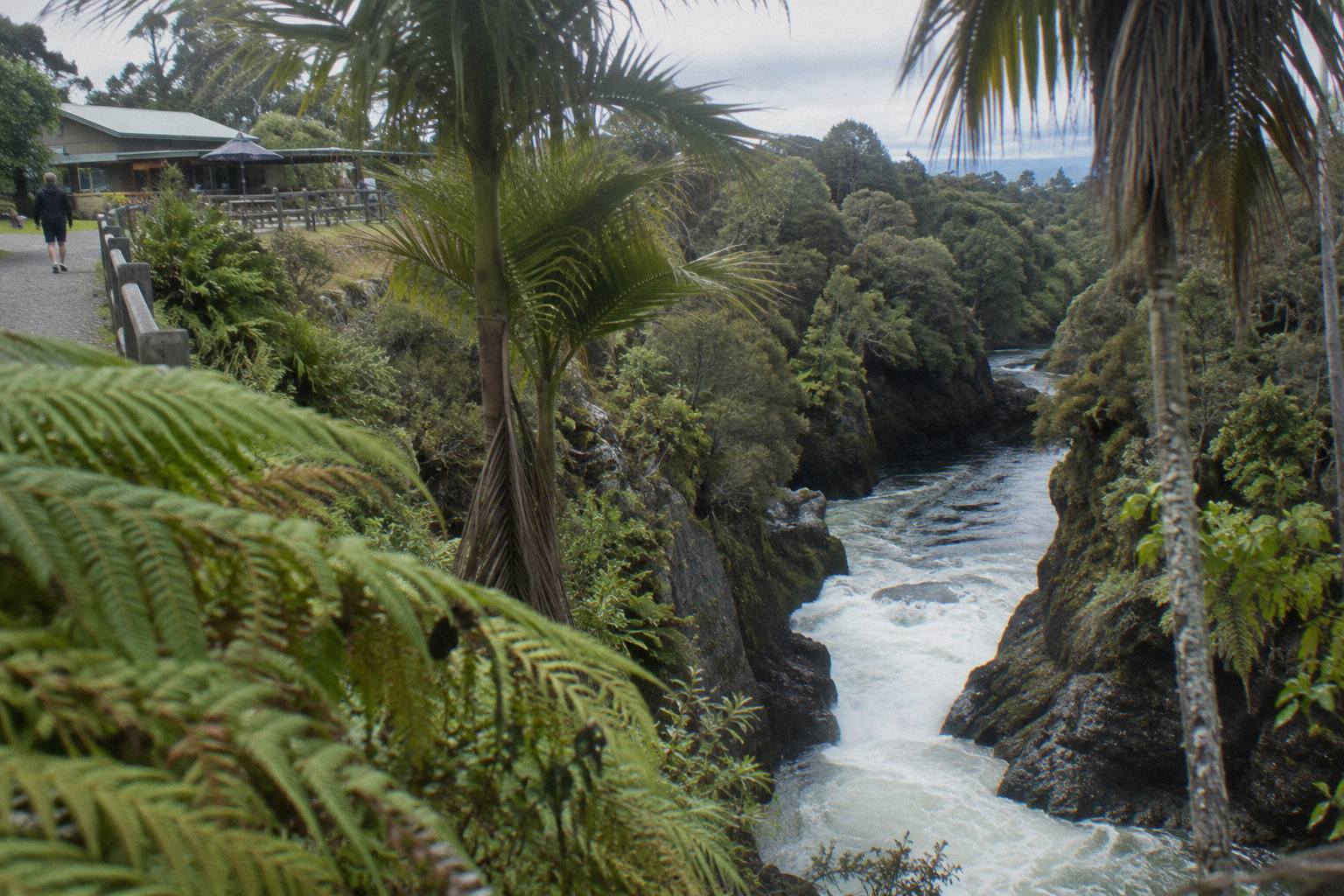
The waterfall sits partway down the run, not at the start, so a raft reaches it after working through the earlier rapids. The name belongs to Tūteataki, a chief of Ngāti Pikiao, and the falls sit inside a narrow volcanic gorge where the Kaituna forces between old lava flows on its way from Lake Rotoiti toward the Bay of Plenty. The Wikipedia entry for the Kaituna River traces that full course, and the Wikipedia entry for Okere Falls covers the settlement and the historic track above the river. For a rafter the geography matters in one practical way: the gorge is short, steep and continuous, which is why so much whitewater is packed into under an hour on the water.
The surrounding reserve is public land with a walking track above the rapids, which is why spectators gather at the viewing spots when rafts come through. If you want the fuller picture of the river above and below the drop, the Okere Falls rafting guide covers the whole stretch and its access points, and the walk above the rapids at Okere Falls explains the track that looks down on the falls themselves.
One point of confusion worth settling early: the run is sold as Grade 5, and Tutea Falls is the reason. Kaituna Cascades' own blog is more precise, describing rapids of Grade 4 and 5 that build toward the falls rather than a river of continuous Class V from top to bottom. That nuance matters for beginners deciding whether the trip is for them, and the Kaituna River rapids grade guide unpacks it rapid by rapid.
How High Is The Drop, Really?
The drop is 7 metres, or 23 feet, and that figure comes from the operators themselves: Kaituna Cascades, Kaitiaki Adventures and Rotorua Rafting all state it, and no source disagrees. It is worth being clear whose number this is, because waterfall heights are quoted loosely in tourism copy. Here the figure is an operator-stated measurement repeated consistently across the three companies.
The claim that travels further than the height is the superlative. Operators describe Tutea Falls as the highest commercially rafted waterfall in the world, and Kaituna Cascades goes a step further by publishing a comparison list of other commercially rafted falls it ranks below Tutea. That list attributes no countries to the smaller falls, so the comparison below stays exactly as the operator presents it: names and heights only.
| Waterfall | Height | Source |
|---|---|---|
| Tutea Falls | 7 m | The operators' figure, stated by all three Kaituna operators |
| Agers Falls | 5.5 m | Listed by Kaituna Cascades as a lower commercially rafted fall |
| Sweets Falls | 4.3 m | Listed by Kaituna Cascades as a lower commercially rafted fall |
| Husum Falls | 3.7 m | Listed by Kaituna Cascades as a lower commercially rafted fall |
Read that table the way it is meant: not as a world ranking compiled independently, but as the operator's own case for the claim. Kaituna Cascades publishes the comparison on its page about the falls, and the Kaituna Cascades page on the waterfall claim is the primary source for it. The margin over the next fall on its own list is 1.5 metres, which is a real gap rather than a rounding difference.
If your question is less about this one falls and more about where it sits among New Zealand drops generally, the highest rafting waterfall in New Zealand question takes the ranking question head on, because that comparison belongs there rather than here. This page owns the waterfall itself: the drop, the claim, and the trip over it.
How Does A Raft Go Over The Falls?
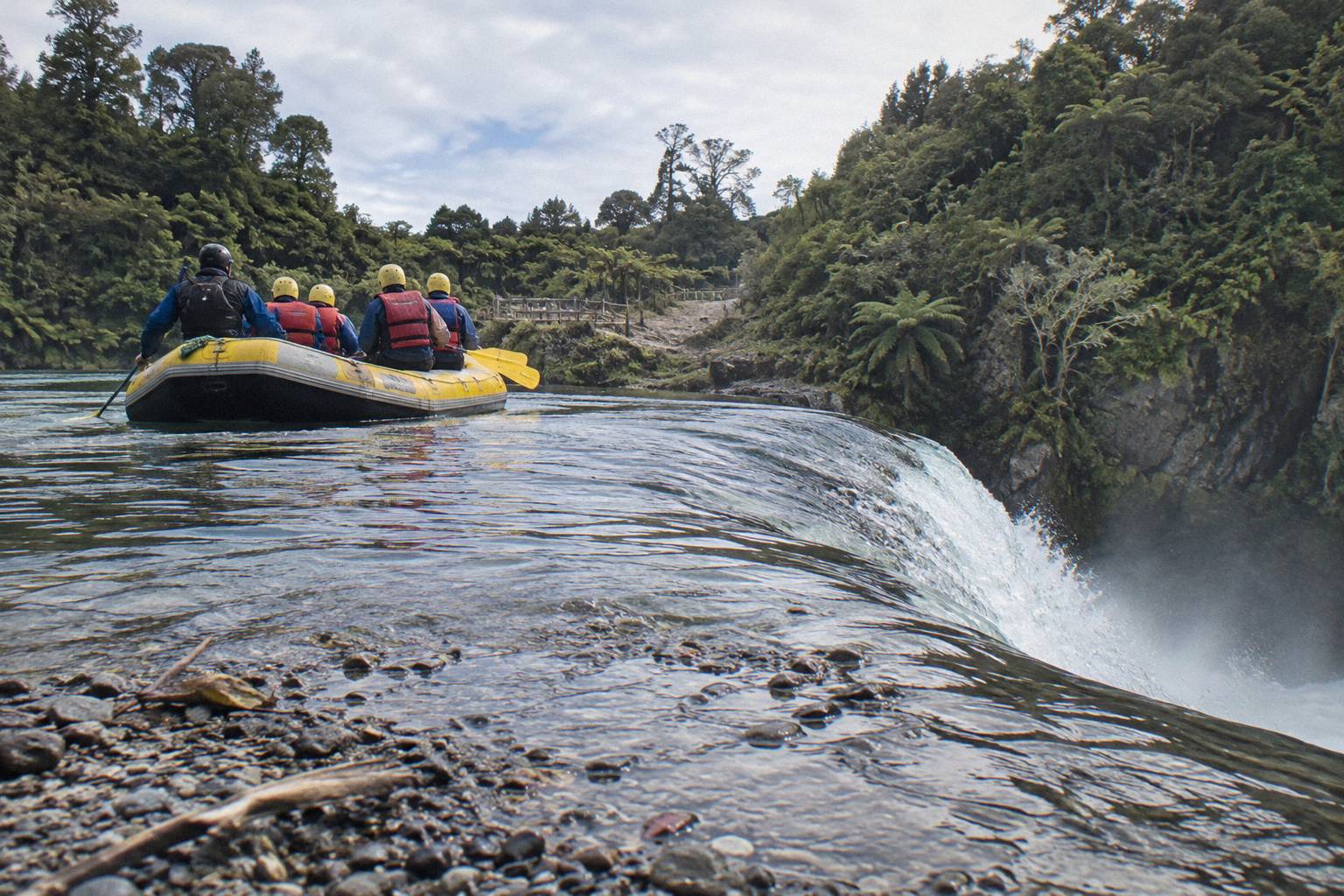
Operator pages describe a deliberate sequence: the raft pulls into an eddy above the drop, the guide lines the boat up square to the falls, paddlers lean in and hold on, and the raft drops into the pool below before continuing down the gorge. The line over it is the guide's decision and the guide's steering, not the crew's choice.
Nothing in the operator material describes the falls as requiring a particular paddling technique, and no operator publishes an angle or entry speed. The drop is over in seconds, and the pool below is where the raft gathers itself before the remaining rapids. That is the extent of what the operator pages say about the mechanics, and it is worth resisting the more colourful versions that circulate in travel copy.
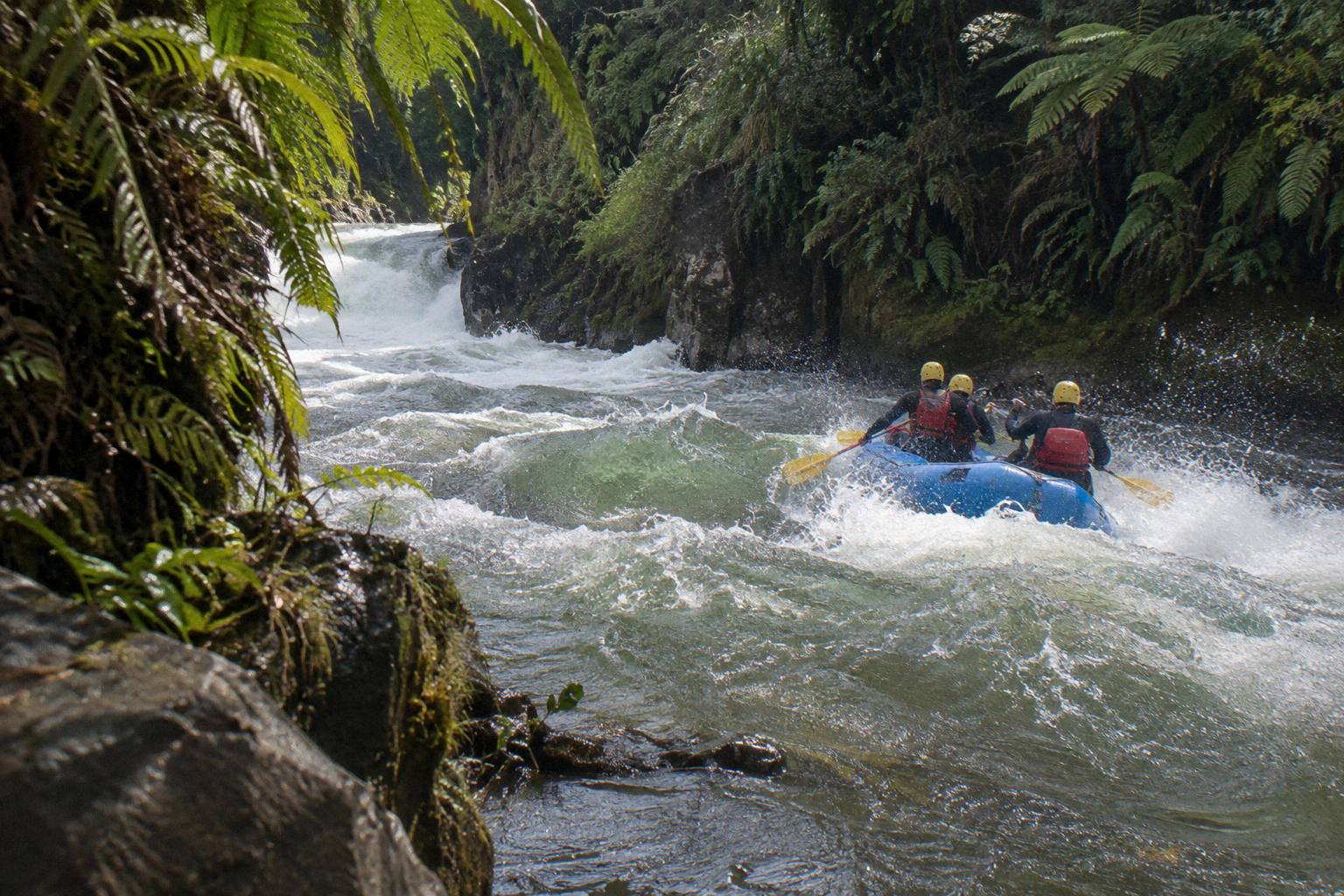
What the operators do publish is the shape of the whole run: 14 rapids and drops, 3 waterfalls, roughly 50 to 60 minutes on the water inside an experience of about 2 hours from base to base. The falls are the climax of that sequence, not the whole of it.
For first timers, the framing is that the drop is the part you cannot rehearse. Everything before it, the paddle calls, the bracing position, the swimming-with-the-current drills in the calm water, builds toward a moment that lasts a couple of seconds and is over before you have finished processing it. The what happens on a Kaituna rafting trip guide walks through the full trip timeline from check-in to the last rapid, and the white water rafting tips for first timers guide covers the preparation that actually helps.
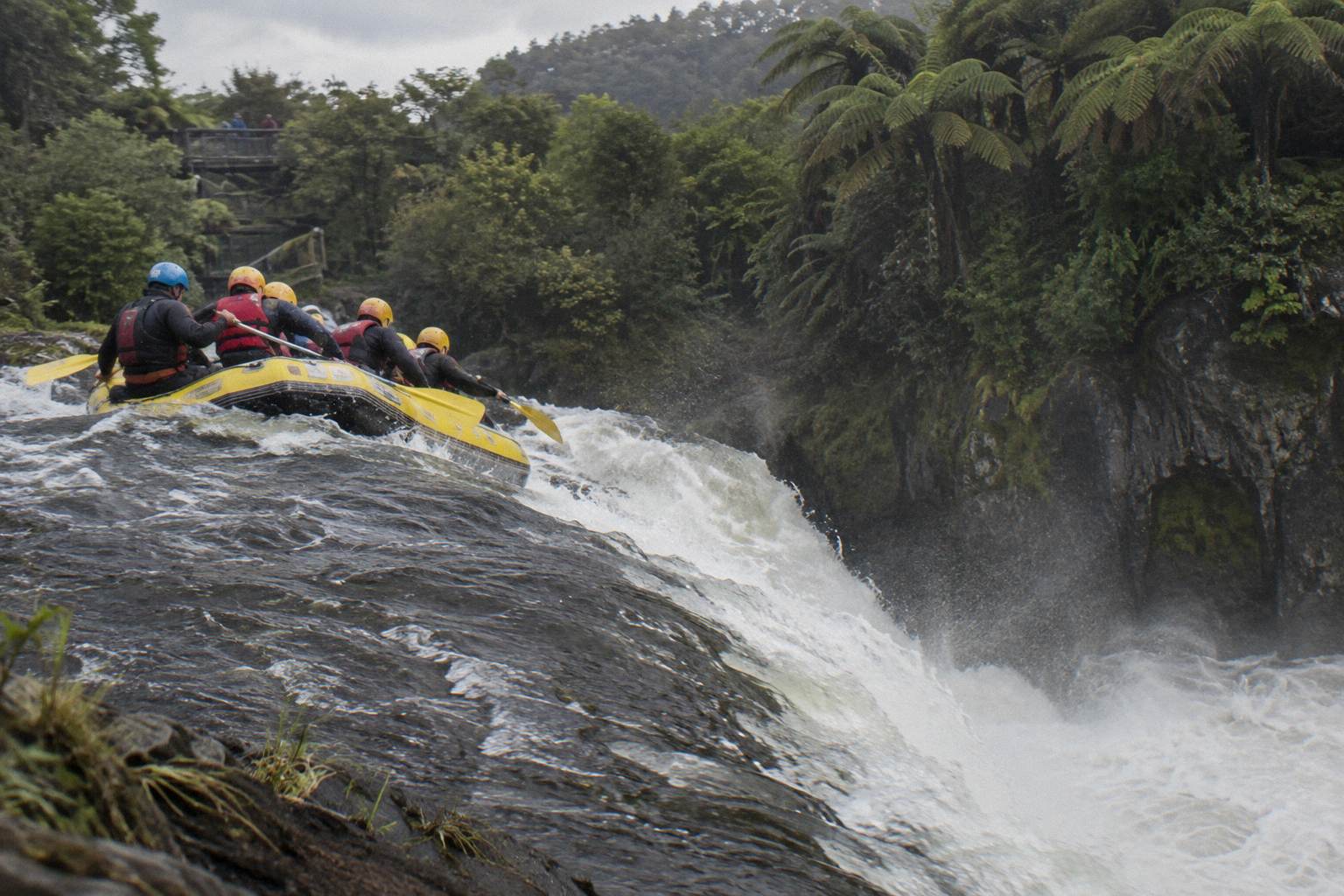
One question that comes up constantly is what happens if someone ends up in the water rather than the raft. The operator answer is that you float with the current, feet up and pointed downstream, and the safety kayaker or the raft picks you up in the pool below. The fuller answer, including the coroner's recommendation about a well fitted lifejacket and helmet, sits in what happens if you fall out of the raft, and it is worth reading before any Grade 5 booking.
What Does High Spring Flow Change About The Falls?
Kaituna Cascades' river conditions page reported in its spring update that flows were running in the 500s on the control gates with the water at 19 degrees C, and that the big waterfall was more powerful but slightly less tall and vertical at that level. High flow makes the drop hit harder and changes its shape: the lip fills in, the face becomes heavier, and the pool below becomes more turbulent.
Those are the operator's own words about its own river, and they are the best available description of why the falls is a different object in spring than in late summer. The reason the flow can be reported at all is engineering. Council-controlled gates at the Lake Rotoiti outlet hold the river's level and keep it raftable 365 days a year, which is why Kaituna trips do not shut down for lack of water the way rain-fed rivers do. The Wikipedia entry for Lake Rotoiti explains the lake and its outlet, the control point for the whole system. The gates are why a February booking and an October booking both get a runnable river, even though they get meaningfully different versions of the falls.
Neither version is the better one, and the operator material does not rank them. Spring high flow gives power; late summer lower flow gives the taller, more vertical shape that photographs so well. If you care about a specific version of the drop, the month by month breakdown in the Kaituna rafting season guide tracks how departures, water temperature and conditions shift across the year, and the does rain cancel the trip question addresses the weather worry directly.
Is The Fall The Whole Reason The Run Is Grade 5?
No single rapid makes a Grade 5 run, but the falls is the anchor of the rating: Kaituna Cascades sells the trip as Grade 5 while its blog describes rapids of Grade 4 and 5 building to the falls. Around the three waterfalls sit 14 rapids and drops packed into a short gorge, so the rating reflects the density of hard water as much as any one feature.
A rafter who shows up only for the drop gets the drop, but pays for it through a full workout of rapids first. The three waterfalls on the run are not equal, and the operator material is clear that Tutea is the big one. The table below lays out the run's structure as the operators describe it, with each waterfall in its place in the sequence.
| Feature | Place On The Run | What The Operators Say |
|---|---|---|
| Upper gorge rapids | Early, after the put-in at Okere Falls | Grade 4 and 5 rapids building toward the falls |
| Tutea Falls | Middle of the run | 7 metre drop, the operators' figure; the run's centrepiece |
| Remaining drops and rapids | Below the falls to the take-out | Part of 14 rapids and drops across roughly 50 to 60 minutes on the water |
The word waterfalls, plural, sometimes surprises people who expected one famous drop. The operators count three on the run, and Tutea is the tallest by a wide margin. If you are working out whether the whole thing suits your experience level, the white water rafting for beginners guide and the is rafting in Rotorua safe for beginners question answer it: first timers run it every year with a guide doing the steering, and the minimum ages per listing exist for exactly that reason.
Which Trips Actually Run The Falls?
Every Kaituna rafting product on this site runs the same gorge and the same waterfall, from NZ$61 per person on the Kaitiaki free pickup listing to NZ$135 on the flagship Kaituna Cascades and Rotorua Rafting trips; the differences are duration, inclusions, pickup and minimum age, not the drop itself. All amounts are New Zealand dollars, and prices vary by date and group.
Choosing between the trips is a choice of operator, transport and extras, not a choice of waterfall, and the booking page shows the price for your date. The table below compares the Kaituna products that fit a falls-focused trip. Twin products are separate bookable trips with their own prices and their own figures, so each row stands alone.
| Trip | Operator | From Price | Rating | Duration | Minimum Age |
|---|---|---|---|---|---|
| Kaituna Cascades, The Originals | Kaituna Cascades | NZ$135 per person | 5.0 from 1,385 reviews | 2h | 13 |
| Free Sauna, 2h30 Kaituna Trip | Rotorua Rafting | NZ$135 per person | 5.0 from 2,191 reviews | 2h30 | 10 |
| Rafting With Hotel Transfers | Kaitiaki Adventures | NZ$139 per person | 5.0 from 823 reviews | 2h30 | 13 |
| Tutea Falls 2h Rafting | Kaituna Cascades | The booking page shows the price | 4.9 from 380 reviews | 2h | 13 |
| Free Sauna, 2h Kaituna Run | Rotorua Rafting | NZ$74 per person | 4.9 from 490 reviews | 2h | 10 |
| Kaituna Rafting, Free Pickup, 2.5h | Kaitiaki Adventures | NZ$61 per person | No rating shown | 2.5h | 13 |
The differences that matter in practice: minimum age is 10 on the two Rotorua Rafting listings and 13 on the others, so families with younger teenagers have a narrower set of options. The free sauna belongs only to the Rotorua Rafting sauna products, so if a warm-down after the drop is part of the plan, those are the listings that include it, and the free sauna after rafting guide explains that angle. Hotel pickup is included on all four Kaitiaki Adventures listings, which the getting to the Kaituna for rafting guide puts in context with the self-drive options at Okere Falls.
The featured trip for the falls is Kaituna Cascades, The Originals, a 2 hour trip from the operator based at 18 Okere Falls Road with direct river access, rated 5.0 from 1,385 reviews and from NZ$135 per person. It suits a visitor who wants the shortest full experience from a base sitting essentially on the river. If a longer experience, a sauna or a pickup changes the equation, the shorter Free Sauna, 2h Kaituna Run from NZ$74 per person covers the same water with a smaller price, and you can check availability on the Kaitiaki free pickup trip if you want the lowest from-price on the river, with hotel pickup included.
For a different kind of contrast, the Wairoa River Grade 5 product from the same headline operator is a 5 hour day near Tauranga on selected release Sundays only, from NZ$190 per person, minimum age 13, and it runs a river with no waterfall remotely like Tutea. The Wairoa River rafting guide covers that trip in full; the short version is that the Wairoa is for rafters who already love Grade 5 water, while the Kaituna is the river built around a single famous drop. Check the live dates before planning around a Wairoa Sunday, because the release calendar decides everything on that river.
What Has Official Reporting Said About The Falls?
A coroner's findings released in March 2026 recommended appropriately sized and fitted lifejackets and helmets; the fuller picture is in the fatality rate question answered in full.
The SunLive report on the coroner's findings is the source for the March 2026 release, and is Kaituna rafting safe covers the safety regime and the equipment the operators supply.
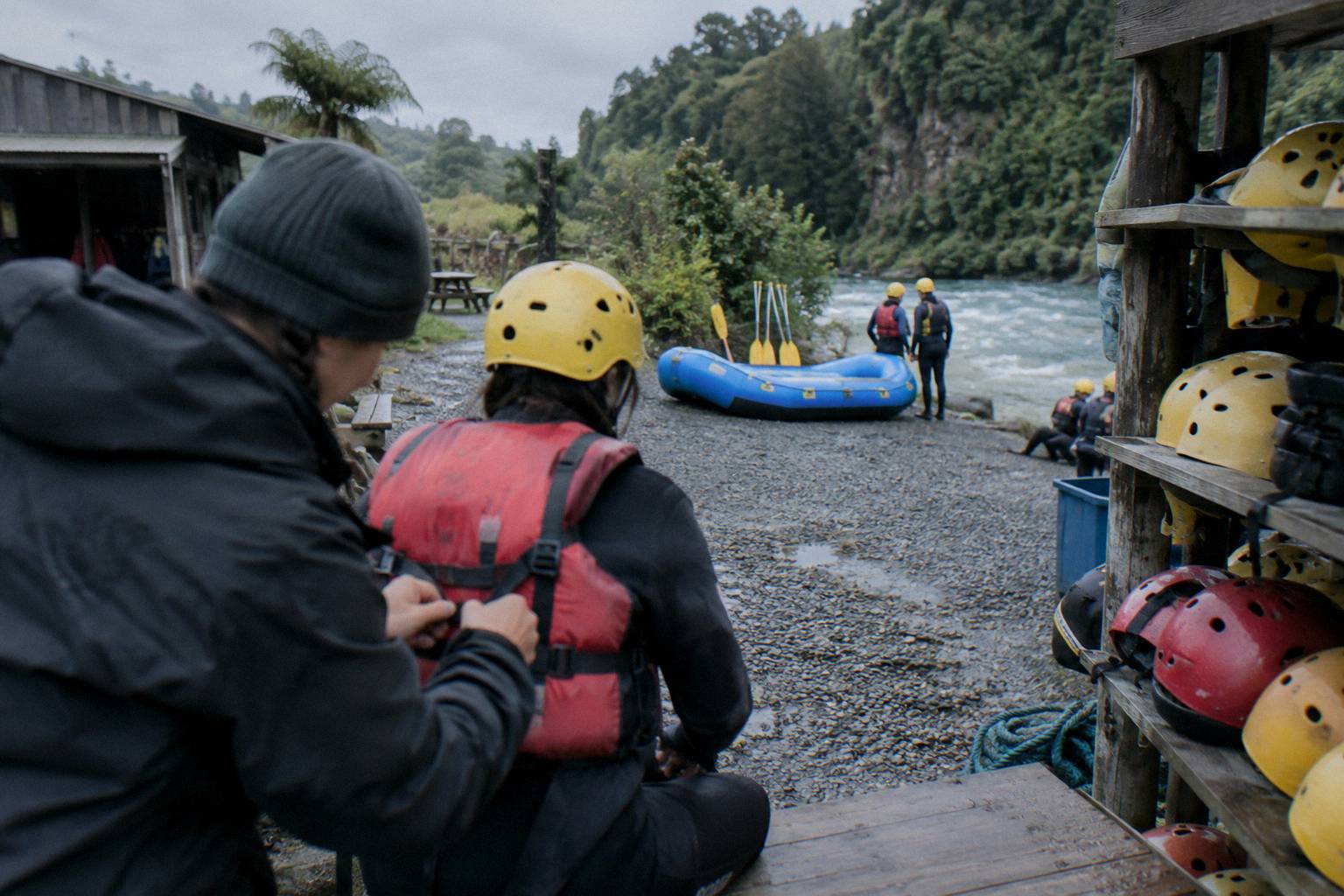
The practical takeaway from the coroner's recommendation is simple and within any rafter's control: a correctly sized, correctly fitted lifejacket and helmet, which the operators fit and check before every trip.
When Is The Best Time To Run The Falls?
The waterfall runs 365 days a year because the control gates at the Lake Rotoiti outlet hold the flow, so the question is not whether the falls is runnable but which version of it you want and how many departure times you get: operators run more departures in summer, on demand, and fewer in winter. The booking calendar holds every confirmed time.
Water temperature follows the seasons, and the operators supply wetsuits, helmets, life jackets, fleece, booties and splash jackets so the kit list barely changes between them. What changes is the experience around the edges: winter means fewer departures and colder air between the pool and the changing shed, and colder water makes the sauna products a different proposition, a comparison the winter rafting question works through properly.
The month itself matters less than people assume, and the best month for white water rafting question explains why: the gates, not the rainfall, set the baseline. Choose on crowd tolerance, water temperature preference and the shape of the falls you want, then see dates on the operator's calendar before building the rest of the day around it, because a popular summer departure time can fill while you decide.
What Trips People Up Before You Book
Most problems happen before you book: travelers assume every Tutea Falls listing has the same minimum age, expect a sauna or pickup on a product that does not include it, treat twin products as one bookable trip, or build a tight schedule around a departure time never confirmed on the calendar. These are booking errors rather than river issues, and each one is avoided by reading the product details before you pay.
Ages first. Minimum age is 10 on the two Rotorua Rafting Kaituna listings and 13 on the Kaituna Cascades and Kaitiaki listings, so a family with a 10 to 12 year old is not choosing freely among all trips, and a 13th birthday in the wrong month changes the options. The white water rafting with kids minimum age guide lays out the whole picture.
Inclusions second. The free sauna belongs only to the Rotorua Rafting sauna products; hotel pickup is included on all four Kaitiaki listings; assuming either applies to a different operator's trip is the single most common disappointment. Twins third: the same operator can carry two separate cards for near-identical water, with different from-prices and different review pools, and they are never a discount or a like-for-like comparison. Prices vary by date and group, and the booking page shows the price for your date; that is the number to plan on, not a from-price quoted in an article.
Weight and health terms fourth. Kaituna Cascades states a maximum of 120 kg, check-in 15 minutes early, and that the trip is not for pregnancy or heart conditions, with a float test possible; Rotorua Rafting states a 130 kg maximum. Bring swimwear and a towel; the operators supply the technical kit. Ask the operator anything the product page leaves open, and see dates before you book anything else in the day, because the departure clock, not the waterfall, is what usually breaks a plan.
The short pitch for the drop: 7 metres, run daily year round, with a guide steering every raft. Pick the product that matches your age mix, your transport and your appetite for extras, then confirm the time on the calendar.
Common Questions About The Tutea Falls Drop
How High Is Tutea Falls?
7 metres, or 23 feet, as the operators' figure. Kaituna Cascades, Kaitiaki Adventures and Rotorua Rafting all state the same number, and no source disagrees.
Is Tutea Falls Really The Highest Commercially Rafted Waterfall In The World?
Operators describe it that way, and Kaituna Cascades publishes a comparison list of lower commercially rafted falls, the tallest of which it gives as 5.5 metres. Treat the superlative as the operators' claim, which it is.
Can Beginners Run Tutea Falls?
Yes, with a guide doing the steering. The run is sold as Grade 5 with rapids the operator's blog rates as Grade 4 and 5 building to the falls, minimum ages apply per listing, and operators supply wetsuits, helmets and life jackets.
How Long Does The Whole Trip Take?
About 2 hours for the whole experience, with roughly 50 to 60 minutes on the water, on the Kaituna Cascades and Rotorua Rafting schedules. Durations on this site range from 2 hours to 2h30 across the Kaituna products.
Does The Waterfall Change With The Seasons?
Yes. Kaituna Cascades' spring update reported the falls as more powerful but slightly less tall and vertical at high flow, with water at 19 degrees C in that update. Lower late-season flows give the taller, more vertical shape.
How Much Does A Tutea Falls Rafting Trip Cost?
Kaituna trips that run the falls start from NZ$61 per person on the Kaitiaki free pickup listing, with the flagship trips from NZ$135 per person. All amounts are New Zealand dollars, prices vary by date and group, and the booking page shows the price for your date.