What Is The Highest Rafting Waterfall In New Zealand?
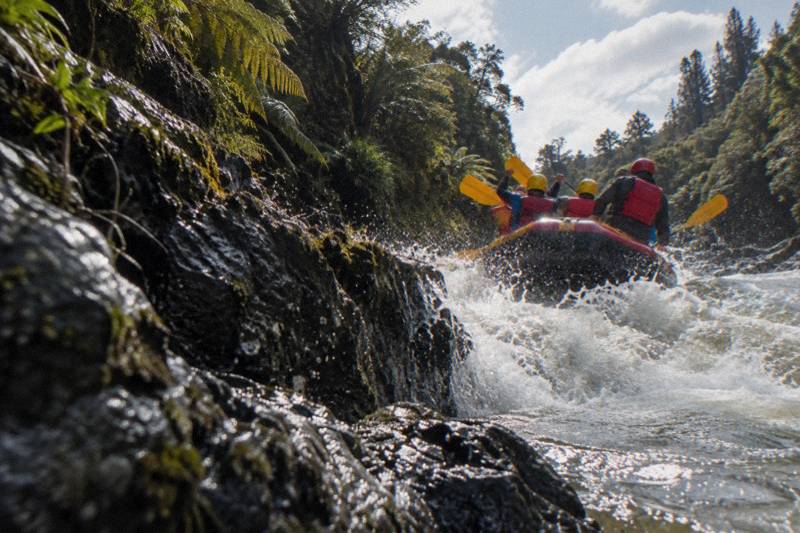
Tutea Falls on the Kaituna River is the drop every Rotorua rafting trip aims at: 7 metres by the operators' figure, and described by operators as the highest commercially rafted waterfall in the world.
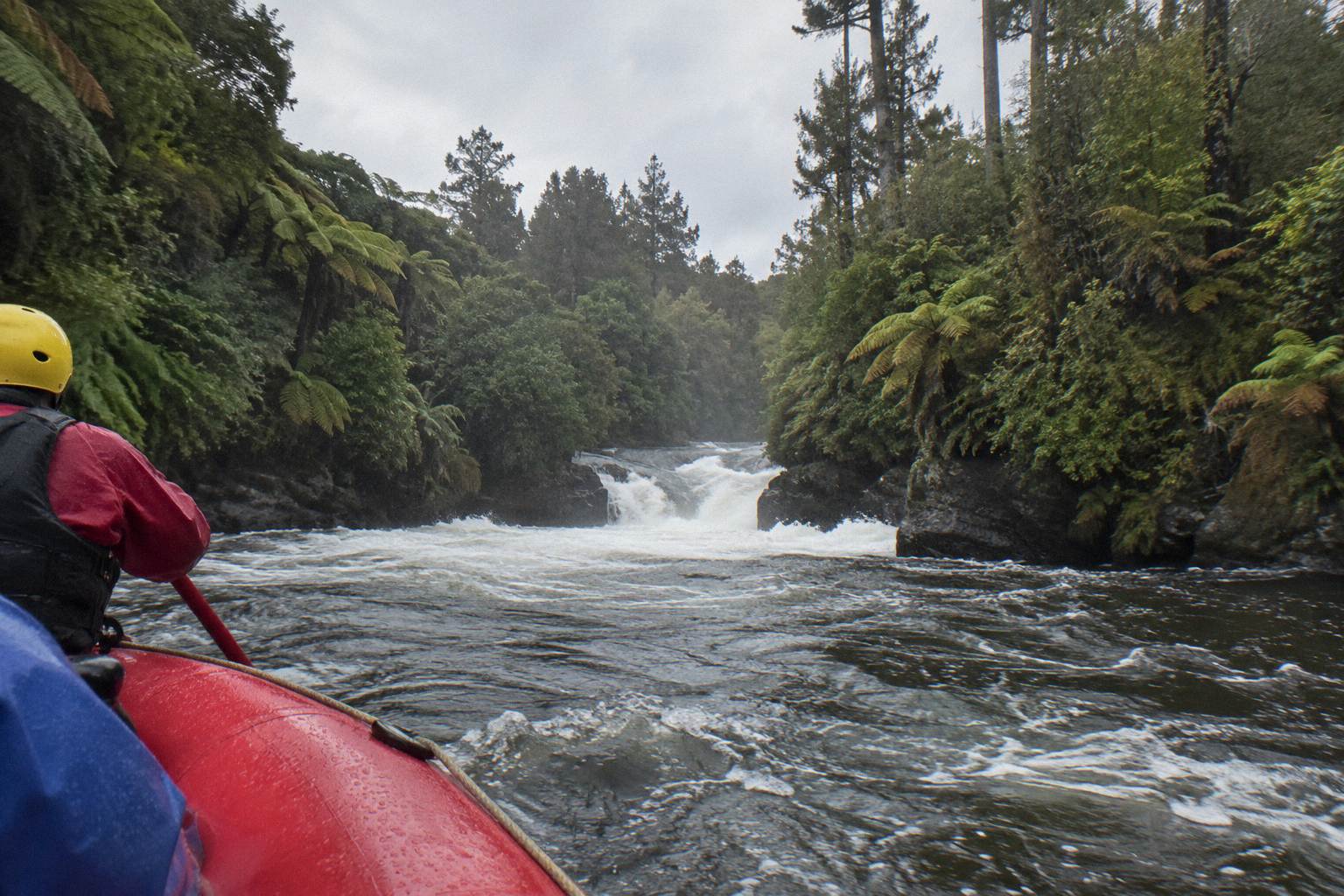
Every Kaituna trip booked through this site starts from the same base country: the Kaituna River rafting category, where the three operators that run the falls each have their own product cards and their own figures. The drop that anchors all of it is Tutea Falls, and its height is a number worth getting right before you book anything.
| Fact | Detail |
|---|---|
| The waterfall | Tutea Falls, Kaituna River, below Okere Falls |
| Height | 7 metres (23 ft), the operators' figure |
| The claim | Operators describe it as the highest commercially rafted waterfall in the world |
| Who states the figure | Kaituna Cascades, Kaitiaki and Rotorua Rafting |
| River grade | Sold as Grade 5, with rapids Kaituna Cascades calls Grade 4 and 5 building to the falls |
| Time on the water | 50 to 60 minutes, inside an experience of about 2 hours |
| Base location | Okere Falls, 23 minutes from Rotorua |
| Trips over it | Three operators, daily departures year round |
Tutea Falls on the Kaituna River, at 7 metres, or 23 feet, is the highest waterfall run by commercial rafting trips in New Zealand. The figure comes from the operators themselves: Kaituna Cascades, Kaitiaki and Rotorua Rafting all state 7 metres, and no source consulted disagrees. Operators go further and describe it as the highest commercially rafted waterfall in the world, a claim this article reports rather than endorses.
The Kaituna River leaves Lake Rotoiti and drops through a short, steep gorge below Okere Falls, the settlement whose name the rapids carry. That gorge packs the whole commercial run into a tight corridor: Kaituna Cascades says the trip covers 14 rapids and drops plus 3 waterfalls, with Tutea Falls the centrepiece. The full rundown of the sequence is in the what happens on a Kaituna rafting trip guide.
The 7 metre number deserves its qualifier. It is not a surveyor's measurement held in a public register, it is the height the operators themselves publish, consistently, across their own pages. Kaituna Cascades, Kaitiaki and Rotorua Rafting all carry the same figure, and the German-language Wikipedia entry for the river agrees with it. When four independent sources converge on one number, that number is as solid as a river fact gets.
The "highest commercially rafted waterfall in the world" phrasing matters commercially, so treat it as a claim rather than a settled record. Operators describe it as such, and Kaituna Cascades backs the claim with a comparison: it publishes a short list of other commercially rafted falls, all of them lower. That list is worth a section of its own further down, because it is the closest thing to context the operators themselves offer.
If the point of the question is to stand on the biggest drop a raft can legally carry you over in New Zealand, the answer points to one river and one waterfall. Three operators sell that trip, from NZ$61 to NZ$139 per person depending on the product, all of them launching from the same corner of countryside 23 minutes from Rotorua.
How Does Tutea Falls Compare With Other Commercially Rafted Waterfalls?
Kaituna Cascades publishes a comparison of commercially rafted waterfalls that puts Tutea Falls, at 7 metres, above Agers Falls at 5.5 metres, Sweets Falls at 4.3 metres and Husum Falls at 3.7 metres. That is the operator's own list, reproduced here as published, and it is the evidence behind the description of Tutea Falls as the highest commercially rafted waterfall in the world.
The comparison is the operator's, not this article's. Kaituna Cascades names those three lower falls on its Tutea Falls page, and the heights are its figures. Set side by side, the gap is clear: the smallest of the three is barely half of Tutea Falls.
| Waterfall | Height | Source |
|---|---|---|
| Tutea Falls | 7 m | The operators' figure, stated by Kaituna Cascades, Kaitiaki and Rotorua Rafting |
| Agers Falls | 5.5 m | Kaituna Cascades' published list |
| Sweets Falls | 4.3 m | Kaituna Cascades' published list |
| Husum Falls | 3.7 m | Kaituna Cascades' published list |
A metre and a half of extra drop does not sound dramatic until you watch water pour over a lip at that scale. Rafting over a waterfall is measured in the vertical, and every additional metre multiplies the volume of water that lands on the raft as it hits the pool below. The operators' own river conditions page, which tracks flow through the control gates upstream, notes that at high spring flows the big waterfall becomes more powerful but slightly less tall and vertical: the drop flattens a little as the river stands up.
That detail is worth holding onto. The 7 metre figure describes the falls at ordinary flows, not a fixed wall of water. The Tutea Falls page on the operator's site carries the claim in the operator's own words, and it is the right primary source for anyone who wants to read the comparison at its origin.
For rafters choosing between destinations, the comparison table settles the practical question: within the list the operator itself publishes, nothing commercially rafted stands taller than Tutea Falls. No other New Zealand waterfall is in contention on the figures available here, and this article names none.
The Tutea Falls rafting guide covers the drop itself in more depth, including how the run builds toward it and what the operators say about running it at different flows.
What Does The Run To The Falls Involve?
Kaituna Cascades describes the trip as 50 to 60 minutes on the water inside an experience of about 2 hours total, covering 14 rapids and drops and 3 waterfalls, with Tutea Falls as the biggest of the three. The run is sold as Grade 5, and the operator's blog says the rapids are Grade 4 and 5, building to the falls. The drop is the finale, not the whole show.
The structure matters for anyone weighing the trip. A raft spends the first stretch of the Kaituna working through continuous whitewater, and by the time it reaches the falls the crew has already run a dozen or more rapids. The International Scale of River Difficulty is the reference behind the grade numbers, and the difference between a Grade 4 rapid and a 7 metre waterfall is the difference between a steep rapid and a vertical lip.
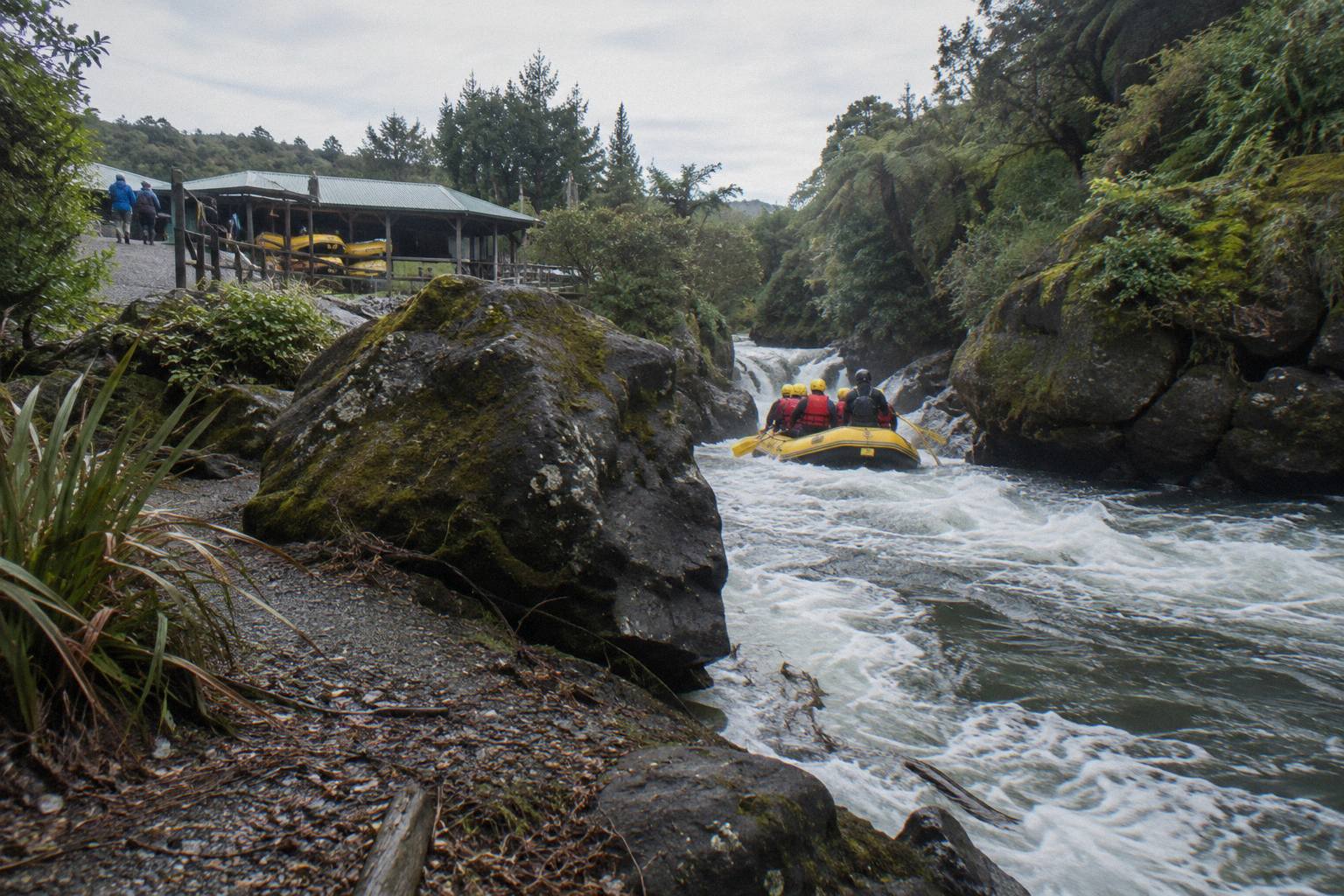
Three waterfalls on one trip is unusual. Most commercial rivers offer a single notable drop, if that. The Kaituna stacks them, which is why the whole experience fits inside about 2 hours and still leaves a full hour of it on the water: nothing is flat, and no section is dead travel time. How the grading works, rapid by rapid, is unpacked in the rapid grades explained for rafters guide.
For first timers, the shape of the run answers the common worry. The falls come late enough in the sequence that the paddle crew has practised, and the guide has called commands through every rapid before it. The question of whether beginners belong on Grade 5 water at all has its own treatment in the white water rafting for beginners guide, and the answer for the Kaituna is more permissive than the grade number suggests.
The Grade 5 label on the product cards is the selling grade. The operator's own blog refines it: Grade 4 and 5 rapids building to the falls. Both descriptions are the operator's, and both appear here as stated.
Where Is Tutea Falls And How Do You Get There?
Tutea Falls sits in the Kaituna gorge below Okere Falls, and the rafting bases cluster around it: Kaituna Cascades at 18 Okere Falls Road with free parking and direct river access, Rotorua Rafting at 761 State Highway 33 about 20 minutes from central Rotorua, and the whole area about 23 minutes' drive from Rotorua. You do not travel to the falls, the trip starts practically on top of them.
This is the quiet advantage of the Kaituna over destination rivers elsewhere. The drive from Rotorua to the put-in is shorter than most city commutes, which is what makes the 2 hour experience possible at all. There is no shuttle stage, no hour in a van winding up a valley: the base, the gorge and the falls sit in one small pocket of countryside. The rest of the planning pages sit on Rafting Rotorua.
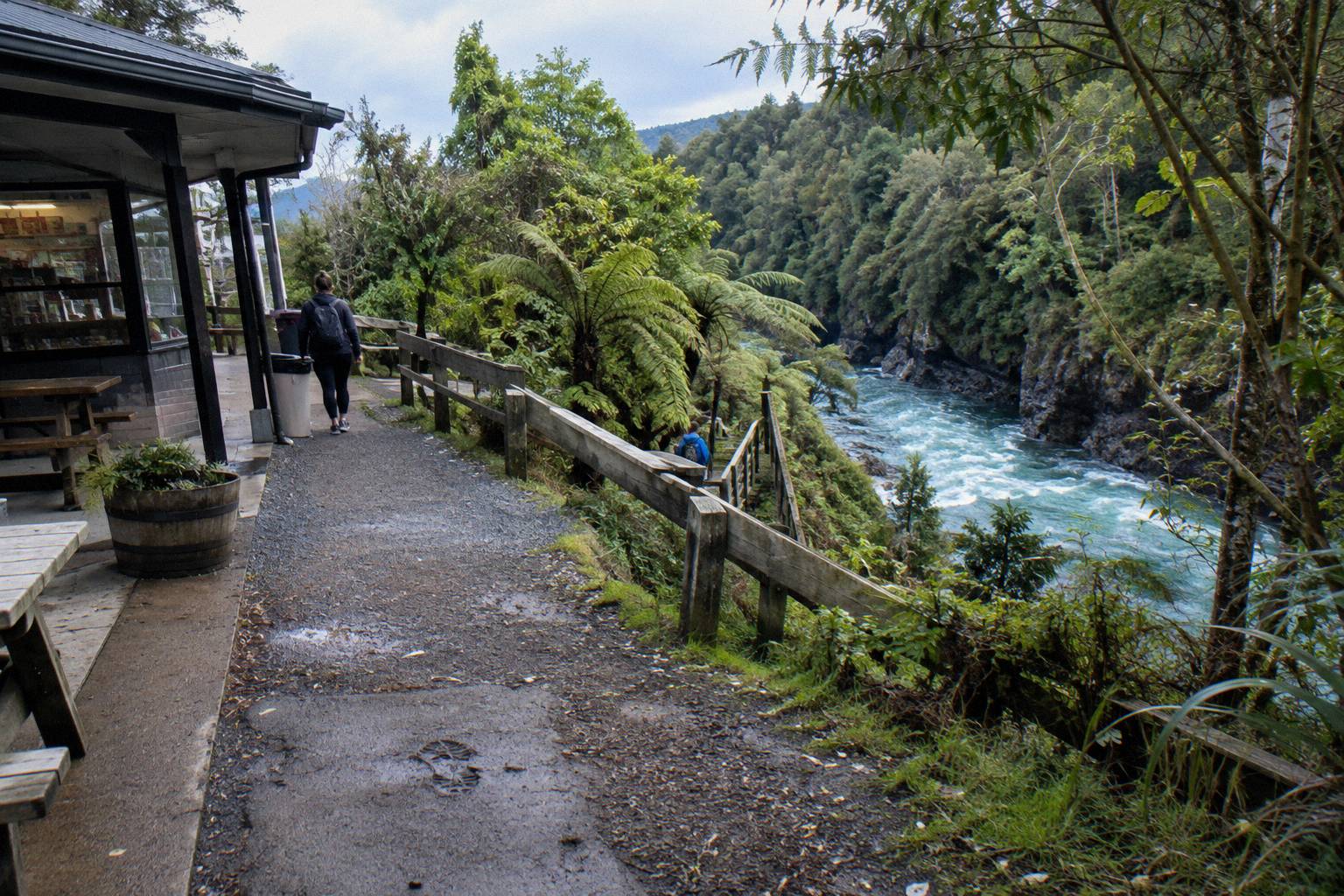
The Kaitiaki Adventures base sits at 1135 Te Ngae Road, Tikitere, and its transfer product collects from hotels, so on that listing the travel question disappears entirely. For the listings without an optional paid pickup, the addresses above are the meeting points, and Kaituna Cascades asks rafters to check in 15 minutes early. Directions, parking and the road options are covered in full in the getting to the Kaituna for rafting guide.
The falls can also be walked to. The Okere Falls track above the rapids guide describes the riverside path where the gorge, and the falls within it, can be seen from above before or after a trip. Plenty of rafters walk it the same day to look down at the drop they just ran.
For anyone arriving from further afield, the trip is reachable as a day out from Tauranga, which the Tauranga to the Kaituna rafting guide lays out with times and meeting points. The waterfall does not move, but the logistics depend on where you start the morning.
Does The Height Of The Falls Change With The Flow?
Yes, and the operator says so directly: in its spring high-flow update, Kaituna Cascades reports that the big waterfall becomes more powerful but slightly less tall and vertical as flows rise. The 7 metre figure is the falls at ordinary levels, not a fixed measurement, and the river's flow is managed year round by control gates at the Lake Rotoiti outlet.
This is the piece of information most first-time visitors never encounter. The Kaituna runs 365 days a year because council-controlled gates at the Lake Rotoiti outlet hold the flow, which is why a commercial rafting operation can guarantee a runnable river in any season while rain-fed rivers elsewhere rise and die with the weather. The mechanism is described on the operator's river conditions page, which tracks the gate flows.
At high flow, the geometry of the falls changes. More water standing up in the gorge raises the pool below the lip, so the vertical distance shortens even as the power of the drop increases. The operator's spring update described flows in the 500s on the control gates and water at 19 degrees C, with the falls more powerful but slightly less tall and vertical. In other words: the number on the page is a fair average, and the falls you run on any given day is a little different from the falls the previous group ran.
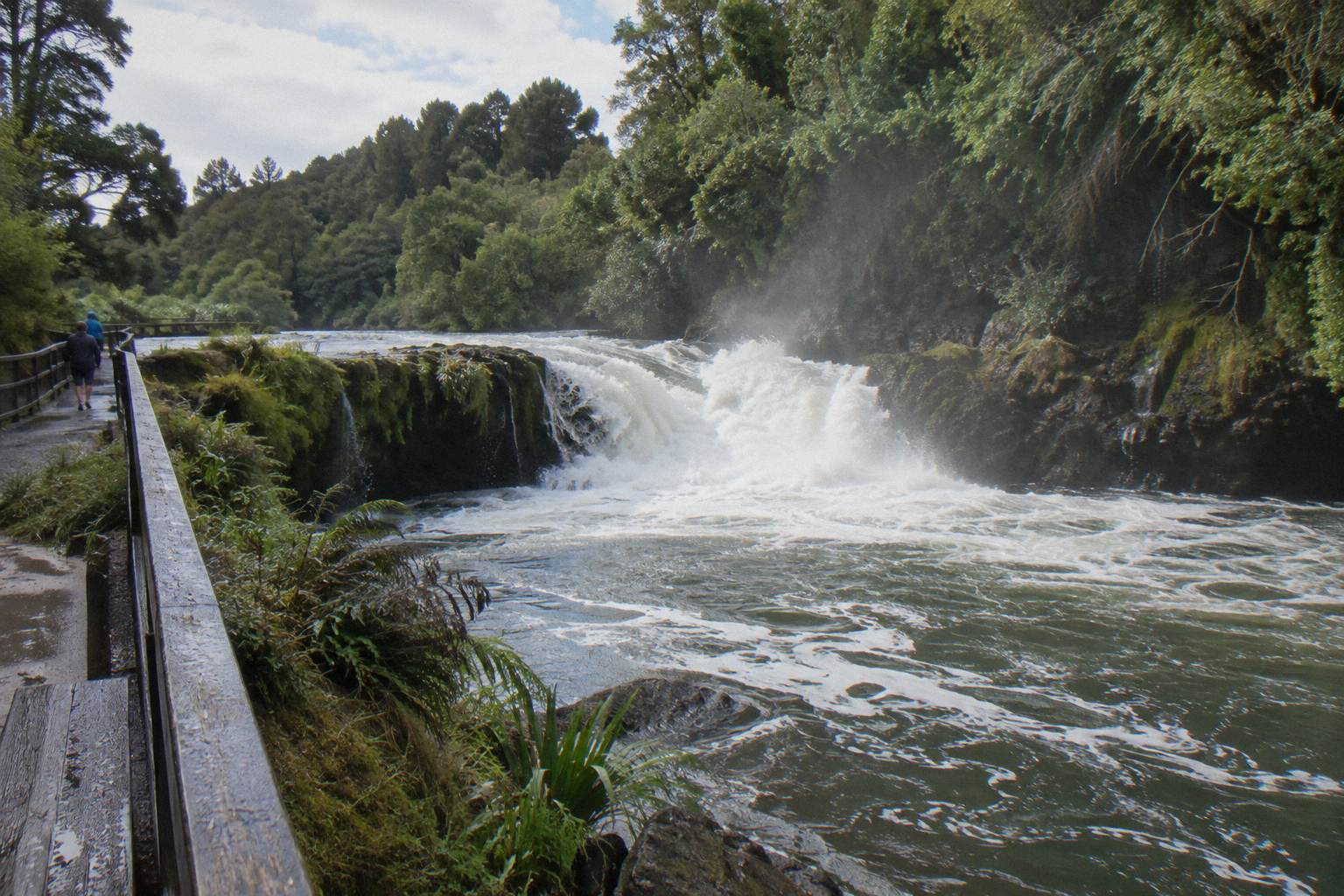
The seasonal angle goes deeper than one spring update. Water temperature runs about 24 degrees C in summer and about 12 °C in winter according to the Rotorua Rafting FAQ, and the operators supply wetsuits, helmets, life jackets, fleece, booties and splash jackets as part of the trip. The month-by-month picture, including the operators' departure schedules across the seasons, is in the Kaituna rafting season month by month guide.
For the height question specifically, the takeaway is simple: quote 7 metres, attribute it to the operators, and know that the live falls breathes with the gates. Anyone who wants the current state of the river before booking can check dates on the operator's river conditions page or ask the operator directly.
Which Trips Take You Over Tutea Falls?
Three operators sell the Kaituna run, and every rafting product in the Kaituna category covers the same gorge and the same waterfall: Kaituna Cascades from NZ$135 per person on its Originals product, Rotorua Rafting from NZ$135 on its sauna product, and Kaitiaki Adventures with two separate listings, one from NZ$61 and one from NZ$139 that includes hotel transfers. The differences are in duration, inclusions and meeting logistics, not in the falls.
Twin products deserve a flag here. Several of these operators list their trip more than once, in slightly different packages with their own prices and their own review pools, and this site treats them as separate products rather than one trip at two prices. The Kaituna rafting operators compared guide lays out the full field, product by product.
| Product | Operator | Rating | From price | Duration | Minimum age |
|---|---|---|---|---|---|
| Kaituna Cascades, The Originals | Kaituna Cascades | 5.0 from 1,385 reviews | NZ$135 | 2h | 13 |
| Free Sauna, 2h30 Kaituna Trip | Rotorua Rafting | 5.0 from 2,191 reviews | NZ$135 | 2h30 | 10 |
| Rafting With Hotel Transfers | Kaitiaki Adventures Aotearoa | 5.0 from 823 reviews | NZ$139 | 2h30 | 13 |
| Free Sauna, 2h Kaituna Run | Rotorua Rafting | 4.9 from 490 reviews | NZ$74 | 2h | 10 |
| Kaituna River White Water Experience | Kaitiaki Adventures | no printed rating | NZ$61 | 2.5h | 13 |
All amounts are New Zealand dollars, prices vary by date and group, and each booking page shows the price for the date you choose. Ages are per listing, so a 10 year old can join the Rotorua Rafting sauna products while the Kaituna Cascades and Kaitiaki listings set the line at 13. The family angle, including the youngest ages across the operators, gets its own treatment in the white water rafting with kids, minimum age guide.
The sauna inclusion belongs only to the Rotorua Rafting and Rotorua Ziplines products. Kaituna Cascades and Kaitiaki do not state sauna inclusion on their pages, so treat the free sauna as a feature of the two Rotorua Rafting Kaituna products and not a universal. The free sauna after rafting guide covers what that inclusion involves.
For the trip that markets itself around the falls most directly, Kaituna Cascades, The Originals is the operator's flagship Kaituna product, rated 5.0 from 1,385 reviews, from NZ$135 per person, 2 hours door to door. Check availability if the date matters more than the detail.
What Trips People Up Before You Book
The mistakes that cost people the falls are consistent: assuming every Kaituna product has the same minimum age when the listings differ, expecting a sauna that only two operators' products include, comparing twin products as one trip at two prices, and quoting the waterfall's height as a surveyed fact rather than the operators' figure. Each of these is avoidable with one careful look at the right product card.
The age line catches families most often. Two listings on this site welcome 10 year olds and three set the minimum at 13, so booking the family onto the wrong twin product ends the day at the check-in desk. The rule is mechanical: ages are per listing, and the listing you book is the one that applies.
The sauna assumption is the mirror image. Because the sauna products carry the biggest review counts, they set expectations for the whole category, but the inclusion is the Rotorua Rafting and Rotorua Ziplines products' alone. If a post-raft sauna is the point of the booking, choose a product that states it.
The height claim is the third trip hazard, in the literal sense of the phrase. Repeat 7 metres as the operators' figure, and repeat the world-highest description as the operators' description, and the sentence you pass on to others stays accurate at any flow. Anyone comparing waterfall destinations deserves to know the comparison list is Kaituna Cascades' own, not an independent ranking.
Check the live price and see dates on the booking page before building a day around one departure time: the calendar holds every trip, and the operators' printed schedules shift between winter and summer seasons.
Common Questions About The Highest Rafting Waterfall
What Is The Highest Rafting Waterfall In New Zealand?
Tutea Falls on the Kaituna River, at 7 metres, or 23 feet, by the operators' figure. Kaituna Cascades, Kaitiaki and Rotorua Rafting all state the same height, and operators describe it as the highest commercially rafted waterfall in the world.
How Tall Is Tutea Falls Exactly?
Seven metres, or 23 feet. That is the figure the three operators publish, not an independent survey measurement, and no consulted source disagrees with it. At high flows the operator reports the drop sits slightly lower as the pool below rises.
Is Tutea Falls Really The Highest Commercially Rafted Waterfall In The World?
Operators describe it as such, and Kaituna Cascades supports the description with a list of lower commercially rafted falls: Agers Falls at 5.5 m, Sweets Falls at 4.3 m and Husum Falls at 3.7 m. That comparison is the operator's own, reported here as published.
Can Beginners Raft Over Tutea Falls?
Yes, the Kaituna trip is sold to first timers. The run is graded 5, with the operator's blog describing Grade 4 and 5 rapids building to the falls, and the falls come after the crew has run more than a dozen rapids together. Minimum ages vary by listing, from 10 to 13.
How Long Does The Trip Over The Falls Take?
Kaituna Cascades describes 50 to 60 minutes on the water inside an experience of about 2 hours. Product durations on this site run from 2 to 2.5 hours depending on the operator and package.
Does The Waterfall Run All Year?
Yes. Council-controlled gates at the Lake Rotoiti outlet hold the Kaituna's flow, so operators run the river 365 days a year regardless of rainfall, with departure schedules shifting between the winter and summer seasons.