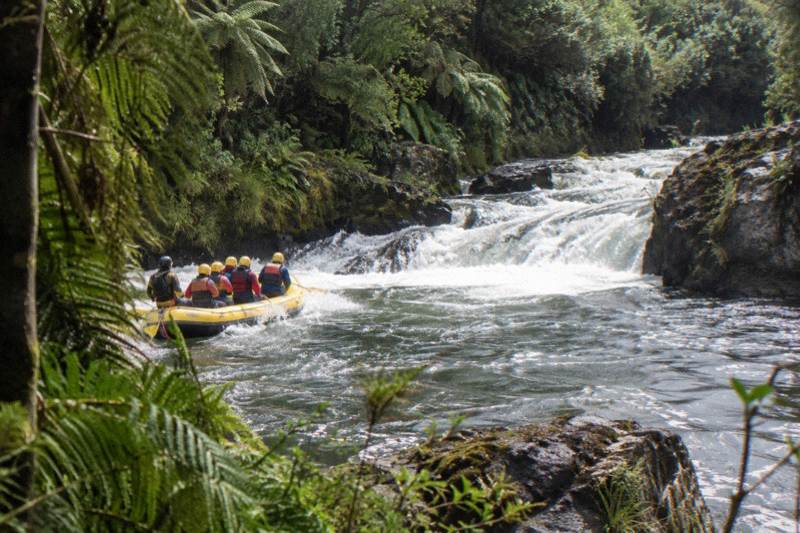
Can A Beginner Do Class 4 Rapids?
Whether a first-time rafter can handle Class 4 water, what the grades mean on a guided trip, and which Kaituna and Rangitaiki products suit a beginner.
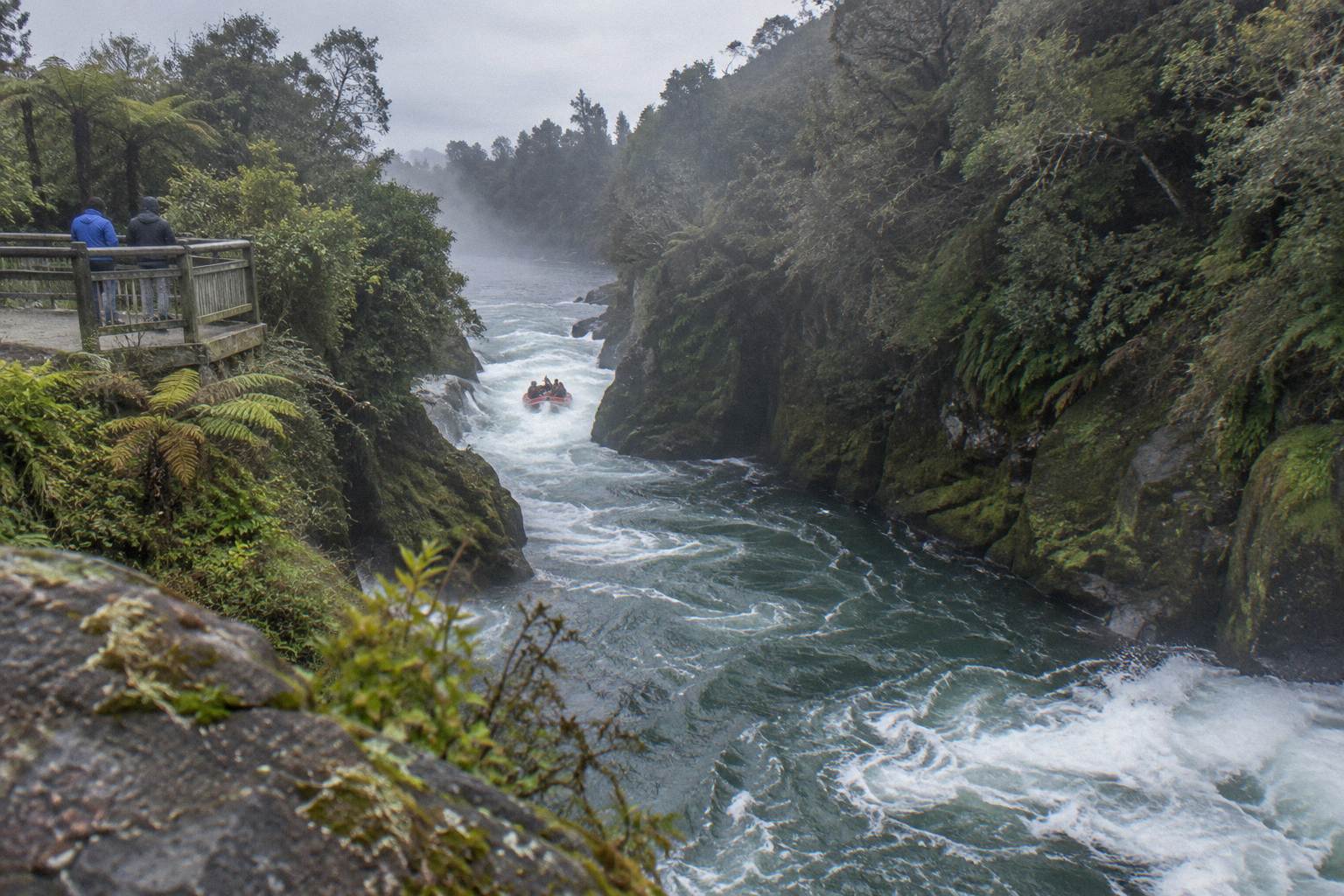
The Kaituna is the river most beginners mean when they ask about Class 4 around Rotorua, and it carries the densest concentration of guided whitewater products in the region, so the practical answer starts there. Comparing the actual trips, their prices and their terms is the shortest route to a confident booking, and choosing between the Kaituna rafting operators does that side by side.
| Fact | Detail |
|---|---|
| Kaituna grade | Sold as Grade 5 (Class V); Kaituna Cascades describes the rapids as Grade 4 and 5 building to the falls |
| Time on the water | About 50 to 60 minutes, about 2 hours for the whole experience, per Kaituna Cascades |
| The run | 14 rapids and drops and 3 waterfalls, per Kaituna Cascades |
| Base | Okere Falls, 23 minutes from Rotorua |
| Kaituna Cascades terms | Minimum age 13 (ages 10 to 12 join halfway), maximum weight 120 kg, check in 15 minutes early, not for pregnancy or heart conditions, a float test may be required |
| Gentler option | The Grade 2 Rafting, 4h product on the Rangitaiki, minimum age 5 on that listing |
| Currency | All amounts are New Zealand dollars |
On a guided commercial trip, yes, often: a beginner can raft Class 4 water because the operator supplies the boat, the guide, the paddle training and the safety gear, and the guide reads the river for the crew. What actually decides is the product's terms, not courage. On the Kaituna, Kaituna Cascades sets a minimum age of 13, a maximum weight of 120 kg, and a float test may be required before anyone joins the run.
The International Scale of River Difficulty is the reference point, and the Wikipedia entry on whitewater sets out what Class 4 means: advanced water with powerful, predictable rapids that demand precise boat handling. Paddling it privately, without a guide, is a different sport from paddling it in a commercial raft with a trained guide who calls every stroke. That gap between the grade on paper and the guided experience is where most beginner questions actually live.
The general shape of the sport is covered in the Wikipedia entry on rafting: a crew paddles an inflatable raft under a guide's commands, and commercial operators run routes matched to their guests. What a first trip feels like, minute by minute, belongs to what happens on a Kaituna rafting trip; the question here is narrower, whether the grade itself bars a beginner.
It does not bar a beginner by itself. What bars people is a product's stated terms: age, weight, swimming ability, and the operator's own assessment on the day. Kaituna Cascades says its minimum age is 13, that rafters aged 10 to 12 join halfway along the run, that the maximum weight is 120 kg, and that a float test may be required. Those are the gates, and they exist because the water is genuinely powerful, not because the sport is closed to newcomers.
What Class 4 Actually Means On The Water
Class 4, on the International Scale of River Difficulty, is advanced whitewater: rapids that are powerful and fairly predictable but need precise handling, with features that can trap or flip a boat. The scale runs from Class 1, moving water, to Class 6, considered unrunnable. The Kaituna's rapids sit at Grade 4 and 5 building to the falls, per the Kaituna Cascades blog, while the trip as a whole is sold as Grade 5.
A grade describes the hardest water on the run, not every metre of it. A Class 4 river pools and flattens between its drops; the Kaituna's 14 rapids and drops and 3 waterfalls are spaced along roughly an hour on the water, per Kaituna Cascades, so the intensity comes in bursts with calmer stretches to reset. That structure is part of why commercial operators can take first-timers down it at all.
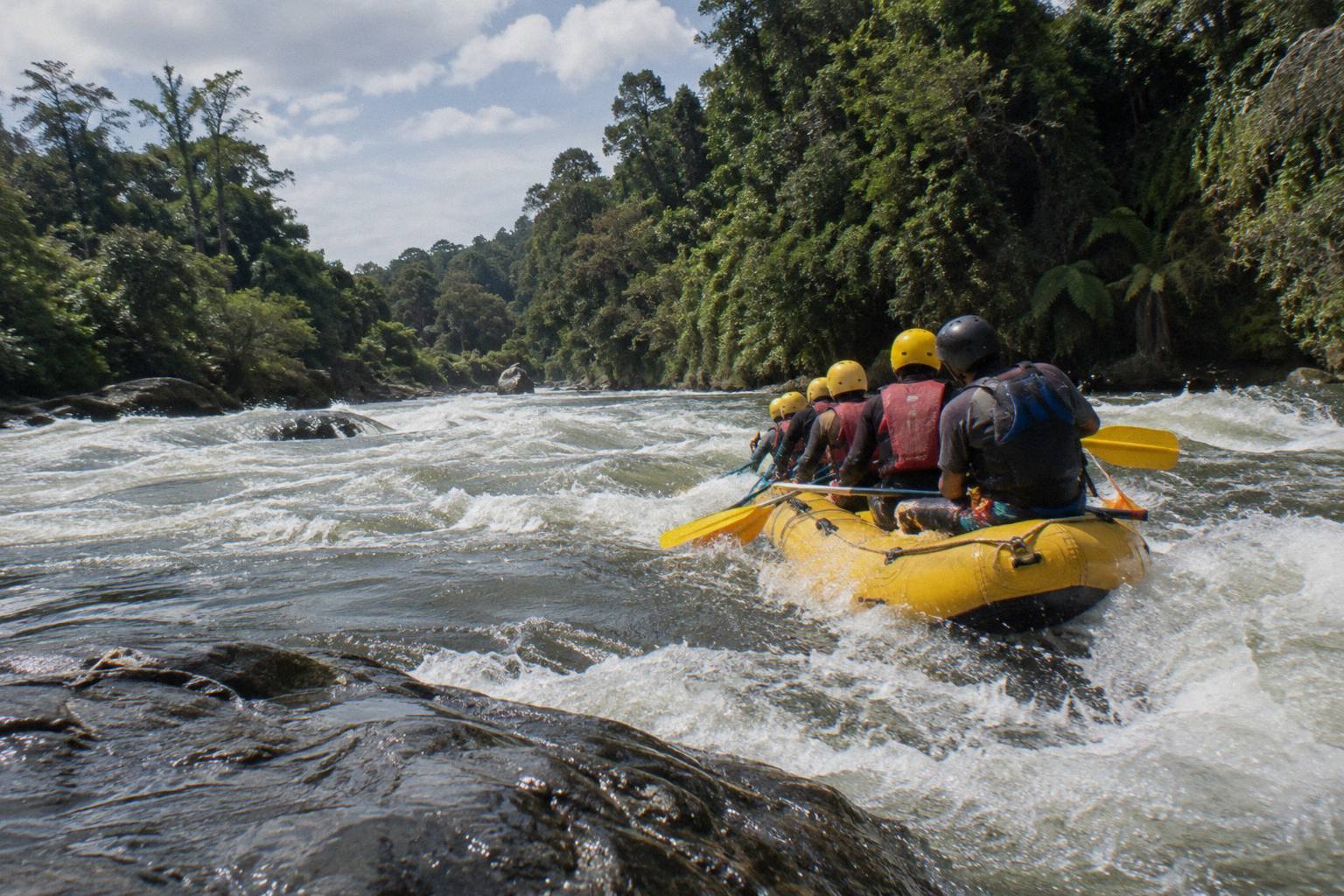
The scale also matters because operators use it loosely in marketing. A trip sold as Grade 5 may be built mostly of Grade 4 rapids with one Grade 5 feature, the waterfall, at the climax. Reading the grade descriptions rather than the number on the poster is the beginner's real protection, and matching the number to your own comfort in water is the second. The comparison between the top two grades is unpacked in the difference between Class 4 and Class 5 rapids, which is worth a read before booking anything.
| Grade | What It Means | Beginner Fit |
|---|---|---|
| Class 2 | Straightforward rapids, wide channels, small waves | Open to nearly everyone, including young children on suitable products |
| Class 3 | Moderate, irregular waves, some manoeuvring | Common first-timer whitewater with a guide |
| Class 4 | Advanced, powerful and predictable, precise handling needed | Possible for fit beginners on a guided commercial trip, terms apply |
| Class 5 | Very difficult, violent water, serious hazards | Guided products exist; the Kaituna is sold as Grade 5 with its rapids described as Grade 4 and 5 |
This is also why two trips labelled with the same number can feel completely different. A run where the Grade 4 water arrives as one short drop between long calm pools asks far less of a first-timer than a run where hard rapids stack back to back. The Kaituna's spacing, with calmer stretches between its drops, means you get a breather, a chance to reset your grip and your breathing, before the next feature arrives.
The guide matters as much as the grade. On a commercial trip, precise handling is the guide's job: they call the paddle strokes, pick the line through each rapid, and decide how the raft attacks the drops. Your job as a beginner is to paddle when told, hold on when told, and say beforehand how comfortable you are in moving water. That, plus reading the tour descriptions rather than trusting the poster number, is what actually determines whether a Class 4 day is a thrill or an ordeal.
How A Guided Trip Changes The Question
A guided commercial trip moves most of the skill burden from the guest to the operator: the guide steers, calls the paddle strokes, chooses the line through each rapid and decides, with the terms, who boards. The beginner's job is to paddle on command, listen at the safety brief, and meet the listing's stated conditions. That is why the question shifts from can I handle Class 4 to which product suits a first-timer.
The terms signal how hard the operator considers the day. Kaituna Cascades asks rafters to check in 15 minutes early, excludes pregnancy and heart conditions, and may run a float test. Rotorua Rafting sets a maximum weight of 130 kg and allows GoPro mounts; two of its listings show a minimum age of 10, a figure that belongs to each listing rather than to the operator as a whole. Kaitiaki Adventures sets a minimum age of 13 and includes free hotel pickup on both of its rafting products.
One product built around beginner convenience is "Rotorua White Water Rafting | Kaitiaki Adventures + Transport". It runs 2h30, carries a 5 rating from 823 reviews, and is priced from NZ$139 per person, with free hotel pickup on that product, which removes the self-drive question entirely. Getting to the river without a car is its own small project, and getting to the Kaituna for rafting covers the self-drive routes if you would rather make your own way.
Costs and booking mechanics, including how Rotorua prices compare, are covered separately in how much white water rafting costs in Rotorua; the short version is that prices vary by date and the booking page shows the price for the date.
The Kaituna: Grade 4 And 5 Building To The Falls
The Kaituna is the trip most beginners are actually asking about. Kaituna Cascades describes its rapids as Grade 4 and 5 building to the falls, and the product is sold as Grade 5. The run covers 14 rapids and drops and 3 waterfalls in about 50 to 60 minutes on the water, inside roughly 2 hours for the whole experience. Tutea Falls is 7 metres by the operators' figure.
The put-in and base sit at Okere Falls, 23 minutes from Rotorua, and the Wikipedia entry for the Kaituna River covers the waterway itself. Operators describe Tutea Falls as the highest commercially rafted waterfall in the world; that is their claim, and it explains why the run is sold at the top of the scale even though much of the paddling is Grade 4.
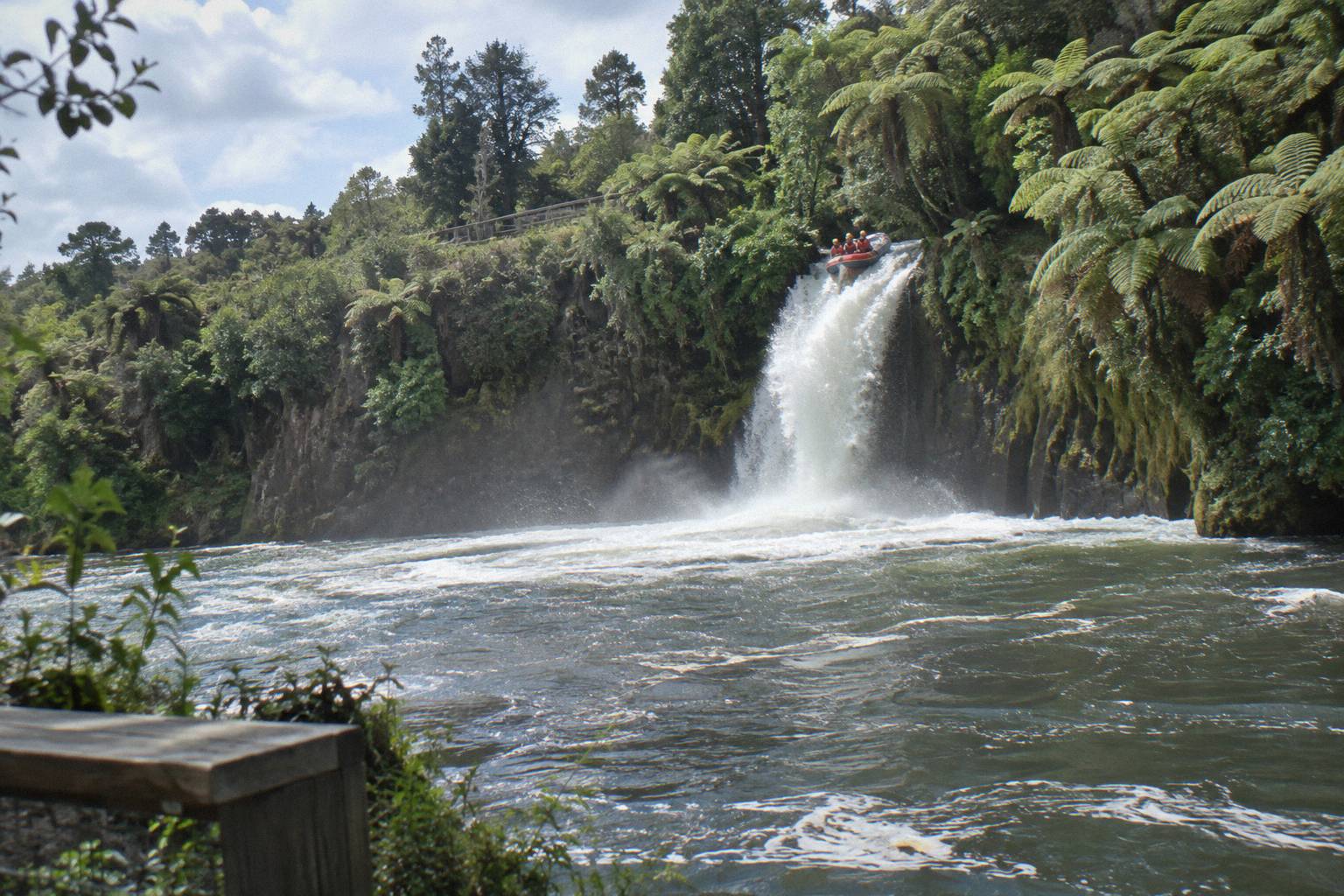
The river runs 365 days a year because council-controlled gates at the Lake Rotoiti outlet hold the flow, per Kaituna Cascades, so a beginner does not need to time a release or a season to get on the water. Several products serve it. "Rotorua Rafting: Kaituna River White Water Rafting & Free Sauna" runs 2h30, is rated 5.0 from 2,191 reviews, and starts from NZ$135 per person; its twin, "Free Sauna, 2h Kaituna Run", runs 2 hours from NZ$74 per person. The twins are separate bookable products with their own figures. "White Water Rafting - Kaituna Cascades, The Originals" runs 2h, is rated 5.0 from 1,385 reviews, and starts from NZ$135 per person. Check availability on the free sauna 2h30 trip if the sauna appeals; it belongs to the Rotorua Rafting products. More of these guides are collected on Rafting Rotorua.
The safety question deserves its own reading rather than a throwaway line, and whether Kaituna rafting is safe covers the regime: adventure activity operators must pass a safety audit by a WorkSafe-recognised auditor and register with WorkSafe under the Adventure Activities Regulations 2016.
The Gentler First Step: Grade 2 On The Rangitaiki
For a beginner who wants moving water without the top grades, the gentler product is "Rangitaiki Rafting Grade 2" from Rotorua Adventures Kayak and Raft: Grade 2, minimum age 5 on that listing, 4 hours overall with about 1.5 hours on the water, from NZ$125 per person. It is a different operator and a different river from the Kaituna trips, and the figures belong to that listing alone.
Grade 2 is the scale's entry level of genuine rapids: straightforward waves, wide channels, forgiving lines. The Wikipedia entry for the Rangitaiki River covers the river itself. The Grade 2 listing suits families and nervous first-timers in a way the Kaituna products, with their age 13 minimums and float tests, do not. Its rating stands at 4.9 from 7 reviews, a small pool, so treat it as an early signal rather than a settled verdict.
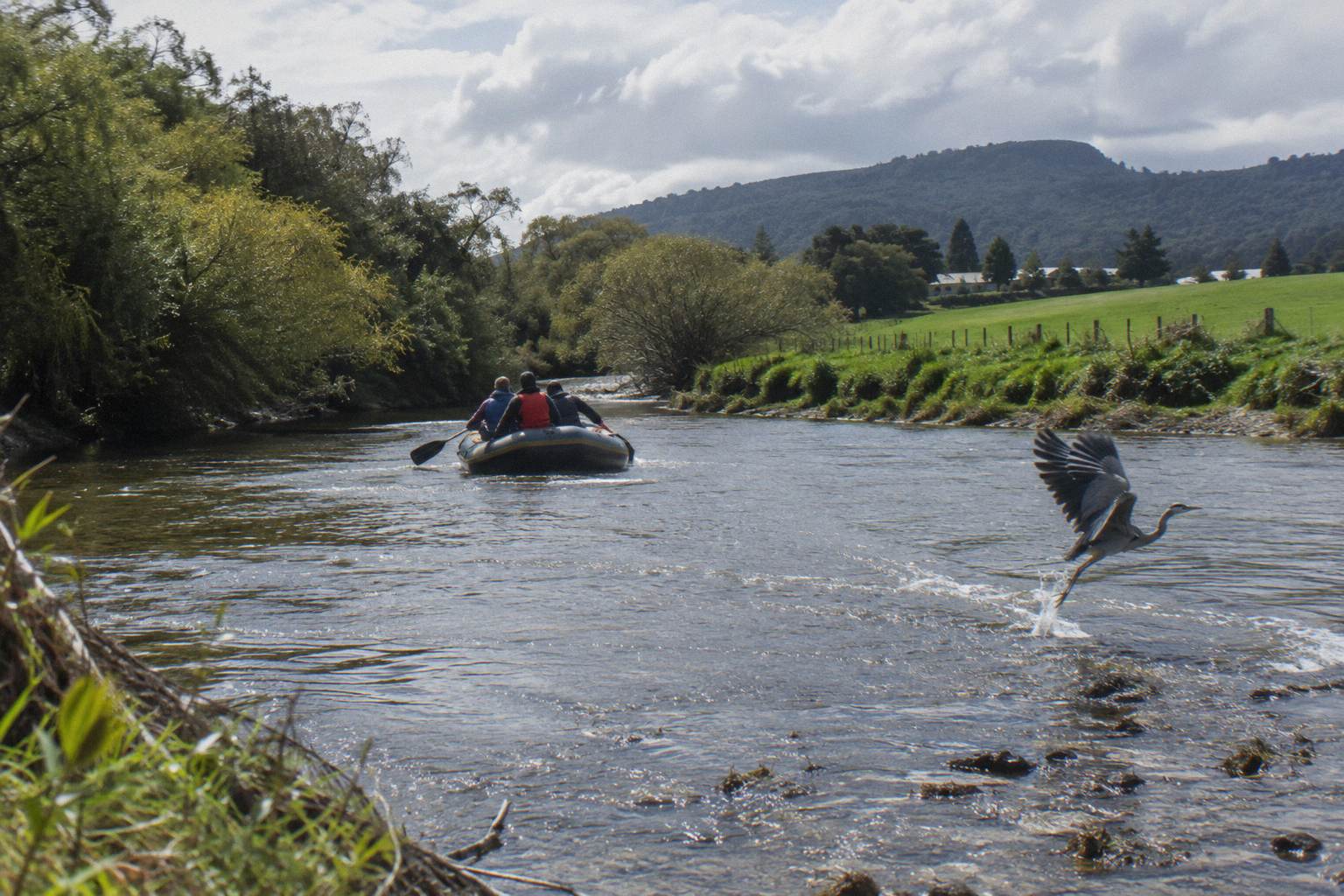
Separately, Kaituna Cascades describes its own Rangitaiki trip as a Grade 4 wilderness run, meeting 9:30am at 33 Waipa State Mill Road or a central pickup, about an hour south-east towards Murupara, running when river levels and group size allow. Two operators, one river name, very different grades; always check whose trip you are reading about. The wider picture is in the Rangitaiki River rafting guide.
The choice between the two rivers is really a choice about appetite, and the white water rafting for beginners guide walks that decision in more depth. See dates for the Grade 2 trip before locking other plans, since river levels and group size shape what runs.
Terms That Gate Beginners Before The Water Does
The grade rarely stops a beginner; the stated terms do. On the Kaituna products the gates are age, weight, health conditions and swimming confidence, and each figure belongs to its own listing. The table below gathers the operator-stated terms in one place, with each row tied to the operator that states it, so nothing is applied to a product it does not belong to.
Kaituna Cascades requires rafters to be at least 13, with ages 10 to 12 joining halfway along the run, caps weight at 120 kg, asks for check-in 15 minutes early, excludes pregnancy and heart conditions, and says a float test may be required. Rotorua Rafting caps weight at 130 kg, and its listings show a minimum age of 10 on those listings. Kaitiaki Adventures sets a minimum age of 13 on its listings and includes free hotel pickup on all four of its listings. The question of swimming itself is treated in do you need to swim to go rafting.
| Operator | Minimum Age | Maximum Weight | Other Stated Terms |
|---|---|---|---|
| Kaituna Cascades (Kaituna) | 13 on its listings; ages 10 to 12 join halfway | 120 kg | Check in 15 minutes early, not for pregnancy or heart conditions, a float test may be required |
| Rotorua Rafting | 10 listings | 130 kg | Optional paid pickup, GoPro mounts allowed |
| Kaitiaki Adventures | 13 on its listings | Ask the operator | Free hotel pickup on all four of its listings |
| Rotorua Adventures Kayak and Raft (Rangitaiki Grade 2) | 5 on that listing | Ask the operator | 4 hours overall, about 1.5 hours on the water |
What to wear and what to pack are their own questions; the operator supplies wetsuits, helmets, life jackets, fleece, booties and a splash jacket, and Kaituna Cascades asks rafters to bring swimwear and a towel. The what to wear white water rafting guide covers the rest. Winter water sits around 12 degrees and summer around 24 degrees, per the Rotorua Rafting FAQ, which is why the kit matters as much as the grade.
Whether age 13 itself is the right threshold for hard rapids is a fair parent's question, and are Class 4 rapids ok for kids treats it directly rather than as a footnote here.
What Trips People Up Before You Book
Most beginner mistakes happen at booking, not on the water: assuming a grade applies to a whole river when it belongs to one operator's trip, merging twin products into one price, and skipping the terms that decide who can board. Each listing's age, weight and inclusions are its own, and the booking page shows the price for the date. Getting these three things right before payment removes most of the regret.
First, do not treat a grade as a property of the river. The Rangitaiki is sold at Grade 2 by one operator and described as a Grade 4 wilderness trip by another; the Kaituna is sold as Grade 5 with its rapids described as Grade 4 and 5. Buy the trip, not the river name. Second, twin products are separate bookable products: the 2h30 free sauna trip and the 2h free sauna run from the same operator have different durations and different from-prices, and neither is a discount version of the other. Third, read the terms on the specific listing you are booking. The minimum age of 10 appears on the Rotorua Rafting listings; Kaituna Cascades and Kaitiaki state 13 on theirs. A family that books on the wrong assumption loses the day at check-in.
Fourth, check what a product actually includes. The free sauna belongs to the Rotorua Rafting and Rotorua Ziplines sauna products only; hotel pickup belongs to Kaitiaki Adventures, on all four of its listings. Assuming inclusions is the classic first-timer error, and no blanket claim covers every trip, so ask the operator when a point is unclear. A quick read of what to check in rafting reviews also helps separate signal from noise when comparing products.
Common Questions About Class 4 Rapids For Beginners
Can A Beginner Do Class 4 Rapids?
On a guided commercial trip, often yes: the operator supplies the boat, guide, training and gear, and the guide handles the river reading. The gates are the product's terms. On the Kaituna, Kaituna Cascades sets a minimum age of 13, a maximum weight of 120 kg, and a float test may be required.
What Grade Is The Kaituna River?
The Kaituna is sold as Grade 5, and the Kaituna Cascades blog describes the rapids as Grade 4 and 5 building to the falls. The run covers 14 rapids and drops and 3 waterfalls in about 50 to 60 minutes on the water, inside roughly 2 hours for the whole experience.
Do You Need Experience To Raft The Kaituna?
The operators do not state that prior experience is required. Their stated gates are age, weight, health conditions and swimming confidence, plus a possible float test on the Kaituna Cascades trip. Meet the listing's terms and follow the guide's commands.
Is There A Gentler Rafting Option Near Rotorua?
Yes. The "Rangitaiki Rafting Grade 2" product from Rotorua Adventures Kayak and Raft is Grade 2 with a minimum age of 5 on that listing, 4 hours overall and about 1.5 hours on the water, from NZ$125 per person.
What Is The Minimum Age For The Kaituna Trips?
It depends on the listing. Kaituna Cascades and Kaitiaki Adventures state 13 on their listings, with ages 10 to 12 able to join halfway along the run on the Kaituna Cascades trip. The Rotorua Rafting listings show a minimum age of 10.
Does The Kaituna Run All Year?
Yes, 365 days a year, because council-controlled gates at the Lake Rotoiti outlet hold the flow, per Kaituna Cascades. Rotorua Rafting runs three trips a day in winter, 1 May to 31 August, and six or more daily in summer from 1 September, with departures as frequent as every 30 minutes on demand; the booking calendar holds every time.