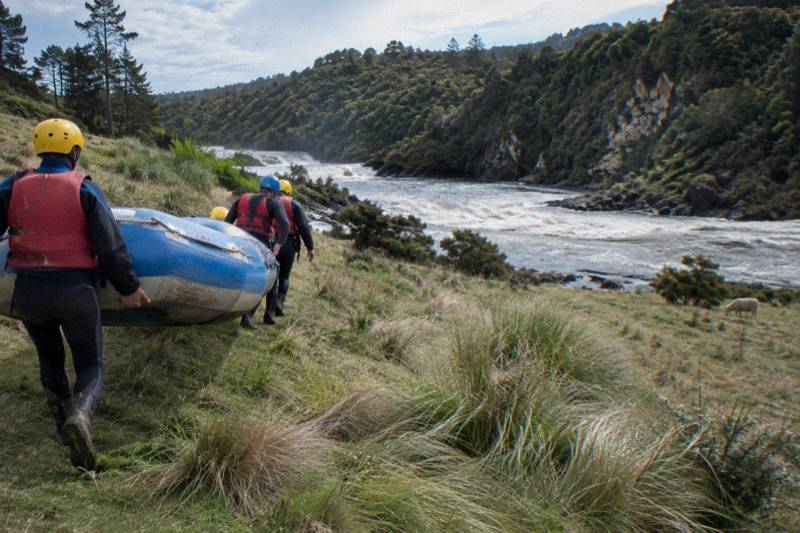
What Is The Difference Between Class 4 And Class 5 Rapids?
The plain-English difference between Class 4 and Class 5 rapids on the International Scale of River Difficulty, and where the Kaituna and Wairoa rivers fit.
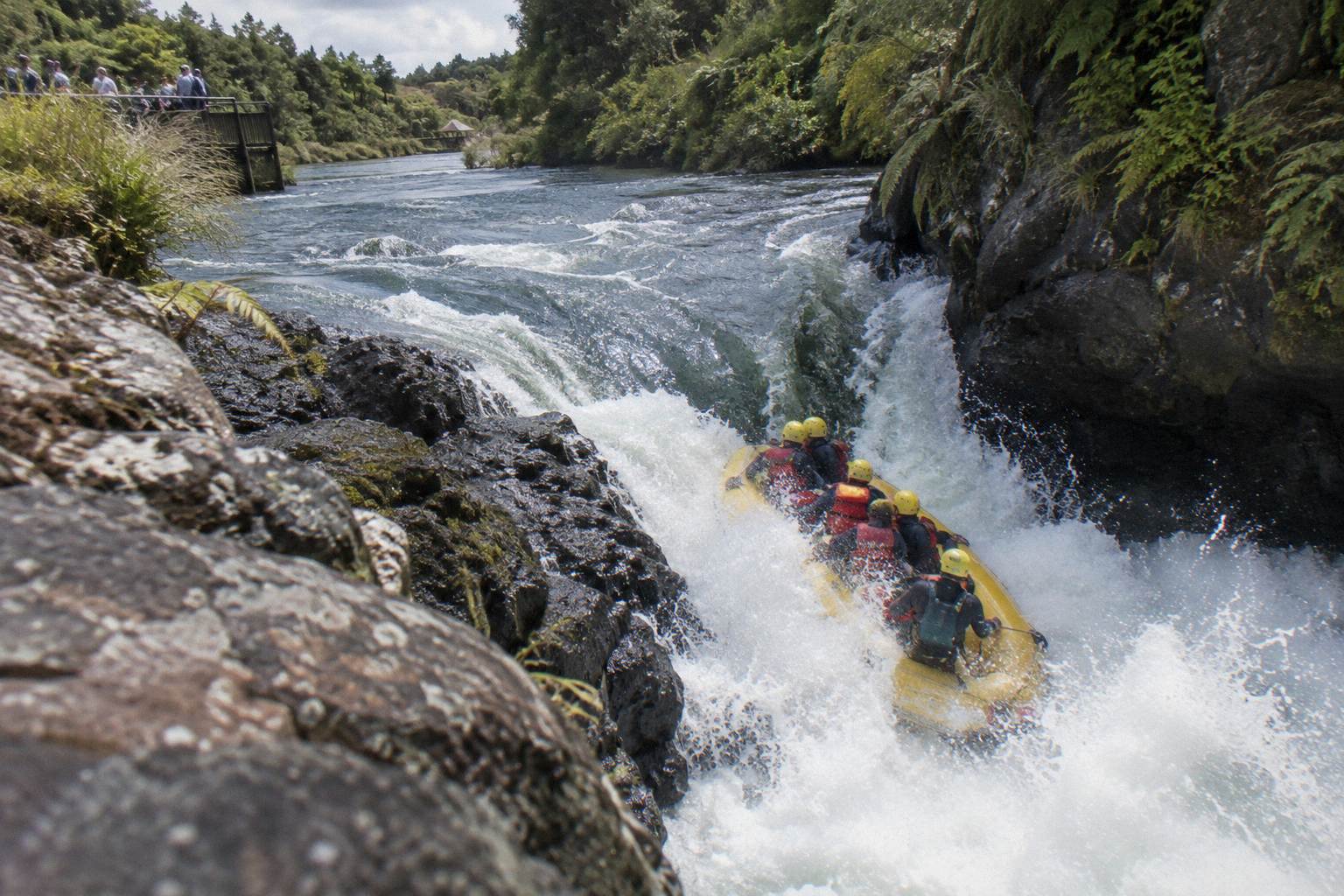
The two trips most people compare when asking about grades both live on the Kaituna River rafting tours page, and the comparison between a Grade 4 and a Grade 5 rapid is exactly the question a first-time paddler should be asking before choosing one.
| Fact | Detail |
|---|---|
| The scale | International Scale of River Difficulty, running from Class 1 to Class 6 |
| Class 4 in one line | Powerful, predictable rapids needing precise handling |
| Class 5 in one line | Violent, obstructed rapids where consequences are severe |
| The Kaituna | Sold as Grade 5; described by Kaituna Cascades as Grade 4 and 5 rapids building to the falls |
| The Wairoa | Grade 5, selected Sundays only, near Tauriko, Tauranga |
| Time on the Kaituna water | About 50 to 60 minutes inside roughly 2 hours total |
| The big drop | Tutea Falls, 7 metres by the operators' figure |
The difference is consequence. A Class 4 rapid is powerful but readable: waves, holes and drops follow a pattern a trained guide can see from the boat, and a swim ends in a pool or an eddy. A Class 5 rapid adds obstruction and violence to the same water, with moves that must be made precisely the first time because the recovery window is short and the penalty for missing it is severe. Guides generally scout Class 5 before running it.
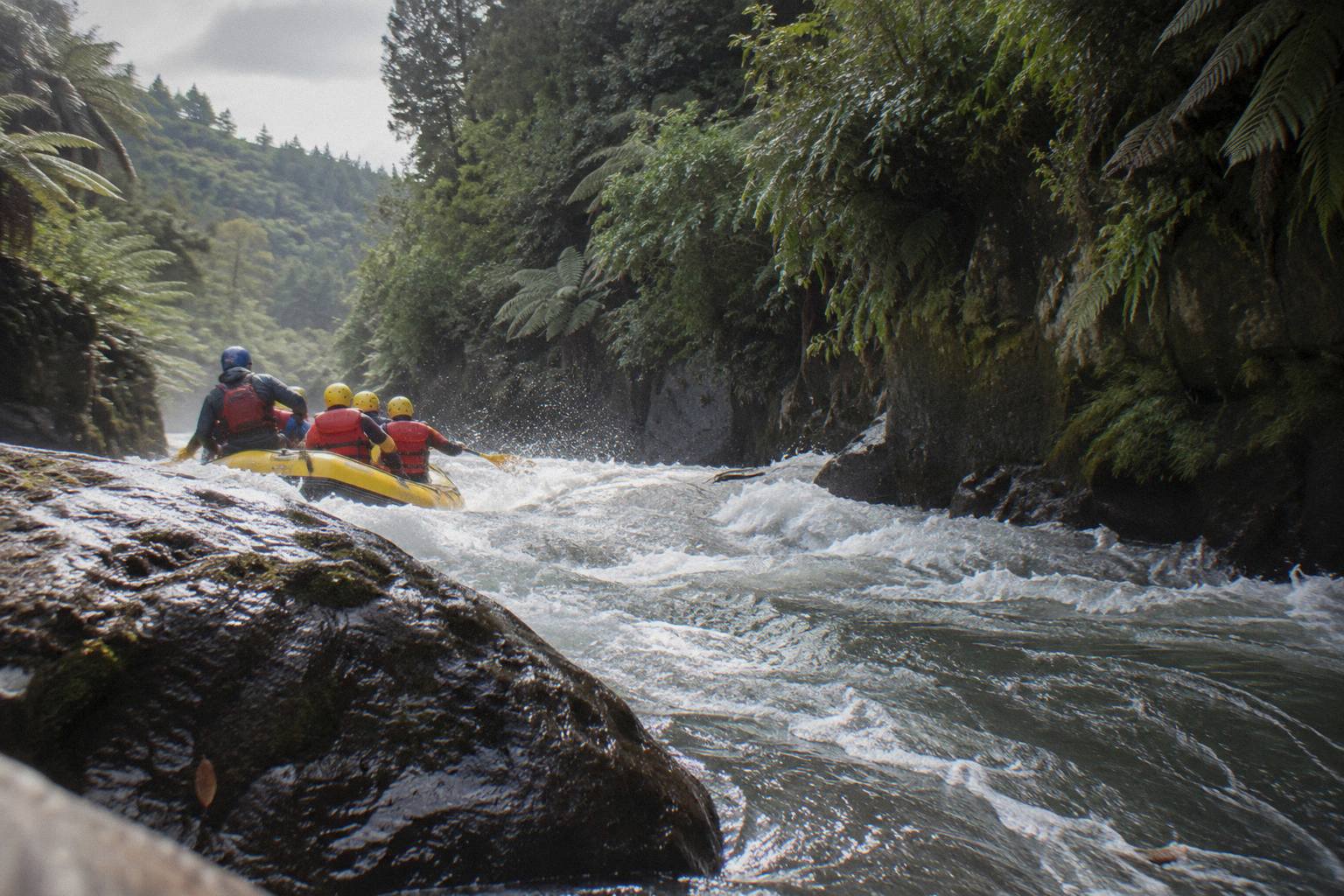
The grades come from the Wikipedia entry on whitewater and the scale it describes, the International Scale of River Difficulty. The scale runs from Class 1, water so calm it is essentially flat, to Class 6, rapids considered unrunnable except in rare conditions. Class 4 and Class 5 are the two top grades that commercial trips actually run, and the scale itself is honest about the boundary being fuzzy: rivers sit between grades, and the same rapid can shift a grade with the water level.
What changes between the two grades is what the water does to a raft. At Class 4 the features are big but they sequence: a wave train leads to a hole, the hole leads to an eddy, and a crew that paddles hard in the right places comes through. At Class 5 the features stack: a drop lands into a hole pressed against a rock wall, with the next move starting immediately. Swimming is unpleasant at Class 4 and dangerous at Class 5, which is why the scale treats the step up as a change in kind rather than degree.
A second difference sits in the water itself. Class 4 rapids usually offer more than one workable line, so a guide who starts slightly off-line can correct mid-rapid. Class 5 rapids tend to offer one line, sometimes one boat-length wide, and the moves come in quick succession without a calm patch to regroup. That is why experience is recommended for Class 5 paddling in private craft, and why commercial operators who run Class 5 water with guests lean on daily repetition, tight entry conditions and guides who know every rock by name.
For a reader choosing a Rotorua trip, both local headliners sit at the top of the scale, and the practical choice between them is more about schedule, fitness and swim confidence than about a single grade number. The sections below put real rivers under both grades so the abstraction becomes a decision.
How The Scale Grades A River In Plain Terms
Grades describe difficulty and danger combined, not just speed or wave height. A Class 3 rapid can have bigger waves than a Class 4 one if the Class 4 water is narrow, obstructed and hard to escape from. The scale judges how precisely a craft must be manoeuvred, how hard rescue would be, and what a single mistake costs. That is why a calm-looking chute through rocks can out-rank a spectacular but forgiving wave train.
The scale also allows halves, which is where much of the confusion starts. A rapid graded 4+ sits at the hard end of Class 4, and one graded 5- is an easier example of Class 5; the boundary is a judgement made by the people running the river, and different operators can read the same water differently. Water level moves rapids across the line in both directions, so a river's grade is really a statement about its normal, run-in conditions rather than a fixed property of the rock.
One more plain-terms point matters for this comparison: the scale grades individual rapids and whole runs. A trip can be sold at the grade of its hardest single rapid even when most of the paddle is gentler. That is exactly the pattern on the Kaituna, where one waterfall sets the headline grade and the rapids below it carry the rest of the run. Reading a trip title as if every minute matches the headline grade is the single most common way travellers misjudge a river.
Flow complicates it further. The same rapid at low water can be a technical rock-dodge, at medium water a clean Class 4 drop, and at flood a washed-out but enormous feature that flips the grade the other way. Operators who run a river daily publish river conditions updates precisely because their guides re-read the water each morning, and a spring flood can change the character of a familiar run overnight.
| Grade | What The Water Does | What It Asks Of A Crew |
|---|---|---|
| Class 3 | Moderate irregular waves, clear passages | Paddle as directed, no prior experience needed on guided trips |
| Class 4 | Long powerful rapids, holes and drops, predictable sequence | Aggressive paddling, precise timing, ability to follow commands under pressure |
| Class 5 | Violent rapids, obstructed routes, severe consequences | Strong swimming, prior experience recommended, scouts may be made before running |
| Class 6 | Considered unrunnable except in rare conditions | Not sold commercially |
The rapid grades explained for rafters guide walks the full scale from Class 1 upward with the same plain reading, and the what is white water rafting post covers the activity itself for anyone starting from zero.
Where The Kaituna Sits: Sold As Grade 5, Paddled As Grade 4 And 5
The Kaituna is sold by its operators as a Grade 5, or Class V, run, while Kaituna Cascades' own blog describes the rapids as Grade 4 and 5 building to the falls. Both statements describe the same water honestly: the run's headline grade is set by its waterfalls, especially Tutea Falls, while much of the paddling between drops sits at Grade 4. This split is normal practice, not a contradiction.
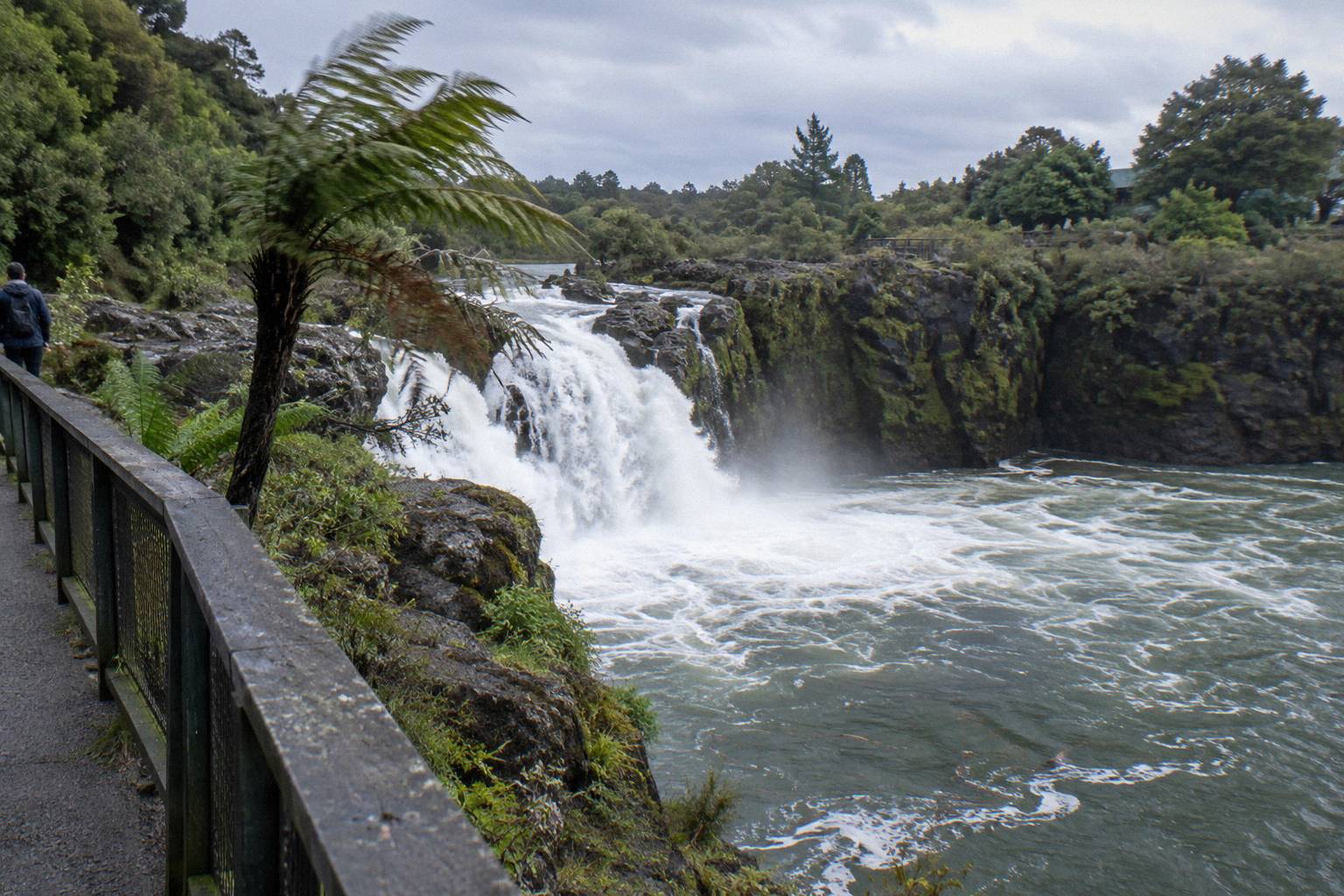
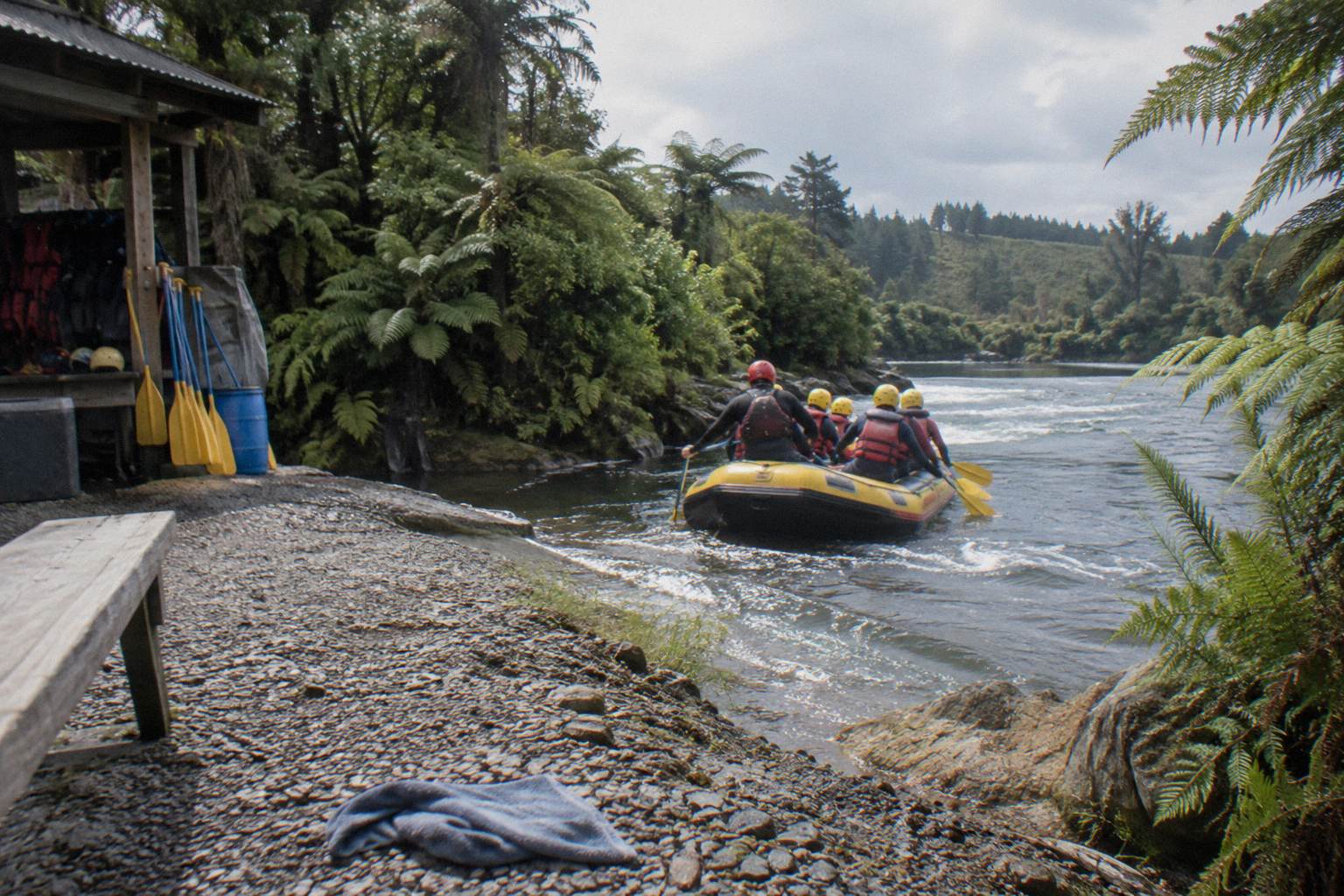
The run itself, by Kaituna Cascades' description, is about 50 to 60 minutes on the water inside a roughly 2 hour experience, with 14 rapids and drops and 3 waterfalls. The put-in and base sit at Okere Falls, 23 minutes from Rotorua. Tutea Falls, the centrepiece, is 7 metres by the operators' figure, and the operators describe it as the highest commercially rafted waterfall in the world, a claim the operators themselves make rather than an independent measurement. For scale, Kaituna Cascades lists other rafted waterfalls well below it, including Agers Falls at 5.5 metres, Sweets Falls at 4.3 metres and Husum Falls at 3.7 metres. The Wikipedia entry for the Kaituna River covers the river's course and geography for readers who want the background.
For the grade question, the Kaituna is the clearest local illustration of why Class 4 versus Class 5 matters less than people assume. A first-time rafter can run this water because a guide controls the boat, the drops are pool-drop style with recovery below, and the operators run it every day of the year; the council-controlled gates at the Lake Rotoiti outlet hold the flow so the river runs 365 days a year. The grade number describes the hardest moment, not the whole hour.
Flow on this river is unusually stable by rafting standards. A spring conditions update from Kaituna Cascades described flows high in the 500s on the control gates with water at 19 degrees C, and the same note said the big waterfall becomes more powerful but slightly less tall and vertical at high flow. In other words, even a river held open year-round shifts its character with the seasons, and the grade holds while the experience inside it changes.
Kaituna Cascades' product "White Water Rafting - Kaituna Cascades, The Originals" runs this stretch in about 2 hours, from NZ$135 per person, rated 5.0 from 1,385 reviews, with a minimum age of 13 on that product. A separate Kaituna Cascades product, "Tutea Falls 2h Rafting", covers the same river on its own card with its own terms, rated 4.9 from 380 reviews, and its price is on the booking page for the date. Another operator, Rotorua Rafting, sells its own products on the same stretch: "Rotorua Rafting: Kaituna River White Water Rafting & Free Sauna" runs 2h30 from NZ$135 per person, rated 5.0 from 2,191 reviews, minimum age 10 on that product, and includes the sauna on its sauna products. Each figure belongs to its own product and none of them describes the others.
If a Grade 5 headline with Grade 4 paddling in between sounds like the right fit, check the Kaituna Cascades Originals trip details before picking a date, and see dates on the booking calendar.
Curious what the whole experience feels like hour by hour? The what happens on a Kaituna rafting trip guide walks the run from check-in to take-out.
What Class 5 Asks Of You: The Wairoa Example
The Wairoa near Tauriko, Tauranga, is a full Grade 5 experience with no softer framing, and the operator's own entry conditions show what the top grade demands. Kaituna Cascades sets a minimum age of 13, a maximum weight of 120 kg, and requires that participants can swim. The trip runs about 2 hours on 5 km of river, 3 to 4 hours overall, and it only runs on selected Sundays when the power company releases water.
That Sunday-only schedule is the Wairoa's defining constraint. The power company controls the flow, so the operator lists the release Sundays and everything else on the calendar is dry bed. Trips depart 9:30am and meet at 1376 State Highway 29, in a farm paddock at the take-out. Booking means matching your travel dates to the release schedule, so check the booking calendar for the Sundays that line up with your trip. There is no backup day in the same week if a Sunday does not suit, which makes early planning worth the effort. Everything else covered here is indexed on Rafting Rotorua.
Compared with the Kaituna, the Wairoa is the purer Class 5 product: continuous hard water over a longer stretch, an entry filter of swimming ability and weight, and a fixed weekly window. The Kaituna wraps its top-grade moments inside a short, daily, beginner-accessible run. Someone comfortable in water and wanting the harder paddle picks the Wairoa; someone wanting the waterfall story with a family-friendly timetable picks the Kaituna.
The meeting arrangement tells its own story about the two rivers. Kaituna trips gather at established bases with facilities, while the Wairoa meet point is a farm paddock at the take-out on State Highway 29, because the river itself is remote from any base once the release begins. Add the must-swim rule and the 120 kg maximum and the picture is complete: this is a trip that filters its guests before the water does.
Kaituna Cascades' Wairoa product, "Kaituna Cascades - Grade 5 Wairoa River near Tauranga", runs 5 hours door to door, from NZ$190 per person, rated 5.0 from 470 reviews. The Wairoa River rafting guide covers the trip in full detail.
Can A Beginner Paddle Class 4 Or Class 5 Water?
Yes, on a guided commercial trip, and thousands do it on the Kaituna every year, because the guide carries the reading and the judgement while the crew supplies paddling power. The honest caveat is fitness and water comfort: entry conditions still exist, the swim between rapids is cold even in summer, and the operator can require a float test. Neither grade is a swimming pool, and both ask you to take instructions quickly.
The gap between grades barely matters for a first-timer because your job is identical on both: paddle hard when told, hold on through the drops, and stay calm if you end up in the water. The can a beginner do Class 4 rapids post takes that question in full, and the white water rafting for beginners guide covers everything from kit to briefing. What actually changes between a Class 4 and a Class 5 trip for a guest is the intensity of the biggest few seconds, not the skill demanded of you.
The water itself is a real factor in that comfort question. Rotorua Rafting's FAQ puts the Kaituna at about 24 degrees C in summer and about 12 degrees C in winter, and the operators supply wetsuits, helmets, life jackets, fleece, booties and a splash jacket as part of the trip. Winter rafting is colder but fully runnable, and the can you go white water rafting in the winter post covers what changes across the season. Swimwear and a towel are what you bring; the rest comes with the guide.
If getting to the river without a car is the sticking point, one Kaituna product solves it: "Rotorua White Water Rafting | Kaitiaki Adventures + Transport" runs about 2h30, from NZ$139 per person, rated 5.0 from 823 reviews, minimum age 13, with free hotel pickup included on that product. That pickup is part of this product only; other trips on the river are self-drive to the respective bases.
Reading A Grade Before You Book Anything
Treat the grade number as a floor-setting headline, then check three things the number hides: the time actually spent on hard water, the entry conditions, and how often the trip runs. A 2 hour Grade 5 experience with 50 minutes on the water suits a first-timer; a Grade 5 trip needing swim ability, a Sunday release and a paddling background does not. The grade tells you the hardest moment, those three checks tell you the day.
Operators must publish their terms, and the entry conditions on each product, age, weight and swim requirements, are the practical grade filter. All adventure activity operators in New Zealand must pass a safety audit by a WorkSafe-recognised auditor and register with WorkSafe; the WorkSafe adventure activities register is public and searchable, so you can confirm an operator's registration for yourself. The regime sits under the Adventure Activities Regulations 2016.
A useful habit before booking any graded trip: find the operator's own river description, not just the grade in the title. Where an operator says the rapids build to the falls, or that a river runs only on release days, those sentences tell you more about the day than the number does. Kaituna Cascades publishes a river conditions page for exactly this reason, and reading it before you book turns a grade into a picture of the actual water. The Wikipedia entry for Okere Falls adds the place context around the Kaituna's take-out stretch.
| Check | Kaituna Run | Wairoa Run |
|---|---|---|
| Headline grade | Sold as Grade 5 | Grade 5 |
| Operator's finer description | Grade 4 and 5 rapids building to the falls | Full Grade 5 release river |
| When it runs | 365 days a year, council-controlled gates hold the flow | Selected Sundays only, power company releases |
| Time on the water | About 50 to 60 minutes | About 2 hours on 5 km of river |
| Minimum age | 13 on the Kaituna Cascades Originals product | 13 |
| Must be able to swim | Float test may be required | Yes |
All amounts on this page are New Zealand dollars, and prices vary by date and group; the booking page shows the price for the date you choose.
What Trips People Up Before You Book
Most booking mistakes around grades come from reading the number and skipping the details: assuming Grade 5 means elite-only, assuming every product on the same river is identical, or ignoring the schedule and entry rules that decide whether the trip happens at all. The grade is one line of the decision. The dates, the minimums and the water requirements are the rest.
The first trap is comparing twin products as if they were one trip. The same stretch of the Kaituna is sold under separate products by different operators with their own prices, durations and minimum ages, and figures from one product never describe another. Read the specific product's own numbers, and if a detail you care about is missing, ask the operator. Minimum ages in particular vary between products on the same water, so a family that fits one listing may be ruled out of its twin.
The second trap is the schedule. The Kaituna runs daily; the Wairoa runs on the release Sundays the operator lists. Booking a Wairoa seat for a random Wednesday is a planning failure, not a river failure. Check the booking calendar before locking accommodation dates around it.
The third trap is kit and weight rules. Maximum weights of 120 kg and 130 kg apply on specific products, swim requirements are real, and pregnancy or heart conditions rule people out on the stated terms. Bring swimwear and a towel; operators supply wetsuits, helmets, life jackets, fleece, booties and a splash jacket. The what to wear white water rafting guide handles the full kit list.
Common Questions About Rapid Grades
What Is The Difference Between Class 4 And Class 5 Rapids?
Class 4 rapids are powerful but predictable, with readable lines and recoverable consequences. Class 5 rapids are violent and obstructed, demanding precise first-time manoeuvres with severe penalties for errors, and guides may scout them before running. The difference is consequence, not just wave size.
Is The Kaituna River Class 4 Or Class 5?
Operators sell it as Grade 5, and Kaituna Cascades describes the rapids as Grade 4 and 5 building to the falls. The headline grade is set by the waterfalls, led by Tutea Falls at 7 metres by the operators' figure, while much of the paddling between drops sits at Grade 4.
Can A Beginner Run Class 5 Rapids?
Yes, on a guided commercial trip such as the Kaituna run, where the guide reads the water and the crew paddles. Entry conditions still apply, including minimum ages, maximum weights and in some cases swim ability or a float test, and participants should be comfortable in water.
Why Is The Wairoa Only Run On Sundays?
A power company controls the Wairoa's flow, and the river is only raftable when water is released. The operator lists the release Sundays, and the trip departs 9:30am on those days. Check the booking calendar for dates that match your travel plans.
Do Rapids Change Grade With The Water Level?
Yes. The scale is read at normal runnable levels, and a rapid can shift in either direction as flow rises or falls. Operators describe the river as it is normally run, which is why the same stretch can be sold at a headline grade while the individual rapids are described more precisely.
What Grade Is Tutea Falls Itself?
Tutea Falls is 7 metres by the operators' figure, and the operators describe it as the highest commercially rafted waterfall in the world. It is the feature that sets the Kaituna's Grade 5 headline, with the run's other rapids described as Grade 4 and 5 leading up to it.