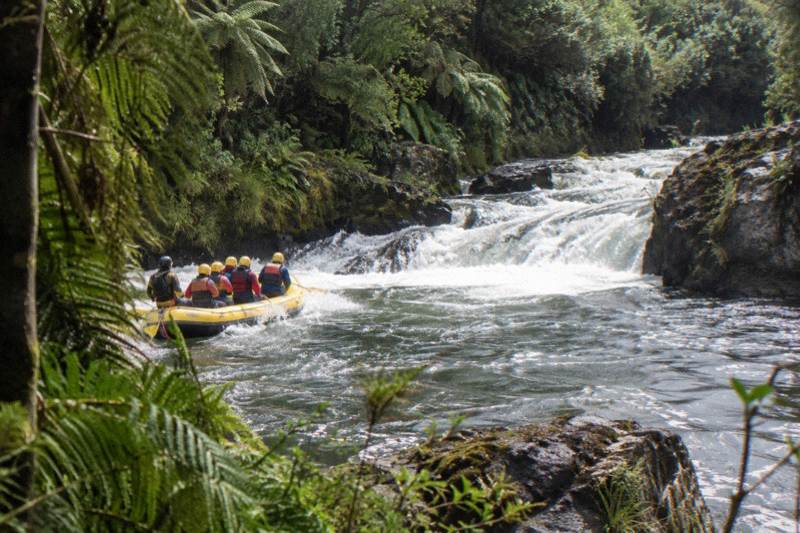
Kaituna Rafting Season: Month By Month, Water, Weather, And Crowds
The Kaituna runs every day of the year because council controlled gates at the Lake Rotoiti outlet hold the flow. What changes through the year is the trip schedule, the water temperature, and how the rapids read, and this guide walks through all of it, month by month.
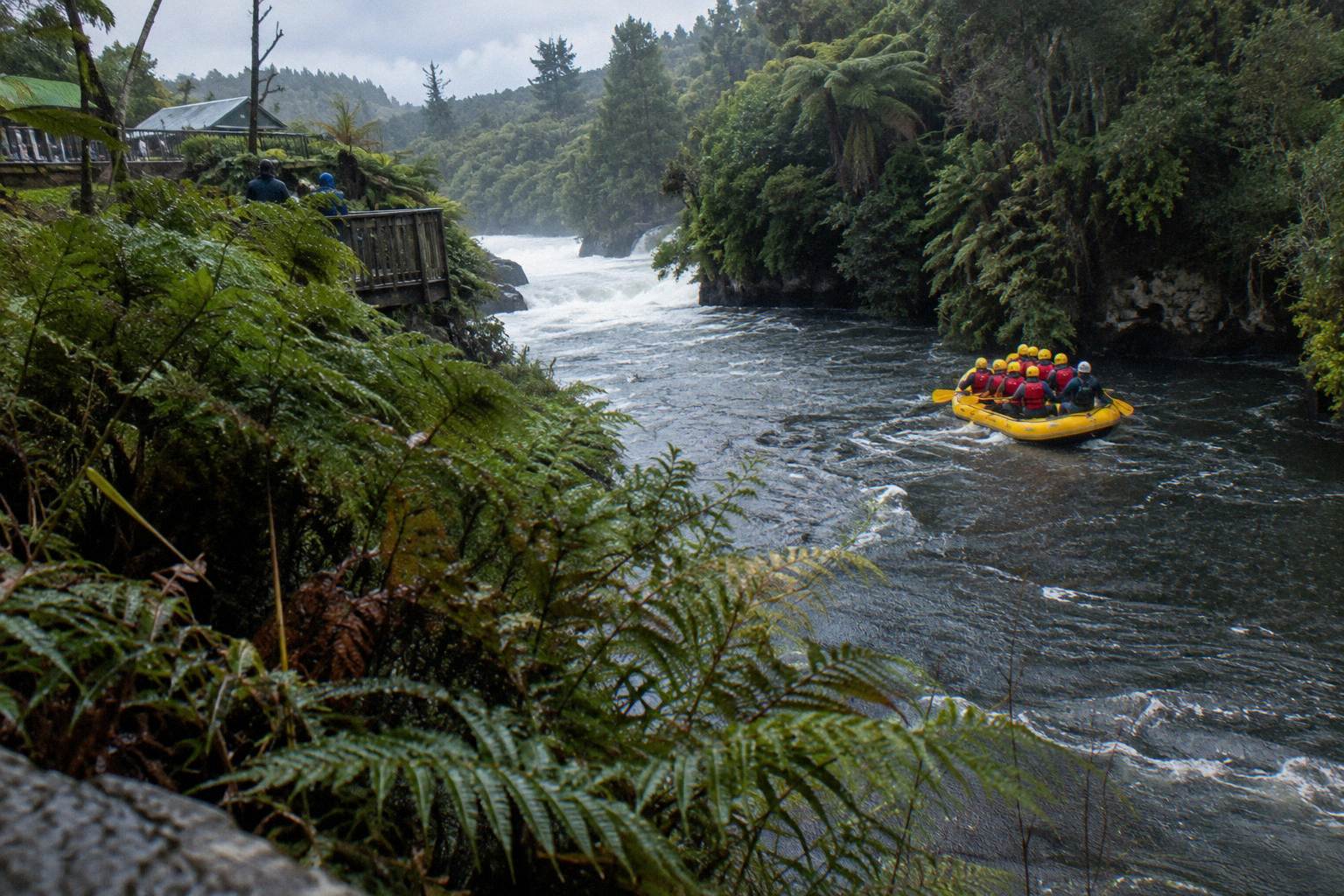
Short answer
The Kaituna rafting season runs 365 days a year. Rotorua Rafting runs 3 trips a day from 1 May to 31 August and 6 or more from 1 September to 30 April, while Kaituna Cascades adds early and late summer departures. Water sits near 24 °C in summer and near 12 °C in winter, with wetsuits supplied.
The full background on the river itself, the operators and the rapids sits in the main Kaituna River rafting guide, and the season question matters more here than on most rivers, because the answer decides how many departure times you have to choose from and how cold the water will be when the raft leaves the bank.
| Fact | Detail |
|---|---|
| Season length | 365 days a year, held by gates at the Lake Rotoiti outlet |
| Winter schedule | Rotorua Rafting, 1 May to 31 August, 3 trips a day at 10am, 12pm and 2pm |
| Summer schedule | Rotorua Rafting, 1 September to 30 April, 6 or more trips, every 30 minutes on demand |
| Kaituna Cascades times | 10:30am, 12:30pm and 2:30pm daily, plus 8:30am and 4:30pm in summer |
| Summer water | About 24 °C, per the Rotorua Rafting FAQ |
| Winter water | About 12 °C, per the same FAQ |
| Spring update | Flows in the 500s on the control gates, water 19 °C, per the Kaituna Cascades river conditions page |
| Time on the water | 50 to 60 minutes inside a roughly 2 hour experience, per Kaituna Cascades |
When Does The Kaituna Rafting Season Run?
The Kaituna has no closed season: gates at the Lake Rotoiti outlet hold the flow, and the operators run trips 365 days a year. What changes across the year is the shape of the day, not whether the day happens. Rotorua Rafting splits its year into a winter schedule from 1 May to 31 August with 3 trips a day, and a summer schedule from 1 September to 30 April with 6 or more. Kaituna Cascades keeps its three daily departures all year and adds two more in summer. The river itself, the Wikipedia entry for the Kaituna River explains, drains Lake Rotoiti toward the Bay of Plenty, and the section rafted at Okere Falls packs 14 rapids and drops, including 3 waterfalls, into a run that takes 50 to 60 minutes on the water per the Kaituna Cascades figures.
That gate arrangement is the reason a month by month guide works at all. On release rivers, a trip only exists on the days the water is let through, and the calendar is a scatter of dates. Here the flow is managed at the lake outlet, so every month of the year has the same underlying product: the same gorge, the same waterfall sequence, the same 2 hour experience wrapped around the run.
The distinction that actually matters for planning is not "open or closed" but "which schedule is running". Cross the 1 May line and the number of departure slots drops; cross back on 1 September and the day fills out again with departures on demand. Everything else in this guide hangs off those two dates.
What Changes Between The Winter And Summer Schedules?
Three things change with the schedule: the number of departure times, how tightly you need to book, and what the water feels like. In winter, 1 May to 31 August, Rotorua Rafting runs 3 trips a day at 10am, 12pm and 2pm, and the FAQ puts the water at about 12 °C. In summer, 1 September to 30 April, the same operator runs 6 or more trips, every 30 minutes on demand, with water about 24 °C. Kaituna Cascades runs 10:30am, 12:30pm and 2:30pm daily and adds 8:30am and 4:30pm in summer. These are operator stated times only; the booking calendar holds every confirmed departure, so treat the listed times as the pattern, not a promise, and check the calendar for the day you want.
Wetsuits, helmets, life jackets, fleece, booties and splash jackets are supplied by the operators, which is why a 12 °C river still fills boats through the middle of the year. The kit does the heavy lifting in winter; in summer it is a comfort layer rather than a necessity. If you are weighing what to wear underneath, the what to wear rafting guide covers the swimwear and layering basics, and the what to bring guide lists the small items worth carrying.
| Operator | Winter times (1 May to 31 Aug) | Summer times (1 Sep to 30 Apr) |
|---|---|---|
| Rotorua Rafting | 3 trips a day: 10am, 12pm, 2pm | 6 or more trips, every 30 minutes on demand |
| Kaituna Cascades | 10:30am, 12:30pm, 2:30pm daily | Same three daily times, plus 8:30am and 4:30pm |
The two operators stage their days differently even on the same river. Rotorua Rafting bases at 761 State Highway 33, about 20 minutes from central Rotorua, while Kaituna Cascades bases at 18 Okere Falls Road with free parking and direct river access. Neither schedule is inherently better; the winter pattern suits a slow morning and an early afternoon, and the summer pattern suits a group that wants to pick an hour and go.
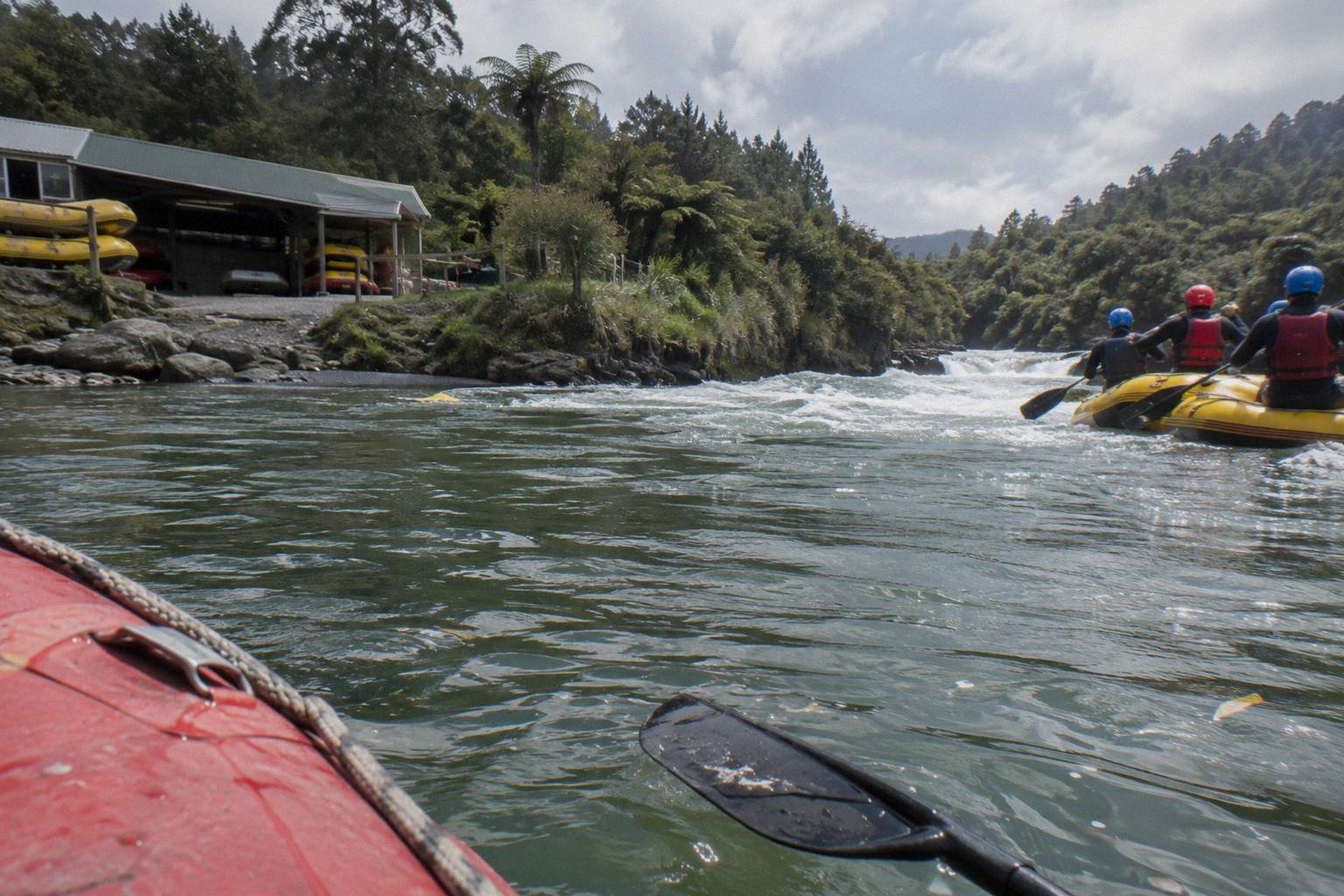
For a first look at what is on offer across the operators, the three products below span the range: the Rotorua Rafting sauna trip, the Kaituna Cascades originals run, and the Kaitiaki Adventures trip with hotel transfers folded in.
The featured product on this site, the Rotorua Rafting trip called "Rotorua Rafting: Kaituna River White Water Rafting & Free Sauna", runs 2h30, carries a 5 rating from 2,191 reviews, takes bookings from NZ$135 per person, and lists a minimum age of 10. Its 2 hour twin, the "Free Sauna, 2h Kaituna Run", is a separate bookable product from NZ$74 per person with a 4.9 rating from 490 reviews, and the two are never the same trip at two prices. Both include the sauna, which belongs to these products and the zipline products only. All amounts on this page are New Zealand dollars, vary by date and group, and the booking page shows the price for the date.
| What changes | Winter (1 May to 31 Aug) | Summer (1 Sep to 30 Apr) |
|---|---|---|
| Departures per day | Fewer: 3 with Rotorua Rafting | More: 6 or more, every 30 minutes on demand |
| Extra operator slots | None beyond the daily three | Kaituna Cascades adds 8:30am and 4:30pm |
| Water temperature | About 12 °C | About 24 °C |
| Kit supplied | Wetsuit, helmet, life jacket, fleece, booties, splash jacket | Same kit, worn lighter |
A fuller treatment of the cold water months, including whether winter rafting works as a plan at all, sits in the winter rafting answer, and the month level picking question is covered in the best month for rafting answer.
How Do The Gates Hold The Flow All Year?
Council controlled gates at the Lake Rotoiti outlet, at the head of the river, keep the Kaituna at a raftable level every day of the year, which is why no month on the calendar is a closed month. The arrangement is the operator stated explanation for the 365 day season, and it removes the release schedule problem that shapes trips on other rivers. The Wikipedia entry for Lake Rotoiti describes the lake the water comes from; the gates sit between that lake and the gorge. Rain still matters at the margins, and the operators read it daily, but the baseline flow does not switch off.
That reliability has a planning consequence worth naming: you can book a Kaituna trip around a conference, a wedding or a school holiday without gambling on a release date. The same cannot be said of the Wairoa, Kaituna Cascades' Grade 5 product near Tauranga, which runs only on selected Sundays when water is released, departing 9:30am for about 2 hours on the river inside a 5 hour trip. If your dates are pinned to the winter months, the Kaituna is the river that will be running.
High water does change the character of the run when it comes. The Kaituna Cascades river conditions page, in its current river conditions update, reports spring flows in the 500s on the control gates with the water at 19 °C, and describes the big waterfall as more powerful but slightly less tall and vertical in those conditions. Those are observations from that page, not standing figures; the same page is where a fresh read lives before any trip.
Is a scheduled trip still worth locking in when rain is about? The short answer is that rain rarely cancels a Kaituna trip, and the rain and cancellation guide works through what does and does not stop a departure. Flow, weather and the operator decide the day, never the calendar alone.
What Does Each Month Actually Look Like?
Every month is a running month, so the month table below is built only from the operator season dates: which schedule governs the month, and what that means for departure times. May through August sit under the winter schedule with 3 Rotorua Rafting trips a day; September through April sit under the summer schedule with 6 or more, plus Kaituna Cascades' extra summer slots. No month by month water temperatures exist as sourced figures, so none appear; the FAQ figures of about 24 °C summer and about 12 °C winter are the only temperatures in play.
| Month | Schedule in force | Departure pattern |
|---|---|---|
| January | Summer (1 Sep to 30 Apr) | 6 or more trips, every 30 minutes on demand, plus Cascades 8:30am and 4:30pm |
| February | Summer | Same summer pattern |
| March | Summer | Same summer pattern |
| April | Summer, to 30 Apr | Same summer pattern |
| May | Winter (1 May to 31 Aug) from the 1st | 3 trips a day: 10am, 12pm, 2pm |
| June | Winter | Same winter pattern |
| July | Winter | Same winter pattern |
| August | Winter, to 31 Aug | Same winter pattern |
| September | Summer from the 1st | 6 or more trips on demand resumes, extra Cascades slots return |
| October | Summer | Same summer pattern |
| November | Summer | Same summer pattern; spring high flows reported by the conditions page |
| December | Summer | Same summer pattern |
Read the table as a planning frame, not a timetable. The two boundary dates, 1 May and 1 September, are the hinges: book a trip on 30 April and you have the full summer schedule; book 2 May and the day has three anchor times. Families planning around school breaks should note the minimum ages are set per listing, and the rafting with kids minimum age guide works through what those limits mean in practice.
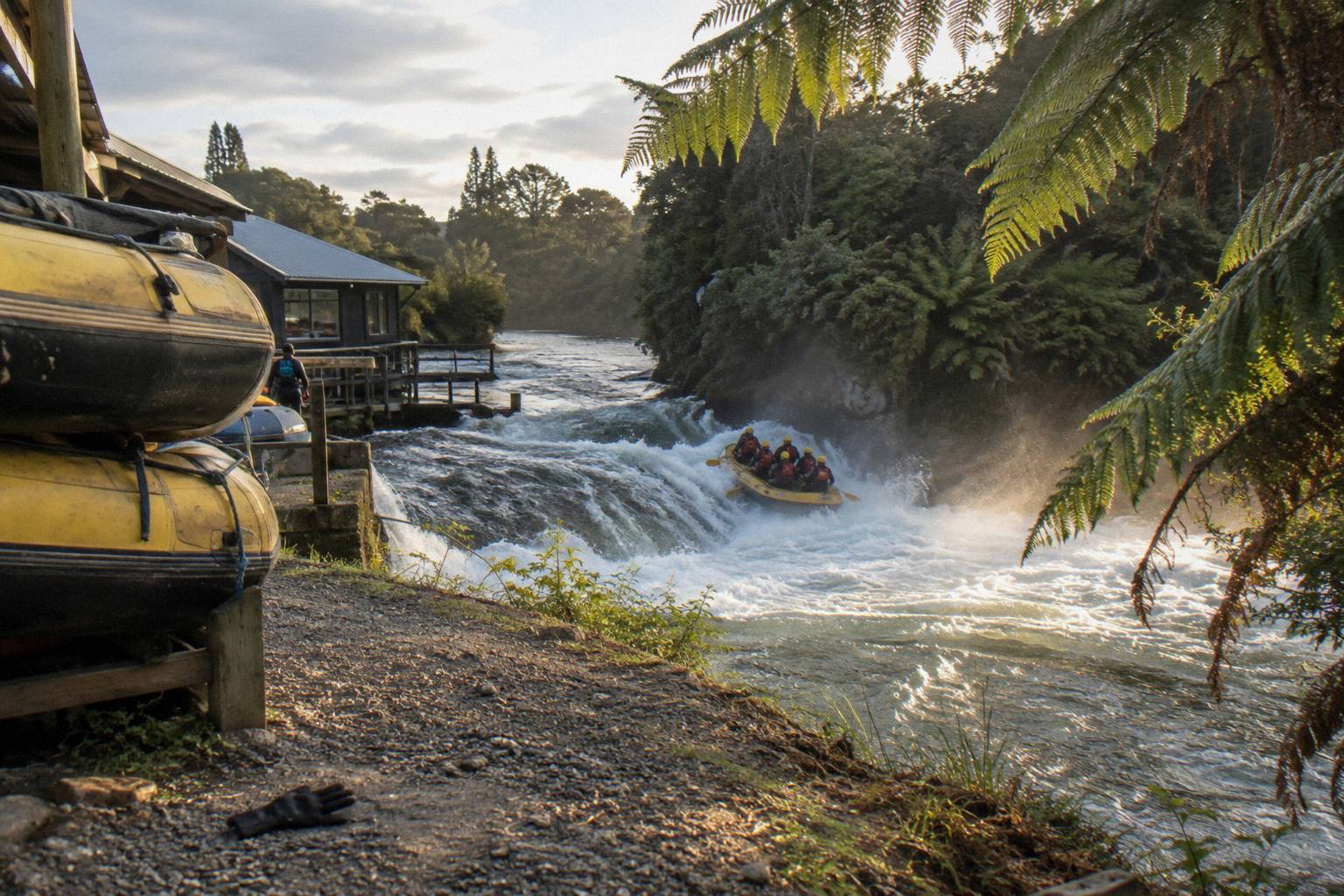
The numbers behind the year compress into one picture: two schedules, twelve running months, and a water temperature span from about 12 °C to about 24 °C.
The Kaituna Cascades product in the mix, "White Water Rafting - Kaituna Cascades, The Originals", runs 2h, holds a 5 rating from 1,385 reviews, takes bookings from NZ$135 per person, and lists a minimum age of 13. Its twin, "Tutea Falls 2h Rafting", is a separate product with a 4.9 rating from 380 reviews and a price on the booking page for the date. See dates for either on the operator's calendar before building a day around them.
Which Months Suit A First Trip Best?
A first trip works in any month because the product is identical year round; what shifts is comfort and freedom of timing. Summer months, September through April, give water about 24 °C and departures every 30 minutes on demand, which suits travellers with fixed windows. Winter months still run daily at 10am, 12pm and 2pm with water about 12 °C, and the supplied wetsuit kit makes that entirely workable. The real trade-off is comfort versus choice, not good months versus bad ones.
The beginner question has more angles than the season alone, and the beginners guide covers swim requirements, fitness and what the guide actually does on a Grade 5 run. Swimming ability comes up often: the do you need to swim guide answers it directly. Neither answer changes with the month.
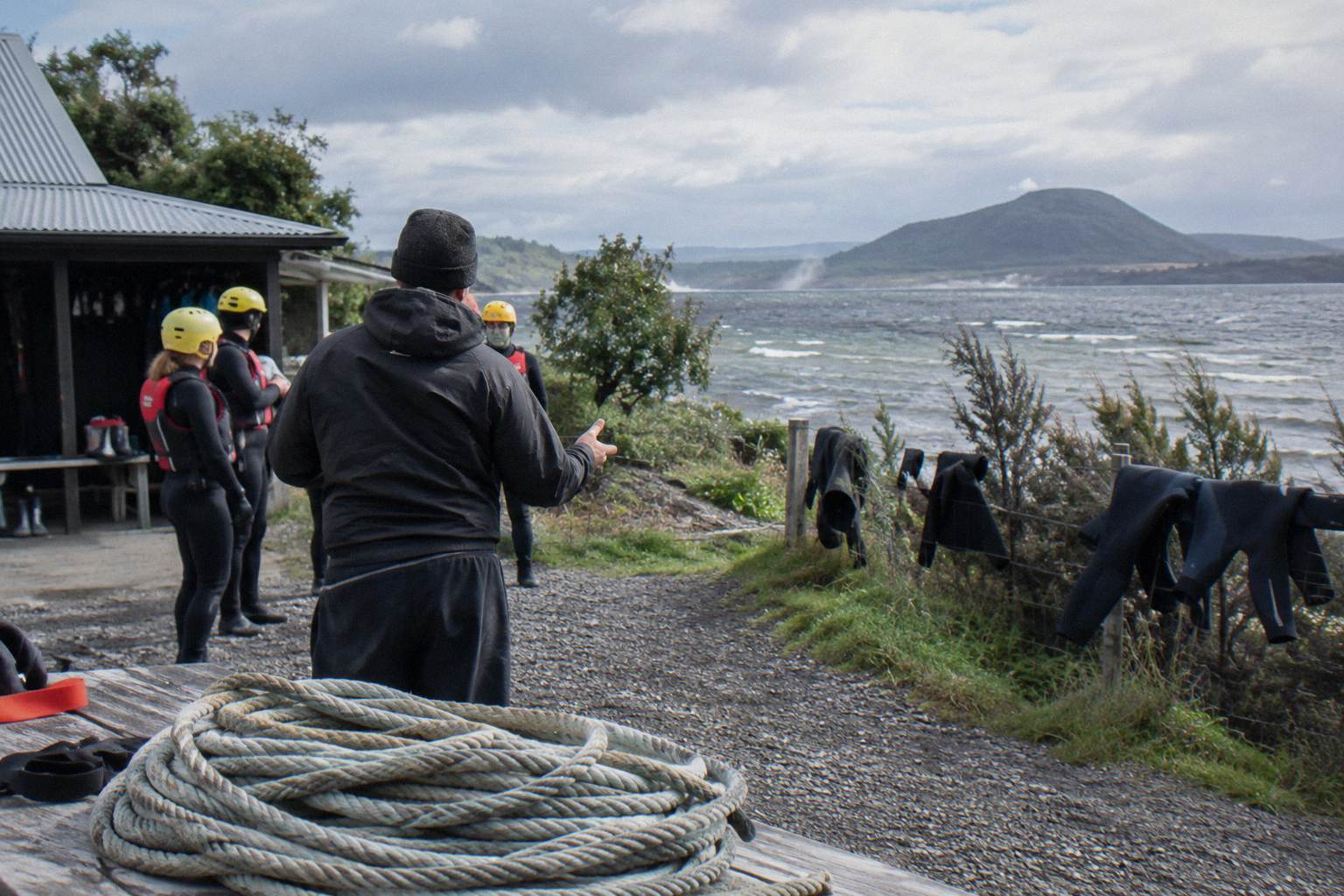
Booking lead time is the one genuinely seasonal behaviour worth planning for. Under the summer schedule, demand spreads across many departure slots; under the winter schedule, the same demand concentrates into three times, and the midday slot tends to be the one people want. Check the live price and calendar for your date rather than assuming a pattern, because the calendar, not the season description, is what holds a seat.
For travellers staying in town without a car, the Kaitiaki Adventures product "Rotorua White Water Rafting | Kaitiaki Adventures + Transport" includes free hotel pickup on that listing, runs 2h30, holds a 5 rating from 823 reviews, takes bookings from NZ$139 per person, and lists a minimum age of 13. Its twin listing, "Kaituna Rafting, Free Pickup, 2.5h", from NZ$61 per person, is a separate product with free pickup and no printable rating. The transfer product is the one that removes the season question from your logistics, since pickup times follow the trip schedule rather than your drive.
How Does Spring Change The Run?
Spring brings the highest flows of the year: the Kaituna Cascades river conditions page reports flows in the 500s on the control gates and water at 19 °C in its current update, and describes the 7 metre waterfall as more powerful but slightly less tall and vertical at those levels. The run stays open, the season structure is unchanged, and the character of the water shifts. The 7 metre figure for Tutea Falls is the operators' figure, and the operators describe it as the highest commercially rafted waterfall in the world; the operator's waterfall page sets it above Agers Falls at 5.5 m, Sweets Falls at 4.3 m and Husum Falls at 3.7 m.
A powerful spring flow reads differently in the raft, and the rapid grades explained guide gives the vocabulary for what Grade 4 and Grade 5 mean, with more in the Wikipedia entry on whitewater and the International Scale of River Difficulty. The Kaituna Cascades blog describes the run's rapids as Grade 4 and 5 building to the falls, even though the trip is sold at Grade 5.
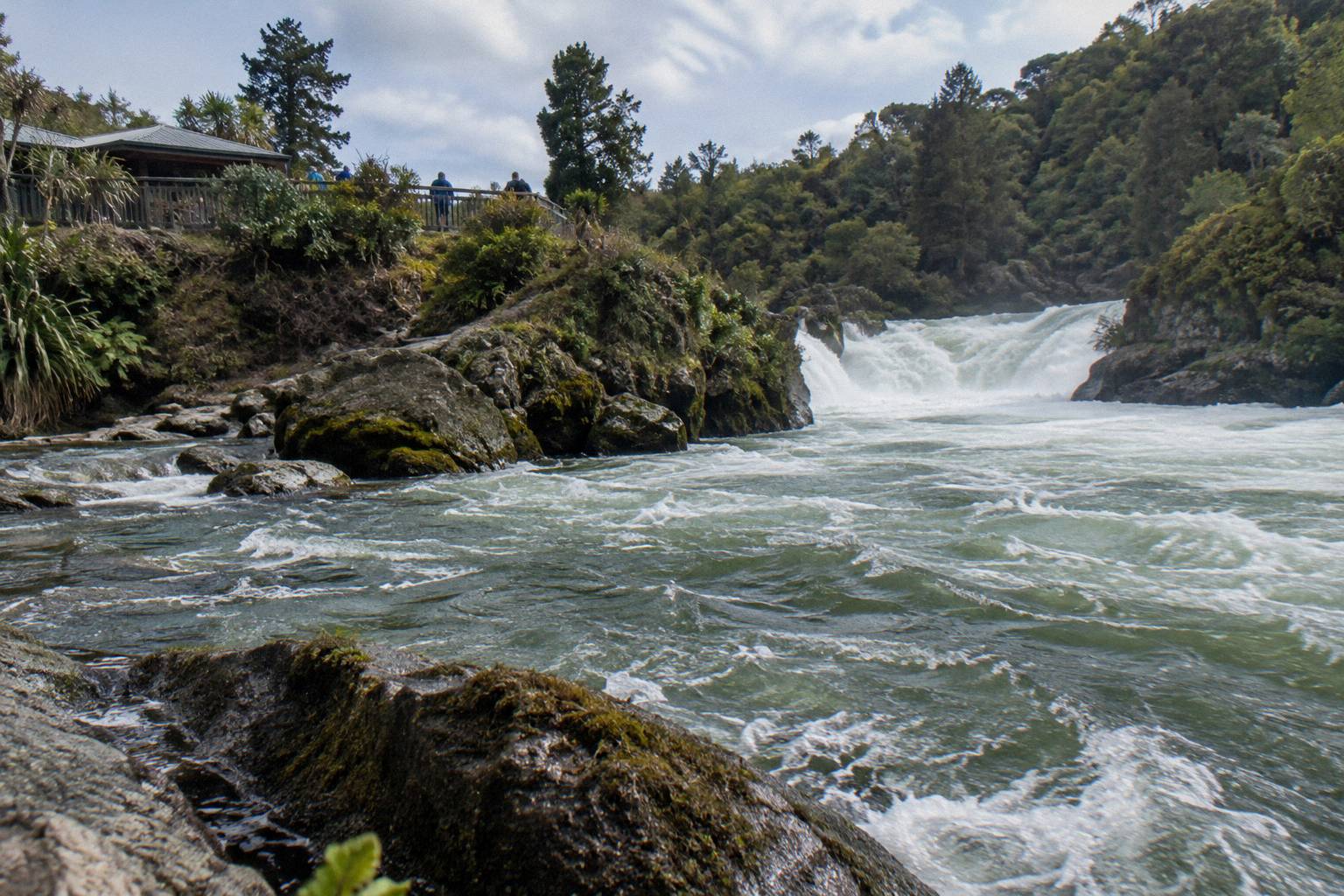
The practical spring advice is to read the conditions page a day or two out and to ask the operator about flow when you check in. Kaituna Cascades asks rafters to check in 15 minutes early, notes a maximum weight of 120 kg, and says a float test may be required; Rotorua Rafting lists a 130 kg maximum on its FAQ. Bring swimwear and a towel, per the operator's kit list, and let the supplied wetsuit handle the rest.
How Do You Build A Day Around The Schedule?
Match the trip to the schedule window, not the reverse: in winter, build the day around 10am, 12pm or 2pm; in summer, pick any half hour and the day bends around it. The experience runs about 2 hours from check in to finish, so a midday trip leaves the morning and late afternoon free, and the bases at Okere Falls and State Highway 33 sit roughly 20 minutes from central Rotorua. Both Kaitiaki Adventures rafting listings, the NZ$61 Kaituna trip and the NZ$139 option with hotel transfers, include free hotel pickup, as do its sledging trips.
The one day built around a rafting trip guide lays out full day plans with the trip as the anchor, and the getting to the Kaituna guide covers the drive, the bases and parking. Both work in any month, though winter's three fixed times make the sequencing tighter.
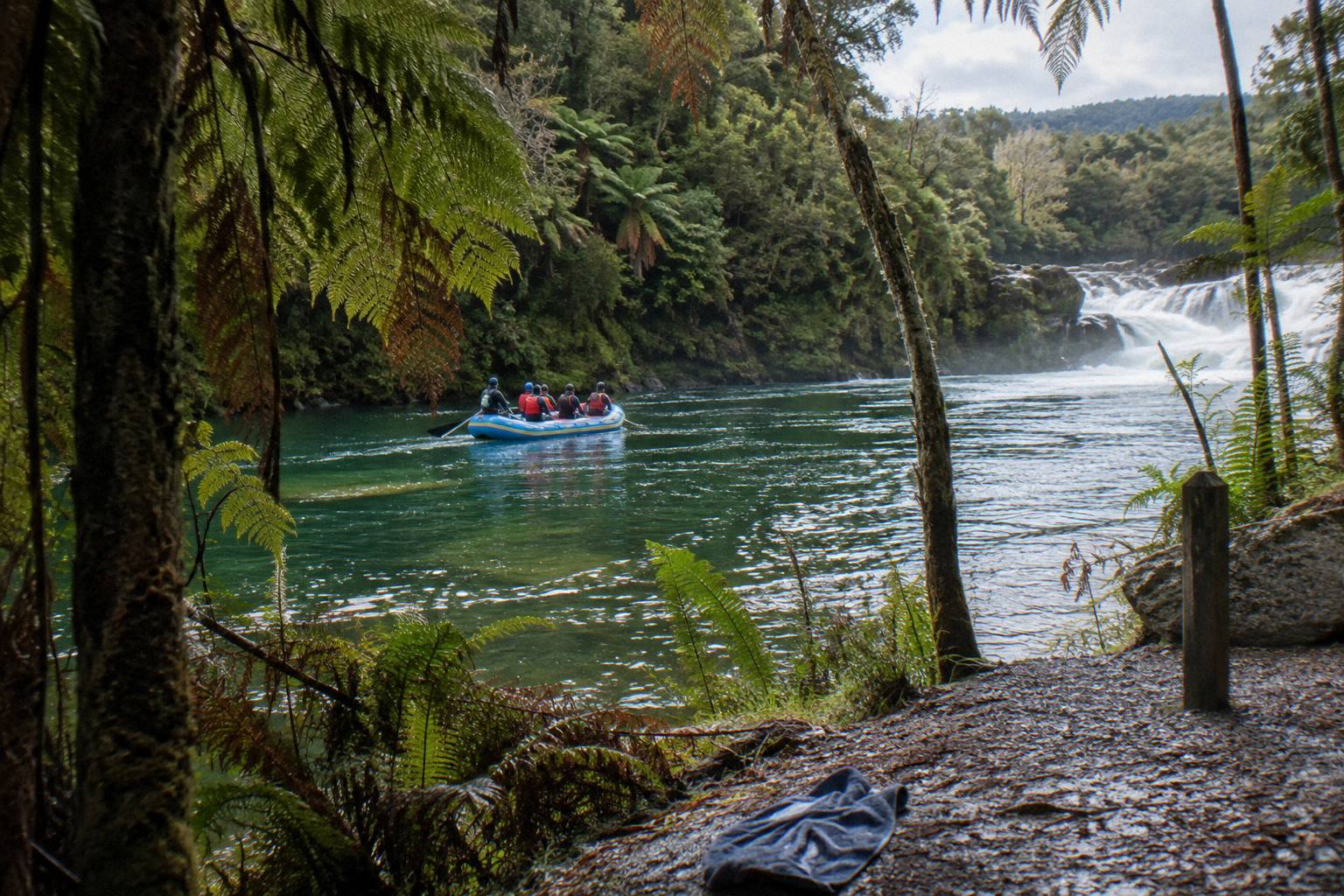
The budget short version of the season story, and the wider price picture across operators, lives in the how much rafting costs answer. For a second look at the cheaper end of the same river, the Rotorua Rafting product "Rotorua Rafting: Kaituna River Rafting Experience - Free Sauna", short name "Free Sauna, 2h Kaituna Run", runs 2h, holds a 4.9 rating from 490 reviews, takes bookings from NZ$74 per person, and lists a minimum age of 10. Its longer twin is the featured product above; the two cards are separate trips and never a discount pair. See dates for the 2h run on the calendar the same way.
What Trips People Up Before You Book
The recurring mistakes are seasonal ones: assuming a month is closed when every month runs, expecting summer frequency in a winter week, and reading a spring conditions note as a standing flow figure. Travellers also merge twin products into one trip and compare their from prices as if they were the same product, which they never are, and book a fixed dinner around a trip whose finish time depends on the day. Each of these is avoidable with one check.
The first fix is the calendar. Operator stated times describe the pattern, and the booking calendar holds every confirmed departure for your date, so the calendar is the single source for what actually runs on the day you want. The second fix is the twin product habit: the sauna 2h30 trip and the sauna 2h trip are separate bookable products with their own cards, ratings and prices, and so are the Cascades pair and the Kaitiaki pair. Compare within a product, not across twins.
The third fix is temperature expectation. About 24 °C in summer and about 12 °C in winter are the FAQ figures, supplied kit covers the gap, and no month by month temperature exists as a sourced number, so do not plan around one. If a winter trip is on the table, Rafting Rotorua keeps the operator pages, calendars and prices in one place for a quick comparison before you commit a date.
Common Questions About The Kaituna Season
Is There A Closed Season For Kaituna Rafting?
No. Gates at the Lake Rotoiti outlet hold the flow, and the operators run trips 365 days a year. What changes is the schedule: Rotorua Rafting runs 3 trips a day from 1 May to 31 August and 6 or more from 1 September to 30 April, and Kaituna Cascades adds two extra summer departures.
How Cold Is The Water In Winter?
The Rotorua Rafting FAQ puts it at about 12 °C in winter and about 24 °C in summer. Operators supply wetsuits, helmets, life jackets, fleece, booties and splash jackets, and you bring swimwear and a towel.
How Many Trips Run Per Day?
In winter, 1 May to 31 August, Rotorua Rafting runs 3 trips a day at 10am, 12pm and 2pm. In summer, 1 September to 30 April, it runs 6 or more, every 30 minutes on demand. Kaituna Cascades runs 10:30am, 12:30pm and 2:30pm daily plus 8:30am and 4:30pm in summer.
Does Spring Rain Cancel Trips?
Rarely. The river runs at high spring flows, reported in the 500s on the control gates with water at 19 °C in the operator's conditions update, and the trip keeps running. Flow, weather and the operator decide the day, so ask the operator if conditions look extreme.
When Does The Summer Schedule Start?
1 September. From that date Rotorua Rafting moves to 6 or more trips a day, every 30 minutes on demand, and Kaituna Cascades adds its 8:30am and 4:30pm departures. The winter schedule returns on 1 May.
Are The Departure Times Guaranteed?
No. The times are operator stated patterns, and the booking calendar holds every confirmed departure. Check the calendar for your date before building the rest of your day around a time.