Can You Go White Water Rafting In The Winter?
Yes, the Kaituna runs all winter: 3 trips a day from May to August, about 12 degrees, full kit supplied. Here is what winter rafting involves and how to book it.
Rafting on the Kaituna is a year-round activity, and winter is simply another season on the timetable. Start with the Kaituna River rafting tours hub to see every trip that runs on this river, then read on for what changes between May and August.
| Fact | Detail |
|---|---|
| Does the Kaituna run in winter? | Yes, 365 days a year, because council-controlled gates at the Lake Rotoiti outlet hold the flow |
| Winter season | 1 May to 31 August |
| Winter trips | 3 trips a day, at 10am, 12pm and 2pm, as the operator states |
| Summer trips | 6 or more trips a day, every 30 minutes on demand, 1 September to 30 April |
| Winter temperature | About 12 °C, per the operator FAQ |
| Kit supplied | Wetsuits, helmets, life jackets, fleece, booties, splash jacket |
| Run length | 50 to 60 minutes on the water inside a roughly 2 hour experience |
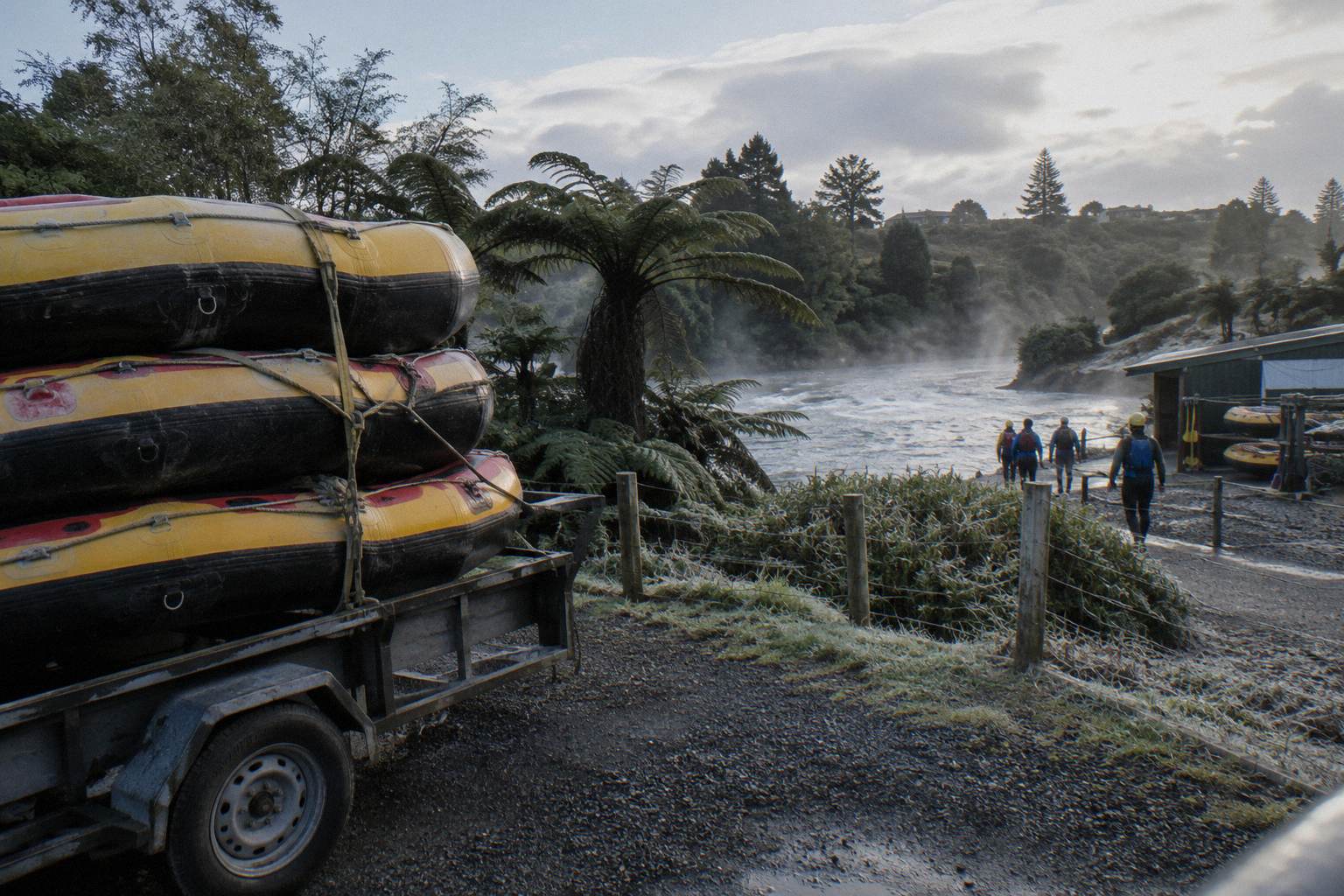
Yes, and on the Kaituna it is a normal, fully scheduled part of the year rather than a hardy exception. The river runs 365 days a year because council-controlled gates at the Lake Rotoiti outlet keep water flowing regardless of rainfall. From 1 May to 31 August the winter timetable runs 3 trips a day, and every operator supplies the cold-water kit that makes a 12 degree day comfortable.
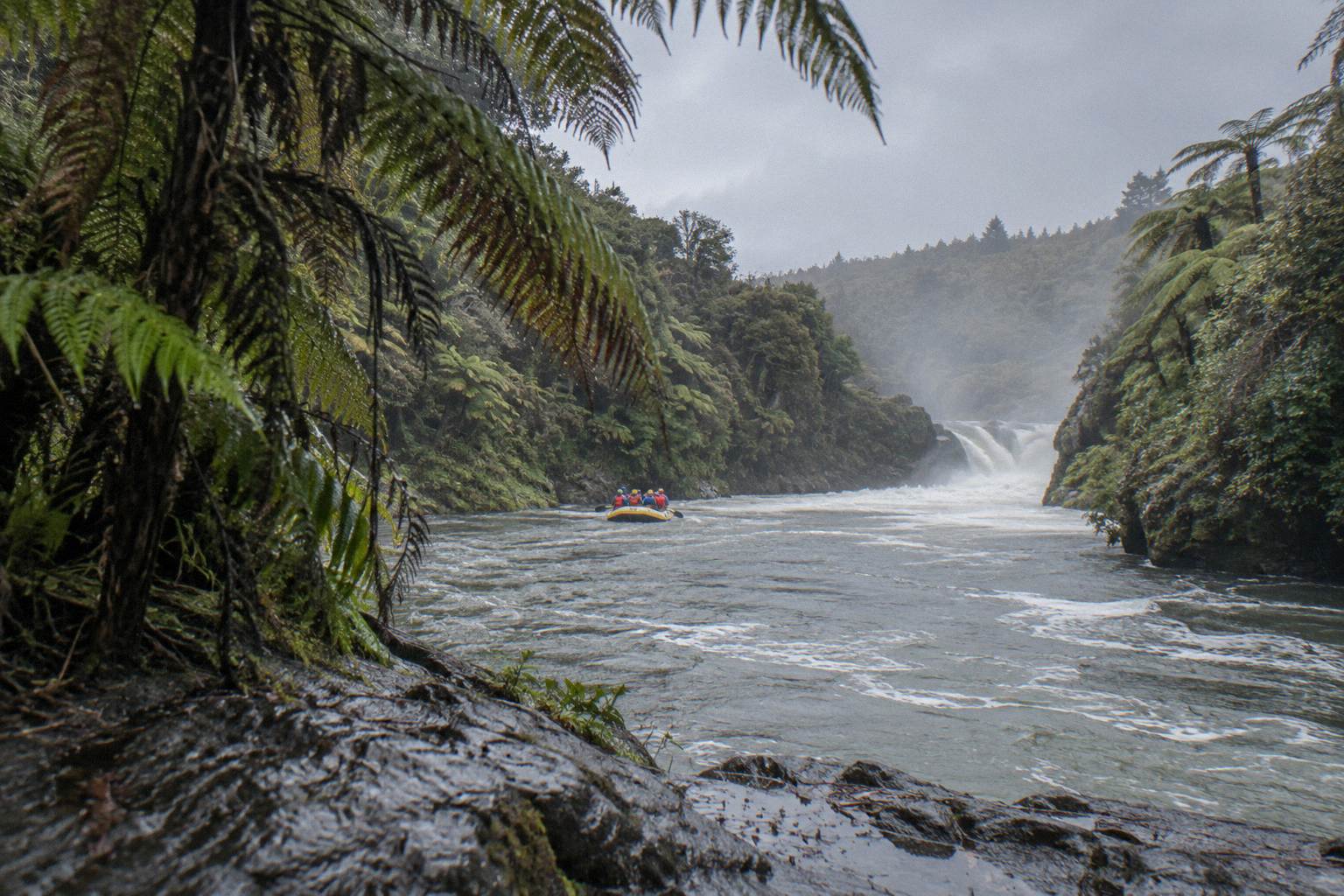
The reason winter rafting works here is structural, not stoic. Most rafting rivers depend on natural flows, which drop or flood with the seasons, but the Kaituna is regulated at its source. Kaituna Cascades states that council-controlled gates at the Lake Rotoiti outlet keep the river rafting 365 days a year, which is why the booking calendar stays open straight through June and July. The Wikipedia entry for the Kaituna River explains the river's path from Lake Rotoiti through the Okere Falls gorge, the stretch the trips run.
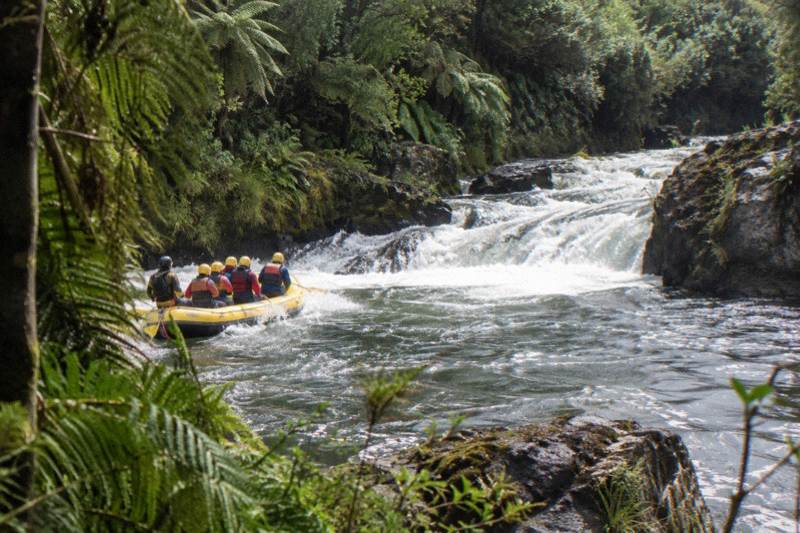
Winter also changes the texture of the day rather than the trip itself. The run is the same 50 to 60 minutes on the water inside a roughly 2 hour experience, with 14 rapids and drops and 3 waterfalls, and the same put-in at Okere Falls a short drive from Rotorua. Fewer people travel in the off season, so the middle-of-the-day trips can feel quieter than their summer equivalents, though the booking calendar is the only reliable guide to how full a given departure is.
The question underneath the question is usually about comfort, not feasibility. People who ask whether winter rafting is possible are often really asking whether they will be miserable doing it, and the answer on this river is that the equipment does the heavy lifting. The water in the gorge does not freeze, the operators do not pause the product, and the drive to the base is short enough that you are not standing in the cold for long before you are in a wetsuit. None of that makes a July morning tropical, but it makes it ordinary, which is the standard a winter activity has to meet.
If a winter trip is on your list, the three products below cover the main ways to do it: a longer trip with a sauna built into the finish, a 2 hour run with a different operator, and a trip with hotel transfers so you are not standing around in the cold waiting for a ride.
How Cold Is The Kaituna In Winter?
About 12 degrees in winter and about 24 in summer, per the operator FAQ, and that single pair of numbers is the full size of it. The FAQ gives those two figures without breaking them down further, so treat them as the operator's seasonal summary, not a forecast for your date. The river-conditions page has separately reported high spring flows around the 500s on the control gates, with the water at 19 degrees C in that update.
The 12 °C figure comes from the operator's FAQ page, which also covers kit and age questions. What matters practically is not the number but the response to it: every operator listed here supplies wetsuits, helmets, life jackets, fleece, booties and a splash jacket as part of the trip. You arrive in swimwear and a towel, per the operator's packing advice, and change into gear designed for cold water.
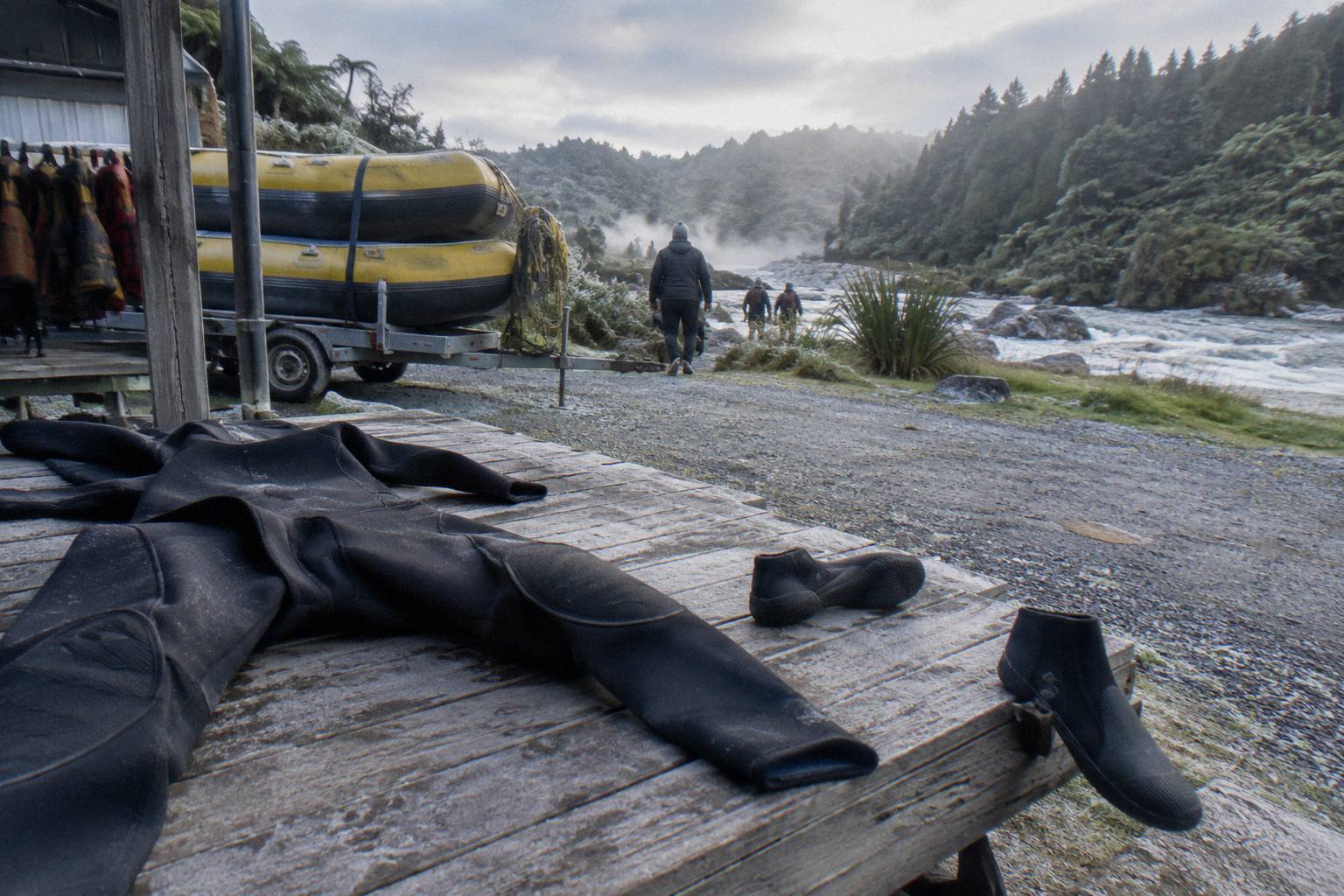
The gate system is the other half of the winter story. Because the Wikipedia entry for Lake Rotoiti describes the lake as the river's source, the council-controlled outlet gates effectively decide how much water reaches the gorge. Kaituna Cascades attributes the year-round schedule to those gates, and its river-conditions page tracks flow and temperature updates through the seasons, which is the page to watch if you care about conditions on your exact week.
It helps to separate the three temperatures people conflate. The FAQ's 12 °C figure is the operator's seasonal summary. The river-conditions page reports actual flow and water readings when it updates, and the spring figure of 19 degrees C in that update shows the water moving well above the winter summary before summer arrives. Then there is the air on the bank, which nobody sources a figure for and which you will feel yourself on the walk to the raft. Planning around the first two is possible; the third is what the supplied splash jacket and fleece are for.
Thinking about a winter morning trip and wondering whether the cold is a dealbreaker? Free cancellation terms are shown on the booking page before you commit.
What Trips Run In Winter And At What Times?
The winter answer is the Rotorua Rafting timetable: 3 trips a day at 10am, 12pm and 2pm, from 1 May to 31 August. Its summer timetable, 1 September to 30 April, runs 6 or more trips with departures every 30 minutes on demand. Kaituna Cascades runs 10:30am, 12:30pm and 2:30pm daily, plus 8:30am and 4:30pm in summer. These are operator-stated times, so check the calendar for actual departures.
| Timetable | Season | Trips And Times |
|---|---|---|
| Rotorua Rafting winter | 1 May to 31 August | 3 trips a day: 10am, 12pm, 2pm |
| Rotorua Rafting summer | 1 September to 30 April | 6 or more trips, every 30 minutes on demand |
| Kaituna Cascades daily | Year round | 10:30am, 12:30pm, 2:30pm |
| Kaituna Cascades summer additions | Summer | Extra 8:30am and 4:30pm departures |
The practical difference is choice, not availability. In summer you can arrive at the base and expect a departure within the half hour in busy periods; in winter you pick one of three fixed slots and book around it. The 10am slot means suiting up in the coldest part of the day, while the 12pm and 2pm slots let the morning warm up first, which is worth thinking about if cold hands are a concern.
Trip length itself does not change with the season. The full experience runs about 2 hours door to door at the base, with 50 to 60 minutes on the water, on every product in the same family. The check-in rule matters more in winter than summer: Kaituna Cascades asks rafters to check in 15 minutes before departure, and in the colder months that buffer is spent in a warm base rather than on the bank.
Booking strategy shifts a little with the timetable too. With only three winter slots on one operator's schedule, a weekend 12pm departure is the one most likely to fill first, simply because it sits in the warmest window of the day. Midweek mornings are the quiet end of the market. If your dates are fixed around a school holiday or a long weekend, book the slot early rather than assuming the off season leaves space; the calendar is the arbiter either way.
If you want the deeper month-by-month picture, the Kaituna rafting season month by month guide breaks the whole year down; this page owns the winter half of it.
What To Wear And What Operators Supply
You bring swimwear and a towel, and the operators supply everything that keeps you warm: wetsuits, helmets, life jackets, fleece, booties and a splash jacket. That split is the whole answer, and it is why a 12 degree day on the Kaituna is manageable for people who would never consider swimming in it. The kit is included on the trips rather than rented separately, so the price you see covers a fully equipped run.
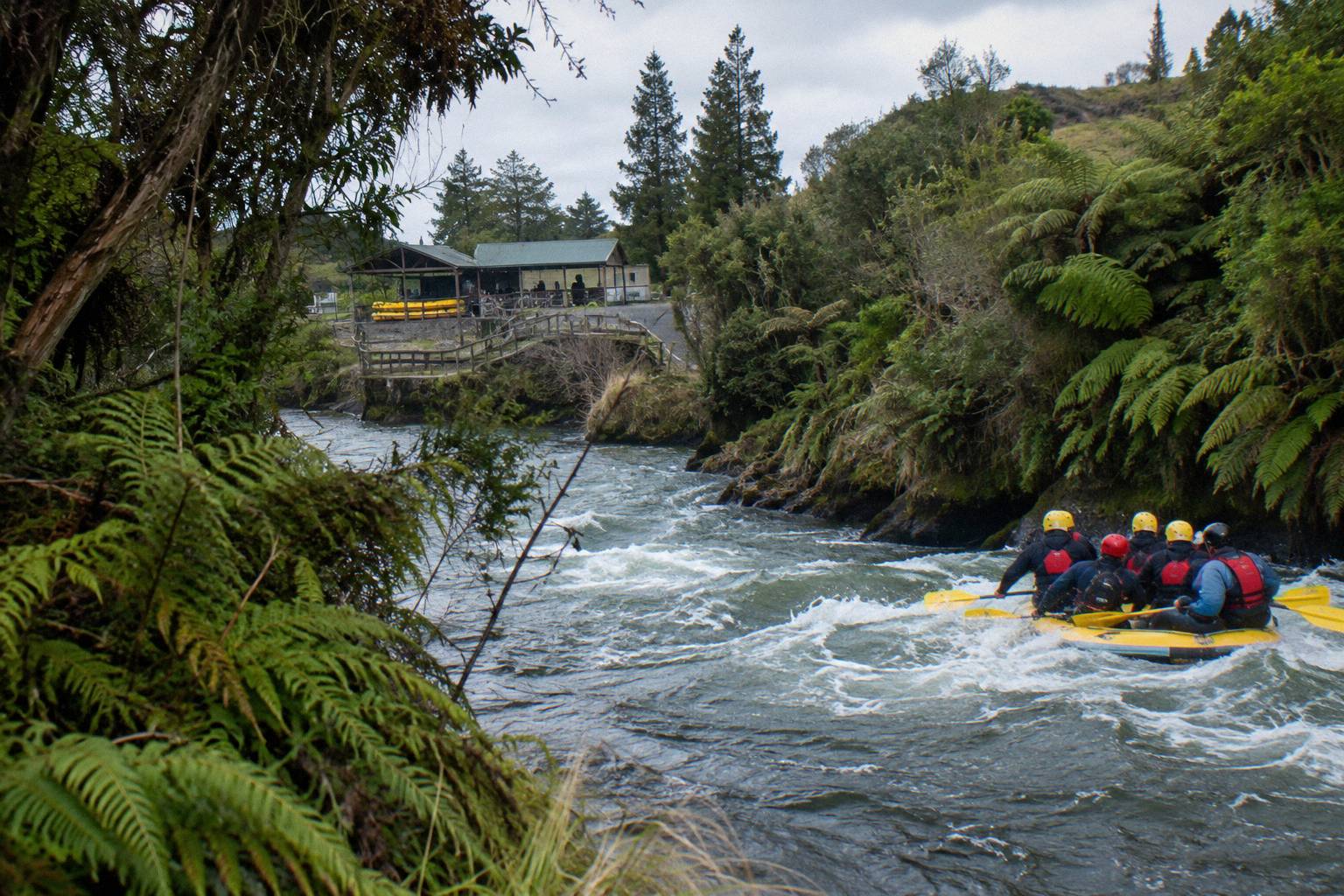
The layering logic is simple. The wetsuit does the insulation in the water, the fleece adds warmth during the flat stretches and the shuttle, booties keep feet functional, and the splash jacket cuts the wind chill on the paddle between drops. The helmet and life jacket are safety equipment on every trip at every time of year, not seasonal extras. Bring a towel for the change afterwards and warm, dry clothes for the drive home.
A note on the wetsuit itself, since it decides most of your comfort: it works by trapping a thin layer of water against your skin, which your body warms, so the first thirty seconds in the river feel colder than the next fifty minutes. This is why operators ask you to wear swimwear rather than cotton underneath; cotton holds water and stays cold against your skin for the whole run. Anything loose or heavy defeats the fit of the suit, and a poorly fitted suit flushes cold water on every rapid.
For a fuller packing treatment, the what to wear white water rafting guide covers the question across seasons. One detail worth knowing for the coldest months: on the sauna-equipped products, the sauna after the run is part of the product, not an upsell, which changes the after-trip experience considerably in July.
The Kaituna Cascades trip is a good example of the standard winter arrangement: a 2 hour product from NZ$135 per person, rated 5.0 from 1,385 reviews, with a minimum age of 13 on that product and check-in 15 minutes before departure. See dates and the live price on the Kaituna Cascades Originals trip page.
Is Winter Rafting Worth It Compared To Summer?
On the Kaituna, the trade is warmth against crowds and convenience. The run, the rapids and Tutea Falls are identical in both seasons, the water flows year round thanks to the outlet gates, and winter's 3-trips-a-day timetable means fewer departures to share. The cost is a roughly 12 degree day against summer's roughly 24, managed by the supplied kit. Anyone comfortable in a wetsuit loses very little by going in winter.
The case for summer is flexibility: departures every 30 minutes on demand once the 1 September switch happens, longer daylight for the drive back, and easier weather for the whole day around the trip. The case for winter is a quieter gorge and the simple fact that the product does not shrink. Both seasons use the same stretch of river through the Okere Falls gorge, which the Wikipedia entry for Okere Falls describes, and both end at the same take-out.
| Factor | Winter (1 May To 31 August) | Summer (1 September To 30 April) |
|---|---|---|
| Temperature | About 12 °C, per the operator FAQ | About 24 °C, per the operator FAQ |
| Trips | 3 a day: 10am, 12pm, 2pm | 6 or more, every 30 minutes on demand |
| The run itself | Same run, 3 waterfalls, 14 rapids and drops | Same run, 3 waterfalls, 14 rapids and drops |
| Kit | Full cold-water kit supplied | Full kit supplied |
| Suit-up comfort | Cold changing rooms, warm gear in the water | Comfortable change |
One winter-specific advantage is logistics. The Kaitiaki Adventures product with hotel transfers, rated 5.0 from 823 reviews and from NZ$139 per person, includes free hotel pickup on that product, which removes the coldest part of a winter rafting day: the wait for a ride in wet gear. Check availability for your dates on the rafting with hotel transfers product.
There is a subtler comparison worth making about the waterfall itself. Tutea Falls stands 7 metres by the operators' figure, and operators describe it as the highest commercially rafted waterfall in the world. In the colder months, when flows have settled after spring, the drop reads differently at the same height: the operators' own river-conditions update has described the big waterfall as more powerful but slightly less tall and vertical during high-flow periods. Neither season gets a better waterfall, they get different versions of the same one, and the gates decide which version is running on your day rather than the calendar.
Price is the other comparison people expect a difference in and mostly do not find. Every product carries its own from-price, tied to its own card, and the booking page shows the amount for the date you choose. The from-prices on the Kaituna products here run from NZ$61 to NZ$139 per person in New Zealand dollars, and they vary by date and group rather than by season in any way an article can promise. If a winter discount exists, it exists on the calendar, not in a general rule.
What Trips People Up Before You Book
Three recurring winter mistakes stand out: assuming the river closes, dressing for the air temperature instead of the water, and booking a mid-afternoon slot without checking the change-around time. The first is flatly wrong on the Kaituna, where the gates keep trips running every month. The second is solved by the supplied kit once you bring swimwear and a towel. The third is planning: winter light is shorter, so a 2pm finish lands closer to dusk.
Weight and age limits also catch people out. Kaituna Cascades sets a maximum of 120 kg and a minimum age of 13 on its Kaituna product, with 10 to 12 year olds able to join halfway, while Rotorua Rafting sets a maximum of 130 kg and a minimum age of 10 on its sauna product listing. These are per-product rules, so match the listing to the person, not the river. The terms also exclude pregnancy and heart conditions on the Kaituna Cascades product, and a float test may be required.
A fourth mistake deserves its own mention because it is purely a winter one: planning the rest of the day around the trip without leaving room to warm up. A rafting morning in July does not hand you back a day at full speed; the sauna on the products that include one, a hot shower at the base where available, and a slow lunch do more for the afternoon than a tightly booked schedule will. People who stack a rafting trip, a drive and a second activity into a short winter daylight window tend to enjoy the last item least.
The fix for all of it is the same: check the booking calendar for your date, confirm the departure time against your day plan, and read the product's own terms before you commit. Most booking friction comes from details that were on the page all along.
The flagship winter product for this question is the Kaituna River White Water Rafting & Free Sauna trip from Rafting Rotorua: 2h30, from NZ$135 per person, rated 5.0 from 2,191 reviews, minimum age 10 on that listing, with the sauna included in the finish. Check the live price for your date on the operator's page.
Whichever way you lean, these three trips cover the winter options on this river:
- Free Sauna, 2h30 Kaituna Trip
- Kaituna Cascades, The Originals
- Rafting With Hotel Transfers
- Zipline Over Waterfalls, 2h30
- Free Sauna, 2h Kaituna Run
- Wairoa River Grade 5, 5h
- Tutea Falls 2h Rafting
- Zipline Free Sauna, 2h
- Sledging With Transfers
- River Board Sledging, Free Pickup
- Rafting Plus Tarawera Hike, 9h
- Grade 2 Rafting, 4h
- Tandem Kayak, Kaituna Waterfalls
- Kaituna Rafting, Free Pickup, 2.5h
- Zipline Rafting Combo, Free Sauna
- Rafting, Zipline, Hot Pool Combo
Common Questions About Winter Rafting
Can You Go White Water Rafting In The Winter?
Yes. On the Kaituna the river runs 365 days a year because council-controlled gates at the Lake Rotoiti outlet hold the flow. Winter runs 3 trips a day, at 10am, 12pm and 2pm from 1 May to 31 August, with full cold-water kit supplied.
How Cold Is The Water In Winter?
The operator FAQ gives about 12 °C for winter and about 24 °C for summer. The FAQ does not break the figure down further, and the river-conditions page tracks updates through the seasons, so treat the number as the operator's seasonal summary rather than a forecast.
Do You Need Your Own Wetsuit?
No. Operators supply wetsuits, helmets, life jackets, fleece, booties and a splash jacket. You bring swimwear to wear under the wetsuit and a towel for afterwards, plus warm dry clothes for the drive home.
Are Trips Cancelled More Often In Winter?
The Kaituna does not close for winter because the outlet gates regulate the flow. Rain and river levels can still affect a given day, and the operator decides, so check the calendar and the operator's conditions page around your date.
What Time Should You Book In Winter?
Winter offers 3 slots on one timetable: 10am, 12pm and 2pm. The middle of the day is the warmest window for suiting up, and the 2pm trip finishes closer to dusk in June and July, so plan the rest of your day around that.
Is Winter Cheaper Than Summer?
Prices are set per product, not per season, and the booking page shows the price for your date. This site's products start from NZ$61 to NZ$139 per person for Kaituna trips, in New Zealand dollars, and amounts vary by date and group.