Kaituna River Rafting: Grade, Rapids, And What To Expect
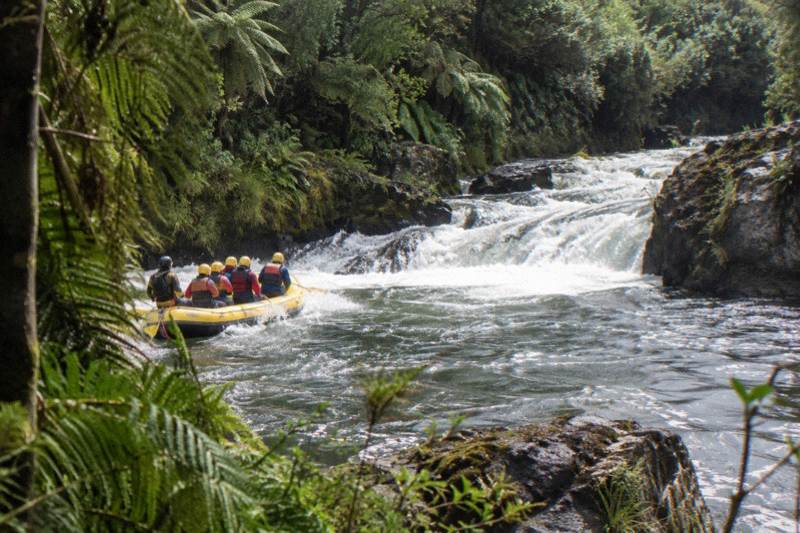
The Kaituna runs through a narrow gorge at Okere Falls, 20 to 25 minutes from Rotorua, and packs 14 rapids and drops and three waterfalls into roughly 50 to 60 minutes on the water.
Short answer
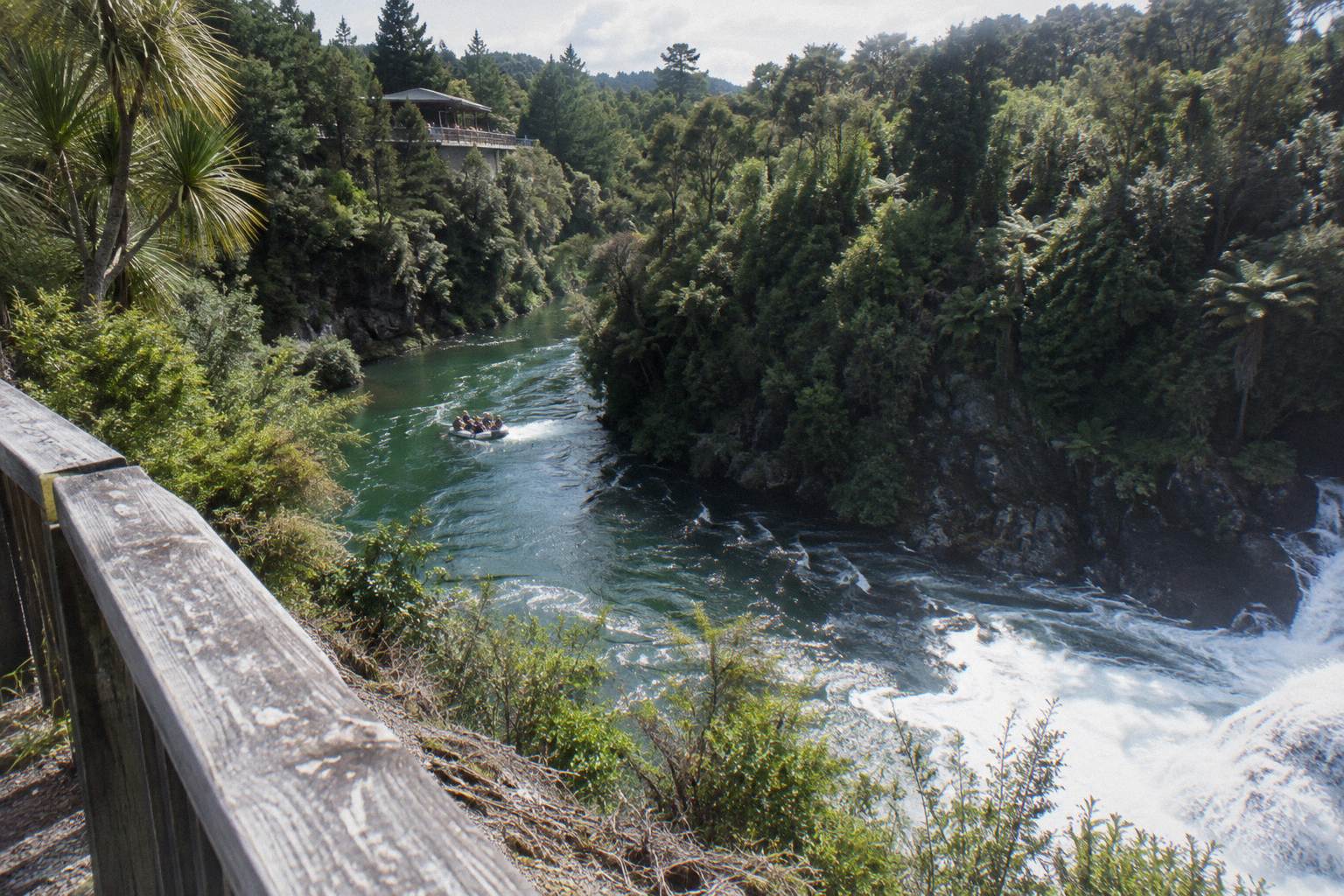
Kaituna River rafting starts at Okere Falls, about 23 minutes from Rotorua, and covers 14 rapids and drops plus three waterfalls in roughly 50 to 60 minutes on the water, inside a roughly 2 hour experience. The run is sold as Grade 5. Kaituna Cascades, Rotorua Rafting and Kaitiaki Adventures all run it, with trips from NZ$61 per person.
The Kaituna is the river most people come to Rotorua to raft, and every bookable trip on it covers the same short, steep gorge. This page covers the river itself: where the run starts, what the rapids and waterfalls are, the grade as the operators sell it, how long it takes, and who runs it. Safety rules and kit lists have their own pages, linked below.
| Fact | Detail |
|---|---|
| Where the run starts | Okere Falls, 20 to 25 minutes from Rotorua (23 minutes per Kaituna Cascades) |
| Time on the water | About 50 to 60 minutes (Kaituna Cascades) |
| Whole experience | About 2 hours (Kaituna Cascades) |
| Rapids and drops | 14 rapids and drops (Kaituna Cascades) |
| Waterfalls | 3 waterfalls, including Tutea Falls at 7 metres per the operators |
| Grade as sold | Grade 5, with rapids the Kaituna Cascades blog calls Grade 4 and 5 building to the falls |
| Flow | Council-controlled gates at the Lake Rotoiti outlet keep the river running 365 days a year (Kaituna Cascades) |
| Operators | Kaituna Cascades, Rotorua Rafting, Kaitiaki Adventures |
Where The Kaituna Run Starts And How To Get There
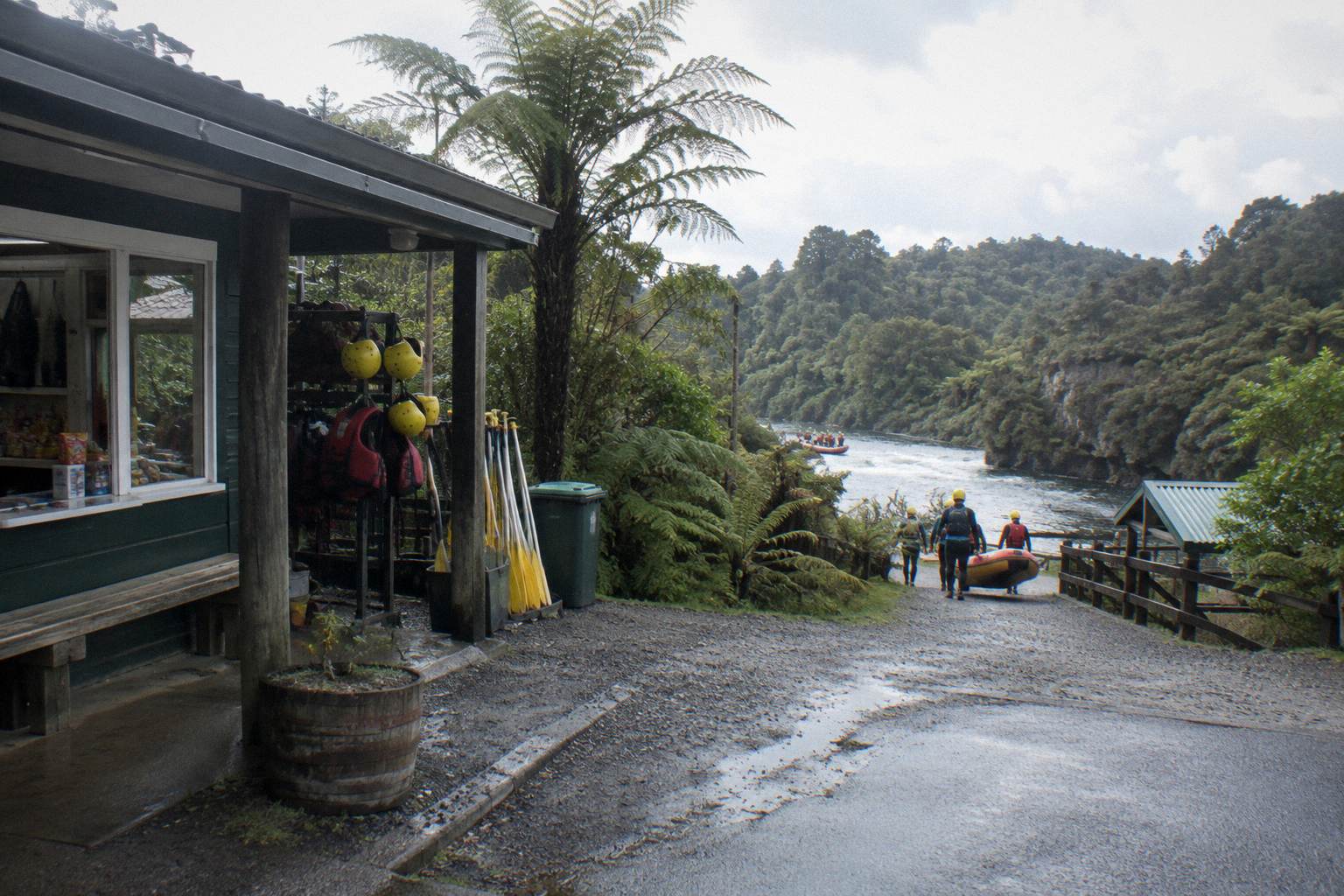
The run puts in at Okere Falls, a small settlement on the Kaituna River about 23 minutes from Rotorua by road, a drive the operators put at 20 to 25 minutes. All three rafting operators base themselves around the river: Kaituna Cascades at 18 Okere Falls Road, Rotorua Rafting at 761 State Highway 33, and Kaitiaki Adventures at 1135 Te Ngae Road, Tikitere. Once you arrive, the gorge does the rest: the rafting section is short, steep and close to the base buildings, so the gap between checking in and being on the water is small.
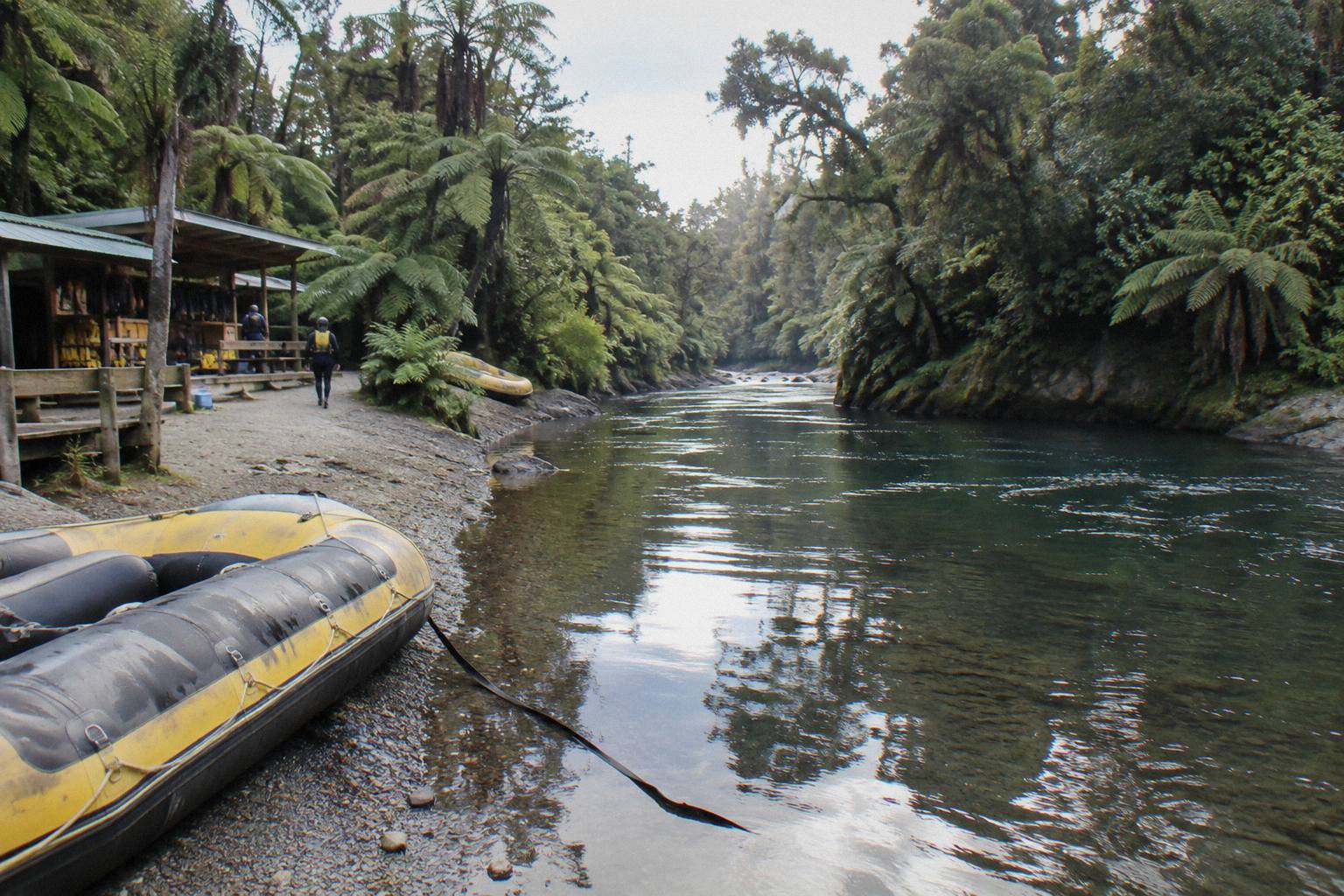
The river itself flows out of Lake Rotoiti, through the gorge at Okere Falls, and on towards the Bay of Plenty, a geography covered in the Wikipedia entry for the Kaituna River. The rafting section sits at the top of that journey, where the water squeezes between bush-clad walls. The wider setting around the falls is described in the Wikipedia entry for Okere Falls, which covers the falls and the place.
Getting there is straightforward but worth planning. If you have a car, all three bases are a short drive from Rotorua and parking is not a complication at the Okere Falls end; the Kaituna Cascades base offers it free with direct river access. If you do not have a car, the Kaitiaki Adventures transfer product includes free hotel pickup, covered below in the operators section. The separate getting to the Kaituna for rafting page handles the drive in detail, including what to allow for.
One point that shapes the whole day: the run is short. Because the on-water time is under an hour and the full experience is about 2 hours, most people treat a Kaituna trip as a half-day block rather than a full day. That leaves room for the walking track above the rapids, which has its own guide, the Okere Falls track above the rapids, or for a second activity. The one day built around a rafting trip page sketches how that looks in practice.
How Long A Kaituna Rafting Trip Takes
A Kaituna rafting trip is about 2 hours all up, per Kaituna Cascades, of which roughly 50 to 60 minutes are spent on the water. The rest is check-in, gearing up with wetsuit, helmet and life jacket, a safety briefing, the walk to the put-in, and the shuttle or stroll back to base afterwards. Trips run year round because council-controlled gates at the Lake Rotoiti outlet hold the flow.
The table below is the run at a glance, using the operator-stated figures for the river rather than any single product. Individual products vary slightly around these numbers: the Kaituna Cascades 2 hour trip, the Rotorua Rafting trips at 2 hours and 2h30, and the Kaitiaki Adventures products at 2h30 all cover the same water but package it differently.
| Part of the trip | What happens | Time it takes |
|---|---|---|
| Check-in and gear | Wetsuit, helmet, life jacket, booties and changing | Around 30 to 40 minutes of the total |
| Safety briefing | Paddle commands, positions, what happens at the falls | Included before the put-in |
| On the water | 14 rapids and drops, three waterfalls | About 50 to 60 minutes |
| Return and change | Take-out, back to base, hot shower and change | The balance of the roughly 2 hours |
Because the whole thing fits inside about 2 hours, the trip slots easily into a Rotorua day. The what happens on a Kaituna rafting trip page walks through the sequence minute by minute, from arrival to the take-out. If you are weighing whether the timing suits a travel day, the short answer is that it does: a morning trip still leaves an afternoon.
If you know the river is for you, the three most common starting points are below. All prices are New Zealand dollars, vary by date and group, and the booking page shows the price for the date.
The Grade, And The 14 Rapids And Drops
The Kaituna is sold as a Grade 5 run, but the operators describe its character more precisely than that single number. Kaituna Cascades' blog says the rapids are Grade 4 and 5, building to the falls, so the run gathers difficulty as it goes rather than starting at its hardest. There are 14 rapids and drops in total, per Kaituna Cascades, packed into a short gorge. For anyone decoding what grades mean, the rapid grades explained for rafters page breaks down the scale.
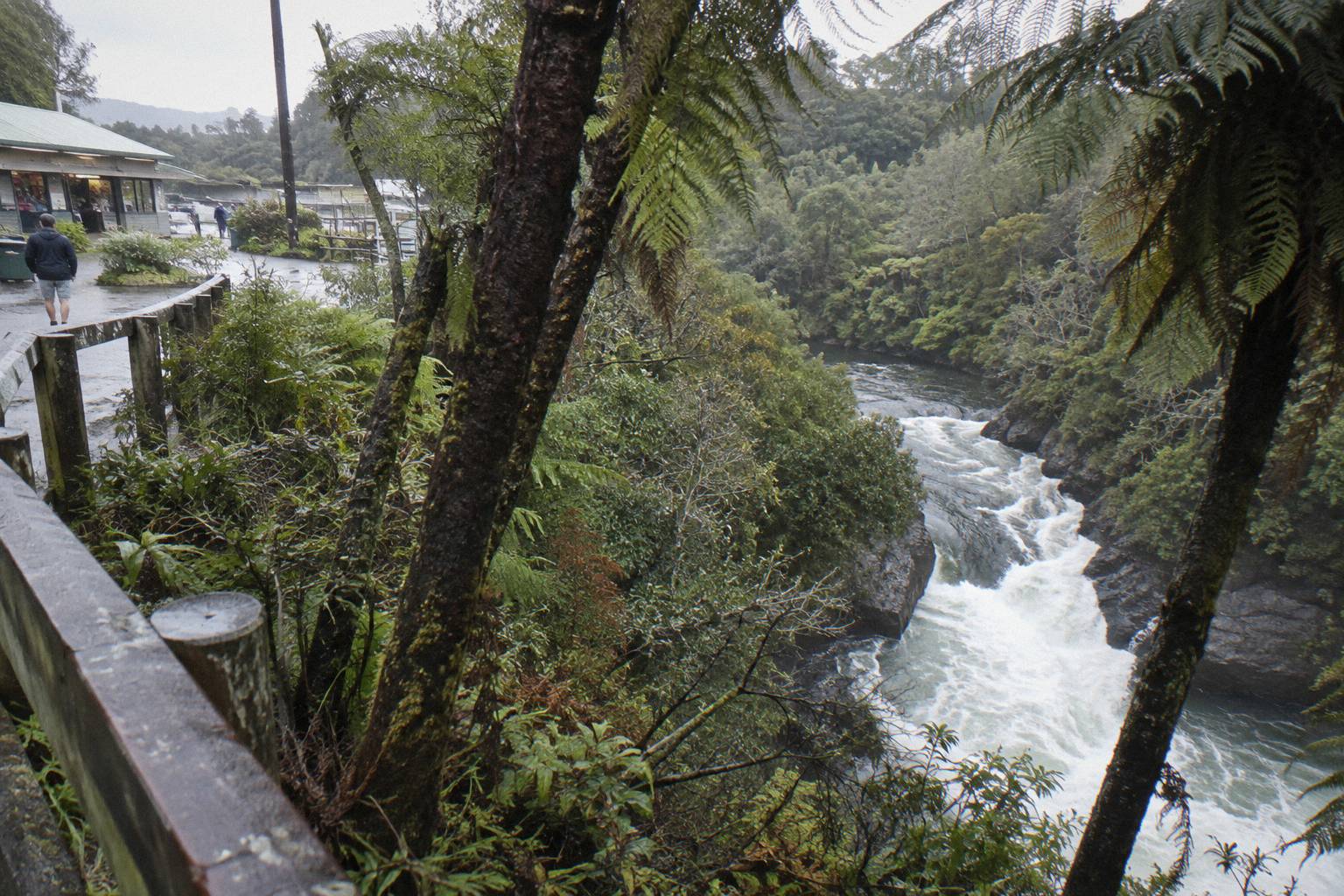
Grade numbers come from the International Scale of River Difficulty, described in the Wikipedia entry on whitewater. On that scale, Grade 5 water is the top commercial grade: powerful, with features that require precise manoeuvring, but runnable by beginners under a guide in a commercial raft. The Kaituna's status as a beginner-accessible Grade 5 is the heart of its appeal, and the white water rafting for beginners page covers whether that is a sensible first trip.
The structure of the run matters for expectations. The early rapids come in quick succession, each one a drop or a chute, and the three waterfalls sit as the signature moments. Tutea Falls is the biggest of them, and the run finishes below it with a short calm stretch to the take-out. The essential facts about rafting as an activity, including how a crew works together, are covered in the Wikipedia entry on rafting.
Two things catch first-timers out. First, the grade as sold, Grade 5, is a whole-run label; the individual rapids are a mix, and the blog of Kaituna Cascades says so directly. Second, the count of 14 rapids and drops includes small features, not 14 separate monsters. Approaching it as a fast, continuous descent with three big moments is closer to how the operator describes it than a list of walls to climb.
Tutea Falls And The Three Waterfalls
The three waterfalls on the run are its signature, and Tutea Falls is the biggest at 7 metres, or 23 feet, per the operators' shared figure from Kaituna Cascades, Kaitiaki, Rotorua Rafting and the German Wikipedia entry. Operators describe it as the highest commercially rafted waterfall in the world, a claim Kaituna Cascades makes with a comparison list of lower commercially rafted falls. That claim and that list belong to the operator, printed here as stated rather than independently measured.
The drop itself, and everything a rafter should know about running it, has a dedicated page: the Tutea Falls rafting guide. For this overview the essentials are the height, the claim, and how the fall behaves. Kaituna Cascades' river-conditions page reports that in its spring high-flow update the big waterfall was more powerful but slightly less tall and vertical, which is what high water does to a ledge fall: the cushion grows and the face changes shape.
| Waterfall on the run | What is known |
|---|---|
| Tutea Falls | 7 metres (23 ft), the operators' figure; operators describe it as the highest commercially rafted waterfall in the world |
| The other two falls | Part of the three-waterfall count in the 14 rapids and drops, per Kaituna Cascades |
| Comparison falls Kaituna Cascades lists | Agers Falls 5.5 m, Sweets Falls 4.3 m, Husum Falls 3.7 m |
| Spring behaviour | More powerful but slightly less tall and vertical in the Kaituna Cascades high-flow update |
The comparison list above is attributed to Kaituna Cascades, which publishes it beside its waterfall claim on the Kaituna Cascades page for the highest commercially rafted waterfall. It is a marketing comparison, but a concrete one: it names measurable competitors and lets a reader see the margin between 7 metres and the next falls down.
Read side by side, the operators' own figures give a sense of scale that the single 7 metre number cannot. On the Kaituna Cascades list, Agers Falls sits 1.5 metres below Tutea Falls, Sweets Falls sits 2.7 metres below, and Husum Falls sits 3.3 metres below. Those gaps are derived from the operators' figures rather than independently measured, but they show why the claim has traction: the nearest named competitor is not a near miss, it is a distinctly smaller drop on the same list. That is also why the wording matters. The claim is about commercial rafting, not about waterfalls in general, and plenty of taller falls exist that no commercial raft runs.
The three operators sharing the height figure, Kaituna Cascades, Kaitiaki and Rotorua Rafting, all run the same river, so the 7 metre figure is consistent across the trips you can actually book rather than resting on one company's marketing. If the waterfall is your main reason for going, the practical detail is timing: the run fits 50 to 60 minutes on the water inside a roughly 2 hour experience, per Kaituna Cascades, and the gates at the Lake Rotoiti outlet mean the river runs 365 days a year, so there is no closed season for the drop itself.
Rafting Tutea Falls is the moment most people book the trip for, and it is over in seconds. The raft paddles to the lip, the guide calls the line, and the boat drops. What happens immediately after, including swimming if someone leaves the raft, is covered on the what happens if you fall out of the raft page. If you want to run the full descent with the operator that publishes the 7 metre figure and the comparison list, the Kaituna Cascades trip is bookable here, or you can check availability for your dates.
Who Runs The Kaituna, And Where Their Bases Are
Three operators run commercial rafting trips on this section of the Kaituna: Kaituna Cascades, Rotorua Rafting and Kaitiaki Adventures, each with its own base, its own products and its own rating and review count on its own listings. Kaituna Cascades bases at 18 Okere Falls Road, Rotorua Rafting at 761 State Highway 33, and Kaitiaki Adventures at 1135 Te Ngae Road, Tikitere. The full product-by-product comparison lives on the Kaituna rafting operators compared page.
| Operator | Base | What the base offers |
|---|---|---|
| Kaituna Cascades | 18 Okere Falls Road | Free parking and direct river access |
| Rotorua Rafting | 761 State Highway 33 | About 20 minutes from central Rotorua |
| Kaitiaki Adventures | 1135 Te Ngae Road, Tikitere | Base for its Kaituna products, with hotel pickup on its transfer listings |
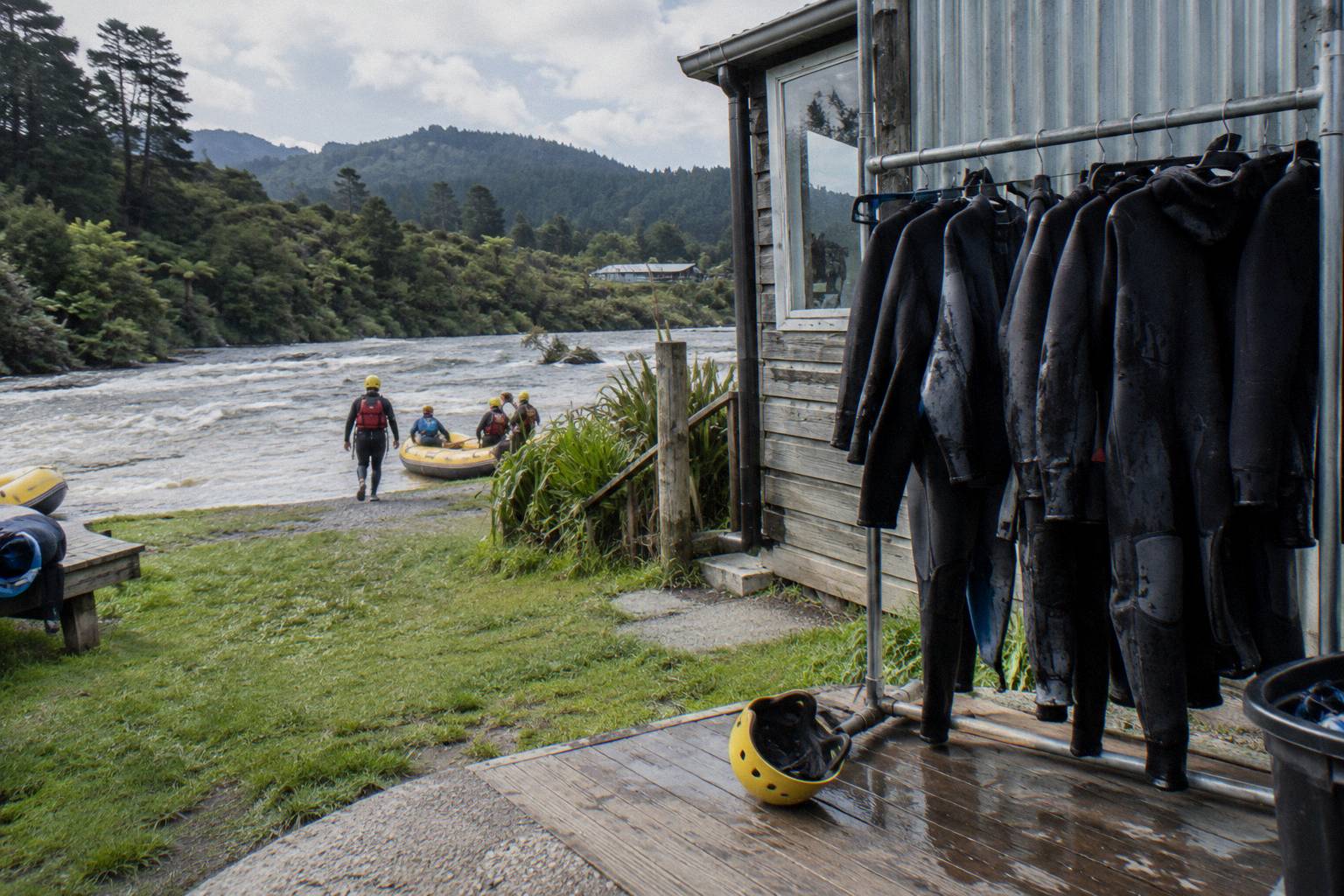
The products differ in the details even though the water is the same. The Kaituna Cascades product "White Water Rafting - Kaituna Cascades, The Originals" runs 2 hours, is rated 5.0 from 1,385 reviews and starts from NZ$135 per person, with a minimum age of 13 on that listing. The Rotorua Rafting product "Rotorua Rafting: Kaituna River White Water Rafting & Free Sauna" runs 2h30, is rated 5.0 from 2,191 reviews and starts from NZ$135 per person, with a minimum age of 10 on that listing and a free sauna included. The Kaitiaki Adventures product "Rotorua White Water Rafting | Kaitiaki Adventures + Transport" runs 2h30, is rated 5.0 from 823 reviews, starts from NZ$139 per person, includes free hotel pickup and sets a minimum age of 13 on that listing.
Beyond the headline products, each operator also carries shorter or lighter options. Rotorua Rafting runs a twin product, the 2 hour "Free Sauna, 2h Kaituna Run", rated 4.9 from 490 reviews and from NZ$74 per person, minimum age 10 on that listing; it is a separate bookable product from the 2h30 trip above, so treat the two prices as different products rather than a discount. Kaitiaki Adventures also lists the 2.5 hour "Kaituna Rafting, Free Pickup, 2.5h", from NZ$61 per person with no printable rating, again a separate product from its transfer twin.
Kaituna Cascades also has a twin on another booking page, "Kaituna Cascades: The Original Whitewater Rafters!", a 2 hour trip rated 4.9 from 380 reviews; its price shows on the booking page for your date, and it is never the same card as "The Originals" above. Twins exist because operators list on more than one sales channel, and the site keeps them as separate products with separate figures so nothing gets merged or mispriced. When a price looks different between two cards that describe the same water, that is usually why.
For the cheapest entry to the same gorge, the Kaitiaki Adventures 2.5 hour listing is the low figure on the river at from NZ$61 per person, and it includes hotel pickup. Where each operator sits before and after the run is covered in the bases table above. Check the live price for your date before comparing, since amounts vary by date and group.
River Flow: Why The Kaituna Runs 365 Days A Year
The Kaituna runs every day of the year because council-controlled gates at the Lake Rotoiti outlet hold the flow, per Kaituna Cascades, a setup that sets it apart from release-dependent rivers like the Wairoa, which runs only on selected Sundays when water is released. That gate control means the rafting season never closes: trips run in winter and summer alike. The gates and the lake behind them are described in the Wikipedia entry for Lake Rotoiti.
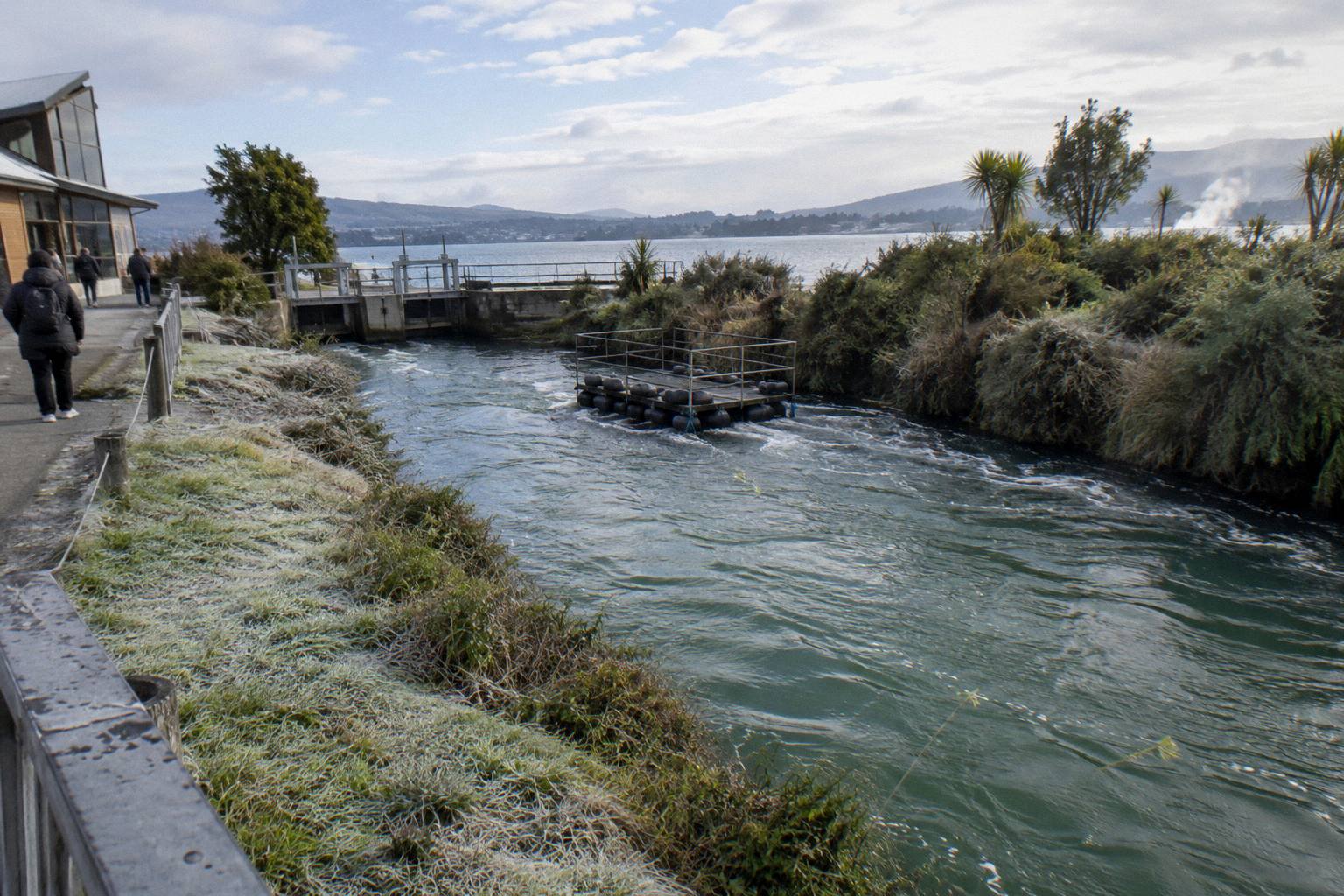
Flow levels still move with the seasons. The Kaituna Cascades river-conditions page reported high spring flows in its update, in the 500s on the control gates, with the water at 19 degrees C in that update, and the same page noted the big waterfall running more powerful but slightly less tall and vertical. Those are readings from one update, attributed to that page, not standing figures; the page is the place to look for current conditions. What the levels mean for your trip is covered on the rainy day rafting page.
Water temperature is seasonal too. Rotorua Rafting's FAQ puts the river at about 24 °C in summer and about 12 °C in winter, and the operators supply the kit for it: wetsuits, helmets, life jackets, fleece, booties and splash jackets are issued at the base. What to wear underneath and what to bring has a dedicated page, what to wear white water rafting, plus its companion on what to bring; the short version from the operators is swimwear and a towel.
The month-by-month picture, including the operators' departure schedules through winter and summer, sits on the Kaituna rafting season month by month page. Rotorua Rafting, for example, runs three trips a day at 10, 12 and 2 through winter from 1 May to 31 August, and six or more daily through summer from 1 September to 30 April, every 30 minutes on demand, per its open hours page. Those times belong to that operator and that season; the booking calendar holds every confirmed departure.
What Trips People Up Before You Book
The common mistakes on a Kaituna booking are mixing up twin products, assuming the minimum age is one number across all trips, expecting a fixed price, and planning the day around a full-day trip that is actually only about 2 hours. Minimum ages differ by listing: 10 on the two Rotorua Rafting listings and 13 on the Kaituna Cascades and Kaitiaki listings. Getting these straight before booking saves both money and disappointment at check-in.
The specifics are worth listing. Weight limits exist: Kaituna Cascades sets a maximum of 120 kg and requires check-in 15 minutes early, and its terms exclude pregnancy and heart conditions, with a float test possible; Rotorua Rafting sets a maximum of 130 kg. Ages are per listing, so a family with a 10 year old has fewer options than one with a 13 year old, and the white water rafting with kids minimum age page handles that decision in full. Prices move by date and group, so the figure you saw may not be the figure on your morning.
Two smaller traps: booking a twin by price alone, without noticing the duration or pickup difference between the cards, and arriving without swimwear and a towel, the two items the operators say to bring. The sauna belongs only to the Rotorua Rafting and Rotorua Ziplines sauna products, so do not assume it on a Kaituna Cascades or Kaitiaki booking; ask the operator if the card does not say. Free hotel pickup exists only on the two Kaitiaki transfer products, not across the river.
Compare the cards, then check the live price and dates for your own travel window before deciding.
Common Questions About The Kaituna Run
How Long Is A Kaituna River Rafting Trip?
About 2 hours for the whole experience, per Kaituna Cascades, with roughly 50 to 60 minutes on the water. The balance is check-in, gearing up, the safety briefing and the return to base. Product durations vary slightly: 2 hours for the Kaituna Cascades trip and the Rotorua Rafting 2 hour twin, 2h30 for the Rotorua Rafting sauna trip and the Kaitiaki products.
What Grade Is The Kaituna River?
The run is sold as Grade 5, the top commercial grade on the International Scale of River Difficulty. Kaituna Cascades' blog describes the rapids as Grade 4 and 5, building to the falls, so the hardest moments come late in the descent rather than at the start.
How Big Is Tutea Falls?
Tutea Falls is 7 metres, or 23 feet, per the operators' shared figure stated by Kaituna Cascades, Kaitiaki, Rotorua Rafting and the German Wikipedia entry. Operators describe it as the highest commercially rafted waterfall in the world, a claim Kaituna Cascades supports with a list of lower commercially rafted falls.
Can Beginners Raft The Kaituna?
Yes, the run is sold as a commercial trip open to first-timers, with a guide in every raft and full kit issued at the base. Minimum ages apply per listing: 10 on the two Rotorua Rafting listings, 13 on the Kaituna Cascades and Kaitiaki listings. The white water rafting for beginners page covers the decision in full.
Does The Kaituna Run All Year?
Yes. Council-controlled gates at the Lake Rotoiti outlet hold the flow and keep the river running 365 days a year, per Kaituna Cascades. Flow levels still shift with the seasons: the operator's river-conditions page reported high spring flows in the 500s on the control gates in one update, with water at 19 degrees C in that update.
Which Operators Run The Kaituna?
Three operators run it: Kaituna Cascades, Rotorua Rafting and Kaitiaki Adventures, each with its own base and its own products. The product-by-product comparison, including ratings, durations and from-prices, is on the Kaituna operators compared page.
For everything bookable on this river, see the Kaituna Cascades flagship trip and the rest of the listings, and for the site's wider coverage start with Rafting Rotorua.