What Is White Water Rafting?
White water rafting explained in plain terms: what a guided raft trip involves, what the grade numbers mean, what kit is supplied, and how the Kaituna near Rotorua works as a real example.
If you are weighing a first trip, the Kaituna white water rafting trip with free sauna is the flagship product on the river this site covers, a full Grade 5 descent from NZ$135 per person.
| Fact | Detail |
|---|---|
| What it is | Paddling an inflatable raft down rapids with a guide |
| Who runs trips near Rotorua | Operators based at Okere Falls, about 23 minutes from town |
| Typical Kaituna experience length | About 2 hours all in, per the operator pages |
| Time on the water | 50 to 60 minutes, as the operators state |
| What the Kaituna run holds | 14 rapids and drops, 3 waterfalls |
| Difficulty as sold | Grade 5, or Class V |
| Kit supplied | Wetsuit, helmet, life jacket, fleece, booties, splash jacket |
| You bring | Swimwear and a towel, per the Kaituna Cascades page |
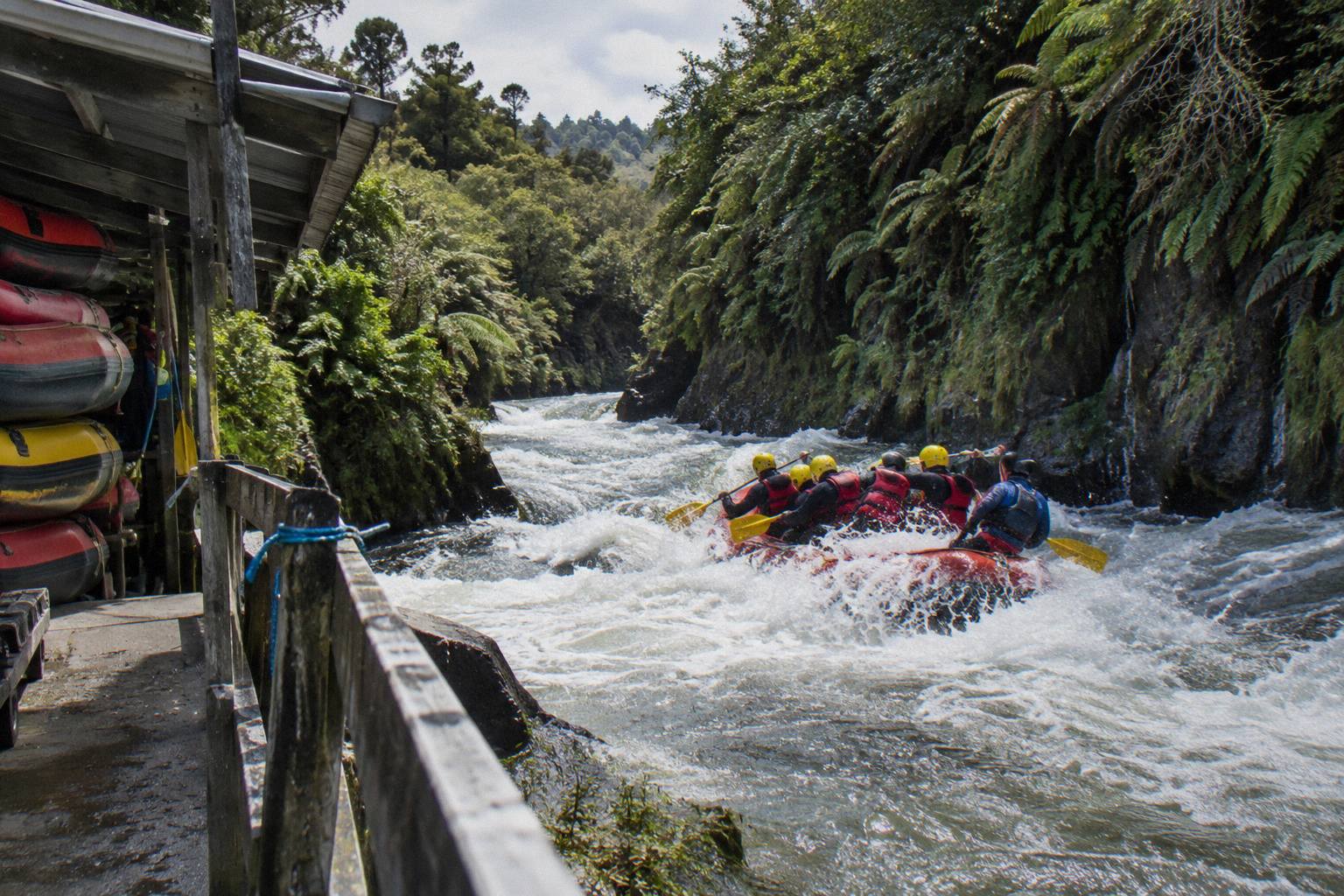
White water rafting is the sport of paddling a large inflatable raft down a river with rough, turbulent stretches called rapids, usually in the company of a trained guide who steers from the rear and calls the paddle commands. It combines teamwork, paddling skill, and the thrill of moving water, which makes it one of the most popular adventure activities on rivers around the world. The raft itself is a stable, multi-person craft built to hit rocks and drops without breaking, and the crew supplies the paddle power. Rivers are graded for difficulty from 1 to 6, so a beginner can start on gentle moving water and work up over seasons. If you want the full background, the Wikipedia entry on rafting covers the craft, and the Wikipedia entry on whitewater covers the water itself.
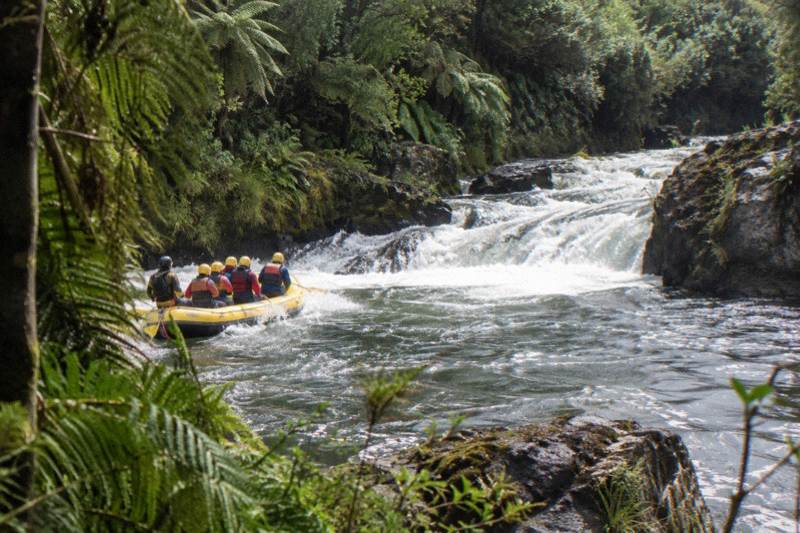
The name comes from the water. When a river drops steeply or squeezes through rocks, the current folds in on itself and turns white with aerated foam. That white water is what makes the ride bouncy and what gives the sport its grade numbers. Flat stretches between the rapids, give the crew a chance to catch their breath, spin the raft around, and look at the bush-covered banks.
Guided commercial rafting is the version most people meet. You join a trip, get kitted out, listen to a safety briefing, and paddle under a guide's instruction rather than steering your own craft. That structure is why a first-timer can run a river sold at Grade 5: the guide reads the water, the crew follows commands, and the operator supplies every piece of safety gear. It sits closer to a guided mountain walk than to solo kayaking in terms of who holds the responsibility.
The best way to understand the shape of a real trip is to look at one, and the Kaituna near Rotorua is the worked example for everything below.
What Happens On A Guided Trip From Check-In To Take-Out?
A guided trip moves through four distinct stages from check-in to take-out. You first arrive at the base, check in, and change into provided gear. Guides then run a safety briefing and paddle practice on flat water before the river run itself. Finally, back at the base, you warm up with hot showers and a debrief that wraps up the day. On the Kaituna, Kaituna Cascades asks guests to check in 15 minutes early and to bring swimwear and a towel; everything else, wetsuit, helmet, life jacket, fleece, booties and a splash jacket, is supplied by the operators. The run itself is 50 to 60 minutes on the water inside a roughly 2 hour experience, door to door, as the operator pages state it.
The briefing is where rafting stops being abstract. You learn where to sit, how to hold the paddle, and the handful of calls the guide will shout on the water: forward, back paddle, hold on, get down. You also learn what to do if the raft flips or someone falls out, which is a drilled routine rather than a scramble. Operators on the Kaituna describe the run as 14 rapids and drops with 3 waterfalls, so the briefing covers each of the big features in turn.
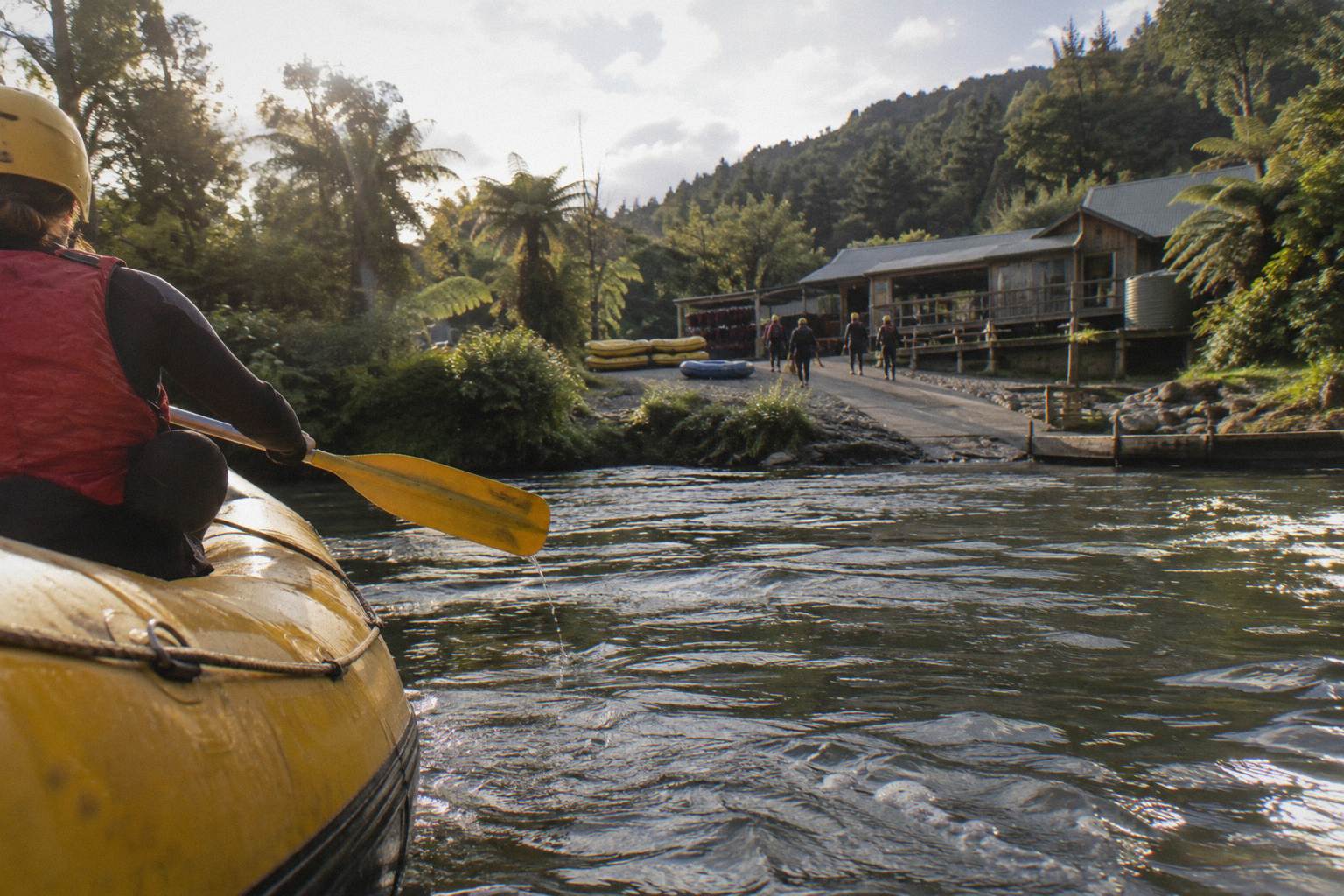
Then comes the put-in. The Kaituna operators base themselves at Okere Falls, about 23 minutes from Rotorua, and the Kaituna Cascades base on Okere Falls Road has free parking with direct river access, which means no shuttle bus between the office and the water. The raft goes in, the crew climbs in, and the guide positions the raft for the first rapid. From there the river does the talking: read the water, paddle the calls, brace through the drops.
The take-out is the quiet stretch at the end. The raft is carried out, gear comes off, and the base showers and changing rooms close the loop. One point worth knowing before you commit: the Kaituna River white water rafting with a free sauna product wraps a sauna session around that wind-down, and the booking page shows the price for your date.
What Do The Grade Numbers On A River Mean?
Rivers are graded on the International Scale of River Difficulty from 1 to 6, where 1 is calm moving water, 3 is the comfortable intermediate zone, 5 is the top end run commercially, and 6 is considered unraftable at normal flows. The scale is described in the Wikipedia whitewater entry. Higher numbers mean steeper drops, tighter lines, and less room for error, not bigger waves alone.
| Grade | What The Water Is Doing | Who It Suits |
|---|---|---|
| 1 | Moving water, small ripples, no obstacles needing manoeuvre | Anyone, including young children |
| 2 | Easy rapids with clear channels, small waves | Nervous first-timers, families |
| 3 | Moderate waves, some manoeuvring, possible drops | Fit first-timers with a guide |
| 4 | Powerful water, precise lines, constricted passages | Experienced or well-briefed crews |
| 5 | Long, violent rapids, big drops, hazards hard to avoid | Expert paddlers, or guided crews on run rivers |
| 6 | Considered unrunnable except at forgiving levels | Nobody commercially |
The Kaituna is sold as a Grade 5 run, and the operators' own blog explains the nuance: the rapids are Grade 4 and 5, building to the waterfall. In practice that means the trip gathers difficulty as it goes, so the early rapids teach the rhythm and the falls are the climax. A Grade 5 label on a guided commercial trip tells you the water is serious, and that the operator, the guide's line and the safety gear carry the responsibility.
Grades also explain why the same sport can be a family float or an adrenaline trip. The Rangitaiki product from Rotorua Adventures Kayak and Raft is listed as Grade 2 with a minimum age of 5 on that listing, which is a different day out entirely from a Kaituna descent. If the numbers are new to you, the sibling page on how rapid grades are explained for rafters works through each level with river examples.
How Hard Is A First Rafting Trip Really?
For most beginners in reasonable health, a first rafting trip is genuinely manageable rather than extreme. You paddle as part of a crew while a trained guide steers and calls instructions, so prior experience is not required. Operators also list fitness and swimming expectations on each product page, letting you pick a trip that matches your comfort and ability level. The Kaituna Cascades terms state a minimum age of 13 on that listing with a maximum weight of 120 kg, and the page advises the trip is not for pregnancy or heart conditions, and that a float test may be required. Those are operator rules, not generalities, and each product's listing carries its own version of them.
Physical effort is real but short. An hour of paddling in bursts, plus holding on through drops, leaves most arms tired rather than wrecked. The mental side is usually the bigger hurdle: the waterfall looks tall from above. Operators state Tutea Falls at 7 metres, by their own figure, and describe it as the highest commercially rafted waterfall in the world, a claim the operators themselves make and the Kaituna Cascades waterfall page sets out beside other rafted falls.
Swimming ability questions come up constantly, and the answer is operator-specific: Kaituna Cascades requires the ability to swim for its Wairoa product, and the Kaituna pages describe the briefing and float test. Rather than guess, the deeper treatment on whether you need to swim to go rafting takes each question in turn.
For a first-timer who wants the full picture, including what a flip or swim actually feels like procedurally, the white water rafting tips for first timers guide covers packing, timing and nerves. The short version: listen at the briefing, paddle when told, and grip the rope when the guide calls get down.
What Kit Is Supplied And What Do You Bring?
On Kaituna rafting trips, the operators supply nearly everything you need for warmth and safety, including a wetsuit, helmet, life jacket, fleece, booties and a splash jacket, as listed on the Rotorua Rafting and Kaituna Cascades pages. Beyond swimwear and a towel, there is very little you need to bring yourself. You bring swimwear to wear under the wetsuit and a towel for afterwards; that is the entire personal kit list, as Kaituna Cascades states it. Nothing in the setup asks you to own gear or buy specialist equipment for the sake of one trip on the water.
| Item | Who Supplies It | Why It Matters |
|---|---|---|
| Wetsuit | The operator | Warmth in the water, all year |
| Helmet | The operator | Head protection through drops and rocks |
| Life jacket | The operator | Buoyancy if you end up in the river |
| Fleece and splash jacket | The operator | Extra warmth layers in cold months |
| Booties | The operator | Grip and foot protection on wet rocks |
| Swimwear and towel | You | Base layer and the dry-off after |
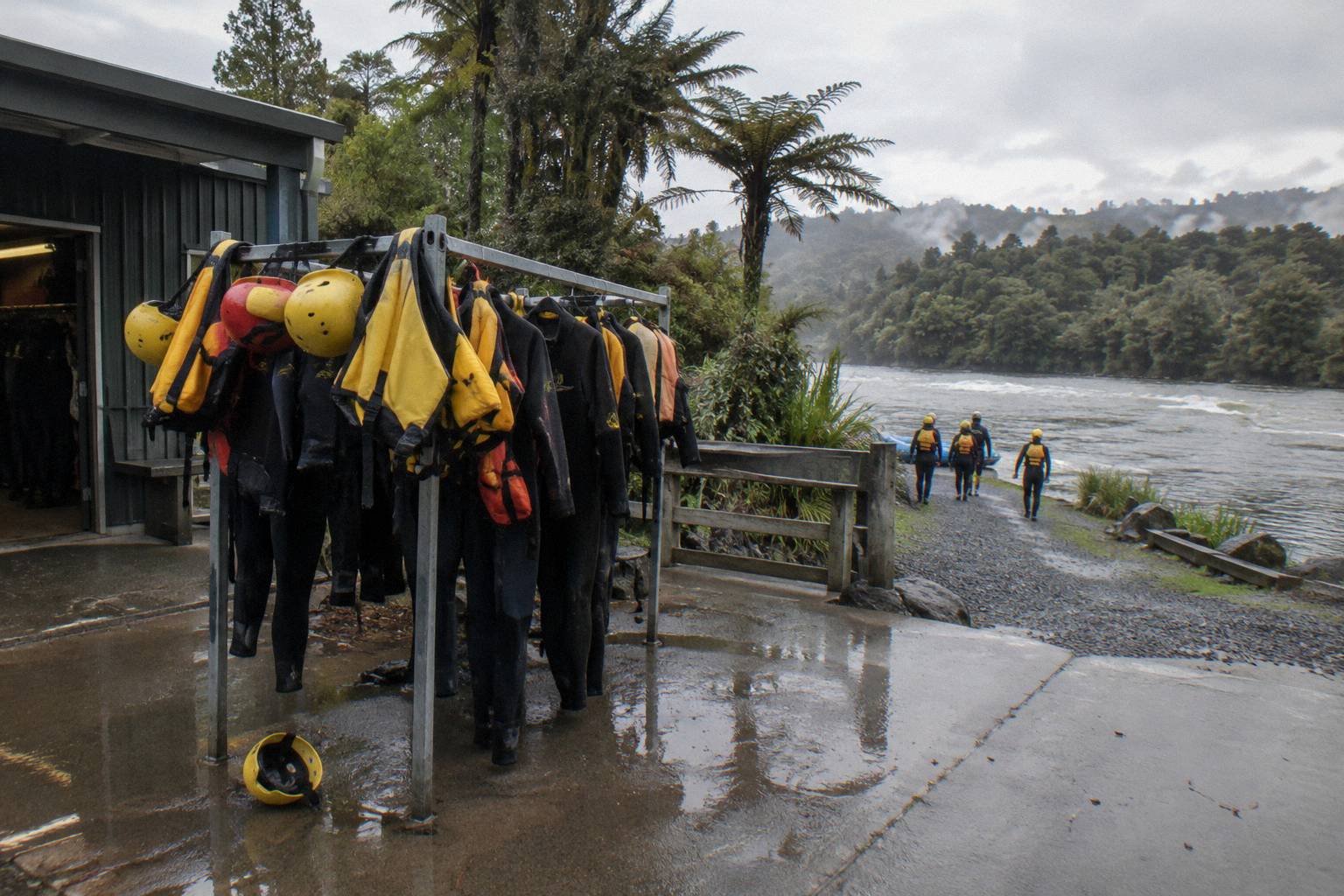
Water temperature shapes the kit. The Rotorua Rafting FAQ puts the Kaituna around 24 °C in summer and around 12 °C in winter, which is why the fleece layer exists and why winter trips feel noticeably serious. The river runs 365 days a year because council-controlled gates at the Lake Rotoiti outlet hold the flow steady, so the operators raft through every season and dress crews accordingly. The Wikipedia entry for Lake Rotoiti covers the lake and its outlet.
Footwear questions deserve their own flag: crocs and loose sandals come off in rapids, which is why the supplied booties matter. The sibling post on whether crocs are Ok for rafting answers it directly, and what to wear white water rafting handles the full outfit question by season.
Where Does The Kaituna Fit In?
The Kaituna is the flagship worked example of this sport near Rotorua: a roughly 2 hour guided experience with 50 to 60 minutes on the water, 14 rapids and drops, 3 waterfalls, and a 7 metre falls as the centrepiece, all accessed from bases at Okere Falls about 23 minutes from town. The Wikipedia entry for the Kaituna River covers the waterway itself, and the Okere Falls entry covers the place.
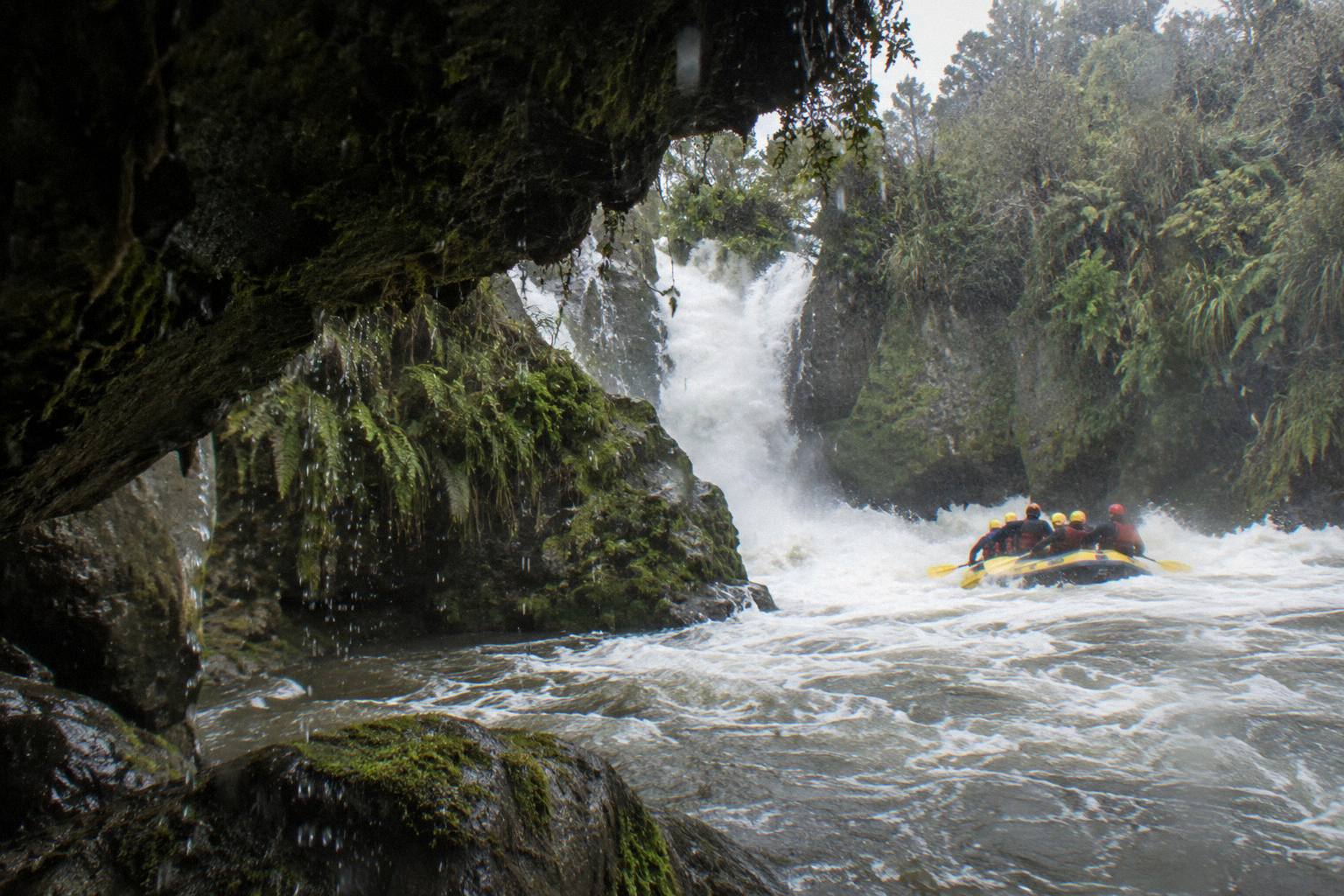
What makes the Kaituna unusual as a commercial river is reliability. Many rafting rivers depend on rainfall or scheduled dam releases, but this one flows through gates at the Lake Rotoiti outlet that keep it raftable every day of the year, per Kaituna Cascades. The operators run multiple departures daily; Kaituna Cascades lists 10:30, 12:30 and 2:30 with extra slots in summer, always subject to the booking calendar.
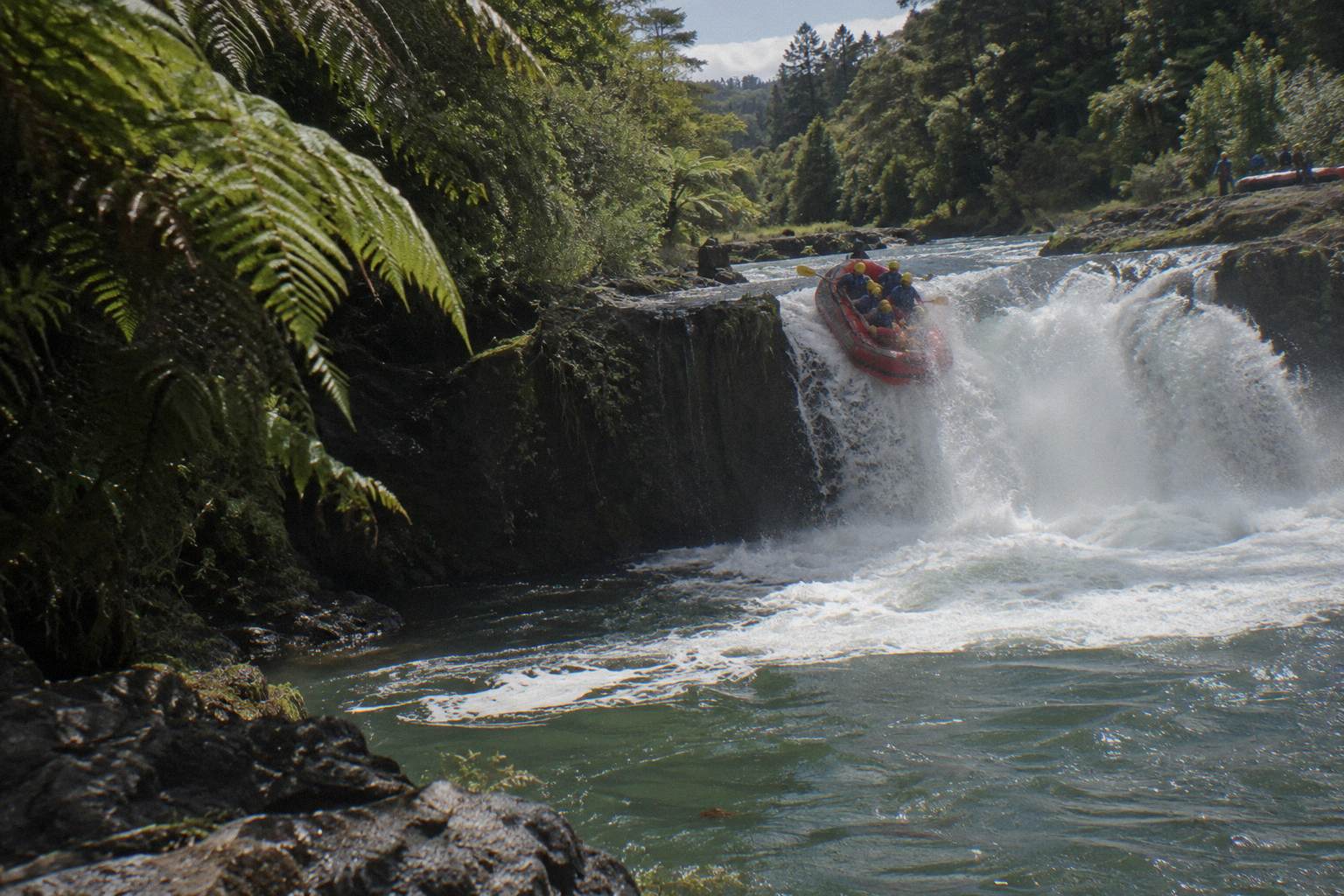
The run's shape is a build. Grade 4 and 5 rapids stack up towards the falls, the raft regroups in pools between features, and Tutea Falls arrives as the drop the whole trip is sold around. Operators describe it as the highest commercially rafted waterfall in the world, with the 7 metre figure stated by the operators themselves. The deep background lives on the Kaituna River rafting guide, and the operators' differences are compared on the Kaituna rafting operators compared page.
Other rivers in the region give contrast rather than competition. The Wairoa near Tauranga runs on selected Sundays only, when water is released, and the Rangitaiki offers a gentler graded day. Both have their own guides, and neither changes what the Kaituna is: a daily, waterfall-centred Grade 5 run minutes from a major tourist town.
How Much Does A Trip Cost And How Long Does It Take?
Kaitiaki Adventures lists two Kaituna trips, one from NZ$61 and one from NZ$139 with hotel transfers included; Rotorua Rafting offers a trip from NZ$74 and a 2h30 sauna run from NZ$135. A Grade 2 Rangitaiki day starts from NZ$125. All amounts are New Zealand dollars, prices vary by date and group, and each booking page shows the price for your date. Twin products are separate bookable trips, so their from-prices are never one comparison.
| Product | Operator | Duration | From Price | Age On That Listing |
|---|---|---|---|---|
| Kaituna River White Water Experience | Kaitiaki Adventures | 2.5h | NZ$61 | 13 |
| Free Sauna, 2h Kaituna Run | Rotorua Rafting | 2h | NZ$74 | 10 |
| Free Sauna, 2h30 Kaituna Trip | Rotorua Rafting | 2h30 | NZ$135 | 10 |
| Rafting With Hotel Transfers | Kaitiaki Adventures | 2h30 | NZ$139 | 13 |
| Grade 2 Rafting, 4h | Rotorua Adventures Kayak and Raft | 4h | NZ$125 | 5 |
Duration is mostly not water time. A 2 to 2.5 hour Kaituna product contains under an hour of rafting; the rest is check-in, changing, briefing and the post-trip wind-down. The Grade 2 Rangitaiki product flips that ratio, listing 4 hours overall with about 1.5 hours on the water. When you compare prices, compare the shape of the day, not just the figure.
The price question has a fuller treatment in the sibling post on how much white water rafting costs in Rotorua. At the decision point here, the simple move is to check the live price for your date before building the rest of your day around it.
Mistakes People Make Before Their First Raft
The common pre-trip mistakes are booking without checking the minimum age on the specific listing, assuming gear is your problem to buy, wearing the wrong footwear to the base, and treating the printed duration as water time rather than total experience length. Each of those is fixed in two minutes of reading, and each one otherwise costs a booking change or an uncomfortable hour on the water. Ages in particular differ between listings for the same river, so the number on the product you actually book is the only one that counts.
The list, briefly:
- Checking the age rule on a different product than the one booked. The Kaituna listings here carry minimum ages of 10 and 13 depending on the product.
- Showing up with sandals or crocs and expecting them to survive the rapids. The supplied booties exist for a reason.
- Budgeting only the ticket. Allow for swimwear and a towel, both on the bring list, and travel time to the base.
- Expecting two hours of paddling. The Kaituna run is 50 to 60 minutes on the water inside roughly 2 hours door to door.
- Skipping the fine print on health terms. Kaituna Cascades states its trip is not for pregnancy or heart conditions, and other operators carry their own terms.
One more, quieter mistake: waiting for perfect weather. The gates at the lake outlet keep the river running in rain or shine, and a wet day often means fewer crews and more water. The rainy day rafting page takes that question head on.
If the definition above has settled the what, the Kaituna River rafting guide handles the where in depth, and Rafting Rotorua holds the full picture across every river and product this site covers.
Common Questions About Getting On The River
What Is White Water Rafting?
It is paddling an inflatable raft down a river's turbulent rapids with a trained guide who steers and calls commands, graded by difficulty from 1 to 6. Near Rotorua the Kaituna run is sold as Grade 5 and packs 14 rapids and drops and 3 waterfalls into a roughly 2 hour experience.
Do You Need Experience To Go Rafting?
No. Guided commercial trips are built for first-timers: the guide reads the water and steers, and the crew paddles to commands given after a full safety briefing. Operators set their own age, weight and health terms on each product page, so read the listing you actually book.
What Should You Wear Rafting?
Bring swimwear and a towel; the operators supply wetsuit, helmet, life jacket, fleece, booties and a splash jacket on the Kaituna products. Avoid loose sandals and crocs, which come off in rapids, and anything you would mind losing to the river.
How Long Does A Rafting Trip Take?
On the Kaituna, about 2 hours for the whole experience with 50 to 60 minutes on the water. The Grade 2 Rangitaiki product runs 4 hours overall with about 1.5 hours on the water. Water time is always shorter than the door-to-door figure.
Is White Water Rafting Dangerous?
Guided commercial rafting sits inside a regulated safety regime: operators must pass a safety audit by a WorkSafe-recognised auditor and register with WorkSafe under the Adventure Activities Regulations 2016. Risks exist and vary with the river and grade, which is why the briefing, the supplied kit and the operator's terms matter.
Can Children Go White Water Rafting?
It depends entirely on the product. Kaituna listings here carry minimum ages of 10 or 13 depending on the listing, while the Grade 2 Rangitaiki product lists a minimum age of 5. Check the age on the exact product you plan to book before promising anyone a seat.