What Is The Best White Water Rafting In New Zealand?
A decision answer comparing the Kaituna, Wairoa and Rangitaiki rivers on grade, length, season and access, so you can pick the trip that fits you.
Deciding between New Zealand rafting rivers is really deciding between three of them, and all three sit within reach of the Kaituna River rafting collection that this site is built around. Each river answers a different question: do you want waterfalls, want the hardest rapids you can book, or want a trip a five year old can join? This page works through the criteria that actually decide the booking, grade, length, season and access, river by river, and closes with the mistakes that catch people out.
| Fact | Detail |
|---|---|
| Rivers compared | The Kaituna, the Wairoa and the Rangitaiki |
| Kaituna grade | Sold as Grade 5, with rapids the operator describes as Grade 4 and 5 building to the falls |
| Kaituna time on water | 50 to 60 minutes, about 2 hours for the whole trip |
| Wairoa season | Selected Sundays only, when the power company releases water |
| Rangitaiki family option | Grade 2 trip, minimum age 5 on that product, 4 hours with 1.5 hours on the water |
| Kaituna flow | Council-controlled gates at the Lake Rotoiti outlet keep it rafting 365 days a year |
| Currency | All amounts are New Zealand dollars |
For most visitors the best white water rafting in New Zealand is the Kaituna: it runs 365 days a year, packs 14 rapids and drops and 3 waterfalls into about 2 hours, and starts from NZ$135 per person on the Kaituna Cascades product. If you want maximum difficulty and can plan around a Sunday, the Wairoa is a Grade 5 release-day trip. Families with young children land on the Rangitaiki's Grade 2 product.
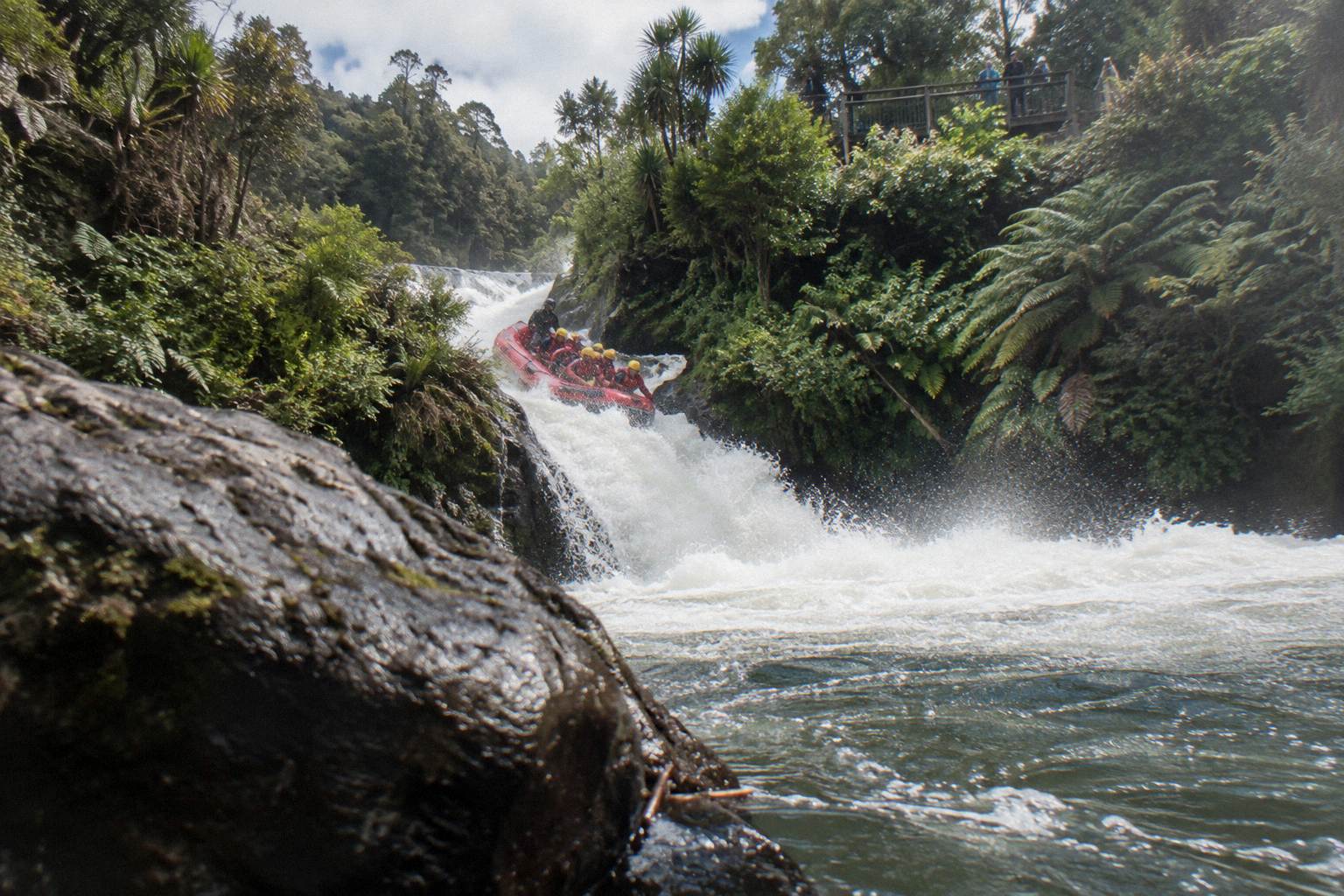
The Kaituna is the easiest of the three to fit into a trip, for practical reasons rather than hype. The put-in and base sit at Okere Falls, 23 minutes from Rotorua, so it slots into almost any Bay of Plenty itinerary. Kaituna Cascades says the run takes 50 to 60 minutes on the water inside about 2 hours for the whole experience, with 14 rapids and drops and 3 waterfalls, the biggest being Tutea Falls at 7 metres, the operators' figure. Operators describe Tutea Falls as the highest commercially rafted waterfall in the world, and Kaituna Cascades compares it against other rafted falls elsewhere that sit well below it.
The Wairoa is a different animal entirely. It runs on selected Sundays only, when the power company releases water down the river near Tauriko, Tauranga, and it demands planning: a 9:30am departure, the ability to swim, a minimum age of 13 and a maximum weight of 120 kg on that product. The Rangitaiki sits at the other end of the scale, with a Grade 2 product on this site that takes children from age 5 and a wilderness trip that Kaituna Cascades describes as Grade 4, running when river levels and group size allow.
If you are weighing a first rafting trip against a harder one elsewhere in the country, the wider context is in the New Zealand white water rafting overview, and the safety question is covered separately in whether white water rafting is safe for beginners.
For a quick side by side, these are the three trips this site features most often, the Kaituna waterfall run, the Wairoa Grade 5 release trip and the Rangitaiki Grade 2 float:
How Do The Kaituna, Wairoa And Rangitaiki Compare?
On grade, the Kaituna is sold as Grade 5 but its rapids are described as Grade 4 and 5; the Wairoa is a straight Grade 5; the Rangitaiki splits into a Grade 2 family product and a wilderness trip Kaituna Cascades describes as Grade 4. The Kaituna runs 365 days a year from Okere Falls, 23 minutes from Rotorua; the Wairoa exists only on release Sundays; the Rangitaiki meets about an hour south-east towards Murupara.
Grade first, in more detail. The Kaituna is sold as Grade 5, or Class V, on the International Scale of River Difficulty as Wikipedia sets it out, though the Kaituna Cascades blog says the rapids themselves are Grade 4 and 5, building to the falls. The Wairoa is a straight Grade 5. The Rangitaiki depends entirely on the product: the Rotorua Adventures Kayak and Raft listing is Grade 2, minimum age 5, while Kaituna Cascades describes its own trip as a Grade 4 wilderness run, and each operator's figure belongs to its own trip.
Season matters more than most visitors expect. The Kaituna flows 365 days a year because council-controlled gates at the Lake Rotoiti outlet, as the Wikipedia entry on the lake explains, hold the flow. The Wairoa only flows for rafting when the power company releases water, on Sundays the operator lists. The Rangitaiki's wilderness trip runs when levels and group size allow.
| Criterion | Kaituna | Wairoa | Rangitaiki |
|---|---|---|---|
| Grade | Sold as Grade 5, rapids described as Grade 4 and 5 | Grade 5 | Grade 2 on the Rotorua Adventures listing; Kaituna Cascades describes its trip as Grade 4 |
| Time on the water | 50 to 60 minutes | About 2 hours on 5 km | 1.5 hours on the Grade 2 product |
| Whole trip | About 2 hours | 3 to 4 hours overall | 4 hours on the Grade 2 product |
| Season | 365 days a year, per the operator | Selected Sundays on water releases | When levels and group size allow, for the wilderness trip |
| Access | Base at Okere Falls, 23 minutes from Rotorua | Meet at 1376 State Highway 29, a farm paddock near Tauriko, Tauranga | Meets at 33 Waipa State Mill Road or a central pickup, about an hour south-east towards Murupara |
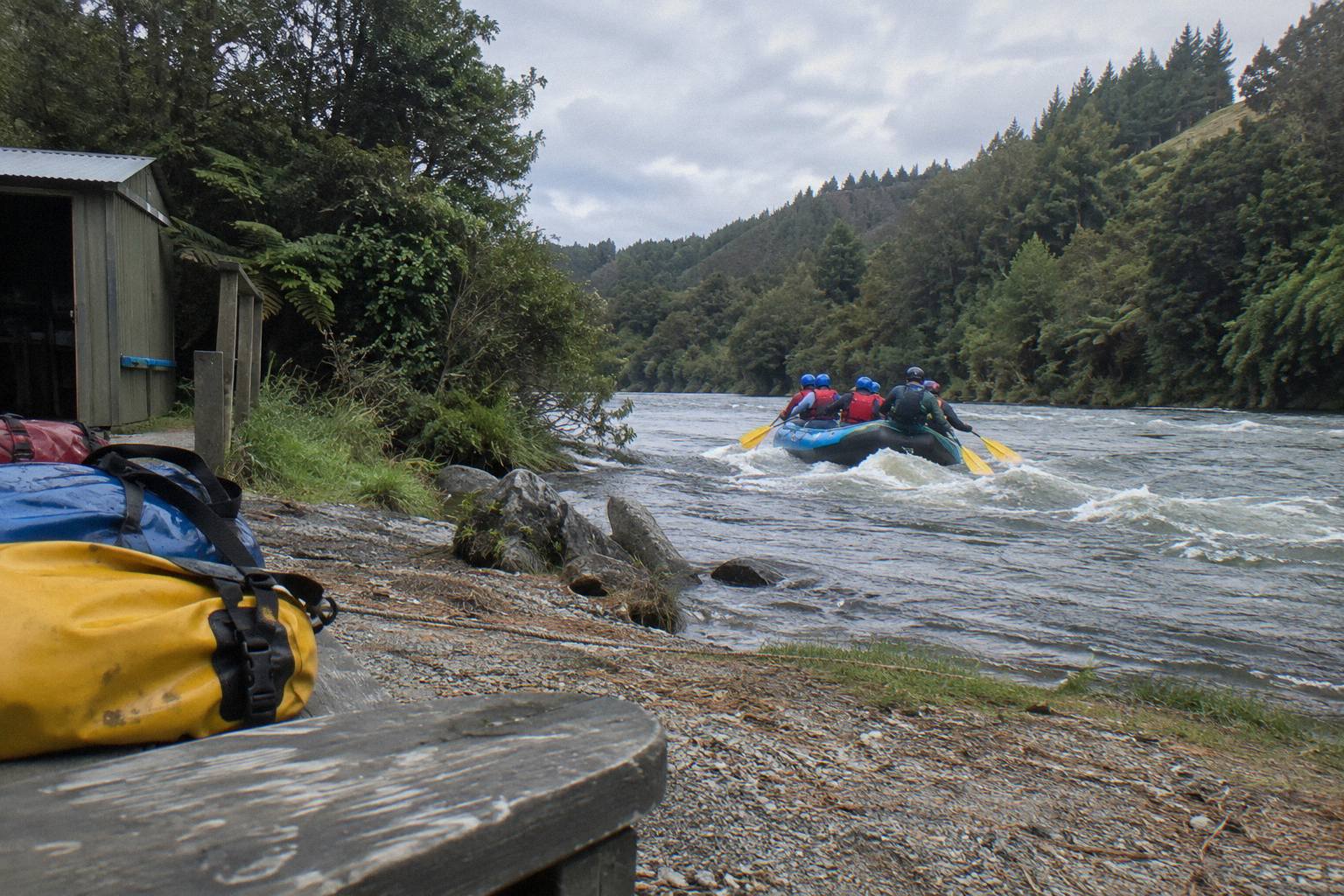
Access shapes the day more than grade does for many groups. A Kaituna trip is a half-day outing from Rotorua, the city the Wikipedia entry profiles, with a base you can drive to. The Wairoa means committing a Sunday morning to a farm paddock meeting point near Tauranga. The Rangitaiki wilderness trip has no self-drive option at all, per the operator, with pickup built in.
The Kaituna Cascades trip down Tutea Falls is the one most worth a hard look if waterfalls are the draw, and you can check the Kaituna Cascades Tutea Falls trip or check availability for your dates.
Why Can You Raft The Kaituna Any Day Of The Year?
The Kaituna runs every day of the year because council-controlled gates at the Lake Rotoiti outlet regulate the flow, so there is no release calendar and no waiting season, which is the single biggest practical difference between it and every other serious rafting river in the region. That reliability, plus a 2 hour total experience, is why the Kaituna is the default answer for visitors with fixed travel dates.
Most rafting rivers depend on rainfall or dam releases, and that decides when they exist. The Kaituna does not, in the way that matters for booking: the gates hold a workable flow through every season, which is why an operator can run a winter schedule at all. The Wikipedia entry for the Kaituna River covers the watercourse itself, and the entry on Okere Falls covers the falls and the settlement the trips launch from.
Flow still changes character. The Kaituna Cascades river-conditions page reported high spring flows, in the 500s on the control gates, with the water at 19 degrees C in that update, and described the big waterfall as more powerful but slightly less tall and vertical. That is a snapshot of one season, not a standing figure, but it shows what the page is for: check it, or ask the operator, when you book.
The river's temperature span is wide too: Rotorua Rafting's FAQ puts the water at about 24 degrees C in summer and about 12 °C in winter, and operators supply wetsuits, helmets, life jackets, fleece, booties and a splash jacket, so winter trips are a kit question rather than a survival one. What to wear on the day is covered in full in what to wear white water rafting.
What Makes The Wairoa A Grade 5 Release-Day Trip?
The Wairoa is the hardest rafting you can book from the listings: a Grade 5 run of about 2 hours on 5 km of river near Tauriko, Tauranga, that only happens on the Sundays the power company releases water, departing 9:30am, meeting in a farm paddock at 1376 State Highway 29, with a minimum age of 13, a maximum weight of 120 kg and a requirement that you can swim.
That is a long list of conditions, and every one of them is real. The release-day structure means the trip does not exist on a Saturday, however much you want it to. The operator lists the release Sundays on its own page, and the booking calendar holds the dates, so check both rather than assuming a weekend works. The Wairoa product on this site is Kaituna Cascades' 5 hour Grade 5 trip, from NZ$190 per person, rated 5.0 from 470 reviews on that product.
The whole outing runs 3 to 4 hours overall, against about 2 hours on the water, so it is a bigger slice of a day than a Kaituna trip. The Wikipedia entry for Tauranga gives the surrounding area its context. If the release calendar does not line up with your stay, the full rundown, including how the meeting point works, is in the Wairoa River rafting guide.
What Does The Rangitaiki Offer A Family Group?
For a family, the Rangitaiki's appeal is the Grade 2 product: a 4 hour trip with 1.5 hours on the water, minimum age 5 on that listing, from NZ$125 per person, run by Rotorua Adventures Kayak and Raft. Kaituna Cascades separately describes its own Rangitaiki trip as a Grade 4 wilderness run meeting 9:30am with pickup only, about an hour south-east towards Murupara, running when levels and group size allow.
The two products are easy to blur and worth keeping apart. The Grade 2 listing is the one that takes young children, and it is the gentlest rafting on this site. The Kaituna Cascades wilderness trip is a different operator's product at a different grade, with different terms, so match the product to your group rather than the river name. The age rules across all rivers are pulled together in white water rafting with kids and minimum ages.
The Wikipedia entry for the Rangitaiki River covers the watercourse. What the river gives a family is a float with scenery rather than drops, which makes it the right answer when the question is "can the whole boat stay together" rather than "how big is the biggest rapid".
Which Trip Fits Which Sort Of Paddler?
Match the river to your appetite and your calendar: fixed dates and a taste for waterfalls point to the Kaituna, a planned Sunday and Grade 5 confidence point to the Wairoa, and young children or a nervous first-timer point to the Rangitaiki Grade 2 product. A first-timer who wants to be pushed, but not to a release-day schedule, still lands on the Kaituna.
Beginners often worry the Kaituna's Grade 5 tag prices them out. The operators do not frame it that way: the run is sold to first-timers every day, the minimum ages on the Kaituna products run from 10 to 13 depending on the product, and the Kaitiaki Adventures listing without transfers starts from NZ$61 per person while the Rotorua Rafting 2 hour sauna product starts from NZ$74 per person. Twin products on the same river are separate bookable trips with their own prices, so treat each card on its own figures. The beginner question is unpacked properly in white water rafting for beginners.
| If your group is | The trip that fits | Why |
|---|---|---|
| First-timers with fixed dates | A Kaituna product | Runs 365 days a year, about 2 hours door to river to door |
| Confident paddlers who can pick a Sunday | The Wairoa Grade 5 | Release-day Grade 5 water, about 2 hours on the river |
| A family with children from age 5 | The Rangitaiki Grade 2 product | Gentle water, minimum age 5 on that listing, 1.5 hours on the water |
| A group wanting scenery over adrenaline | The Rangitaiki wilderness trip | Kaituna Cascades describes a Grade 4 wilderness run with pickup included |
| Anyone who wants the waterfall photo | A Kaituna product | 3 waterfalls in 50 to 60 minutes on the water, including the 7 metre drop |
One more angle worth knowing: the same river can be rafted or sledged, and sledging is a separate way down the Kaituna for people who want to be in the water rather than above it. It is a different craft, a different guide ratio and a different kind of scare, so treat it as its own decision rather than a swap-in.
What Trips People Up Before You Book?
The mistakes that cost people their trip are calendar mistakes and product mistakes: booking a weekend for the Wairoa when it only runs on release Sundays, mixing up the two Rangitaiki products at very different grades, assuming every Kaituna product has the same minimum age, and showing up without swimwear and a towel. Each of these is avoidable in about two minutes of checking.
The calendar mistake first. The Wairoa exists only on the Sundays the power company releases water; the operator lists those dates and the booking calendar confirms them. If your stay does not include one, the Kaituna is the year-round answer, and it is why this site leans on it as the default. The Rangitaiki wilderness trip has its own version of this: it runs when river levels and group size allow, so ask the operator before building a day around it.
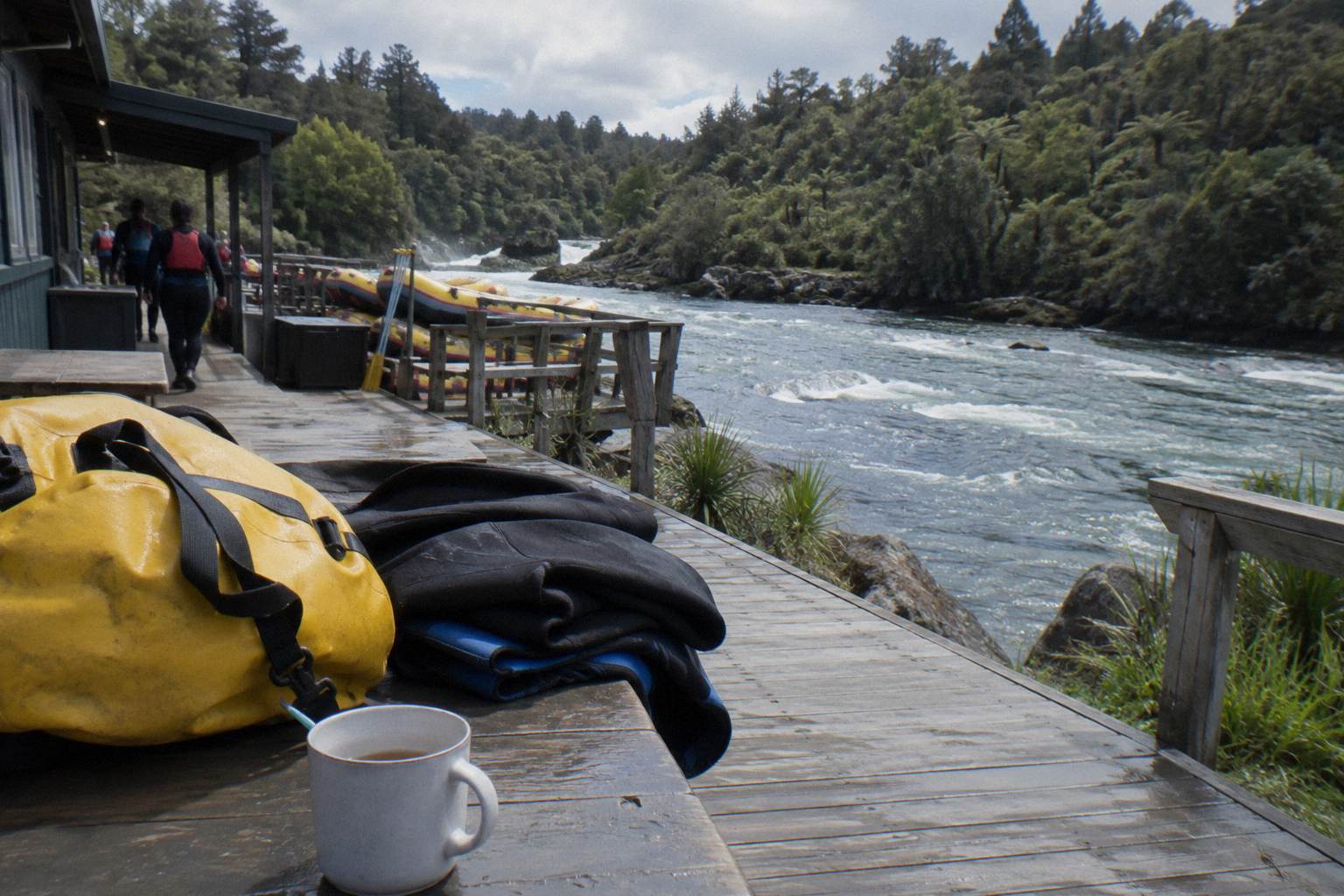
The product mistake: the Rangitaiki Grade 2 product and the Kaituna Cascades Grade 4 wilderness trip are different operators' trips on the same river, with different meeting points and different ages. Booking one while intending the other is a real risk when you skim. On the Kaituna, minimum ages differ between products, from 10 on one listing to 13 on others, so check the age on the exact product your family plans to book. Ages and weights are per product, and they change between twins.
The kit mistake is the smallest but most common: operators supply the technical gear, and what you bring is swimwear and a towel, per the operator's own advice. The full list, including what to leave behind, is in what to bring white water rafting.
Prices vary by date and group, and the booking page shows the price for your date, so check the live price for your exact day before comparing trips against each other. Rafting Rotorua keeps the whole listed side by side for exactly that job.
Common Questions About Choosing A New Zealand Rafting Trip
What Is The Best White Water Rafting In New Zealand?
For most visitors the Kaituna: it runs 365 days a year, holds 14 rapids and drops and 3 waterfalls in about 2 hours, and starts from NZ$135 per person on the Kaituna Cascades product. The Wairoa is the harder Grade 5 trip on release Sundays, and the Rangitaiki Grade 2 product is the family pick.
Which Is Harder, The Kaituna Or The Wairoa?
Both are sold as Grade 5, but the Wairoa is the more demanding commitment: you must be able to swim, it runs about 2 hours on 5 km of river, and it only exists on release Sundays. The Kaituna is sold to first-timers daily.
Can A Beginner Raft The Kaituna?
Yes, the Kaituna products are sold to first-timers, with minimum ages of 10 to 13 depending on the product. Operators supply wetsuits, helmets, life jackets, fleece, booties and a splash jacket, and the run is 50 to 60 minutes on the water.
What Is The Minimum Age For The Rangitaiki?
Five on the Rotorua Adventures Kayak and Raft Grade 2 listing, which is a 4 hour trip with 1.5 hours on the water. The Kaituna Cascades wilderness trip on the same river is a separate product with different terms.
When Does The Wairoa Run?
Selected Sundays only, when the power company releases water, with a 9:30am departure. The operator lists the release Sundays and the booking calendar holds the dates, so check both before planning around it.
Do You Need To Swerve Winter To Raft Near Rotorua?
No. The Kaituna runs 365 days a year, with the water at about 24 degrees C in summer and about 12 °C in winter, and operators supply the thermal kit. Winter schedules run fewer departures per day, per the operator's season page.