Is Rafting In Rotorua Safe For Beginners?
A first-timer's pre-trip checklist for rafting around Rotorua: the WorkSafe register, age and weight terms, health conditions, the float test, what kit is supplied, and how to choose a first trip.
Beginners start on the Kaituna more often than on any other river around Rotorua, and the whole category of Kaituna River rafting tours is built around short, guided, half-day trips that a fit first-timer can join. The question is rarely whether a beginner can go. It is whether that beginner has checked the right things before booking, because the terms that decide whether a trip is safe for you specifically, the operator's registration, the age and weight limits, the health rules and the swim requirement, all live on operator pages rather than in a single rulebook.
| Fact | Detail |
|---|---|
| Safety regime | Adventure activity operators must pass a safety audit by a WorkSafe-recognised auditor and register with WorkSafe, under the Adventure Activities Regulations 2016 |
| Public register | The WorkSafe adventure activities register is searchable online |
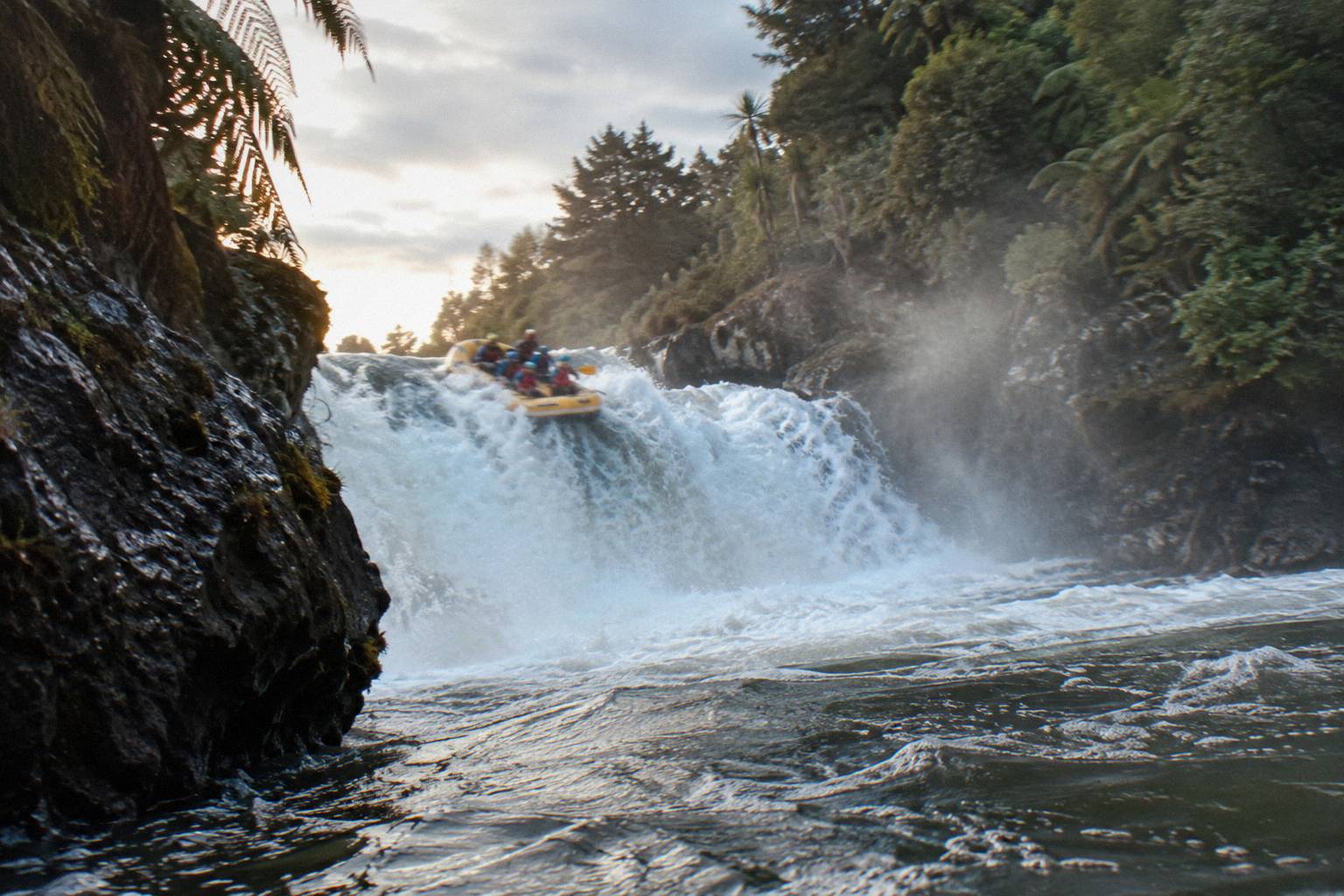
| Kaituna run | About 50 to 60 minutes on the water inside a roughly 2 hour experience, with 14 rapids and drops and 3 waterfalls, per Kaituna Cascades |
| Signature drop | Tutea Falls, 7 metres by the operators' figure, described by operators as the highest commercially rafted waterfall in the world |
| Typical minimum ages | 13 on the Kaituna Cascades and Kaitiaki Adventures listings, 10 on the Rotorua Rafting listings on this site, per listing |
| Weight limits | Maximum 120 kg on Kaituna Cascades trips, maximum 130 kg on Rotorua Rafting trips |
| Kit commonly supplied | Wetsuits, helmets, life jackets, fleece, booties and a splash jacket on the Rotorua Rafting and Kaituna Cascades pages |
Yes, in the ordinary case. A beginner with average fitness, swimming ability and no excluded health condition can join a guided commercial trip on the Kaituna or the Rangitaiki, and thousands do. What makes it safe for you is not bravado but paperwork and matching: a registered operator, terms you actually fit inside, honest answers about pregnancy, heart conditions and swimming, and a trip size chosen to match your first-time nerves rather than someone else's highlight reel.
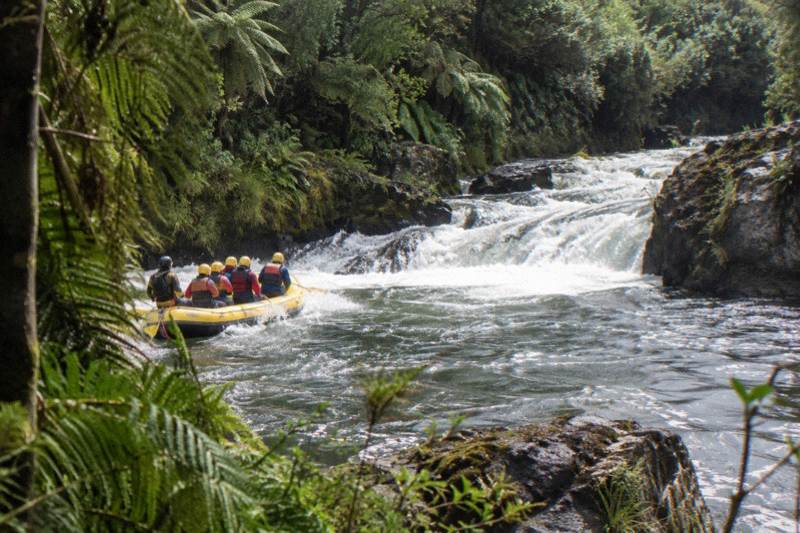
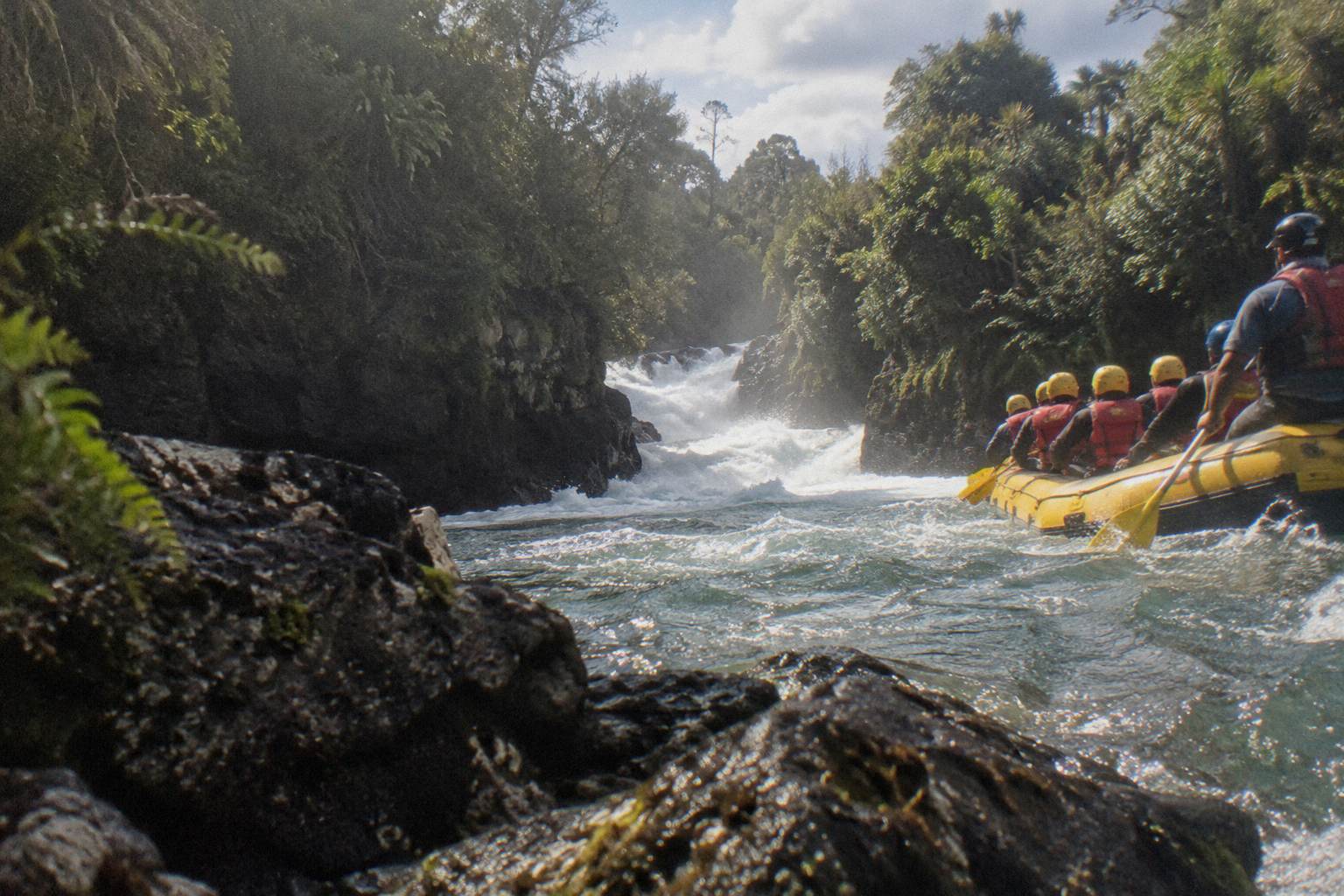
The Kaituna is sold as a Grade 5 run, which sounds alarming until you understand how a commercially guided trip works. A professional guide sits in the back of the raft and calls every paddle stroke; you supply power and body position, not judgement. The run itself is short, about 50 to 60 minutes on the water per Kaituna Cascades, with 14 rapids and drops and 3 waterfalls packed into a compact gorge. The river runs 365 days a year because council-controlled gates at the Lake Rotoiti outlet hold the flow steady, so a first-timer is not gambling on recent rain. For a fuller treatment of the river's specific character, read whether the Kaituna is safe to raft, which carries the conditions detail; the action list below is what you do before you ever reach the water.
The safety frame around every commercial trip here is legal, not voluntary. Under the Adventure Activities Regulations 2016, operators must pass a safety audit by a WorkSafe-recognised auditor and register with WorkSafe before they can legally take paying customers into rapids. That regime is what separates a commercial Kaituna trip from a private one, and you can verify an operator's registration yourself in about two minutes. That verification is item one on the checklist.
What Should You Check On An Operator Before You Book?
Check three things: that the operator appears on the WorkSafe adventure activities public register, that its age, weight and health terms match your group, and that its booking page states what kit is supplied and what you must bring. The register is the one item no marketing copy can substitute for, because registration is the legal proof the operator has passed a safety audit by a WorkSafe-recognised auditor.
The register itself is public and searchable at the WorkSafe adventure activities register. Type in the operator's trading name, confirm the registration is current, and confirm the activities listed include the rafting you are buying. The wider regime is explained on the WorkSafe adventure activities pages, which set out who must register and what the audit covers. This is not a formality for the operator's file drawer: it is the mechanism by which commercial rafting in New Zealand is held to a common safety standard, and it applies to the operators on the Kaituna just as it does to heli-skiing or caving elsewhere in the country.
After the register, read the operator's own terms rather than a summary. The operators here publish them clearly: Kaituna Cascades asks customers to check in 15 minutes early, and Rotorua Rafting allows GoPro mounts and offers an optional paid pickup, with the price of that pickup shown on the booking page. If a term matters to your group and you cannot find it, ask the operator before booking rather than assuming. Every figure that follows in the next section is operator-stated, and each one is a genuine gate: a rafter outside the weight limit is not a brave rafter, they are a rafter the operator must turn away at the base.
| Pre-Booking Check | Where To Look | What Settles It |
|---|---|---|
| Operator registration | The WorkSafe adventure activities public register | Current registration covering rafting |
| Minimum age | The product's own listing | The age figure stated on that listing |
| Maximum weight | The operator's terms page | Your weight inside the stated limit |
| Health conditions | The operator's terms or booking form | Honest declaration at booking |
| Kit supplied | The operator's product page | The supplied list on that product |
| Departure time | The booking calendar | The time shown for your date |
What Are The Age, Weight And Health Terms?
Ages and weights are per listing and per operator, so read the product you are actually booking. Kaituna Cascades sets a minimum age of 13 with ages 10 to 12 joining halfway along the run, a maximum weight of 120 kg, and excludes pregnancy and heart conditions, with a float test possible. Rotorua Rafting's listings show a minimum age of 10 on those listings and a maximum weight of 130 kg. Kaitiaki Adventures sets a minimum age of 13.
Those numbers differ because each operator writes its own risk assessment and its own terms, which is exactly why a blanket claim about "the minimum age for rafting in Rotorua" is always wrong in some direction. The Rotorua Rafting figure of 10 is a listing figure on those products, not an operator-wide rule; the same operator's own site material discusses a different threshold, so treat 10 as applying to the specific listings that state it. Kaituna Cascades handles younger rafters differently again: ages 10 to 12 join the run halfway, past the biggest drops, which is a sensible structure for a family with mixed ages and nerves.
Health terms deserve the same honesty. Kaituna Cascades states its trips are not for pregnancy or heart conditions, and a float test may be required, meaning the guide can ask you to swim a short distance in moving water in your kit before the trip to confirm you are water-confident. Declaring a condition is not about being excluded for fun; it is about the guide making real decisions in a rapid with real consequences. Families working through ages and readiness in more depth will find the minimum age considerations for family rafting worth a read before choosing a product.
| Term | Kaituna Cascades | Rotorua Rafting (listings) | Kaitiaki Adventures |
|---|---|---|---|
| Minimum age | 13, ages 10 to 12 join halfway | 10 on those listings | 13 on its listings |
| Maximum weight | 120 kg | 130 kg | Ask the operator |
| Health exclusions | Not for pregnancy or heart conditions | Ask the operator | Ask the operator |
| Float test | May be required | Ask the operator | Ask the operator |
| Check-in | 15 minutes early | Ask the operator | Free hotel pickup on all four of its listings |
What Kit Is Supplied On The Trip?
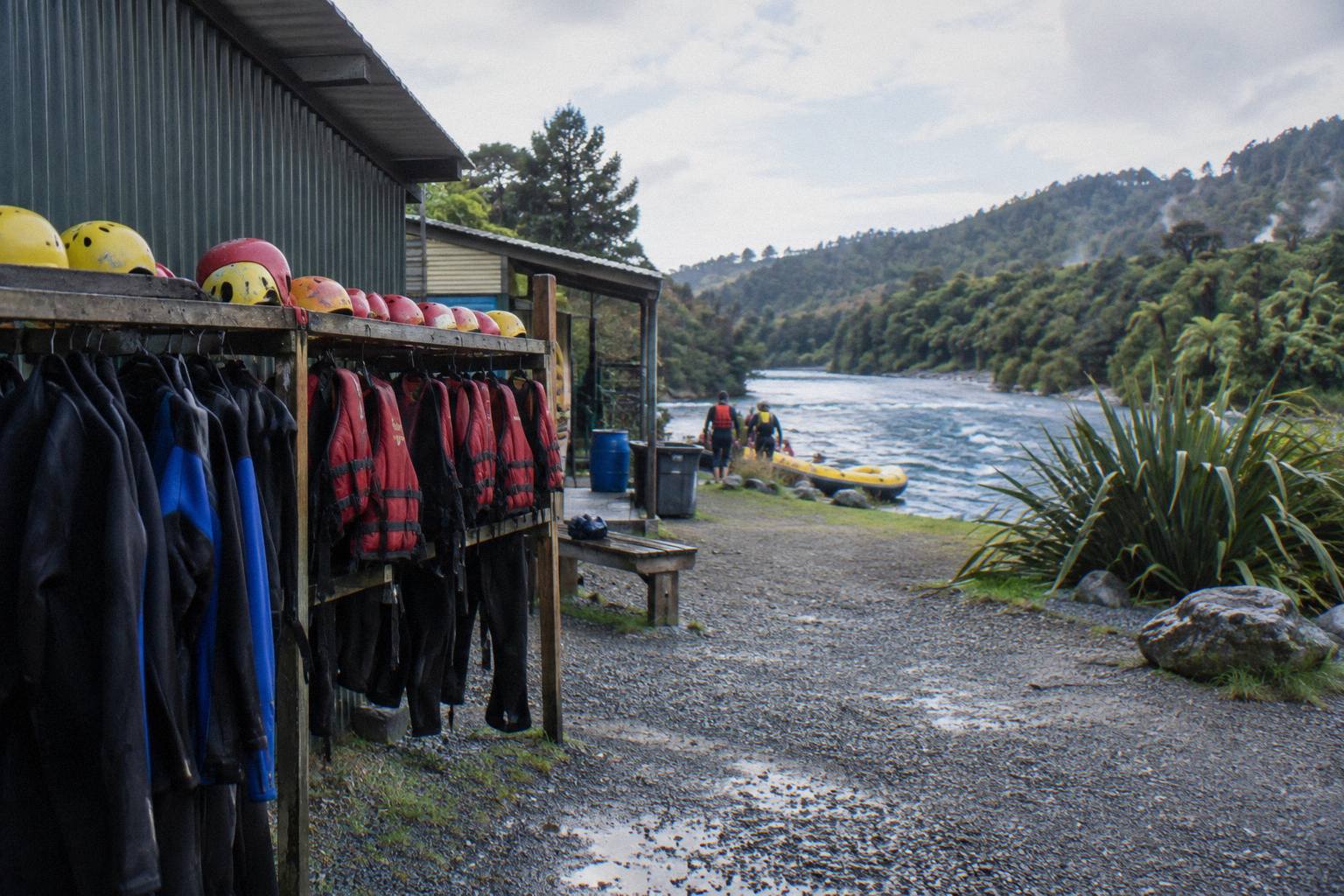
On the Rotorua Rafting and Kaituna Cascades pages, the supplied list covers the safety-critical items: wetsuits, helmets, life jackets, fleece, booties and a splash jacket. Kaituna Cascades asks customers to bring swimwear and a towel. What a beginner should take from that list is that the helmet and life jacket are not optional extras on a commercial trip, they are standard issue, and the wetsuit layers are there because the water runs cold even in summer.
The water temperature on the Kaituna sits around 24 degrees C in summer and about 12 °C in winter, per the Rotorua Rafting FAQ, which is why fleece and a splash jacket appear in the kit list rather than being left to the customer. A wetsuit plus fleece plus booties is the standard layering chain that keeps a swimmer, and swimmers do happen on first trips, functional rather than shocked. The kit is included in the trip price on the pages that list it; what is not supplied is the personal side, swimwear worn under the wetsuit and a towel for afterwards, which Kaituna Cascades names explicitly.
Two honest gaps to handle by asking rather than assuming. First, the sauna: free sauna access belongs to the Rotorua Rafting and Rotorua Ziplines products that name it, and the Kaituna Cascades and Kaitiaki pages do not state it, so do not book either of those expecting a sauna; the post-trip sauna detail covers which products include it. Second, Kaitiaki Adventures' kit list should be read on its own product pages rather than inferred from its competitors. Neither gap is a safety problem; both are expectation problems, and expectations are best set before the booking is paid.
A Shorter First Trip Or A Bigger One: Which Suits You?
Match the trip to your confidence, not your holiday schedule. A nervous first-timer is better served by a Grade 2 Rangitaiki trip, where the Rotorua Adventures Kayak and Raft product takes children from age 5 and spends 1.5 hours on the water inside a 4 hour day. A confident first-timer who can swim and wants the headline drop goes straight to a Kaituna product.
The genuinely gentle option in the region is "Rangitaiki Rafting Grade 2" by Rotorua Adventures Kayak and Raft: Grade 2 water, minimum age 5, 4 hours overall with 1.5 hours on the water, from NZ$125 per person, rating 4.9 from 7 reviews. Grade 2 means small waves, clear lines and a forgiving environment, the step most instructional programmes worldwide start on. The trade-offs are real: it is a longer day out for less adrenaline, and its review pool is small, so weigh the rating accordingly. It suits families with young children and adults whose main question is "will I panic", and it answers that question gently.
The Kaituna products are the confident-first-timer route. "Rotorua Rafting: Kaituna River White Water Rafting & Free Sauna" runs 2h30, minimum age 10 on that listing, from NZ$135 per person, rating 5.0 from 2,191 reviews, with the free sauna afterwards on that product. Beginners join these trips every day of the year, and the short, intense format means a nervous half-hour is over quickly. For someone who wants the waterfall but would rather not drive, Rafting With Hotel Transfers by Kaitiaki Adventures runs 2h30 with free hotel pickup on that product, minimum age 13, from NZ$139 per person, rating 5.0 from 823 reviews; check the live price for your date on the booking page. A middle path for families with mixed ages is a Kaituna product where younger rafters join halfway, or splitting the group between two products.
| First Trip Style | Product (short name) | Water Grade | Minimum Age | Time On Water |
|---|---|---|---|---|
| Gentle family day | Grade 2 Rafting, 4h | Grade 2 | 5 | 1.5 hours |
| Kaituna with sauna | Free Sauna, 2h30 Kaituna Trip | Grade 5 | 10 on that listing | About 50 to 60 minutes |
| Kaituna with transfers | Rafting With Hotel Transfers | Grade 5 | 13 | About 50 to 60 minutes |
| Halfway join option | Kaituna Cascades products | Grade 5 | 10 to 12 join halfway | Partial run |
All amounts on this site are New Zealand dollars, they vary by date and group, and the booking page shows the price for your date.
What Actually Happens At Check-In?
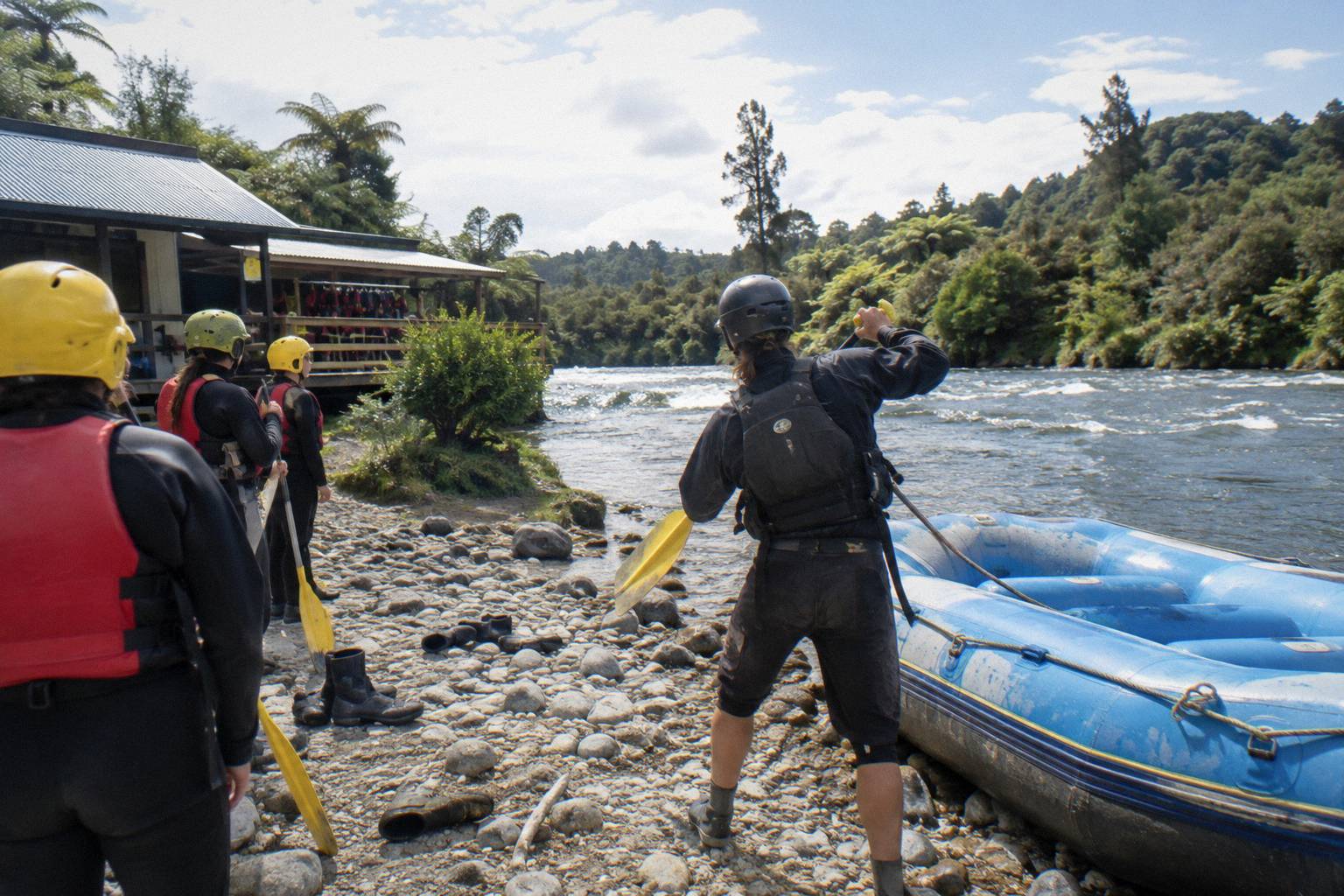
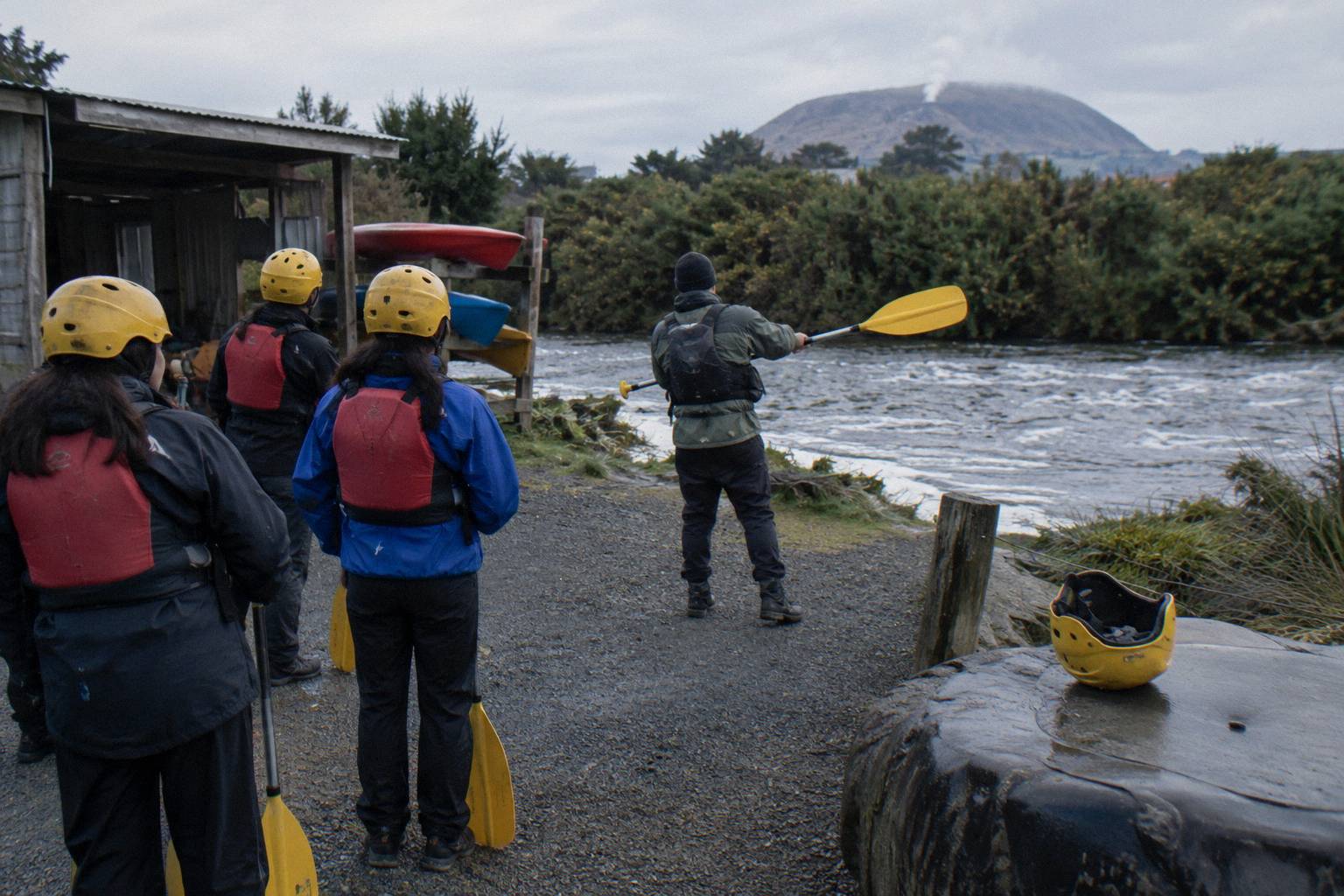
You arrive at the base, are fitted with the kit, receive a safety briefing covering paddle commands and what to do in a swim, and, on Kaituna Cascades trips, may be asked to complete a float test in moving water before the run. Kaituna Cascades asks customers to check in 15 minutes early. Nothing in the process requires prior skill; it requires listening.
The briefing is the part beginners most underestimate and then most appreciate. Paddle commands are simple, forward, back, left, right, down, and the guide drills them on flat water before the first rapid. The swim instruction, what to do if you end up outside the raft, is given before you need it, and the standard response is feet up and downstream, let the life jacket do its job, and hold the paddle. Knowing the shape of that moment in advance is genuinely reassuring, and the deeper mechanics are covered in what happens if you fall out of the raft, including why a well-fitted lifejacket and helmet matter most in that moment.
Departure clocks belong to each operator's season. Kaituna Cascades runs 10:30, 12:30 and 2:30 daily, with 8:30 and 4:30 added in summer. Rotorua Rafting's winter schedule, 1 May to 31 Aug, runs three trips a day at 10, 12 and 2, expanding from 1 Sep to 30 Apr to trips every 30 minutes on demand. Treat those as the shape of the day rather than a promise: the booking calendar holds every time, so confirm yours there.
Arrival logistics are the other pre-trip decision. The bases sit around Okere Falls, roughly 20 to 23 minutes from central Rotorua depending on the operator, and Kaituna Cascades' base at 18 Okere Falls Road has free parking and direct river access. If driving or a rental shuttle is a hassle, the Kaitiaki transfer products fold pickup into the trip, which removes the single most common source of pre-trip stress, arriving late to a departure you cannot join. Whatever you choose, the departure clock belongs to the booking calendar, so confirm your time there rather than from a seasonal average.
Where The Confidence Really Comes From
For most beginners the deciding factor is not the river grade but the guide ratio, the kit quality and the operator's processes, which is why the register check matters more than the brochure. The second deciding factor is your own honesty: declaring a heart condition, admitting a weak swim, or asking for the halfway join for a nervous 11 year old are all normal requests. The unsafe beginner is the one who hides something.
Every operator-stated term in the checklist exists because it once mattered. The weight limits matter because a life jacket and a rescue both behave differently at the extremes; the pregnancy and heart condition exclusions exist because cold water and exertion are real physiological loads; the float test exists because a guide needs to know who in the raft cannot swim before the first drop, not after. Answering these questions honestly on the booking form or at check-in is not a barrier to the trip, it is the mechanism that lets a guide take a mixed-ability raft down a Grade 5 run at all. The regime behind the guide, audits, registration, the general practice of commercial rafting worldwide, is built on that same chain of disclosure.
It also helps to know what the environment is doing. The Kaituna runs year-round because the gates at the Lake Rotoiti outlet control the flow, so a beginner in April is not rafting a flood leftover from a storm, and operators adjust to conditions; the Kaituna Cascades river conditions page publishes flow updates through the seasons. Rain does not cancel the ordinary Kaituna trip in the way newcomers expect, a point unpacked in whether rain cancels a rafting trip. For anyone still weighing the general risk picture rather than the personal one, the overall white water rafting safety guide covers the regime in full, and Rafting Rotorua exists to make exactly these checks easy.
What Trips People Up Before You Book
The recurring mistakes are simple and avoidable: booking on a price alone without checking the register, assuming one operator's age or weight terms apply to all of them, expecting a sauna on a product that does not include one, arriving without swimwear and a towel, and picking a Grade 5 run for a companion whose real preference was gentle. Each is a five-minute fix on the operator's page.
The price-only mistake deserves a special mention because Rotorua's listed contains twin products: the same river experience sold as separate bookable products with their own cards and their own figures. A from-price on one twin tells you nothing about the other, and comparing them as if they were one product with two prices leads to confident, wrong conclusions. Read the product you are booking, on its own terms, with its own minimum age and its own inclusions. The same discipline applies to reviews: a 5.0 from a handful of reviews and a 5.0 from over two thousand are different kinds of information, and what to check in rafting reviews covers reading them well.
The companion mismatch is the quiet one. Groups routinely contain one enthusiast and several polite followers, and the enthusiast books the waterfall. If anyone in your party would honestly rather not, the halfway-join structure on Kaituna Cascades, or the Grade 2 Rangitaiki day, exists precisely for that person. Choosing it is not a downgrade; it is the difference between a family story retold for years and a family story never mentioned again. Ask the question at booking, when the answer still changes something. Every one of these fixes is cheaper to make before payment than at the base on the morning.
Common Questions About Beginner Rafting Trips
Is Rafting In Rotorua Safe For Beginners?
Yes, for beginners who match the operator's terms: registered operators, supplied safety kit, guided rafts and honest health disclosure make commercial trips here routine for first-timers. The Kaituna is sold as Grade 5 but guided; the Rangitaiki Grade 2 product is the gentler entry.
Do You Need To Be Able To Swim?
You need to be water-confident and able to declare your real swimming ability, and Kaituna Cascades states a float test may be required. Life jackets are standard issue on the products that list their kit. The full answer is on the operator pages and in the do-you-need-to-swim guidance on this site.
What Is The Minimum Age For A First Trip?
Per listing: 13 on the Kaituna Cascades and Kaitiaki Adventures listings, with ages 10 to 12 joining halfway on Kaituna Cascades, and 10 on the Rotorua Rafting listings on this site. The Rangitaiki Grade 2 product takes children from age 5.
What Happens If You Fall Out Of The Raft?
Guides brief the swim response before the first rapid: feet up, downstream, let the life jacket hold you up, and follow the guide's call. The recommendation that matters most is a well-fitted lifejacket and helmet, both standard on the products that list their kit.
Is The Kaituna Too Hard For A First-Time Rafter?
Not for a confident, honest first-timer: the run is 50 to 60 minutes on the water with a guide calling every stroke, and it runs 365 days a year on controlled flow. A nervous beginner or a young family has the Rangitaiki Grade 2 option or the halfway join instead.
What Should You Bring On Your First Trip?
Swimwear to wear under the wetsuit and a towel, per Kaituna Cascades. Wetsuits, helmets, life jackets, fleece, booties and a splash jacket are supplied on the Rotorua Rafting and Kaituna Cascades pages; check the Kaitiaki product pages for their own kit wording.