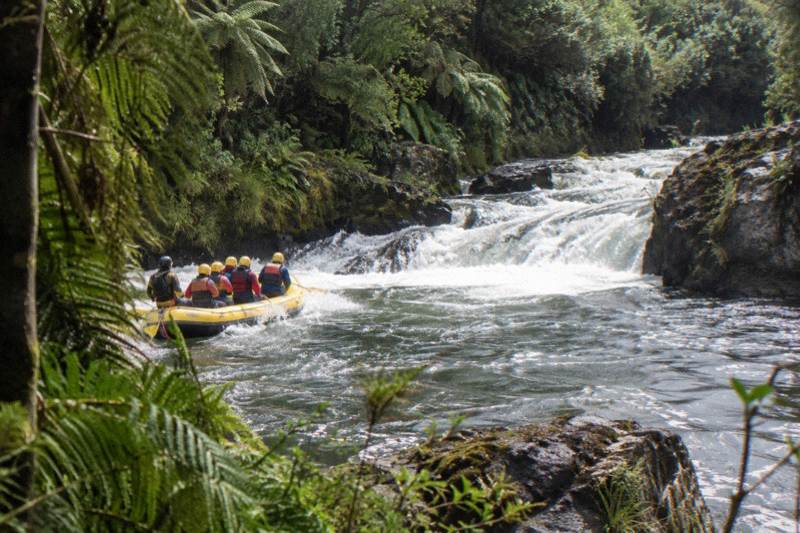
What Country Has The Best White Water Rafting?
What makes a country good for white water rafting, and how New Zealand's Kaituna, Wairoa and Rangitaiki rivers meet every test: grade range, reliable flow, scenery, guided infrastructure and the WorkSafe safety regime.
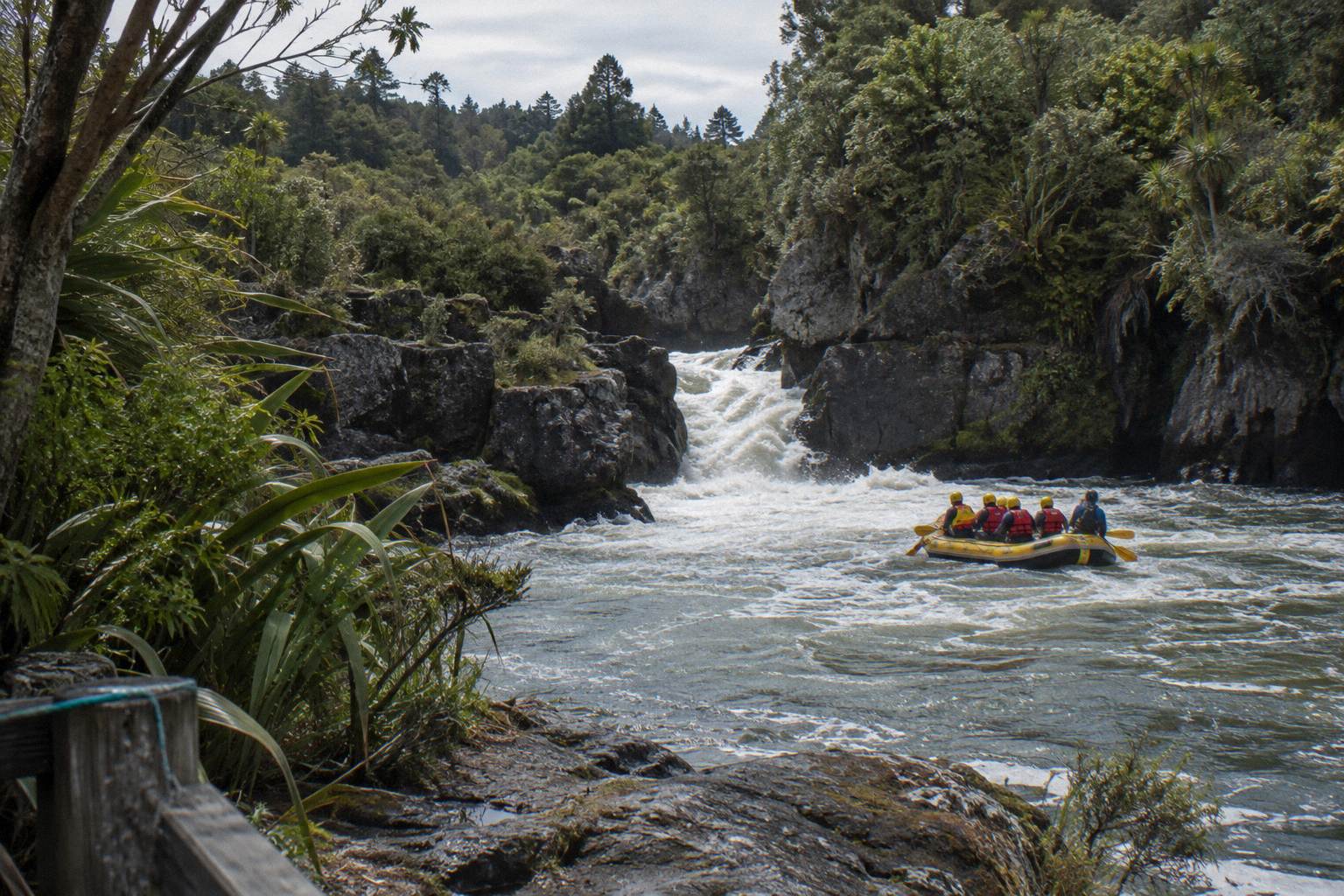
Rafting around Rotorua starts with the Kaituna River rafting trips hub, where every bookable run on the river sits side by side. The question of which country does rafting best is bigger than one river, but the answer comes down to the same handful of tests everywhere, and the Kaituna, the Wairoa and the Rangitaiki are a useful worked example of a place that passes them all.
| Fact | Detail |
|---|---|
| The headline river | The Kaituna, put-in at Okere Falls, 23 minutes from Rotorua |
| Signature drop | Tutea Falls, 7 metres by the operators' figure |
| Grade range on offer | Grade 2 on the Rangitaiki to Grade 5 on the Kaituna and Wairoa |
| Year-round flow | Council-controlled gates at the Lake Rotoiti outlet keep the Kaituna rafting 365 days a year |
| Time on the water | About 50 to 60 minutes on the Kaituna, about 2 hours all up |
| Safety regime | Adventure Activity Operators must pass a WorkSafe-recognised safety audit and register with WorkSafe |
| Example price | The Kaituna Cascades Originals trip, from NZ$135 per person |
No sourced ranking of countries exists in the material behind this page, so no country gets a trophy here. What can be said with confidence is what makes rafting in a country good: a spread of grades, water that runs on schedule, scenery worth the trip, professional guiding infrastructure, and a safety regime with teeth. Measured against those five tests, the rivers around Rotorua make a strong case. The rest of this page shows exactly how. The scope stays tight: only three rivers are covered below, the Kaituna, the Wairoa and the Rangitaiki, and no other country's rivers are named or characterised anywhere in the comparisons. Any comparison you build yourself should use the same tests rather than a slogan, because a destination that passes three of the five is a very different trip from one that passes all five.
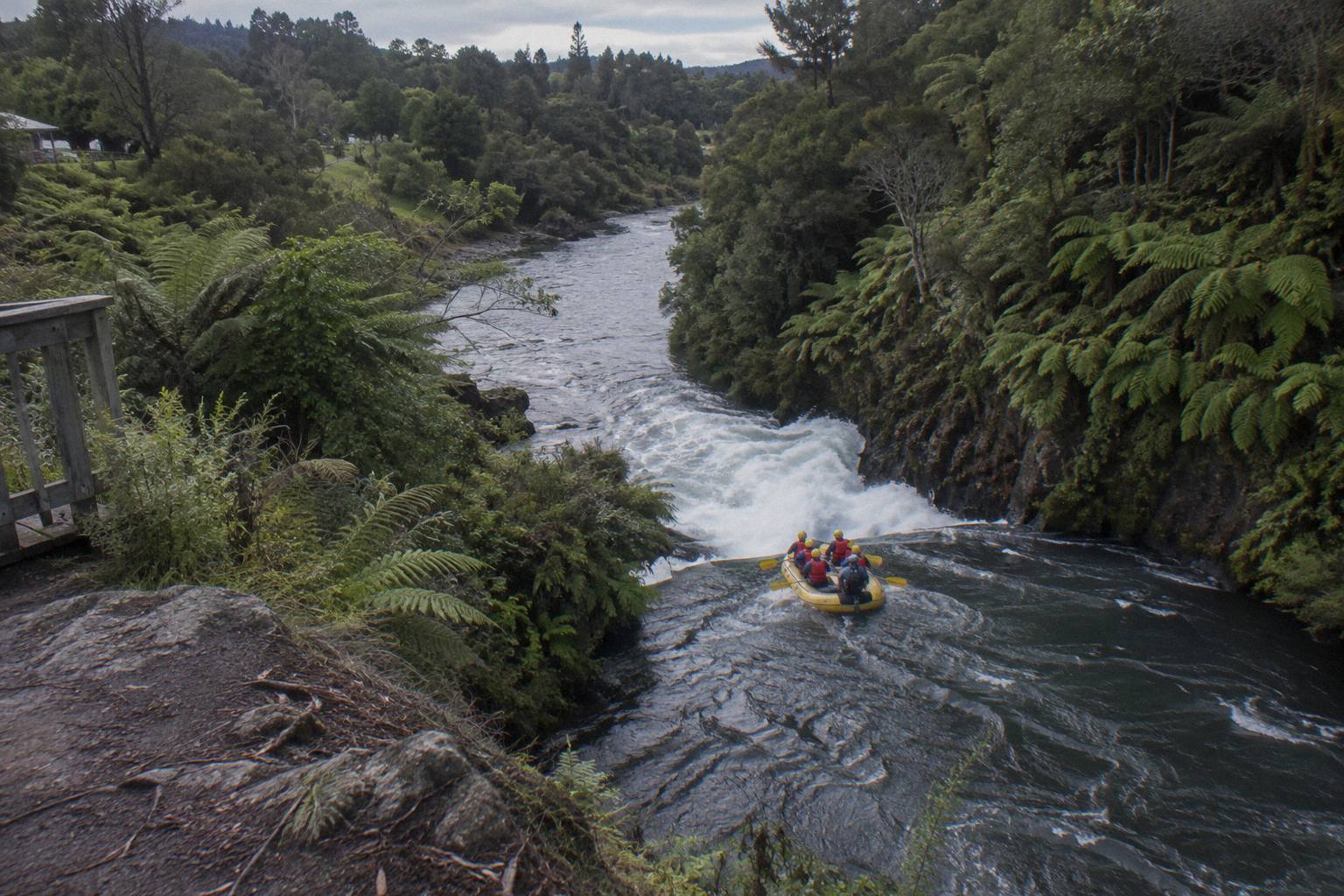
The five tests come straight from how the sport works. Grades describe difficulty on the International Scale of River Difficulty, covered in the Wikipedia entry on whitewater, and a good rafting country gives you several of them within reach of one base, so beginners and confident paddlers can share a day. Reliable flow matters just as much: a river that only runs after rain, or on a handful of release days, caps how easily you can actually book. Scenery is the third test, then guided infrastructure, operators with bases, gear, bookings and transport, and finally regulation, the legal scaffolding that makes a commercial trip auditable rather than merely advertised.
The Kaituna answers the flow test in an unusual way. As the Wikipedia entry for the Kaituna River explains, the water drains from Lake Rotoiti through a steep gorge at Okere Falls, and council-controlled gates at the lake outlet hold the flow at a raftable level every single day of the year. That is rarer than it sounds. Many famous rafting rivers shut for months, or wait for rain, or depend on dam releases a few days a season. Here, Kaituna Cascades states plainly that the gates keep the river rafting 365 days a year, which turns a rafting trip from a gamble into something you can plan a holiday around.
If the five tests have sold you on the Kaituna already, these three trips are where most readers start:
What Actually Makes A Rafting Country Good?
Five tests do the work: grade range, flow reliability, scenery, guided infrastructure and safety regulation. Grade range decides who can come; flow reliability decides when; scenery decides whether the calm stretches earn their place; infrastructure decides whether booking, gear and transport are simple; regulation decides whether the operator's safety claims have been checked by anyone outside the company. A country strong on one or two of these can still be worth visiting, but the best rafting countries clear all five, and they do it close together geographically, which is what lets a mixed group share one holiday.
| Test | Why It Matters | Kaituna Answer | Wairoa Answer | Rangitaiki Answer |
|---|---|---|---|---|
| Grade range | Matches trip to ability | Sold as Grade 5, rapids Grade 4 and 5 building to the falls | Grade 5 | Different operator's listing sold as Grade 2 |
| Flow | Can you book any day | Gates hold flow 365 days a year | Selected Sundays on power-company releases | Runs when levels and group size allow |
| Time on water | Value per trip | 50 to 60 minutes, about 2 hours total | About 2 hours on 5 km, 3 to 4 hours overall | 1.5 hours on water in a 4 hour trip |
| Access | Getting there simply | Okere Falls base, 23 minutes from Rotorua | Meet at 1376 State Highway 29 near Tauranga | Meets 9:30am at 33 Waipa State Mill Road |
| Regulation | Checked safety | WorkSafe adventure activities regime | Same regime | Same regime |
Grade range deserves a longer look, because it is the test travellers most often underweight. A country with only extreme water forces beginners onto trips above their level or leaves them on the bank. The cluster around Rotorua spans the whole useful spectrum: a Grade 2 family float on the Rangitaiki with a minimum age of 5 on that listing, Grade 3 and 4 water for the confident middle, and two genuine Grade 5 runs, the Kaituna's drop-punctuated gorge and the Wairoa's release-day big water. The Wikipedia entry on rafting frames the sport as paddling an inflatable raft through whitewater of varying difficulty, which is exactly why spread of difficulty, not one spectacular rapid, defines a destination's quality.
Flow reliability is the quiet test. Kaituna Cascades' river conditions page, in its spring update, reported high flows in the 500s on the control gates with the water at 19 degrees C, and noted the big waterfall running more powerful but slightly less tall and vertical at that level. That is what a managed river looks like: the operator can describe today's water because the gates set it, and a booking three weeks out is not a prayer for rain. The Wairoa is the counterpoint that proves the point, it runs on selected Sundays when the power company releases water, which is spectacular but calendar-bound, and the dates for the season ahead are on the operator's page rather than assumed.
Scenery and infrastructure finish the job. The Kaituna's gorge at Okere Falls is bush-clad and steep, and the whole character of the place is covered in the Wikipedia entry for Okere Falls. Infrastructure is equally concrete: three operators run bases within a short drive of Rotorua, gear is supplied, and two listings include hotel pickup. Kaitiaki Adventures' transfer product includes free hotel pickup and runs from NZ$139 per person, rated 5.0 from 823 reviews, which removes the rental-car question entirely for visitors staying in town.
How The Kaituna Meets Each Test
The Kaituna passes all five tests in one two-hour trip. Sold as Grade 5, with rapids the operator's blog calls Grade 4 and 5 building to Tutea Falls, it flows daily year-round on gated lake water through a steep bush gorge, has established operator bases at Okere Falls, and operates under the WorkSafe regime. The run covers 14 rapids and drops and 3 waterfalls in roughly 50 to 60 minutes on the water. Those numbers come from Kaituna Cascades' own pages, and they describe the most compact high-grade experience in the region: nowhere else can you book a Grade 5 waterfall run in the morning and be back in Rotorua before a late lunch.
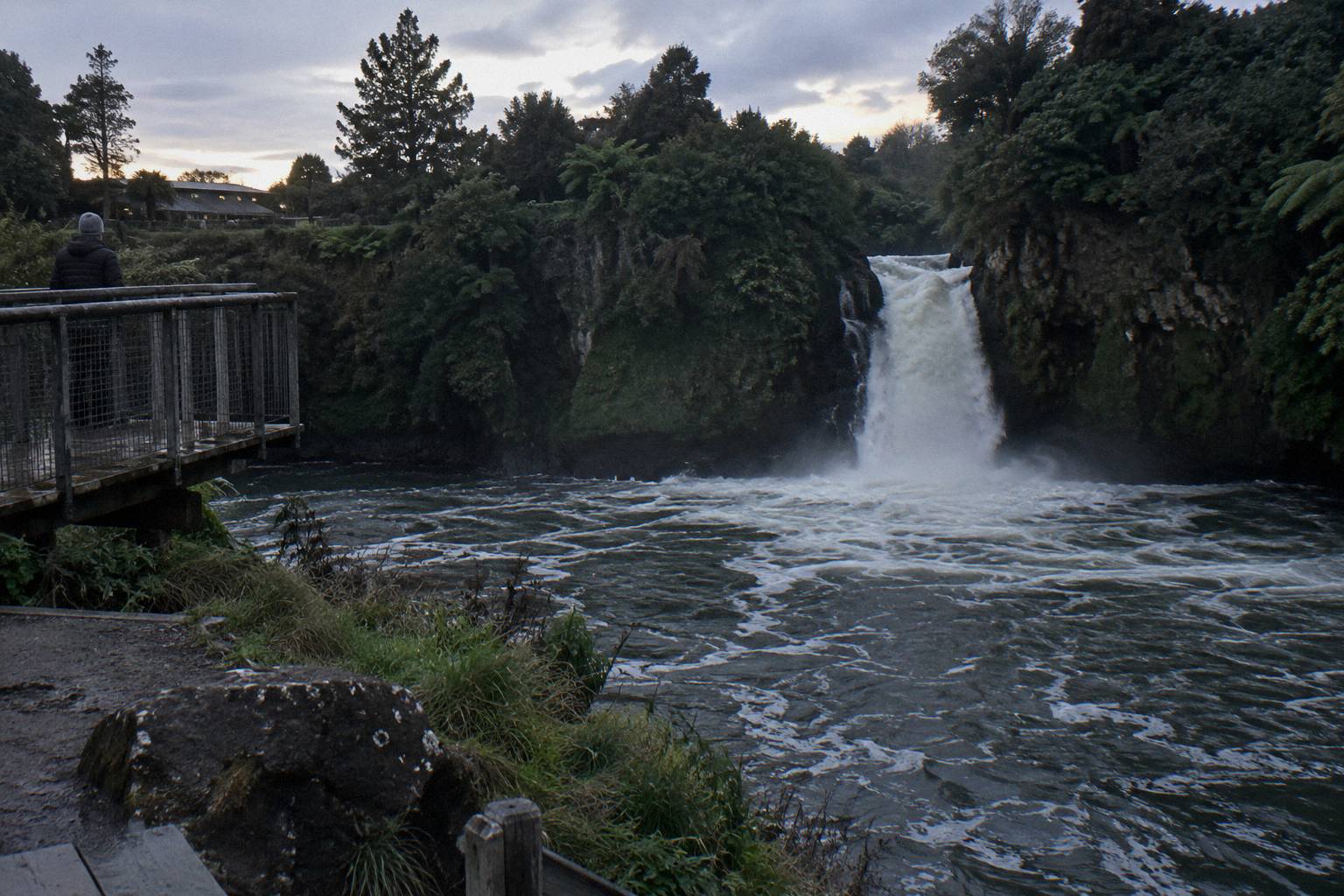
The signature trip for many readers is the Kaituna Cascades trip known as The Originals, the Tutea Falls run, rated 5.0 from 1,385 reviews and from NZ$135 per person, with a minimum age of 13 on that listing. The put-in and base sit at Okere Falls, 23 minutes from Rotorua, with free parking and direct river access, so the logistics collapse to a short drive and a 15 minute early check-in. Tutea Falls itself is 7 metres by the operators' figure, and operators describe it as the highest commercially rafted waterfall in the world, their comparison table lists Agers Falls at 5.5 m, Sweets Falls at 4.3 m and Husum Falls at 3.7 m below it. Treat that superlative as the operators' claim, which is what it is, and treat the 7 metres as the number to remember.
Which Kaituna Trip Should You Actually Book?
It comes down to age, transport and appetite for extras. Confident paddlers 13 and over book The Originals, from NZ$135, 5.0 from 1,385 reviews. Families with a 10 or 12 year old are held to listings that allow it: the Rotorua Rafting sauna products carry a minimum age of 10 on those listings, and Kaituna Cascades lets 10 to 12 year olds join halfway. Anyone without a car should take Kaitiaki Adventures' transfer listing, from NZ$139 with free hotel pickup. A tighter budget points to the 2 hour sauna run at from NZ$74. All amounts here are New Zealand dollars, prices vary by date and group, and each booking page shows the price for the date you want.
The twin-product wrinkle matters when you compare. Each operator here has two separate bookable cards for essentially the same water, listed on different booking pages with their own prices, and those are separate products, never one trip with two prices. The Rotorua Rafting sauna pair illustrates it: the 2h30 version costs from NZ$135 and rates 5.0 from 2,191 reviews, while the 2 hour version costs from NZ$74 and rates 4.9 from 490 reviews. Both include the sauna, both carry a minimum age of 10 on their listings, and the right choice depends on whether the extra half hour matters to your day. Check the live price on both before deciding, because the gap moves with the date.
Wondering where a Kaituna trip fits in your whole day?
Flow Reliability: Why The Kaituna Runs 365 Days A Year
The Kaituna's dependability is engineered, not lucky. Council-controlled gates at the Lake Rotoiti outlet regulate how much lake water enters the river, and Kaituna Cascades states that these gates keep the river raftable 365 days a year. That single fact changes what a rafting destination is: instead of chasing a season or a rainfall forecast, you pick a date, any date, and the water is there. The practical upside is that winter rafting is simply a normal booking here rather than a specialist expedition.
The lake behind the system is covered in the Wikipedia entry for Lake Rotoiti in the Bay of Plenty, which explains how the river drains it through the Okere Falls gorge. The conditions still move, and that is worth understanding rather than fearing. The river-conditions update noted spring flows in the 500s on the control gates with water at 19 degrees C, and described Tutea Falls as more powerful but slightly less tall and vertical at high flow. High water makes some drops smoother and some waves bigger; the operators adjust the line and the trip goes. Water temperature ranges from about 24 °C in summer to about 12 °C in winter by Rotorua Rafting's FAQ figures, and operators supply wetsuits, helmets, life jackets, fleece, booties and splash jackets, so the season changes how you dress, not whether you go.
Departure frequency follows the same dependability. Rotorua Rafting runs three trips a day in winter, 1 May to 31 August, at 10, 12 and 2, then moves to six or more daily from 1 September to 30 April, departing about every 30 minutes on demand. Kaituna Cascades runs 10:30, 12:30 and 2:30 daily with 8:30 and 4:30 added in summer. Those are the operators' stated times for their own seasons, and the booking calendar holds every confirmed slot, so treat the times as the shape of the day rather than a promise.
The Wairoa And The Rangitaiki: Grade Range And Choice
The Wairoa near Tauranga serves up Grade 5 big water on selected Sundays when the power company releases flow, with about 2 hours on 5 km of river inside a 3 to 4 hour trip, a minimum age of 13 and a 120 kg maximum. The Rangitaiki covers the gentle end, sold as Grade 2 with a minimum age of 5, four hours with 1.5 on the water. Between them, a family with a five year old and a group of adrenalin hunters can both be on water the same weekend, which is precisely the grade-range test from earlier made real.
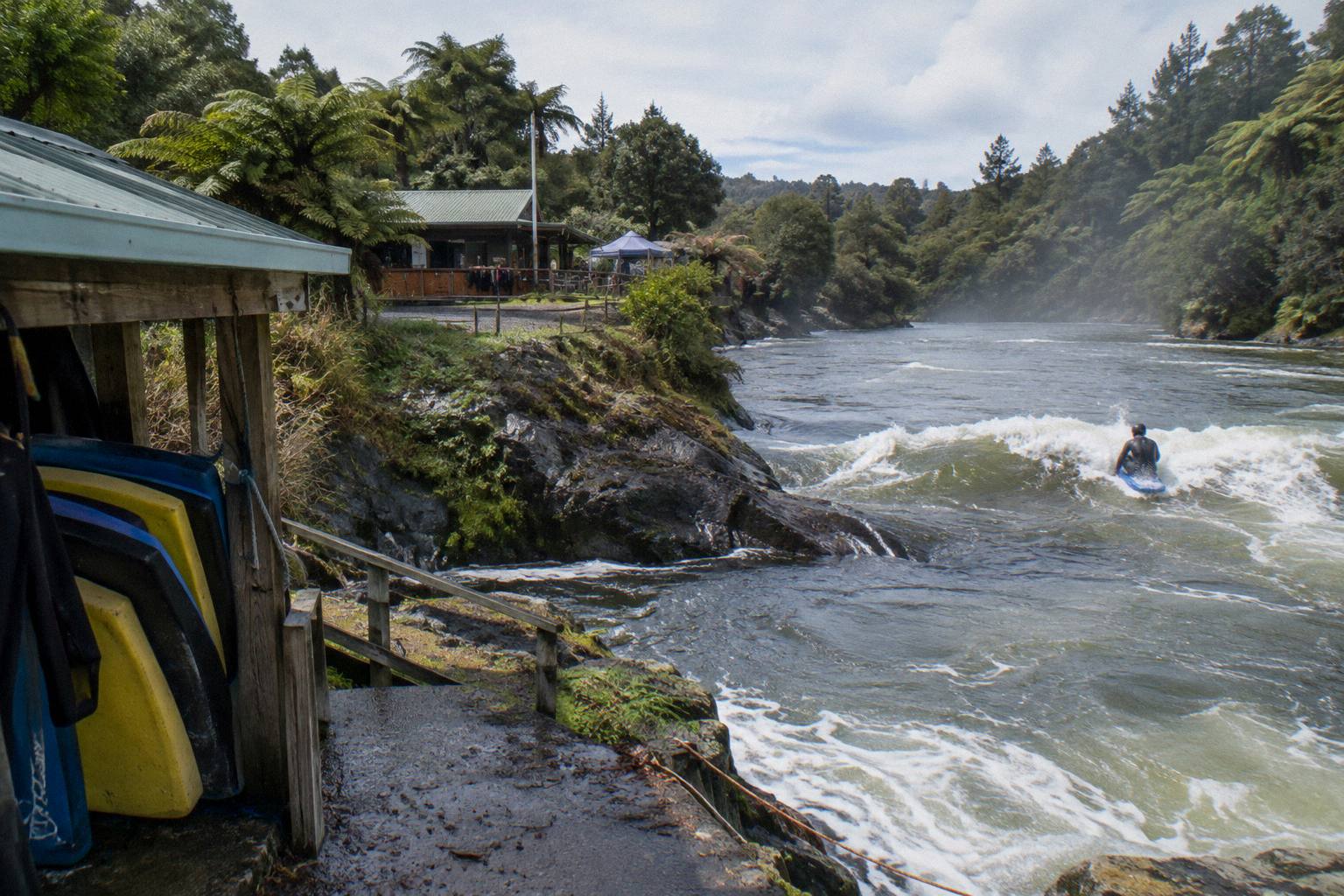
The Wairoa is a commitment worth reading before booking. The Kaituna Cascades product runs from NZ$190 per person, rated 5.0 from 470 reviews, and it departs 9:30am on release days, meeting at 1376 State Highway 29, a farm paddock at the take-out near Tauranga, which the Wikipedia entry for Tauranga places in the Bay of Plenty. Participants must be able to swim. The release dates for the season sit on the operator's page; the count of days varies by how you tally it, so work from the dates themselves rather than a number. See the dates on the booking page before you build travel around a specific Sunday.
The Rangitaiki has a second face depending on operator, and the fair way to print it is with each operator attached. Kaituna Cascades describes a Grade 4 wilderness trip meeting 9:30am at 33 Waipa State Mill Road or by central pickup, no self-drive, running when levels and group size allow. Rotorua Adventures' separate listing is the Grade 2, age 5 product, from NZ$125 per person, rated 4.9 from 7 reviews, unpacked in full in the Rangitaiki river rafting guide. Same river, different operators, different products, and the grade difference is the whole decision. For a first taste of moving water at a gentle price, the Grade 2 listing is the entry point:
Regulation And Safety: The WorkSafe Regime
The fifth test is the one you never see on the water but want behind every trip: a legal safety regime. In New Zealand, commercial adventure activity operators must pass a safety audit by a WorkSafe-recognised auditor and register with WorkSafe under the Adventure Activities Regulations 2016, and anyone can look an operator up on the public register. That is the difference between a safety promise printed on a website and a safety system someone outside the company has inspected. The regime is summarised on the Worksafe adventure activities pages, and the register itself sits at the WorkSafe adventure activities public register.
For a traveller comparing destinations, regulation is the test that is hardest to check from a sofa and easiest to check from a register page. A country can have spectacular rivers and weak oversight, and the two can coexist for years until they suddenly cannot. When a destination clears the regulation test alongside the other four, the practical effect is boring and valuable: gear standards, guide competence and incident processes have all been audited, so your remaining decisions are grade, date and price rather than trust. That framing sits behind the longer treatment of whether white water rafting is safe.
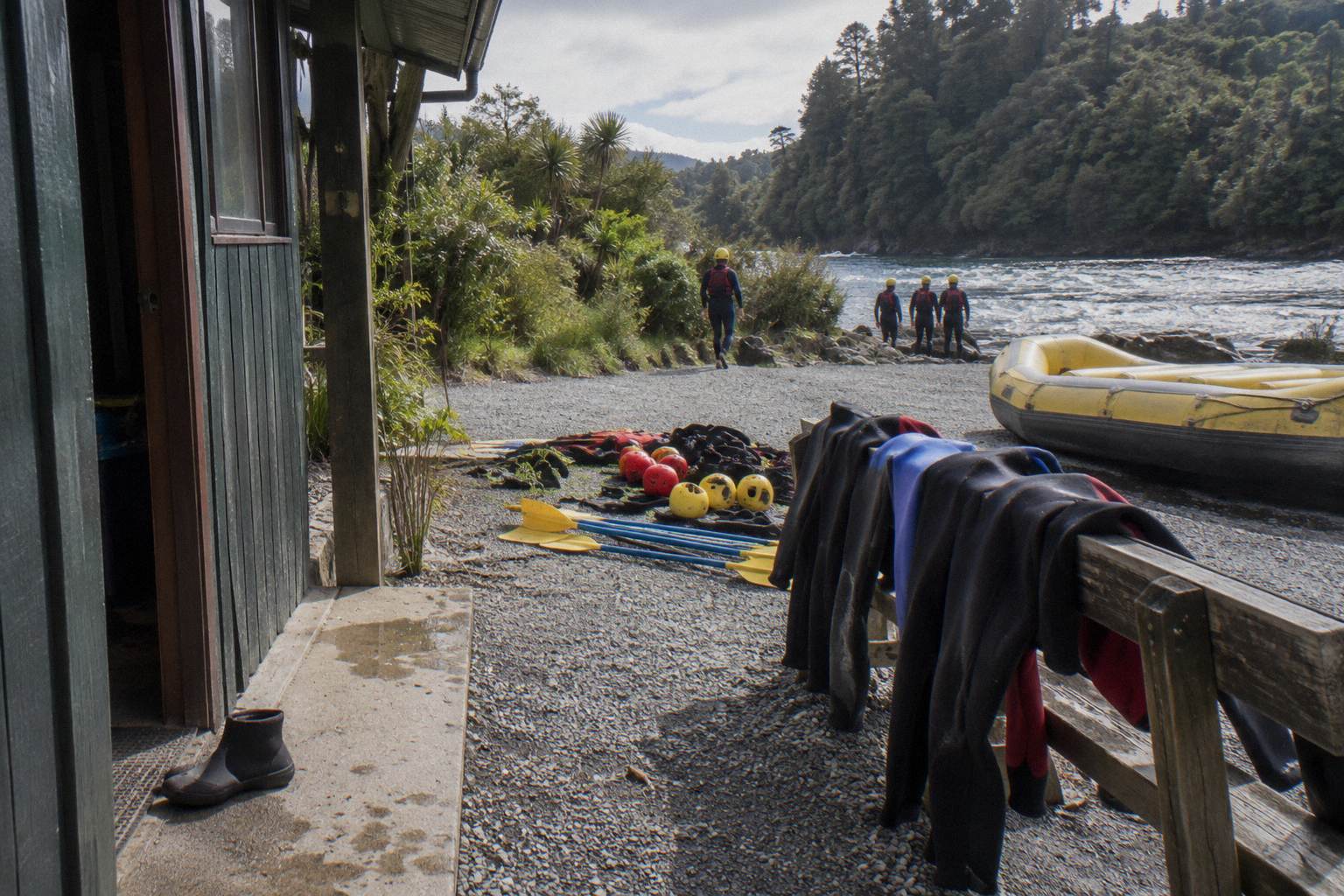
On the water, the everyday version of the regime is the safety brief and the gear. Operators here supply wetsuits, helmets and life jackets as standard, run a check-in 15 minutes before departure, and list condition boundaries plainly: Kaituna Cascades' terms name a 120 kg maximum, a minimum age of 13 with 10 to 12 year olds joining halfway, and exclude pregnancy and heart conditions, with a float test possible. Rotorua Rafting's terms name a 130 kg maximum. Those boundaries are per operator and per listing, and they are the fine print worth reading before you book rather than at the river.
Seasons, Water Temperature And When To Go
Because the Kaituna's gates hold the flow year-round, the when-to-go question becomes about comfort and crowds rather than possibility. Summer water sits around 24 °C by Rotorua Rafting's FAQ, winter around 12 °C, with wetsuits and full kit supplied in every season, and summer brings six or more departures a day on demand versus three a day in winter. The shoulder logic is simple: winter trips are quieter on the water and colder in it, summer trips are warmer and busier, and spring brings the high flows the conditions page described.
| Season | Operator Schedule | Water Temperature | What It Means For You |
|---|---|---|---|
| Winter, 1 May to 31 Aug | Rotorua Rafting 3 trips a day at 10, 12 and 2 | About 12 °C | Quietest water, full cold-water kit supplied |
| Summer, 1 Sep to 30 Apr | Rotorua Rafting 6+ trips, about every 30 minutes on demand | About 24 °C | Most choice of times, book ahead for peak days |
| Daily, all year | Kaituna Cascades 10:30, 12:30, 2:30, plus 8:30 and 4:30 in summer | Varies with season | Fixed slots around a midday anchor |
| Spring | High flows reported in the 500s on the gates | 19 °C in the conditions update | Bigger water, waterfall more powerful, slightly less vertical |
Month-by-month planning has its own page in the Kaituna season guide. The short version for kit: bring swimwear and a towel, per Kaituna Cascades' guidance, and let the operator's supplied gear handle the rest. Temperature figures are the operator's stated ranges, not a forecast for your date, so treat them as the band you are packing inside.
Price follows date and product, not season headlines. The budget end of the Kaituna cards sits at the 2 hour sauna run from NZ$74, rated 4.9 from 490 reviews, while the transfer-inclusive Kaitiaki listing sits at from NZ$139 with hotel pickup, rated 5.0 from 823 reviews. Every amount is New Zealand dollars, per person, and moves with the date, so check the live price once your dates are firm. It is this spread of bookable options that Rafting Rotorua exists to compare in one place.
If a cheaper taste of the same gorge is what you are after, this is the card:
What Trips People Up When Comparing Destinations
The common mistakes are comparing single rivers instead of countries, trusting flow that is not managed, assuming a famous name means audited safety, and merging twin products into one price comparison. Each error quietly breaks the comparison: a spectacular river with four running weeks a year is not the equal of a good one that runs daily, and two cards for the same water at different prices are two products, not a discount and a rip-off. The five tests prevent all four mistakes if you apply them before falling for a photo.
The first trap is the superlative itself. Every rafting region markets a biggest, steepest or best something, and the operators' highest-raftable-waterfall claim for Tutea Falls is exactly that kind of claim, real and quotable, but theirs. The fix is to anchor on verifiable figures: 7 metres, Grade 5 sold, Grade 4 and 5 rapids by the operator's blog, gates that hold flow year-round, a register you can search. The second trap is flow optimism, booking a rain-dependent or release-dependent river for a fixed holiday date without checking the calendar. The Wairoa's Sunday-release structure is the local example: brilliant water, narrow windows.
The third trap is treating price as the whole comparison. From NZ$74 to from NZ$190 spans the local cards, but those prices buy different rivers, durations, inclusions and pickup arrangements. The Kaitiaki transfer listing at from NZ$139 includes hotel pickup; the from NZ$61 twin also covers pickup as an optional paid extra, and the two are separate products with separate cards. Ask the operator what a given card includes before assuming, and compare like with like: same river, same inclusions, same transport. The fourth trap is skipping the age and weight terms, 13 minimum with 10 to 12 joining halfway on Kaituna Cascades, minimum age 10 on the Rotorua Rafting sauna listings, 120 kg and 130 kg maxima depending on operator, because a booking that fails at check-in is no bargain.
Common Questions About The Best Rafting Destinations
What Country Has The Best White Water Rafting?
No sourced ranking of countries exists in the material behind this page, so the defensible answer is a method: judge a destination on grade range, flow reliability, scenery, guided infrastructure and safety regulation. New Zealand's Kaituna, Wairoa and Rangitaiki clear all five, with the Kaituna running 365 days a year on gated flow and Grade 2 to Grade 5 water within reach of Rotorua.
Is The Kaituna Really Grade 5?
It is sold as Grade 5, or Class V, and the Kaituna Cascades blog describes the rapids as Grade 4 and 5 building to Tutea Falls. The run covers 14 rapids and drops and 3 waterfalls in about 50 to 60 minutes on the water inside a roughly 2 hour experience.
Why Does The Kaituna Run Every Day Of The Year?
Council-controlled gates at the Lake Rotoiti outlet regulate the flow into the river, and Kaituna Cascades states that this keeps the river rafting 365 days a year. Rain changes the character of the water, high spring flows in the 500s on the gates were described in the operator's conditions update, but the river does not depend on rainfall to run.
What Is The Cheapest Kaituna Rafting Trip?
The 2 hour sauna run from Rotorua Rafting starts at from NZ$74 per person, rated 4.9 from 490 reviews. The Kaitiaki Adventures Kaituna listing is from NZ$61 per person. Prices are New Zealand dollars, vary by date, and the booking page shows the price for your date.
Can Beginners And Families Raft Near Rotorua?
Yes, within each listing's terms. The Rangitaiki Grade 2 listing from Rotorua Adventures has a minimum age of 5 and runs 4 hours with 1.5 on the water, from NZ$125 per person. On the Kaituna, minimum ages are 13 on most listings, 10 on the Rotorua Rafting sauna listings, and Kaituna Cascades has 10 to 12 year olds join halfway.
Is Rafting In New Zealand Properly Regulated?
Commercial adventure activity operators must pass a safety audit by a WorkSafe-recognised auditor and register with WorkSafe under the Adventure Activities Regulations 2016, and the public register is searchable online. That audit-and-register regime is the fifth test a good rafting country passes, and it is checkable before you book.