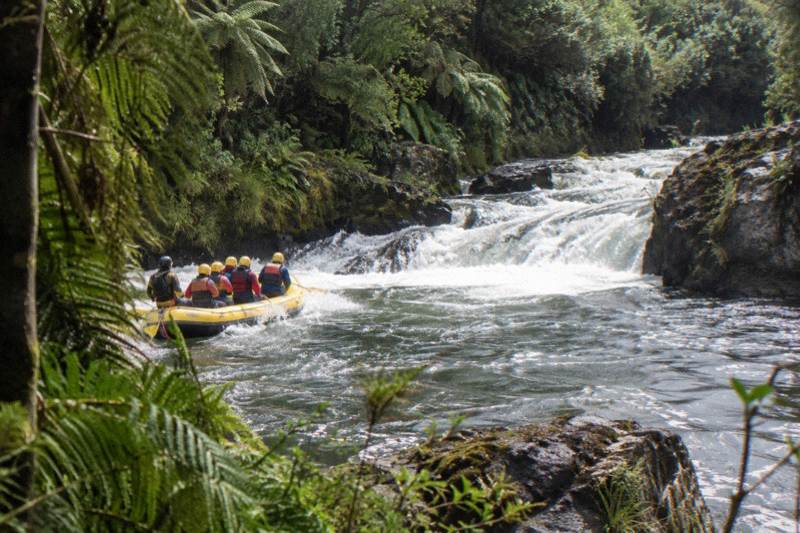
What Not To Wear When White Water Rafting?
A practical rundown of what to leave at home for a Kaituna rafting trip, based on what the operators supply and their own stated terms.
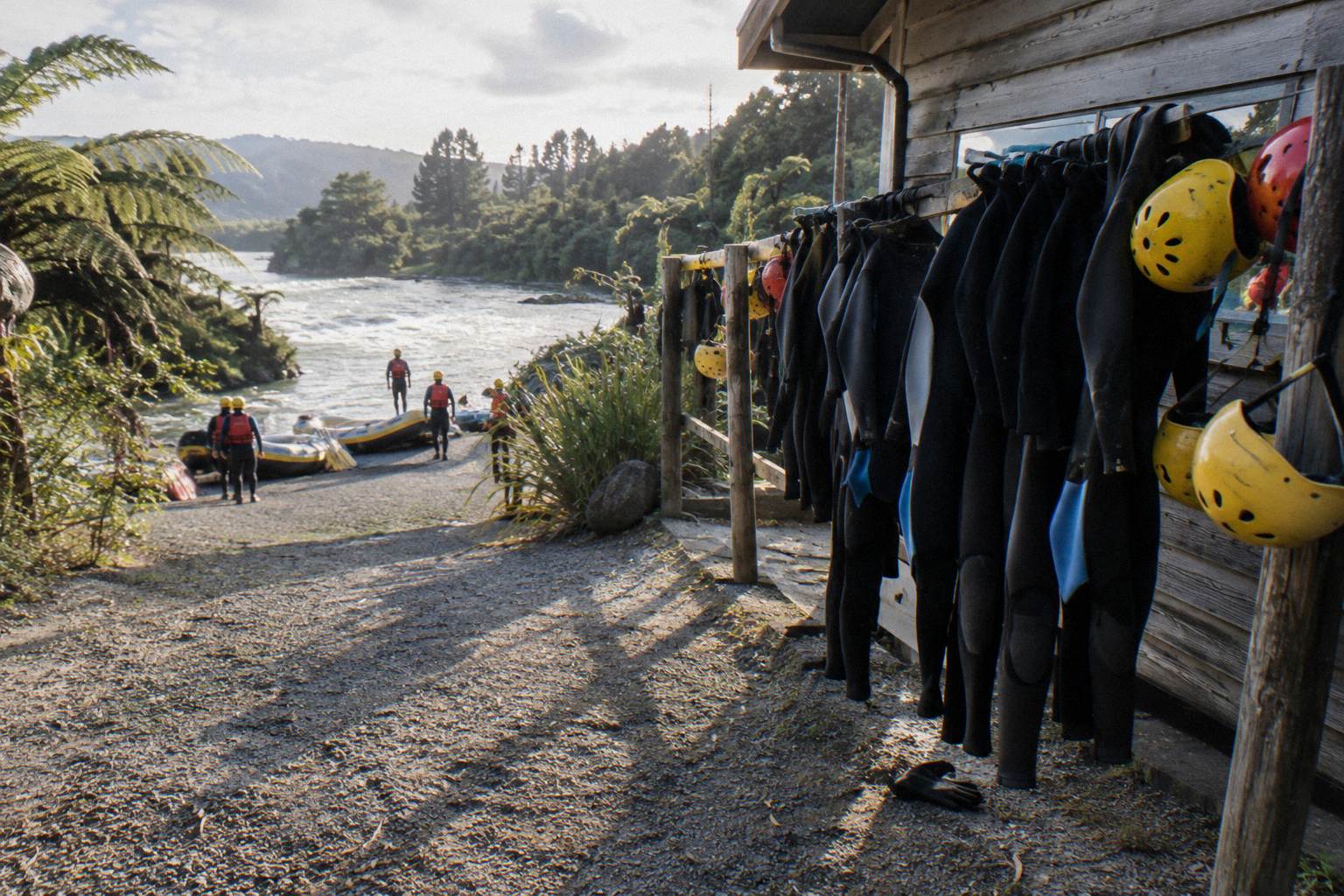
Every rafting trip on the Kaituna starts from the same gear reality, and the products on this river are more alike than different when it comes to kit. The short version: you bring very little, the operator supplies most of what you wear, and the mistakes happen in the bag you pack, not in the outfit you choose. Prices below are New Zealand dollars, and the booking page for each product shows the exact price for your date.
| Fact | Detail |
|---|---|
| Kit the operators say they supply | Wetsuits, helmets, life jackets, fleece, booties and a splash jacket (Rotorua Rafting and Kaituna Cascades pages) |
| What you bring | Swimwear and a towel, per the Kaituna Cascades page |
| Maximum weight | 120 kg on Kaituna Cascades trips, 130 kg on Rotorua Rafting trips |
| Minimum age | 13 on the Kaituna Cascades and Kaitiaki listings, 10 on the two Rotorua Rafting listings |
| Cameras | GoPro mounts are allowed on Rotorua Rafting trips |
| Check-in | 15 minutes before departure on Kaituna Cascades trips |
| Water temperature | About 24 °C in summer, about 12 °C in winter (Rotorua Rafting FAQ) |
The short answer is cotton, denim, jewellery, watches, loose sunglasses, anything you would mourn, and any shoe you care about. The Rotorua Rafting and Kaituna Cascades pages say they supply wetsuits, helmets, life jackets, fleece, booties and a splash jacket, and Kaituna Cascades asks you to bring only swimwear and a towel. Where an operator page does not prohibit an item, the pre-trip briefing decides.
The reason the list of banned clothing is short is that the list of supplied kit is long. A wetsuit only works against bare skin or a thin synthetic base, so a thick cotton t-shirt underneath fights the insulation rather than helping it. Denim soaks, stretches and drags. Jewellery snags on grab lines and paddle shafts, and rings are the classic injury item when a hand takes load against a hard surface. None of the operator pages spell out every prohibition, because none need to: the wetsuit covers most of your body and the briefing covers the rest.
The general practice around the world is the same, and the Wikipedia entry on rafting describes how the activity is built around operator-supplied safety equipment rather than personal clothing choices. On the Kaituna specifically, the run covers 14 rapids and drops including 3 waterfalls in roughly 50 to 60 minutes on the water, so everything on your body gets worked over repeatedly. Anything that can come off, will try.
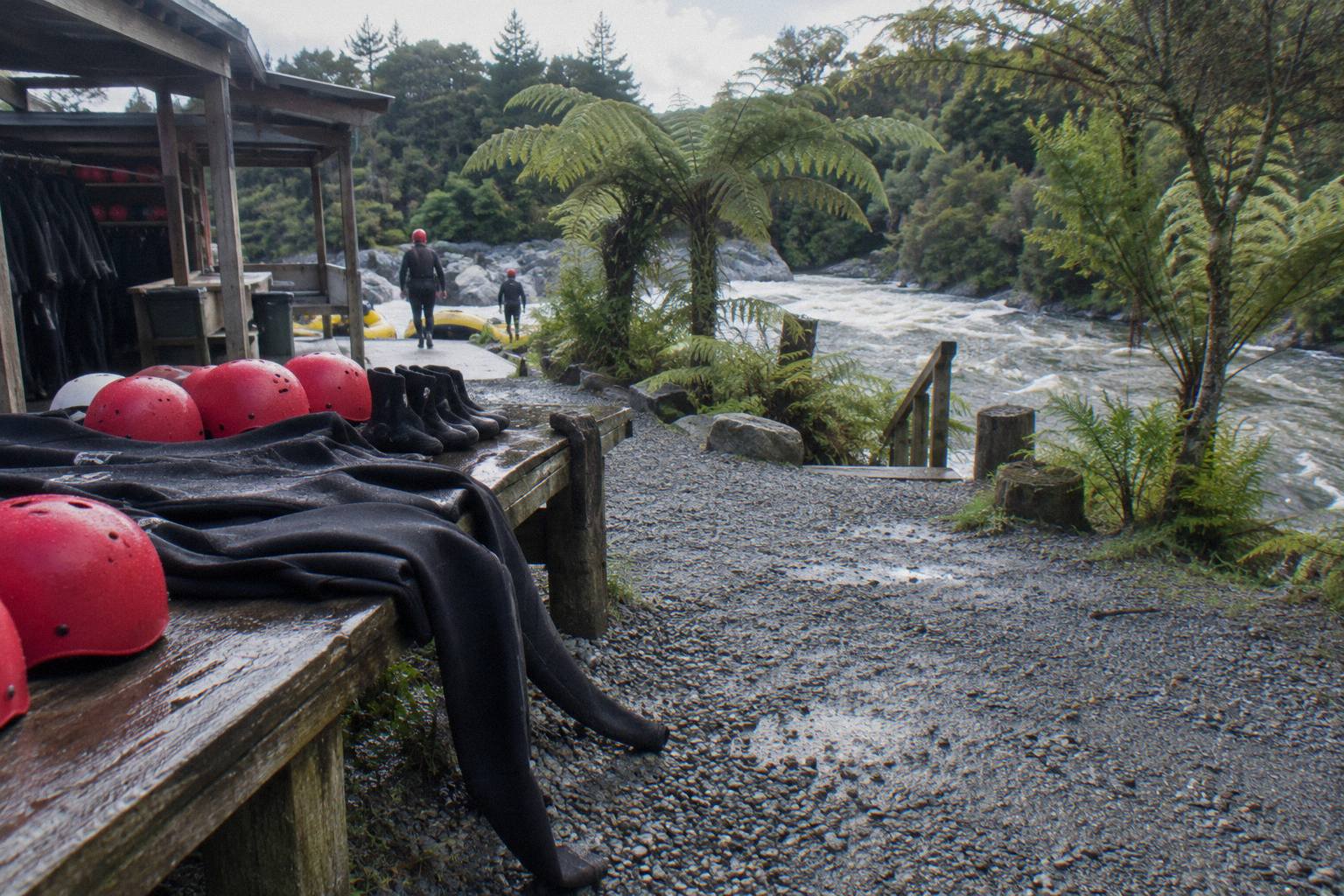
If you want the fuller clothing picture, including what to wear rather than what to avoid, the guide to what to wear white water rafting covers layering season by season. This piece stays on the negative side of the ledger: the items that cause problems, and why the operator pages and standard practice rule them out.
Why The Supplied Kit Makes Most Clothing Unnecessary
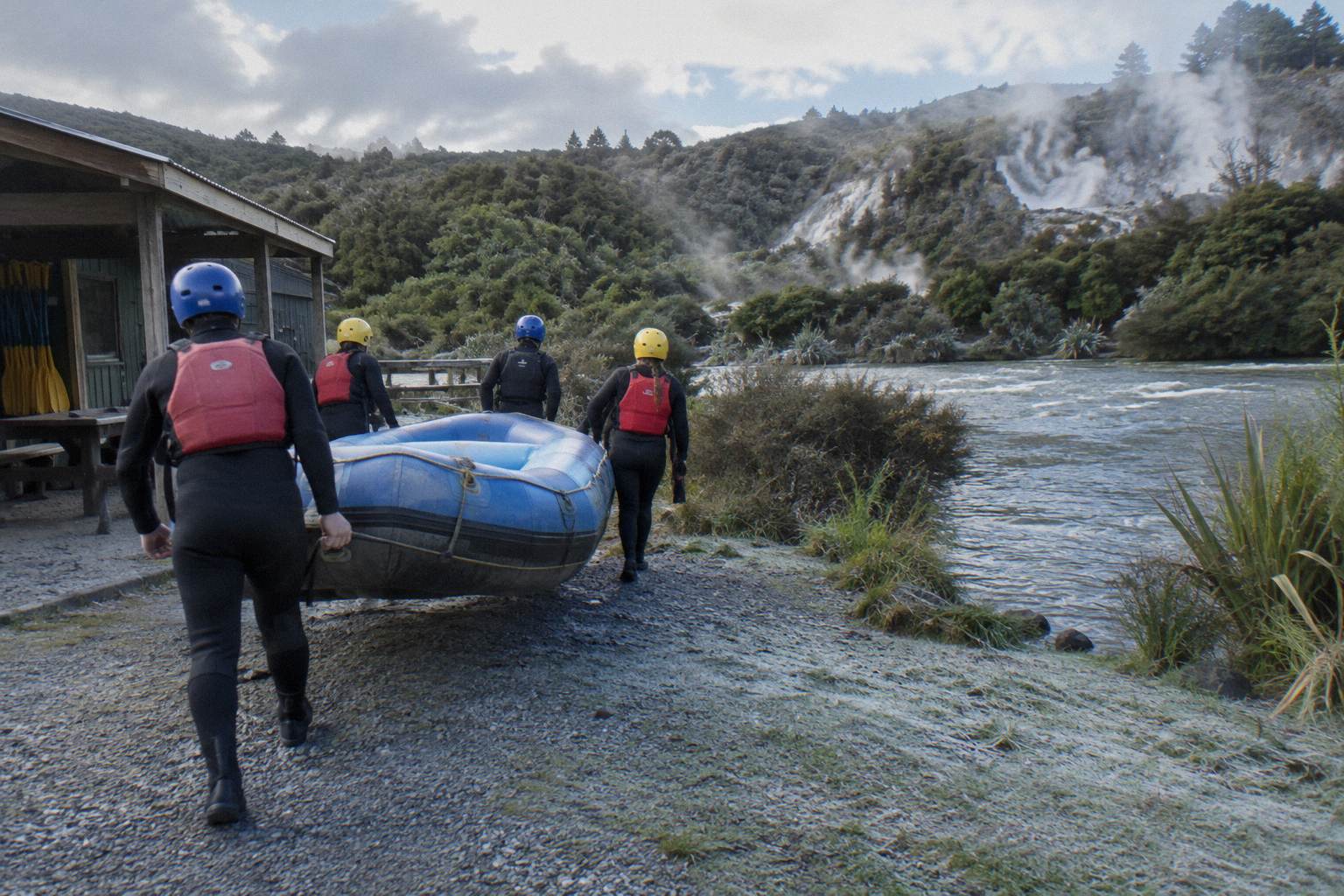
The wetsuit, helmet, life jacket, fleece, booties and splash jacket that Rotorua Rafting and Kaituna Cascades say they supply cover every part of your body that matters on the water. Kaituna Cascades asks you to bring swimwear, which you wear under the wetsuit, and a towel for afterwards. That leaves almost nothing for your own wardrobe to do, which is why over-packing is the more common mistake than under-packing.
Water temperature on the river runs about 24 °C in summer and about 12 °C in winter according to the Rotorua Rafting FAQ, and the wetsuit plus fleece combination is sized for that range. A fleece sounds odd to first-timers until you feel a 12 °C river: the operators use it as an insulating layer under or over the wetsuit depending on conditions, and it belongs to their kit, not yours. The splash jacket cuts wind and spray on top. Booties protect your feet on the rocks at the put-in and take-out, which are walked in kit, not in bare feet.
| Supplied Item | What It Does |
|---|---|
| Wetsuit | Insulation against about 12 °C winter to about 24 °C summer water |
| Helmet | Head protection through 14 rapids and drops |
| Life jacket | Flotation and grab handles for rescue |
| Fleece | An extra insulating layer in cold conditions |
| Booties | Foot protection at the put-in, on the river and at the take-out |
| Splash jacket | Wind and spray barrier over the wetsuit |
The honest arithmetic is that your swimwear and towel fit in a small bag and everything else goes home. Nothing in the operator pages asks you to bring thermal layers, water shoes or gloves; where the river is cold, the supplied kit answers it. If you own a thin synthetic rash vest, the briefing is the place to ask whether it can go under the wetsuit, and the answer belongs to the operator on the day, not to a packing list.
Kaituna Cascades, The Originals runs from NZ$135 per person with a 5.0 rating from 1,385 reviews, a 13 year minimum age and a 15 minute early check-in. Check the live price for your date before you plan around any figure.
Fabrics And Materials That Cause Trouble On The River
Cotton is the headline problem fabric: it holds water against your skin, loses all insulating value when wet, and slows the wetsuit down when worn underneath it. Denim behaves the same way with more weight. Wool and thick synthetics under a wetsuit mostly just create bulk and fit problems, since the wetsuit is cut to sit close to the body. The safe base layer is plain swimwear, exactly what the Kaituna Cascades page asks you to bring.
The physics is simple enough. A wetsuit works by trapping a thin layer of water against your skin, which your body warms. Cotton soaks that layer up and keeps replacing it with cold water every time you get dunked or splashed, so the suit fights a losing battle. On a river that runs 3 waterfalls in under an hour, you are wet from the first minutes onward, and the fabric choice matters the whole trip.
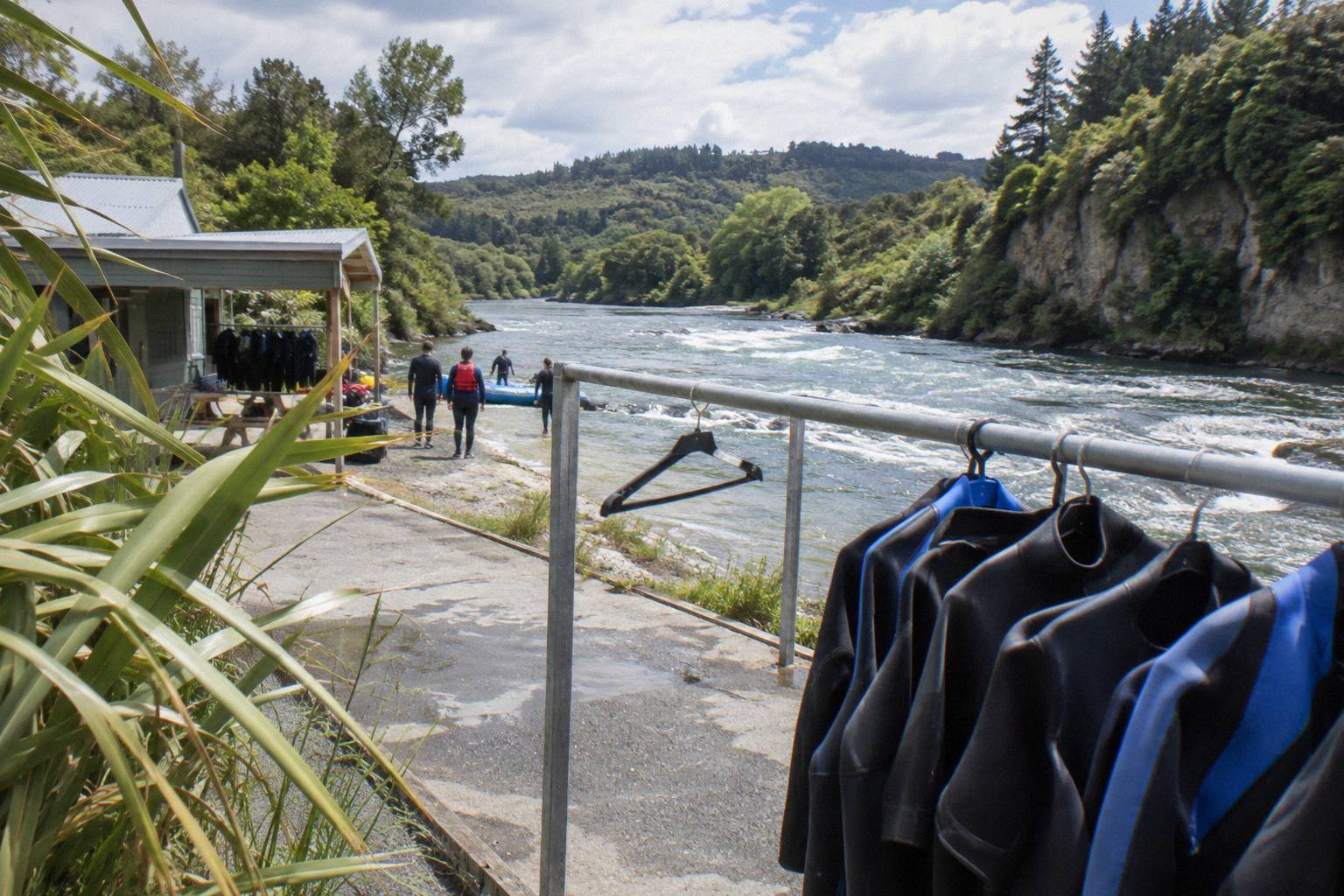
The river itself is the reason the whole topic exists, and the Wikipedia entry for the Kaituna River explains the flow control that makes it runnable every day of the year. Council-controlled gates at the Lake Rotoiti outlet hold the flow, which means the trip runs in every season and the kit has to answer both summer and winter water. You cannot pick a warm day to dress down; the wetsuit goes on regardless, and bulky clothing underneath makes the suit fit badly and work worse.
One more fabric note: anything with heavy zips, studs or hooks can press into your skin under a tight wetsuit and life jacket for a couple of hours. Soft, thin and stretchy is the whole brief. If a garment is any of those three things and you are unsure, leave it in the car and ask at check-in, where a 15 minute early arrival on the Kaituna Cascades trips gives you time to change plans.
Footwear And Accessory Decisions
Thongs, crocs-style clogs, hiking boots and everyday sneakers all fail on a raft: thongs and clogs float away or fold underfoot, boots fill and sink, and sneakers take days to dry. The operators supply booties as part of the kit, so footwear is a leave-at-home category. The one accessory the operator pages mention directly is the camera: GoPro mounts are allowed on Rotorua Rafting trips.
The footwear logic is unforgiving. You walk on rocks at the put-in, brace your feet inside the raft, and may swim. The supplied booties are designed for all three. Anything open-heeled leaves your foot at the first swim; anything stiff-soled does not fit the raft's foot cups. The are-crocs-ok question comes up often enough to have its own answer, and if you are weighing it, the short version is that the supplied booties remove the decision.
Loose sunglasses deserve a line of their own. They fall off on the first drop or the first splash, and the river keeps them. If you genuinely need eye protection, a retaining strap is the minimum, and even then the briefing may overrule you. Regular prescription glasses raise the same question with higher stakes: tell the operator at check-in and take their instruction, because no operator page offers a blanket ruling on eyewear.
The Rotorua Rafting FAQ page is the source for the temperature figures and the GoPro ruling above, and it is worth a read before any trip with that operator. For a contrasting product on the same river, the Free Sauna, 2h30 Kaituna Trip from Rotorua Rafting runs from NZ$135 per person with a 5.0 rating from 2,191 reviews; see dates on the booking page rather than trusting a fixed schedule.
Jewellery, Watches And Valuables To Leave Behind
Rings, bracelets, necklaces, watches and piercings that cannot come out all belong in the stay-home pile: they snag on lines and paddle shafts, press painfully under wetsuit and life jacket straps, and the river does not return dropped items. Phones go the same way unless they are mounted. The operator pages do not itemise valuables, so the check-in desk and the briefing are the final word.
The mechanics of loss are boring and reliable. A raft has grab lines running its perimeter, and during a swim or a hard brace, hands and wrists slide along those lines. Anything raised on a finger or wrist takes the load. A life jacket cinches across the chest and shoulders, and a pendant or a thick chain under it becomes a pressure point for two hours. Wetsuit cuffs seal tight at the wrist, which is exactly where a watch sits.
| Item | Why It Stays Home |
|---|---|
| Rings and bracelets | Snag on lines and shafts, press under wetsuit cuffs |
| Necklaces and chains | Sit under a cinched life jacket for hours |
| Watches | Water damage risk plus wrist snag, and wetsuit cuffs seal over them |
| Loose sunglasses | Come off on drops and splashes, unrecoverable |
| Phones in pockets | One swim ends the phone; mounts are the allowed route |
| Denim and cotton layers | Soak, chill and ruin wetsuit fit |
There is a practical side too: the bases are working river operations, not hotels. Kaituna Cascades operates from 18 Okere Falls Road with free parking and direct river access, and Rotorua Rafting from 761 State Highway 33, about 20 minutes from central Rotorua. Both mean a car boot or a locker, not a valet, so the simplest system is to leave everything of value locked in the car and walk in with swimwear, a towel and whatever the operator allows you to mount. First-timers usually find the check-in-to-river sequence simpler than expected once the gear is on.
A footnote on the phone question: the Rotorua Rafting products include a free sauna after the trip, and the sauna is the one moment on a rafting day when people most regret not having a dry phone for photos. The workaround is simple, leave it in the car through the trip and collect it for the sauna, rather than risking it in a wetsuit. Check the live price and the sauna details on the booking page when you book.
Season And Weather: Does Clothing Change?
Very little changes by season, because the supplied kit does the seasonal work: the same wetsuit, fleece, booties and splash jacket answer a 12 °C winter river and a 24 °C summer one, per the Rotorua Rafting FAQ figures. What changes is your base layer weight and what you wear to the base before you change. Swimwear under the wetsuit is the year-round instruction on the Kaituna Cascades page.
Winter trips make the after-kit matter more than the during-kit. You will be warm enough on the water in the supplied gear; the cold hits at the take-out and the change back into street clothes. A beanie, a dry jumper and a jacket waiting in the car do more for winter comfort than anything you could wear on the river itself. Departure schedules shift across the year, including the Rotorua Rafting winter pattern of 3 trips a day at 10, 12 and 2 from 1 May to 31 August, and 6 or more daily trips from 1 September to 30 April.
Rain is the other seasonal question people attach to clothing, and the answer is that rain does not change what you wear, since you are getting wet anyway. That question has its own full treatment in whether rain cancels a rafting trip, where river levels and flow gates, not clothing, are the deciding factors. Flow on the Kaituna comes from the Lake Rotoiti control gates, so a wet week does not automatically mean a change to your kit or your trip.
Spring brings the one flow nuance worth knowing as a packing consideration: the Kaituna Cascades river conditions page has described high spring flows at 500s on the control gates, with the big waterfall more powerful but slightly less tall and vertical. None of that changes your packing list, but it explains why the operators keep the kit standard across the year rather than letting summer customers dress light. The river decides the mood; the wetsuit decides your comfort; your wardrobe mostly decides how little of it you needed.
For travellers staying in town without a car, Rafting With Hotel Transfers from Kaitiaki Adventures includes free hotel pickup on that product, from NZ$139 per person with a 5.0 rating from 823 reviews, which also settles the parking and valuables question by removing the car from the equation. See dates on the booking page for your window.
What Trips People Up Before You Book
The recurring mistakes are over-packing street clothes, wearing cotton or denim to the base, bringing phones and jewellery to the riverbank, and arriving with no towel. Every one of them traces back to ignoring the two-line instruction the operators actually give: bring swimwear and a towel, because the wetsuit, helmet, life jacket, fleece, booties and splash jacket are supplied. Kit terms also differ per listing, so ages and weight limits need checking.
The weight and age terms are where assumptions bite hardest, because they are per listing, not per river. Kaituna Cascades sets a 13 year minimum with a 120 kg maximum weight, and its pages note the trip is not for pregnancy or heart conditions, with a float test possible. The Rotorua Rafting listings show a minimum age of 10 on those listings. Kaitiaki Adventures sets 13 on its listings. A family that books on one listing and packs for another's rules can arrive with a 11 year old who fits one product and not its neighbour, so read the specific product page, not a general rule, before you pack anyone's bag.
| Packing Mistake | What Goes Wrong |
|---|---|
| Cotton or denim under the wetsuit | Kills insulation, ruins suit fit |
| Street shoes to the river | Have to be left behind; booties are supplied |
| Phone loose in the wetsuit | One swim and it is gone |
| Jewellery worn onto the water | Snags, presses, gets lost |
| No towel | A genuinely miserable ending, since Kaituna Cascades asks you to bring one |
| Assuming one operator's ages apply everywhere | Minimum ages differ per listing: 13, 13 and 10 across the main products |
The calm version of all of this is that a Kaituna trip is close to packing-proof once you follow the operator's own two items. Swimwear, towel, car keys somewhere secure, and an on-time arrival at check-in cover the entire requirement on the pages that state one. Everything else you might carry is either supplied or banned, and the briefing settles the edge cases in under a minute. Whether you come in winter conditions or at the height of summer, the bag looks the same, and the packing list for white water rafting covers the few extras beyond clothing worth considering.
The Wikipedia entry on whitewater covers the International Scale of River Difficulty if you want to understand why the Kaituna is sold as a Grade 5 run and why that grade demands full kit rather than casual clothing. Grade 4 and 5 water is continuous and consequential, and the clothing rules exist because the river does not negotiate. Pack against the river you booked, not the weather in the car park, and the not-to-wear list does its whole job.
Common Questions About Clothing On The River
What Not To Wear When White Water Rafting?
Leave cotton, denim, jewellery, watches, loose sunglasses, street shoes and unmounted phones behind. The Rotorua Rafting and Kaituna Cascades pages say they supply wetsuits, helmets, life jackets, fleece, booties and a splash jacket, and Kaituna Cascades asks you to bring only swimwear and a towel. Where no page prohibits an item, the briefing decides.
Do I Need To Bring My Own Wetsuit?
No. Wetsuits are part of the supplied kit on the Rotorua Rafting and Kaituna Cascades pages, alongside helmets, life jackets, fleece, booties and a splash jacket. Bringing your own adds a wet, heavy item to carry home and no advantage, since the supplied suits are cut for the river and the season.
Can I Wear Crocs Or Sandals On The Raft?
The supplied booties are the footwear for the trip, and open shoes are the category most likely to be rejected at check-in. Thongs and loose sandals fold, float away or leave your foot exposed on the rocks at the put-in and take-out. If you own a footwear question, ask the operator at the 15 minute early check-in.
Can I Bring My Phone Or Camera?
GoPro mounts are allowed on Rotorua Rafting trips, which makes a mounted action camera the one clearly sanctioned way to film the run. A loose phone in a wetsuit is one swim away from loss. Leave it locked in the car for the trip and collect it afterwards.
Does Winter Change What I Should Wear?
Not on the water. The supplied wetsuit, fleece and splash jacket answer winter water of about 12 °C and summer water of about 24 °C, per the Rotorua Rafting FAQ. What changes is what you wear to the base and what waits dry in the car for afterwards: warm layers, a beanie and a jacket.
What Do The Operators Actually Ask You To Bring?
Kaituna Cascades asks for swimwear and a towel, and its pages add a 15 minute early check-in. Rotorua Rafting allows GoPro mounts. Beyond that, the kit list does the work, and any item not covered by an operator page is decided by the briefing on the day.
For the positive side of the question, the guide to what to wear white water rafting covers layering for every season, and Rafting Rotorua is the home of every product named above when you are ready to compare trips.