Wairoa River Rafting: Short Runs, Big Drops, And Release Days
The Wairoa River near Tauranga runs a Grade 5 rafting trip on selected Sundays only, when a power company releases water down the channel. The result is a short, steep, drop-filled run that works completely differently from the everyday Kaituna trips out of Rotorua.
Short answer
The Wairoa trip is a Grade 5 run near Tauriko, Tauranga, operated by Kaituna Cascades from NZ$190 per person. It runs on selected Sundays when water is released, departs 9:30am, covers about 5 km of river in roughly 2 hours, and takes 3 to 4 hours overall. Minimum age is 13, maximum weight 120 kg, and rafters must be able to swim.
Rafting trips split into two kinds: the ones that run every day, and the ones you have to plan a weekend around. The Wairoa River belongs firmly to the second kind. It sits in the same family as the calmer Rangitaiki options, and it is the only product in that family built around a hydro-release schedule rather than a daily timetable. That single fact shapes everything about the day: when you leave, where you meet, how long you get on the water, and how far ahead you need to commit. You can start with the Wairoa Grade 5 trip itself and work backwards into the schedule.
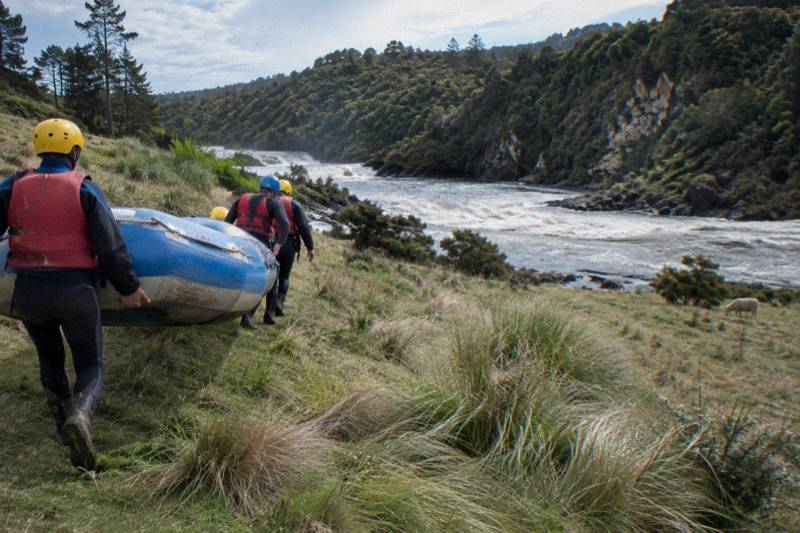
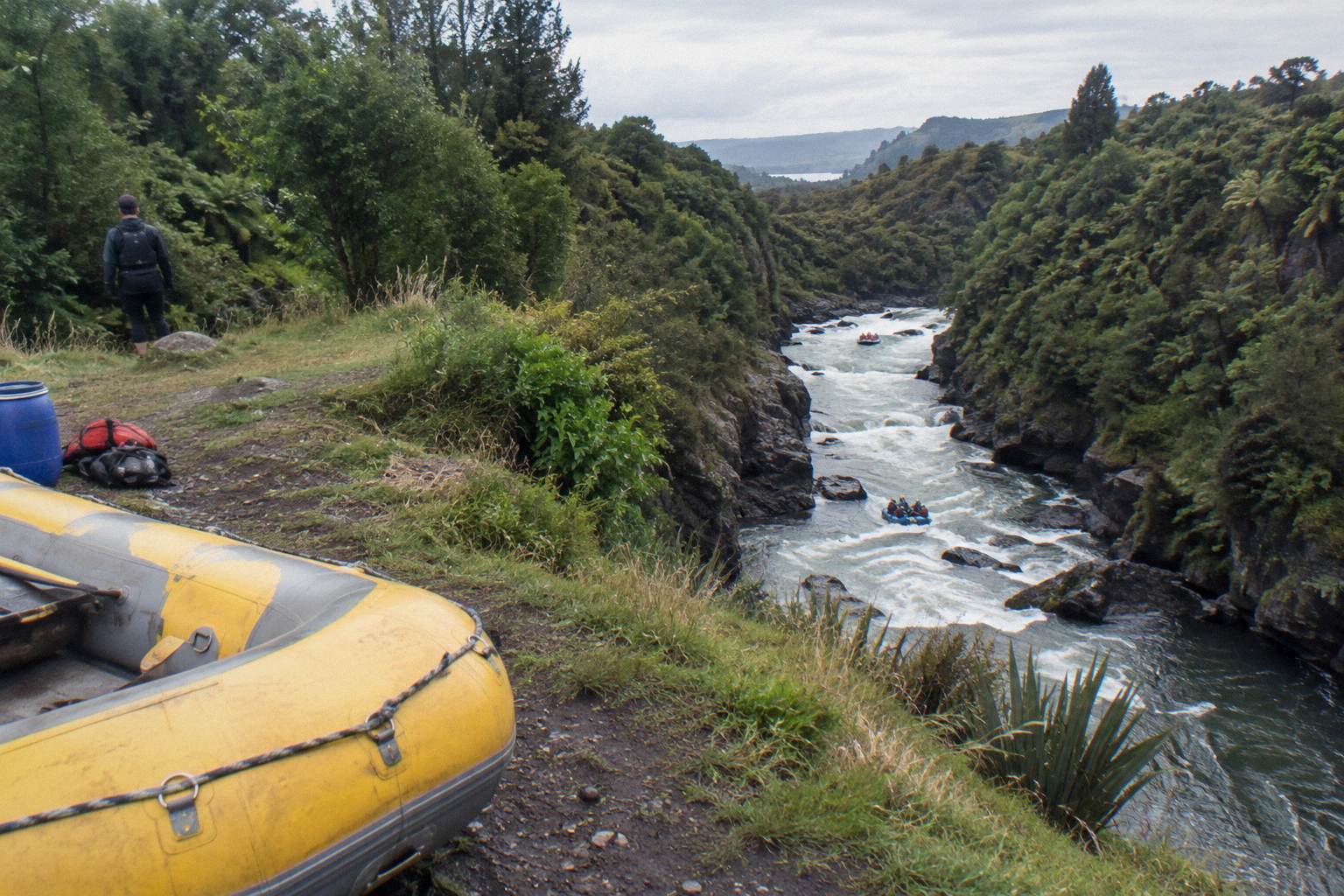
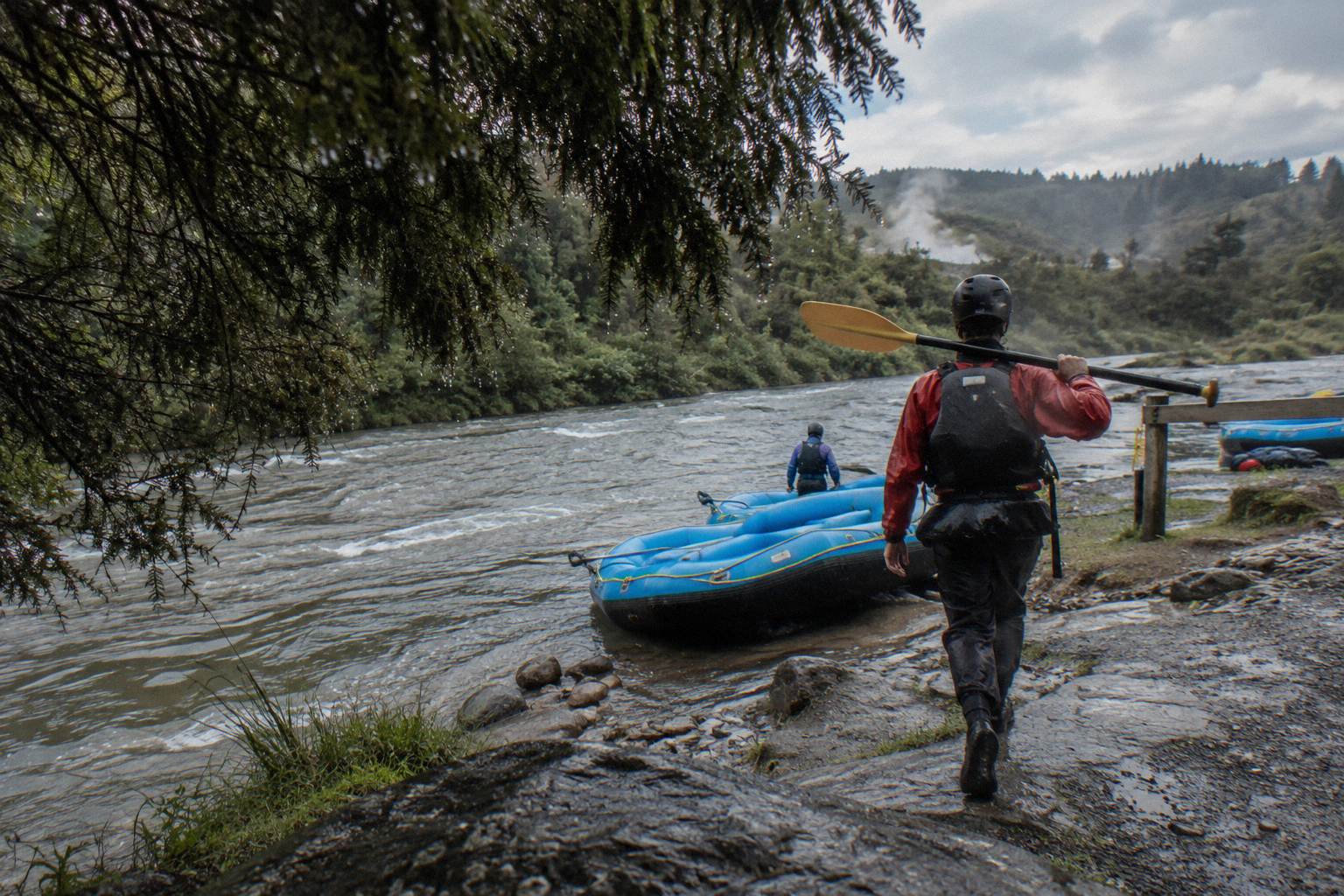
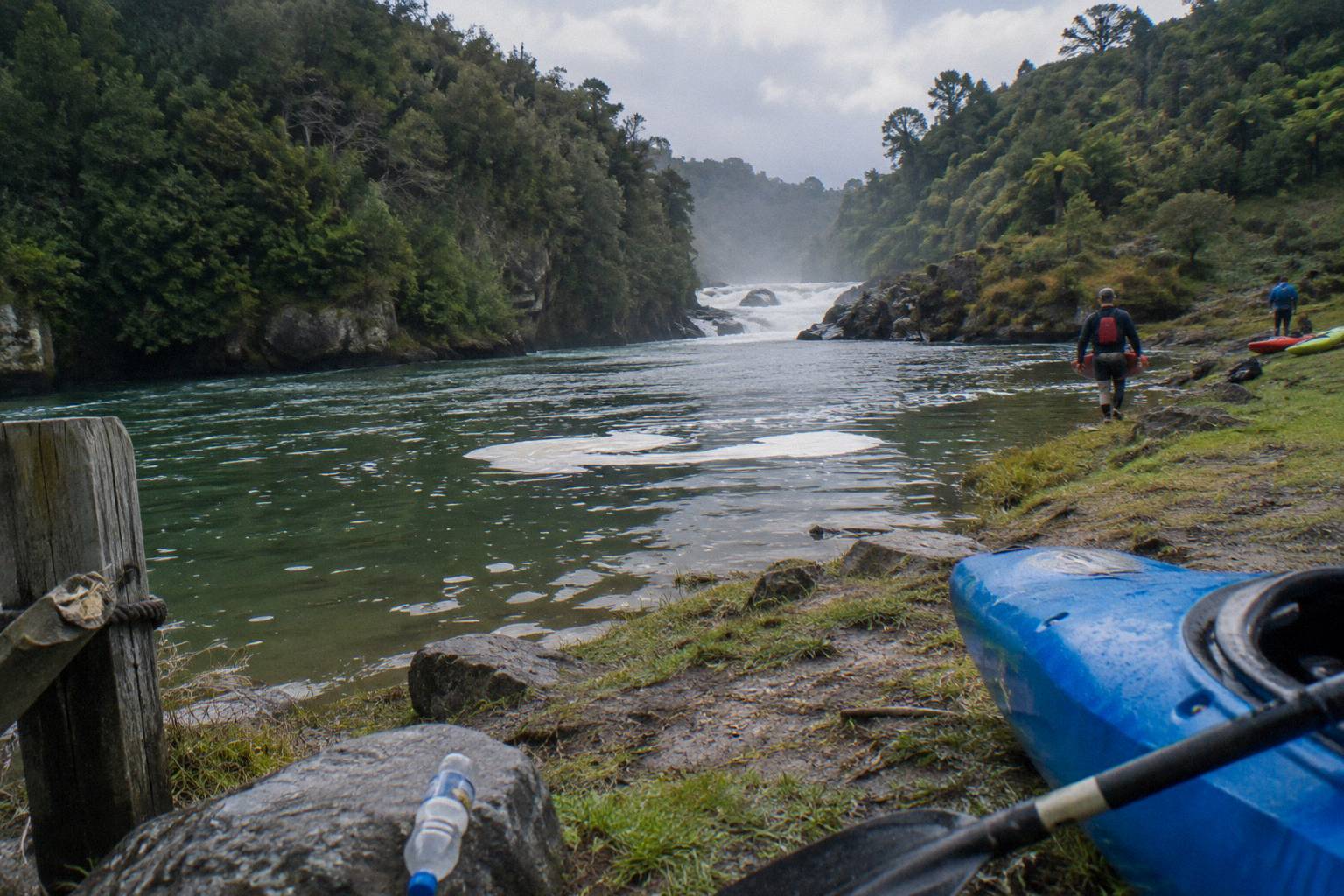
The river itself flows out of hills above Tauranga, through the Kaimai gorge country near Tauriko, and the rafted section is short, steep and relentless. Water releases from the power scheme upstream turn a low boulder channel into a full Grade 5 run for a few hours at a time, and when the release stops, the show stops. Operators work inside that window, which is why the Wairoa has a fixed morning departure and a meeting point at the take-out rather than a riverside base like the Kaituna operators run at Okere Falls.
This guide walks through how the release system works, what the day actually looks like from the farm paddock meeting point to the final rapid, who the trip suits, and how it compares with the Kaituna for length, grade and timing. All prices are in New Zealand dollars, and the booking page shows the price for the date you choose.
| Fact | Detail |
|---|---|
| River | Wairoa River, near Tauriko, Tauranga |
| Grade | 5, per the operator's page |
| When it runs | Selected Sundays only, when the power company releases water |
| Departure | 9:30am, per the operator's page |
| Time on the water | About 2 hours |
| Overall trip length | 3 to 4 hours |
| River distance | About 5 km |
| Meeting point | 1376 State Highway 29, a farm paddock at the take-out |
| Minimum age | 13 on this listing |
| Maximum weight | 120 kg, per the operator's terms |
| Swimming | Must be able to swim, per the operator's page |
| Price | From NZ$190 per person |
Why Does The Wairoa Only Run On Sundays?
The Wairoa's flow is controlled by a power scheme, and raftable water only exists during scheduled releases, which the operator runs trips on for selected Sundays. There is no daily rafting on this river. The hydro operator upstream holds and releases the water, the gorge empties again afterward, and every commercial trip has to fit inside that engineered window. That is the whole reason the Wairoa has one fixed 9:30am departure instead of a rolling daily schedule.
Rivers with natural or lake-fed flow can be rafted almost any day. The Kaituna, for example, runs year-round because council-controlled gates at the Lake Rotoiti outlet hold a steady release into the channel, which is why Kaituna operators advertise departures throughout the day. The Wairoa works the opposite way. A power company scheme draws the river down for generation, and on agreed days it sends water down the natural bed for a set period. Those days are clustered on Sundays, and the operator lists the release Sundays on its river conditions page.
The practical consequence is scarcity. If a Kaituna trip is full at 10am, another departure follows at midday. If a Wairoa Sunday fills, the next chance may be a fortnight away. Travellers building a North Island itinerary around Rotorua and Tauranga should treat the Wairoa date as the anchor and fit everything else around it, not the reverse. The one day built around a rafting trip guide covers how to sequence a day like this without racing the clock.
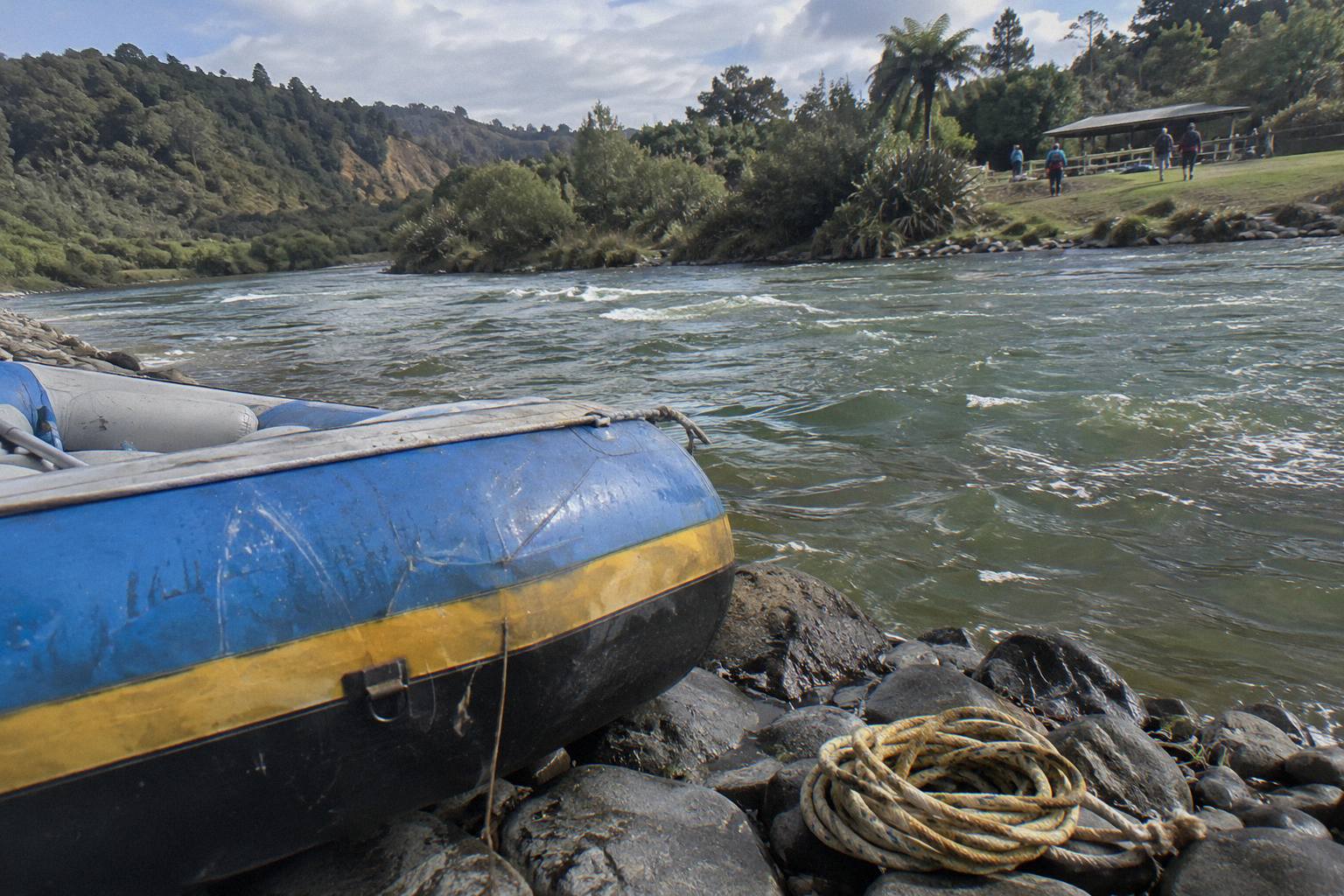
The release system also explains the geography. Trips meet at the take-out, at 1376 State Highway 29 near Tauriko, because there is no base building at the put-in the way there is at Okere Falls. A farm paddock serves as the check-in and gear point, and the shuttle logistics run from there. It is functional rather than scenic, and arriving with that expectation makes the morning smoother.
How Hard Is Grade 5 On The Wairoa?
Grade 5 sits at the top of the commercial rafting scale, meaning long, powerful rapids with continuous hazard, where precise manoeuvring matters and a swim would be serious. The Wairoa delivers that grade across roughly 5 km of steep boulder garden, so the run is intense for its full length rather than building gradually. It suits confident swimmers with some rafting background or genuinely fit, water-comfortable first-timers who accept a hard day.
The grading system, the International Scale of River Difficulty as described in the Wikipedia whitewater entry, runs from Grade 1 water that is essentially moving flat water up to Grade 6, which is considered unrunnable commercially. Grade 5 is the highest grade routinely sold to the public anywhere in the world. Rapids at that level involve drops, pourovers and keeper hydraulics, and the consequences of a mistake are real, which is exactly what the operator's swimming requirement reflects.
What makes the Wairoa's Grade 5 distinctive is compression. The Kaituna's Grade 5 reputation rests heavily on one feature, the 7 metre Tutea Falls, with rapids the operator's own blog grades at 4 and 5 building toward it. The Wairoa has no single headline drop on the same scale of fame; instead it sustains hard whitewater down a narrow gorge for the whole run. Paddlers describe the difference as sprint versus interval training. Both are Grade 5 on paper and both demand full attention, but the rhythm of the day is different, and the rapid grades explained guide breaks down what each number means in practice.
For anyone unsure whether Grade 5 is a sensible first trip, the framing is simple: the operator sets the bar at able to swim, minimum age 13 and a maximum weight of 120 kg, and it may require a float test before letting someone on the water. Those terms exist because the river does not forgive a panicked swimmer. A beginner who is a strong pool swimmer, listens to paddle commands and wants the hardest commercially available day can do this. A nervous non-swimmer cannot, and the operator's own conditions say so.
What Does The Wairoa Trip Day Actually Look Like?
The day starts with a 9:30am departure, meeting at a farm paddock at 1376 State Highway 29 near Tauriko, with check-in 15 minutes before that per the operator's standard terms. From there the trip moves to the put-in, runs about 5 km of river over roughly 2 hours, and returns to the paddock, with the whole experience taking 3 to 4 hours. There is no afternoon session to fall back on.
The fixed morning departure is a direct product of the release schedule. Water comes down the river on the operator's agreed Sundays, and the trip runs while it flows. That means the 9:30am time is not one slot among several, it is the slot, and the operator's page is the place to confirm it for your date. Arriving late on a river that stops flowing is not like arriving late for a daily departure; the window genuinely closes.
The operator supplies the rafting equipment, and its standard terms ask rafters to check in 15 minutes early, bring swimwear and a towel, and note that the trip is not suitable during pregnancy or for people with heart conditions. A float test may be required on the day, which is a quick check that you can hold yourself in moving water with a buoyancy aid on. It is routine on harder rivers and nothing to be anxious about, but it is a real gate: the guide team uses it to decide who gets on the raft.
A rough shape of the day, using the operator's own figures for the timings:
| Stage | What Happens |
|---|---|
| Check-in, from about 9:15am | Arrive at the farm paddock at 1376 State Highway 29, meet the crew, gear up |
| 9:30am departure | Trip leaves the paddock for the put-in |
| On the water | About 2 hours rafting roughly 5 km of Grade 5 river |
| Off the water | Rafts and crew return toward the take-out and the paddock |
| Wrapped up | The whole experience runs 3 to 4 hours overall |
One planning note worth underlining: because the river only flows during the release, there is no drifting start and no waiting for stragglers. Everything on a Wairoa Sunday is time-boxed. Build your morning so you arrive at the paddock with margin, especially if you are driving over from Rotorua, where the getting to the Kaituna for rafting guide explains how drive times around the region's rivers actually behave on weekend mornings.
The Wairoa trip is booked as the "Wairoa River Grade 5, 5h" product from Kaituna Cascades, from NZ$190 per person, carrying a 5.0 from 470 reviews. Because release Sundays are finite, checking the calendar early is the single most useful move you can make: see dates for the Wairoa Grade 5 trip.
Wairoa Versus Kaituna: Which Trip Suits You?
Choose the Wairoa if you want the hardest sustained whitewater, can only travel on release Sundays, and are happy near Tauranga; choose the Kaituna if you want the famous 7 metre waterfall drop, daily departures, and a shorter overall commitment from Rotorua. The Wairoa is a 5 hour product with roughly 2 hours on the water; the Kaituna products run about 2 to 2.5 hours total with 50 to 60 minutes on the river.
The comparison matters because both rivers are sold at Grade 5 and both sit within reach of a Rotorua or Tauranga base. The taupo or kaituna white water rafting comparison covers the Kaituna side in depth, and the white water rafting North Island guide places both rivers in the wider regional picture. The table below keeps the head-to-head to the figures each operator states.
| Wairoa (Kaituna Cascades) | Kaituna (Kaituna Cascades, The Originals) | Kaituna (Free Sauna, 2h30 Trip) | |
|---|---|---|---|
| Grade | 5 | Sold as Grade 5, rapids graded 4 and 5 building to the falls | Sold as Grade 5 |
| Runs | Selected Sundays only, on releases | Daily, multiple departures | Daily, multiple departures |
| Time on the water | About 2 hours | 50 to 60 minutes | 50 to 60 minutes |
| Overall length | 3 to 4 hours, listed as a 5 hour product | 2 hours | 2 hours 30 |
| Signature feature | Sustained steep gorge whitewater | Tutea Falls, 7 metres by the operators' figure | Tutea Falls plus sauna time after |
| Minimum age | 13 on this listing | 13 on this listing | 10 on this listing |
| From price | NZ$190 per person | NZ$135 per person | NZ$135 per person |
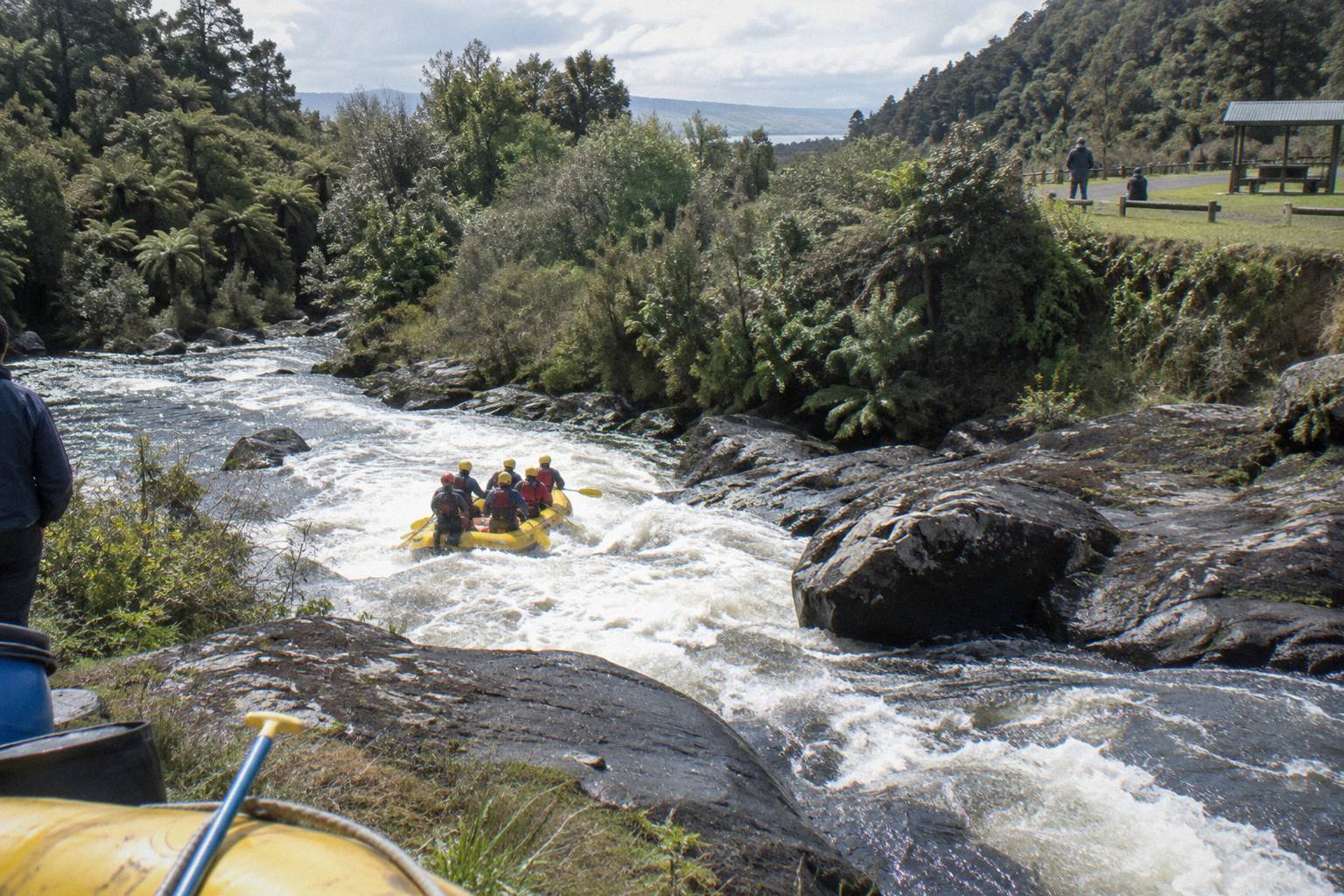
Three differences do most of the deciding. First, scheduling: the Kaituna runs every day of the year because the gates at the Lake Rotoiti outlet, described in its Wikipedia entry, hold the flow steady, so a Kaituna trip fits anywhere in a week. The Wairoa fits only on its release Sundays. Second, rhythm: the Kaituna front-loads calm water and builds to the waterfall, while the Wairoa is hard from early on. Third, logistics: the Kaituna bases sit 18 to 20 minutes from Rotorua with parking on site, while the Wairoa meet is a paddock on State Highway 29 in the Tauranga direction, closer for anyone staying near Tauranga, covered in the city's Wikipedia entry, than for Rotorua visitors.
For travellers who want both rivers in one trip, the order matters less than the calendar: pick the Wairoa Sunday first, then slot a Kaituna morning around it. The Kaituna Cascades Originals product and the sauna product are separate bookable trips with their own prices, so treat the two NZ$135 figures as belonging to two different cards rather than one interchangeable trip.
The Originals trip is the tighter 2 hour run; the sauna product adds time to warm up afterward on the same stretch of river, with the sauna inclusion stated on that product's page. Both carry a 5 rating from their own review pools, 1,385 reviews on the Originals card and 2,191 on the sauna card, and both list a minimum age of 13, except the sauna listing which shows 10. Ages print per listing, never as an operator-wide rule.
Who Can Actually Go On The Wairoa?
The operator's terms set a minimum age of 13, a maximum weight of 120 kg, a swimming requirement, a 15 minute early check-in, and exclusions for pregnancy and heart conditions, with a float test possible on the day. Those are firm gates, not suggestions, and the booking page asks you to confirm them when you reserve. Anyone outside them cannot ride this river and should look at the gentler options instead.
The swimming requirement deserves emphasis because it is stricter than on many rafting products. The Kaituna family trips and the Grade 2 Rangitaiki run operated by a different company both take non-swimmers in principle with buoyancy aids, and the do you need to swim to go rafting guide covers that question fully. The Wairoa does not sit in that category. Grade 5 water moves swimmers downstream fast, and the operator's page is explicit that you must be able to swim.
The operator's stated terms, gathered in one place:
| Term | Requirement |
|---|---|
| Minimum age | 13 on this listing |
| Maximum weight | 120 kg |
| Swimming | Must be able to swim |
| Check-in | 15 minutes before departure |
| Health exclusions | Not for pregnancy or heart conditions |
| Float test | May be required on the day |
| Bring | Swimwear and a towel |
Families with younger children have a clear alternative path. The Grade 2 Rangitaiki product from Rotorua Adventures Kayak and Raft takes children from age 5 on its listing and runs about 4 hours with 1.5 hours on the water, from NZ$125 per person. It is a different operator than the Kaituna Cascades Rangitaiki trip, so the two must never be treated as one product. The white water rafting with kids minimum age guide works through age limits across every product, listing by listing.
For adults within the gates, the useful self-test is water comfort rather than experience. The operator does not require prior rafting trips; it requires that you can swim, that you meet the physical terms, and that you follow paddle commands in fast water. People who tick those boxes and want the ceiling of commercial difficulty book the Wairoa. People who want a taste of hard whitewater with a softer landing, and a sauna afterward, book the Kaituna sauna product and check the live price on its booking page.
How Do You Plan Around A Release Sunday?
Pick the Sunday first, book before anything else in the itinerary, and build travel and accommodation around the 9:30am meet at State Highway 29. The operator lists the release Sundays on its river conditions page, and the booking calendar shows the dates taking bookings, so the strategy is simply: open the calendar, choose a Sunday, commit, then arrange everything else. Waiting until you arrive in New Zealand usually means the date is gone.
The scarcity is structural. A daily-departure river absorbs extra demand by adding trips; a release river cannot. When a Sunday sells out, the operator cannot add an afternoon run, because there is no water for one. Domestic paddlers and rafters watch the release calendar too, so popular spring and summer Sundays go first. Checking availability on the operator's booking page costs nothing and takes a minute: Check availability.
Travel planning around the day is straightforward if you respect the clock. The meeting point is a farm paddock on State Highway 29, which puts it in Tauranga's orbit rather than Rotorua's: staying near Tauranga the night before is the lower-stress option, while Rotorua visitors face an early start across country roads. Either way, plan to be at the paddock by about 9:15am for the 15 minute early check-in the operator asks for. The tauranga to the kaituna rafting guide covers the same corridor in the other direction for anyone pairing rivers.
Weather is the other variable. Release days happen on schedule because the water is engineered, but heavy rain can change river character, and the operator makes the call on conditions. The rainy day rafting guide explains how operators decide and what your options are if a day is called off. The booking page holds the cancellation terms for your specific date, so read them when you book rather than after.
What Trips People Up Before You Book
The three recurring errors are assuming the Wairoa runs daily like the Kaituna, treating the two NZ$135 Kaituna cards as one interchangeable product, and underestimating the drive to a 9:15am check-in at a farm paddock with no base facilities. Each one is avoidable with a calendar check, a close read of which card you are booking, and a realistic look at the map the night before.
The first mistake is the calendar one. People read Grade 5 rafting near Tauranga, assume a daily product, and leave booking until their trip week. Release Sundays do not work that way, and the fix is booking the Sunday before you book anything non-refundable around it. The second is the twin-product trap: the Kaituna Cascades Originals card and the Rotorua Rafting sauna card are separate products with their own prices, durations and inclusions, even though both raft the same river. Pick the shape of day you want, then book that exact card. The sauna inclusion belongs to the Rotorua Rafting and Rotorua Ziplines products only, and nothing on the Kaituna Cascades pages states a sauna.
The third is logistics. The Wairoa meet is a working farm paddock at 1376 State Highway 29, not a base with a shop, changing village and parking lot like Okere Falls Road. Bring swimwear and a towel as the operator asks, arrive dressed to change quickly, and build buffer into the drive. And the fourth, quieter error: booking the Wairoa as a first-ever rafting trip without being a confident swimmer. The operator's terms are plain, a float test may be applied, and the river is unforgiving of a panic. If in doubt, the white water rafting for beginners guide helps you judge which river suits your swimming and your nerve.
A middle path exists for people who want Grade 5 water without the Sunday constraint. The Kaituna runs 365 days a year on its controlled flow, so it can absorb a last-minute plan, a shifted itinerary or a wet forecast that moves your whole week. Check the live price on the booking page when you are weighing the two.
Which River Should You Actually Choose?
Pick the Wairoa for the hardest sustained whitewater in the region, a longer time on the water, and a calendar-anchored adventure near Tauranga. Pick the Kaituna for the 7 metre waterfall, daily availability, shorter days from Rotorua, and lower minimum ages on some listings. Doing both across a week is the plan serious paddlers land on, Wairoa Sunday first, Kaituna on any other morning.
The choice is genuinely personal rather than hierarchical. The Wairoa is not a better version of the Kaituna; it is a different proposition, a release-day commitment with a longer paddle and no daily fallback. The Kaituna is not the soft option; it carries the highest commercially rafted waterfall claim in the operators' own words and Grade 5 selling grade on every card. What differs is what kind of day you want and how much control you want over when it happens.
For most first-time visitors to the region with a loose itinerary, the Kaituna wins on logistics alone, and the kaituna river rafting guide lays out that river in full. For returning rafters, strong swimmers, or anyone whose dates happen to include a release Sunday, the Wairoa is the trip worth reorganising a weekend for. Both prices, NZ$190 for the Wairoa and NZ$135 for the Kaituna cards listed here, are from-prices on the booking page, and the page shows the price for the date you select.
Whatever you choose, book the anchor day first. A Kaituna seat can usually be found close to the date; a Wairoa release Sunday often cannot. The brand behind this coverage, Rafting Rotorua, keeps the full river and product guides updated so you can move between them as your plan firms up.
Common Questions About The Wairoa Trip
When Does The Wairoa River Run Rafting Trips?
On selected Sundays only, when the power company releases water into the river. The operator lists the release Sundays on its river conditions page, and the booking calendar shows which dates are taking bookings. There is no daily rafting on the Wairoa.
How Much Does Wairoa River Rafting Cost?
The Kaituna Cascades Wairoa product is from NZ$190 per person. Amounts are in New Zealand dollars, prices vary by date and group, and the booking page shows the price for the date you choose.
How Long Is The Wairoa Rafting Trip?
About 2 hours on the water covering roughly 5 km of river, with the whole experience taking 3 to 4 hours. The product is listed as a 5 hour trip overall.
Where Do You Meet For The Wairoa Trip?
At 1376 State Highway 29, a farm paddock at the take-out near Tauriko, Tauranga. The operator asks rafters to check in 15 minutes before the 9:30am departure.
What Is The Minimum Age For The Wairoa?
13 on this listing, with a maximum weight of 120 kg and a requirement that rafters can swim. The trip is not suitable during pregnancy or for people with heart conditions, and a float test may be required.
Is The Wairoa Harder Than The Kaituna?
Both are sold as Grade 5, but they are hard in different ways. The Wairoa sustains steep gorge whitewater for about 2 hours, while the Kaituna builds Grade 4 and 5 rapids toward the 7 metre Tutea Falls within a 50 to 60 minute run. Confident swimmers handle either; the Wairoa asks for more endurance.